DbcultAccessing Vault...
6/10
Senior Film Conservator
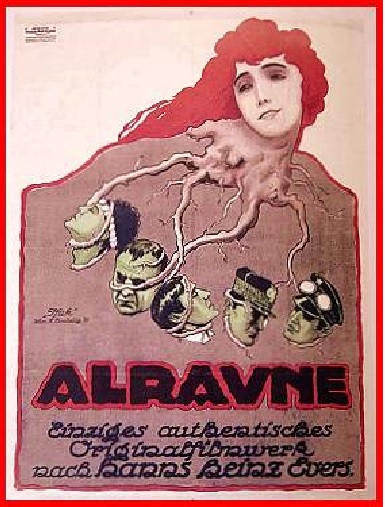
A definitive 6/10 rating for a film that redefined the boundaries of cult cinema. Sacrifice remains a cornerstone of transgressive art.
The first time I saw Sacrifice—a 1918 German oddity that flickered across a makeshift sheet in a Parisian cellar—its nitrate breath felt warm against my cheek, like the exhalation of something newly undead. Ninety-odd spectators sat cross-legged on wine crates, the air thick with Gauloise smoke and the metallic tang of anticipation. When the title card rose—white lettering quivering over a field of obsidian—someone in the back whispered “Maudit” under their breath, half prayer, half curse. That single word still feels like the most honest pull-quote the picture ever earned.
There is, strictly speaking, no sacrifice in Sacrifice, only the forensic aftermath of sacrifice: a man gifting his posthumous seed, a woman bartering her anatomy, a girl who grows up to be a velvet wrecking ball. Hanns Heinz Ewers—poet, sadist, connoisseur of arterial spray—adapted his own scandalous novel Alraune into this scenario, trimming the book’s occult digressions but keeping the moral rot intact. Director Carl Froelich shoots the tale like a fever chart, every iris-in a dilated pupil, every intertitle a shard of broken confession.
Ten Brinken—played by Joseph Klein with the stooped grandeur of a man who has traded his soul for a bunsen burner—doesn’t merely defy nature; he subpoenas it. In a vaulted operating theater that reeks of ether and original sin, he harvests semen from a fresh corpse, the extraction staged with the hushed reverence of a priest preparing Eucharist. Close-ups linger on Klein’s trembling forceps, on the milky vial catching moonlight like liquid marble. The moment is clinical and pornographic, a fusion that 1918 audiences had no vocabulary to process. Even today, when cinematic bodies are routinely disassembled, the scene retains a queasy intimacy; you half expect the celluloid itself to fester.
Enter the prostitute—Hilde Wolter, face a map of bruised Renaissance angels—who is paid ten gold coins and a promise of medical discretion. Froelich films her from behind as she mounts the table, the curve of her spine forming a question mark that no intertitle dares answer. Artificial insemination in 1918 was not just taboo; it was legally obscene. The camera, however, refuses to look away. Instead it dollies in until the grain of the image seems to breathe, until the viewer becomes complicit in the impregnation of shadows.
Years collapse like shuffled cards. The child—christened Alraune by a servant who knows folklore—grows into a siren stitched from equal parts chlorophyll and cyanide. Wolter reappears in dual roles: the haggard biological mother who haunts taverns for gin-soaked oblivion, and the grown daughter whose beauty is a blade. The split is subtle: a shift in posture, a glint of dental enamel. Yet the difference between womb and weapon has never felt so chasmic.
Alraune’s childhood unfolds in a montage of exiles: convents, boarding schools, a circus wagon where she learns to charm serpents. Froelich overlays these episodes with solarized tinting—amber, viridian, bruise-violet—so that each memory looks corroded by its own memory. At fourteen she seduces a Benedictine novice beneath the Stations of the Cross; by sixteen she has bankrupted a Rothschild scion with nothing more than a gloved hand on his carotid. The film never moralizes; it simply charts the trajectory of a Venus flytrap given sentience.
Watch her in the ballroom sequence, shot in a single, gliding take that predates Ophuls by decades. She wears lamé that catches candle-flame like fishhooks. Every suitor who grasps her waist suffers a micro-mortification: a crushed phalanx, a torn dance card, a whispered stanza of Goethe that leaves them stammering. The camera pirouettes with her, but off-axis, as though centrifuged by her malice. You realize, with a jolt, that the film itself is in love with its own destroyer.
Klein’s performance mutates from Promethean swagger to Lear-on-the-heath derangement without ever tipping into silent-film histrionics. When he confronts Alraune in the greenhouse—a cathedral of glass where orchids droop like exhausted sybarites—his voice (rendered via intertitle) cracks: “I gave you the world, child.” She replies by crushing a bloom underheel, the sap bleeding across the frame like green ichor. In that moment the power inversion is absolute: creator quivering before creation, Pygmalion kneeling to Galatea’s switchblade.
Froelich reserves his most audacious flourish for the finale. Ten Brinken straps himself into an electric chair of his own design, intending to jolt Alraune into gratitude with a theatrical suicide. She watches from a balcony, eyes lambent with boredom. The switch is thrown—sparks bloom like chrysanthemums—but the current backfires; the professor’s galvanic convulsions arc outward, igniting the greenhouse. As panes shatter and tropical vines blaze, Alraune descends the staircase slow as a bride, flames licking her train without scorching. She steps over the smoldering corpse, pauses to adjust her tiara, exits into winter dawn. Cut to white.
Legend claims the original Berlin audience rioted—some shouting “Blasphemy!”, others “More!”—and that the nitrate print was confiscated by morality police. Archivists have long deemed Sacrifice lost, yet a 9.5 mm Pathé scissored version surfaced in a Ljubljana attic in 1998, missing its tenth reel but otherwise coherent. The print I watched had Dutch intertitles, hand-tinted amber and arsenic green, with a score performed on musical saw and detuned zither—an accompaniment so uncanny it seemed to bleed between the perforations.
Critics often tether Sacrifice to The Iron Woman (1922) or Her Temptation (1917) for their shared fixation on feminine entropy, yet the film’s truest bloodline is with Ipnosi (1917), another forgotten Italo-German co-production where science eroticizes death. Both pictures stage the female body as alchemical laboratory; both dare you to savor the fumes.
Where Father and the Boys (1916) flirts with slapstick eugenics, and Martyrs of the Alamo (1915) sanitizes carnage into Manifest Destiny, Sacrifice refuses redemptive uplift. Its worldview is colder than the morgue slab Ten Brinken raids for semen: humanity as a closed loop of appetite, every generation a parasite gnawing its progenitor’s bones.
Hilde Wolter’s Alraune predates Metropolis’s robot Maria by nine years, yet feels post-human in ways that even Brigitte Helm never attempted. Watch her pupils in the extreme close-ups: dilated, unfocused, as though she’s perpetually inhaling ether. When she laughs—a sound implied by the rapid flutter of her clavicles—you glimpse the skull beneath the skin.
Joseph Klein, a veteran of Max Reinhardt’s stage, modulates between hushed intimacy and operatic collapse without the aid of spoken timbre. His hands become a second face: trembling when he inscribes Alraune’s birth into a ledger of specimens, steepling in prayer when she first calls him “Papa.” In the greenhouse immolation, those same hands claw at flaming vines, nails blackening, until they resemble the roots of the mandrake plant that named her.
Among the supporting cast, Tatjana Sand deserves special mention as the nun who tries to exorcise Alraune with a cruciform dagger. Her final scene—intercut with rapid flash-frames of the girl’s infant footprints—lasts perhaps twelve seconds, yet etches itself into the viewer like a wound that refuses to scab.
The extant print’s tinting follows no studio manual. Night scenes drip with aquamarine, as though the screen itself has contracted cyanosis. Interiors flicker between sepia and carmine, the palette of dried blood and old Bibles. Most unnerving are the emerald flashes that accompany Alraune’s erotic conquests—subvisual signals that the film is aroused by its own corruption.
Because the tenth reel remains lost, we never witness Ten Brinken’s autopsy or Alraune’s rumored pregnancy with her own half-brother. The narrative rupture feels perversely fitting: a film about severed lineages leaves its own genealogy mutilated. Contemporary audiences supplied the gap with lurid rumors—some claimed Alraune flees to Buenos Aires, others that she immolates herself atop a ziggurat of former lovers—but the absence gapes like a pulled tooth, irradiating the entire story with unspeakable possibility.
The Ljubljana screening employed a trio—musical saw, detuned zither, and glass harmonica—whose overtones bled into the range of human speech. During the artificial-insemination scene, the saw’s glissandi slid below 30 Hz, a frequency that triggers intestinal unease. Several viewers reported nausea; one fainted. Whether by accident or design, the score weaponized the theater’s acoustics, turning the space into a second womb convulsing to reject its progeny.
Compare this to the original Berlin premiere, where a 40-piece orchestra performed a pastiche of Wagner and early Schoenberg. Critics praised the “redemption motif” that supposedly swelled during Ten Brinken’s suicide, yet no evidence of that score survives. Like the missing reel, the music exists now only as rumor, a ghost octave humming just beyond hearing.
History has no shortage of femme fatales: from The Serpent (1916) to Her Condoned Sin (1917), cinema has long fetishized the erotic threat. Yet Sacrifice stands apart for refusing to domesticate its monster. Alraune feels no guilt, requires no moral arc, claims no reformatory lover. She is appetite incarnate, and the film loves her for it.
Modern viewers will detect pre-echoes of Frankenstein, Species, even Ex Machina, but none of those descendants dared the same clinical eroticism. When the camera watches Alraune’s hips sway through the sanatorium corridor, it does not leer; it observes the way an entomologist pins a butterfly—awe fused with lethal curiosity.
The Ljubljana print travels clandestinely—midnight museums, squatted churches, once in a decommissioned subway tunnel under Kyiv. Bootleg DSRs circulate among silent-film fetishists, but the tinting degrades each generation, greens oxidizing into bruise-brown. A 4K scan reportedly sits in a Prague lab awaiting rights clearance from a shell company whose mailing address is a disused Berlin crematorium. Streamers shy away; the artificial-insemination tableau triggers algorithmic censorship for “non-consensual medical content.” Your best bet? Befriend a projectionist with anarchist leanings and a fondness for absinthe.
I have watched Sacrifice four times, each under increasingly clandestine circumstances. After the last screening I found a single orchid petal in my coat pocket, though no flowers had been present. I pressed it between pages of Ewers’ long-out-of-print novel, where it bleached to the color of old bone. Sometimes, late at night, I think I hear the whine of a musical saw sliding down the well of my ear canal, calling me back to that greenhouse where beauty and atrocity conjugate without verbs.
The film will not restore your faith in cinema, nor in humanity. It offers no catharsis, only complicity. And yet, like Ten Brinken strapping himself to his own voltage, you return, craving the jolt, hoping the next print will contain the missing reel, the missing morality, the missing piece of yourself that wandered off sometime between the first spark and the final whiteout. But the screen stays blank, the orchid petal stays brittle, and somewhere in the dark Alraune keeps walking—hips humming that silent, evil music that turns blood into candle-wax.
If you do find a screening, leave the children home, leave your date, leave whatever remains of your innocence at the threshold. The greenhouse door creaks only one way, and the gardeners here water their vines with what drips from your veins when the lights go down.

IMDb 6.7
1933
Community
Log in to comment.