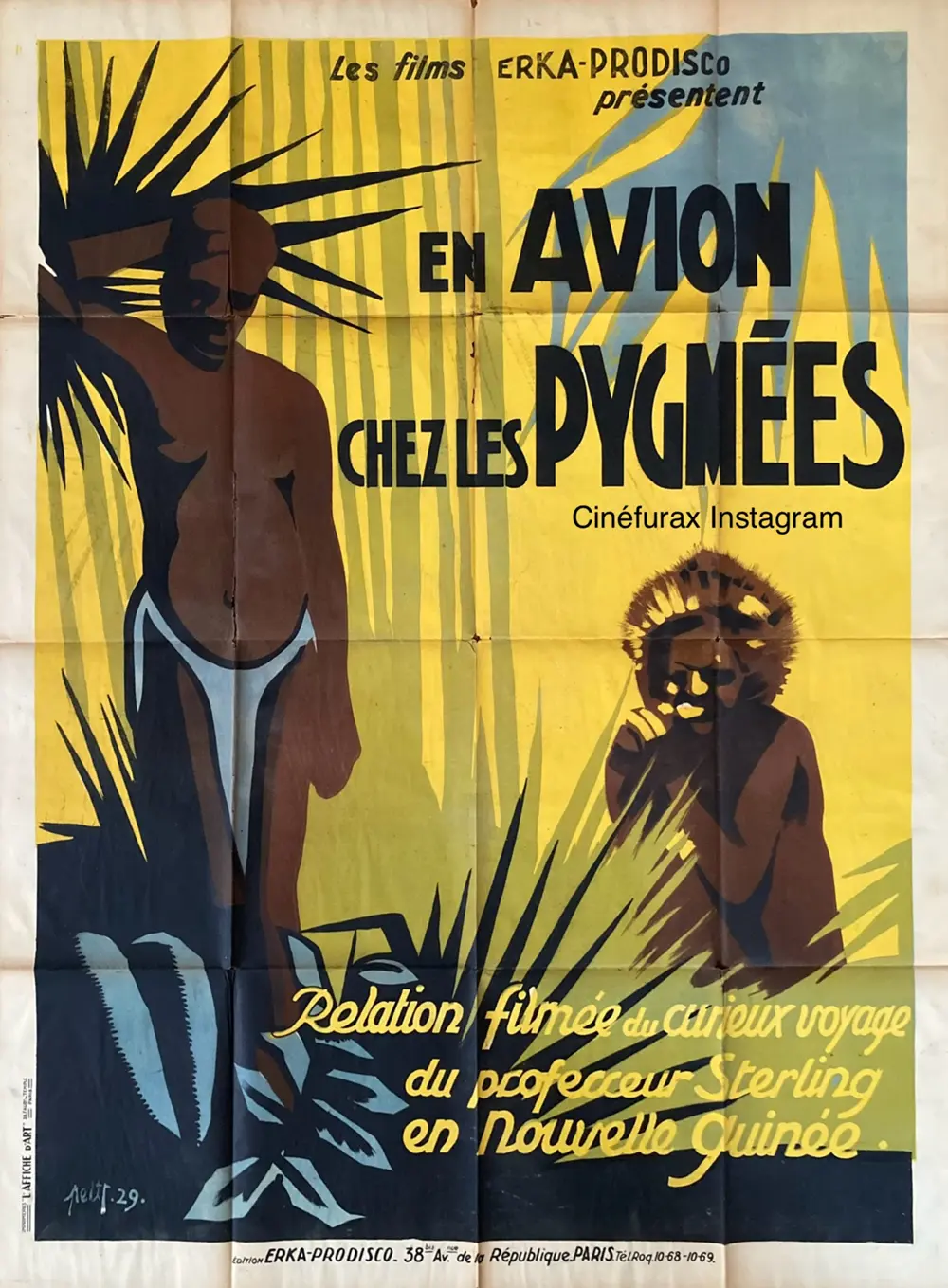
Is By Aeroplane to Pygmyland worth watching today? Short answer: yes, but with a significant asterisk. This isn't entertainment in the modern sense; it's a profound, if problematic, historical document that demands a critical eye. It works as an invaluable artifact for anyone interested in the genesis of documentary filmmaking, early 20th-century exploration, or the fraught history of anthropology, yet it will likely alienate viewers seeking conventional narrative or uncritical escapism.
This film is for historians, anthropologists, and cinephiles fascinated by the raw, unfiltered footage of a bygone era. It is emphatically not for those seeking fast-paced action, character development, or a narrative that aligns with contemporary ethical sensibilities regarding indigenous representation. Approach it as a time capsule, not a blockbuster.
The Unvarnished Truth of Early Exploration
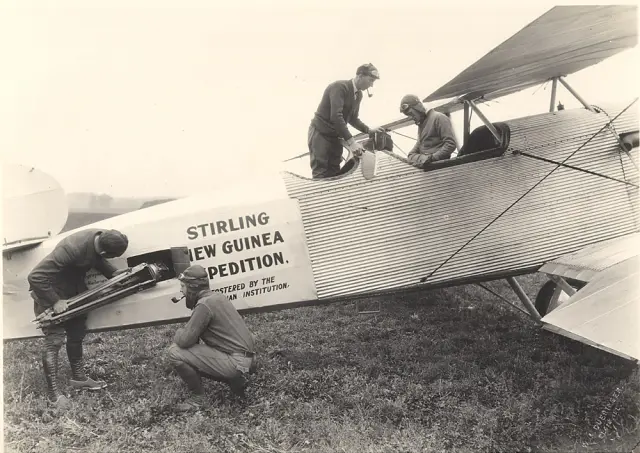
Matthew W. Stirling's By Aeroplane to Pygmyland stands as a fascinating, if deeply flawed, relic of early 20th-century exploration. Released during an era when the world still held vast, uncharted territories—or at least, territories uncharted by Western eyes—Stirling’s expedition to New Guinea offered audiences a rare, unfiltered glimpse into what was then considered the ultimate frontier. The film, essentially a compilation of raw expedition footage, serves less as a cohesive narrative and more as a visual diary, documenting the arduous journey itself, the logistical challenges, and the initial, often charged, encounters with indigenous populations.
The very title, with its exoticizing 'Pygmyland,' immediately signals the colonial gaze through which this story unfolds. It’s a film that cannot, and should not, be viewed in a vacuum. Its historical context is paramount. Stirling, an American ethnologist, embarked on this journey with the stated aim of scientific discovery, but the inherent power imbalance between the technologically advanced explorers and the indigenous communities they encountered is palpable throughout. This tension is, in fact, one of the film's most compelling, albeit uncomfortable, aspects.
What makes this footage so compelling is its sheer rawness. There’s a distinct lack of the polished production values that would come to define later documentaries. Instead, we are presented with a series of moments: the laborious unloading of supplies, the precarious flights over dense jungle canopies, and the often-stilted interactions between Stirling's team and the local inhabitants. These are not actors performing for the camera; these are real people, captured in their environment, often with an air of bewilderment or cautious curiosity.
Direct Answer Block: Why This Film Endures (and Where it Stumbles)
This film works because: It offers an unparalleled, unvarnished historical record of early 20th-century exploration and the nascent stages of ethnographic filmmaking, providing invaluable insight into both the challenges of such expeditions and the prevailing attitudes of the era.
Scene from By Aeroplane to Pygmyland
Cinematic perspective: Exploring the visual vocabulary of By Aeroplane to Pygmyland (1927) through its definitive frames.
This film fails because: Its inherent colonial gaze and the objectification of indigenous peoples are deeply problematic by modern standards, and its lack of conventional narrative structure can make it a challenging and at times tedious viewing experience for contemporary audiences.
You should watch it if: You are a student of history, anthropology, or early cinema, willing to engage critically with its content and understand its place within a specific, often uncomfortable, historical narrative.
The "Directing" of Documentation: Stirling's Lens
While Matthew W. Stirling wasn't a director in the Hollywood sense, his choices behind the camera—or, more accurately, the choices made by his expedition's cinematographer—constitute the film's 'direction.' The cinematography is, by necessity, functional. Shots are often static, focusing on the action at hand, whether it's the meticulous mapping of terrain or the exchange of goods with locals. The use of the aeroplane itself is a key cinematic element, providing sweeping, unprecedented aerial views that must have been breathtaking for audiences of the time. This isn't just transport; it's a visual metaphor for conquering the unknown.
Pacing is another crucial aspect. The film moves at the speed of the expedition itself. There are moments of intense activity—the struggle to build an airstrip, the difficult river crossings—interspersed with longer stretches of observation, showcasing daily life in the villages or the vastness of the natural environment. This deliberate, almost observational pacing, while perhaps slow for modern tastes, lends the film an authentic, documentary feel. It prioritizes the recording of reality over dramatic embellishment, a hallmark of early non-fiction cinema.
The tone is largely one of scientific detachment, yet beneath the surface, there's an undeniable undercurrent of Western triumphalism. The 'Pygmies' are often presented as subjects of study, their customs and appearances cataloged, rather than as equals. This is perhaps best exemplified in scenes where the camera lingers on specific individuals, observing their reactions to the explorers' technology or their traditional practices, without offering any discernible context from their perspective. It's a one-way mirror, reflecting only the gaze of the observer.
A Glimpse into the Technical Limitations and Innovations
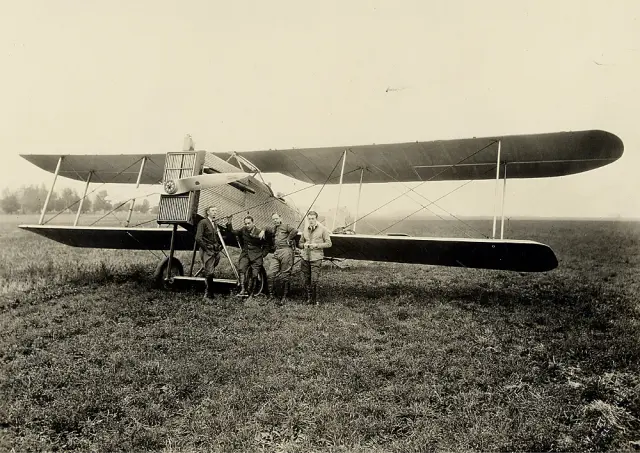
Considering the era, the technical execution of By Aeroplane to Pygmyland is remarkably robust. Filmed in the early 20th century, likely on cumbersome hand-cranked cameras, the footage often exhibits the characteristic flickering and grain of silent-era film. Despite these limitations, the clarity in many sequences is impressive, allowing for a surprisingly detailed view of the landscapes and the people. The decision to use an aeroplane for transport was not just logistical; it was a pioneering cinematographic choice, offering perspectives never before seen on film. This innovation alone sets it apart from more traditional ground-level expedition films of the period, like perhaps some segments of The Luck o' the Foolish if it had documentary elements, or even the adventure serials that were popular.
Scene from By Aeroplane to Pygmyland
Cinematic perspective: Exploring the visual vocabulary of By Aeroplane to Pygmyland (1927) through its definitive frames.
Editing, as far as it exists, is primarily sequential, following the chronological progression of the expedition. There are no fancy cuts or complex narrative structures. Intertitles, if they were present in the original exhibition, would have been crucial for providing context and guiding the audience through the various stages of the journey, explaining the scientific objectives or identifying geographical locations. Without them, the raw footage stands on its own, a testament to the raw capture of moments in time.
The 'acting,' if one can even call it that, is entirely unscripted. Matthew W. Stirling and his team are simply themselves, engaged in the tasks of their expedition. The indigenous people, too, are captured in their natural state, though the very presence of the camera undoubtedly influenced their behavior, creating a performative aspect even in supposedly candid moments. This dynamic is a crucial part of the film's historical value, illustrating the early relationship between documentarian and subject.
Ethical Quandaries and Enduring Legacy
One cannot discuss By Aeroplane to Pygmyland without confronting its ethical dimensions. The film is a product of its time, deeply embedded in the colonial mindset that viewed non-Western cultures as subjects for study and often, exploitation. The term 'Pygmyland' itself is a reductive, demeaning label, stripping away individual identities and reducing complex societies to a single, often misapplied, anthropological category. This is not just a film about discovery; it's a film about power, about the West asserting its dominance and documenting 'others' for its own consumption.
My unconventional observation here is that the film, despite its problematic framing, inadvertently serves as a powerful, if unintended, indictment of the colonial project. By simply showing the interactions, the film exposes the vast cultural chasm and the inherent awkwardness of these initial encounters, often revealing more about the explorers' biases than about the people they sought to document. It’s a mirror, albeit a distorted one, reflecting the very assumptions that underpinned scientific exploration in that era.
The enduring legacy of this film lies in its dual nature. It is both a priceless historical record of a specific geographical region and its inhabitants at a particular moment, and a stark reminder of the problematic foundations of early ethnographic film. It forces viewers to grapple with uncomfortable truths about representation and the ethics of observation, questions that remain highly relevant in documentary filmmaking today. Compared to purely fictional dramas like Mania. Die Geschichte einer Zigarettenarbeiterin or adventure narratives like 30 Below Zero, its value is in its unadorned, often unsettling, reality.
Is This Film Worth Watching Today?
Yes, absolutely, but with significant caveats and a prepared mindset. By Aeroplane to Pygmyland is not a film you passively consume for entertainment. It's a historical document that demands active engagement and critical analysis. Its value lies not in its cinematic polish or its narrative prowess, but in its raw, unfiltered glimpse into a specific moment in history.
Watching it today offers an unparalleled opportunity to understand the early days of documentary filmmaking and the complex, often troubling, relationship between Western explorers and indigenous cultures. It is a time capsule, preserving not just images of a distant land, but also the prevailing attitudes and methodologies of an era long past. It works. But it’s flawed.
Pros and Cons
Pros:
Invaluable Historical Document: Provides a unique, unfiltered look at a 1920s scientific expedition and the cultures encountered.
Pioneering Cinematography: Features groundbreaking aerial footage for its time, showcasing the innovative use of aeroplanes in film.
Authentic Glimpse: Offers raw, unscripted interactions and observations, free from modern documentary conventions.
Catalyst for Critical Discussion: Provokes important conversations about colonialism, ethnography, and ethical representation in film.
Early Documentary Insight: A prime example of nascent non-fiction filmmaking, demonstrating its potential and limitations.
Cons:
Colonial Gaze: Heavily steeped in the problematic, objectifying perspective of Western explorers towards indigenous peoples.
Lack of Narrative: Its raw, observational style lacks a conventional plot, making it challenging for audiences seeking traditional storytelling.
Slow Pacing: Reflects the actual speed of an expedition, which can feel very slow by contemporary cinematic standards.
Ethical Discomfort: Viewers must contend with the uncomfortable power dynamics and potentially exploitative nature of the footage.
Limited Context: Without extensive accompanying information, some footage may lack sufficient explanation for modern viewers.
Key Takeaways
Best for: Academic study, film history enthusiasts, and those interested in the history of exploration and anthropology.
Not for: Casual viewers seeking light entertainment, or those unprepared to critically engage with colonial-era perspectives.
Standout element: The groundbreaking aerial footage and its raw, unmediated capture of a historical expedition.
Biggest flaw: Its pervasive colonial gaze and the inherent ethical issues surrounding the representation of indigenous cultures.
Verdict
By Aeroplane to Pygmyland is not a film to be enjoyed in the conventional sense. It is a film to be studied, interrogated, and understood within its complex historical framework. Matthew W. Stirling’s footage, while undeniably a product of its time and imbued with its era's problematic ethnocentric biases, offers an extraordinary window into a pivotal moment in both exploration and filmmaking. Its value as an educational tool and a primary historical source is immense, far outweighing its deficiencies as a piece of entertainment. It challenges us to confront the past, to understand how early documentaries shaped perceptions, and to critically examine the legacy of scientific inquiry. For those willing to engage with its difficult truths, it remains an essential, if uncomfortable, viewing experience. It's a crucial piece of cinema history, demanding thoughtful reflection rather than passive consumption.