DbcultAccessing Vault...
Cult Review
Senior Film Conservator
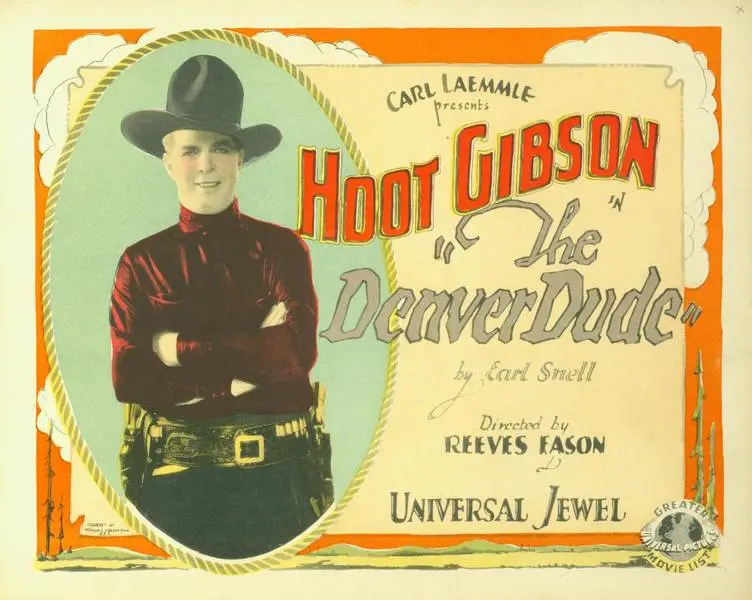
Is The Denver Dude worth watching today? Short answer: yes, but with significant caveats. This early silent Western offers a fascinating, albeit brief, glimpse into evolving gender roles and the comedic side of frontier life, making it a valuable historical artifact for cinephiles and enthusiasts of early cinema. However, its narrative simplicity and brevity might leave modern audiences accustomed to complex storytelling feeling underwhelmed.
This film is primarily for those with an appreciation for silent-era filmmaking, Western history, and character-driven comedies that prioritize charm over intricate plot. It is decidedly not for viewers seeking explosive action, deep psychological drama, or a runtime that justifies a full evening's investment.
Let's get straight to it:
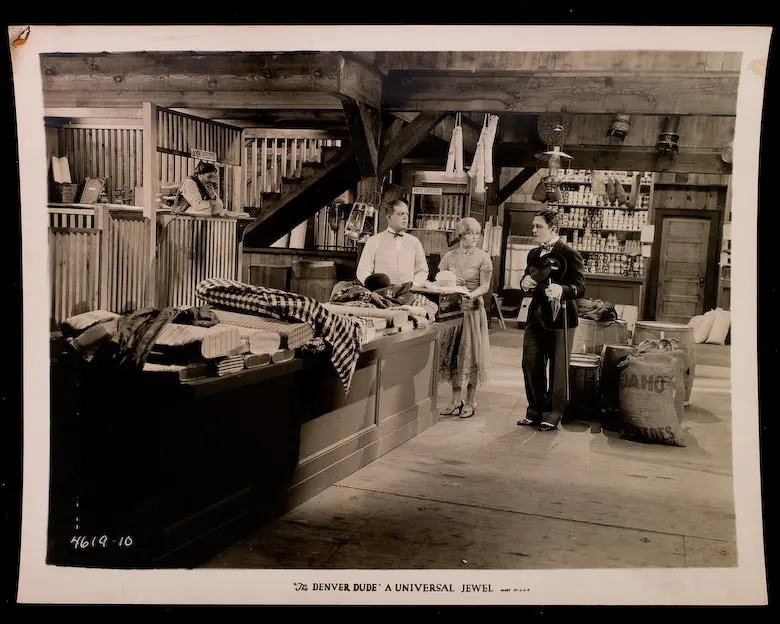
At its core, The Denver Dude is a character study, albeit a fleeting one, of a man attempting to change his very essence for the sake of love. Glenn Tryon, as our titular cowboy, delivers a performance that manages to be both earnest and subtly comedic. He doesn't play the transformation for broad laughs alone; there's a genuine vulnerability in his character's efforts. When he first attempts a bath, his expressions convey a mixture of bewilderment and reluctant determination, a truly relatable human moment despite the archaic context.
Tryon’s shift from rugged, dust-caked cowboy to suit-wearing, clean-shaven suitor is depicted with a physical awkwardness that speaks volumes. His posture stiffens, his movements become more deliberate, and his eyes betray a constant self-consciousness. It’s a nuanced portrayal for a silent film, avoiding caricature while still mining the premise for humor. One particular scene, where he struggles with a tie, is surprisingly effective, relying purely on pantomime to communicate his plight.
Grace Cunard, as the object of his affection, provides a crucial anchor. Her character isn't a mere prize; she possesses an understated agency. Cunard’s nuanced expressions suggest a woman who is both amused by the cowboy’s efforts and perhaps subtly charmed by his sincerity, even as the 'dandy' (likely played by Howard Truesdale or Rolfe Sedan, though specific roles are hard to definitively assign from the sparse cast list) presents a more polished alternative. Her reactions guide the audience’s perception, making the cowboy’s transformation feel less like a desperate act and more like a genuine, if misguided, romantic gesture.
The rivalry itself, largely unspoken, is carried through the contrasting demeanors of the two suitors. The 'dandy' likely exudes an effortless sophistication, a stark visual counterpoint to Tryon’s labored attempts. This dynamic is the engine of the film’s narrative, and the actors, particularly Tryon, carry it with a commendable blend of humor and heartfelt effort. It’s a testament to their craft that such a simple premise can hold attention, relying heavily on non-verbal cues and the universal theme of wanting to be enough for someone else. Frankly, it's more compelling than many early Westerns focused solely on gunfights or chases.
The direction, likely overseen by William Berke in collaboration with the writers, demonstrates a keen understanding of silent film comedy. The visual gags are clear, concise, and effectively communicated without the need for intertitles to explain every beat. The contrast between the cowboy's original, wild environment and his new, artificially refined appearance is frequently highlighted through thoughtful framing. Shots often emphasize the awkwardness of his new clothes against a backdrop that still screams 'frontier,' creating an immediate visual punchline.
The film’s cinematography, while not groundbreaking, serves the story well. There’s a simplicity to the framing that allows the performances to shine. The camera often lingers on facial expressions, particularly Tryon’s, ensuring the audience grasps the internal struggle beneath the external transformation. The use of natural light for outdoor scenes gives the film an authentic, if slightly rough, aesthetic that grounds the comedic premise in a believable setting. This isn't a stylized Western like The Girl of the Golden West; it feels more observational.
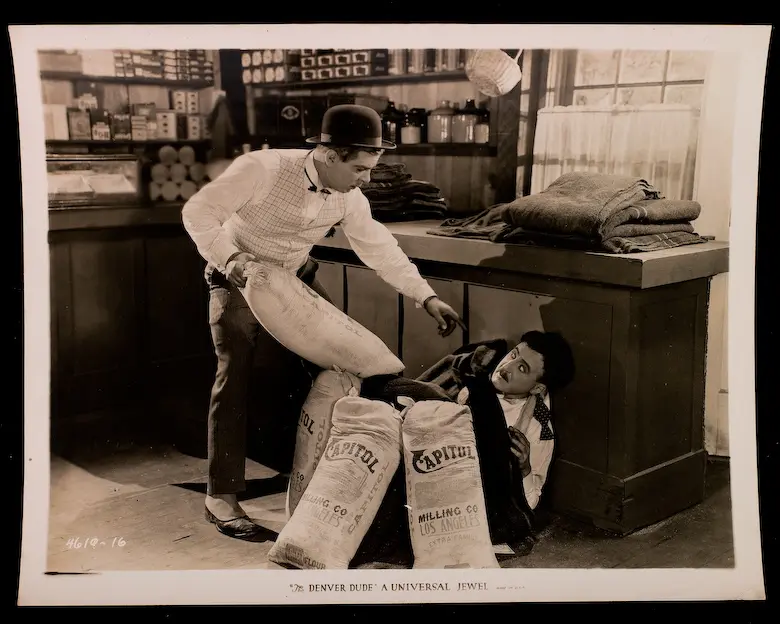
One particularly effective directorial choice is the subtle escalation of the cowboy's efforts. From a simple bath to a full suit, the progression feels logical within the comedic framework. The director understands that the humor comes from the effort, not just the outcome. There's a sequence, for instance, where the cowboy attempts to mimic the dandy’s gestures, perhaps a polite bow or a flourish of the hand, and the director captures the clumsy imitation with a sympathetic eye. It’s a small moment, but it speaks to the film’s gentle humor rather than outright mockery.
The editing is brisk, keeping the narrative moving without feeling rushed. For a short film, pacing is paramount, and The Denver Dude avoids lingering too long on any single joke, ensuring the comedic energy remains buoyant. This efficiency is a hallmark of good silent film direction, especially in shorter subjects, preventing the humor from growing stale. The visual narrative is clear, concise, and remarkably effective for its era, proving that sometimes, less is indeed more. It works. But it’s flawed.
The pacing of The Denver Dude is precisely what you’d expect from a silent film of this vintage: swift and to the point. There’s no wasted motion, no indulgent scenes. Every shot, every intertitle (though sparse), pushes the central conflict forward. This brevity is both a strength and a weakness. It ensures the film never outstays its welcome, delivering its comedic premise efficiently. However, it also means that character development, beyond the surface-level transformation, remains largely unexplored. We understand the cowboy’s motivation, but not necessarily his deeper emotional landscape or the girl's true feelings.
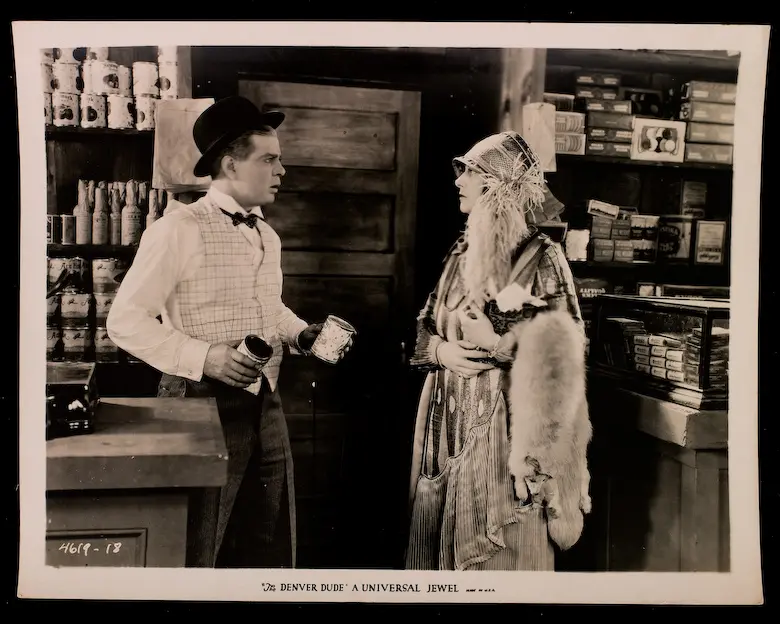
The tone is consistently lighthearted and comedic, tinged with a romantic undercurrent. It’s a charming, almost whimsical, take on frontier romance, far removed from the gritty realism or high drama found in other Westerns like Dangerous Waters. The humor arises from situational irony and the visual contrast between the cowboy’s natural state and his adopted persona. There’s an innocence to the film’s comedy that feels refreshing even today, a stark reminder of a simpler time in filmmaking.
What truly sets the tone apart is its surprising lack of cynicism. Despite the superficiality of the cowboy’s transformation, the film doesn’t mock his efforts. Instead, it presents them with a gentle understanding, suggesting that perhaps, in the pursuit of love, even awkward self-improvement can be endearing. This humane approach elevates it beyond mere slapstick, lending it a warmth that resonates. I'd argue this unexpected tenderness is its most enduring quality.
Yes, The Denver Dude is worth watching, particularly for specific audiences. It’s a delightful historical curiosity. It offers a clear window into early cinematic comedic techniques. The performances, especially Glenn Tryon's, are genuinely charming. It’s short, sweet, and doesn't demand much. If you're studying the evolution of the Western or silent film comedy, it's invaluable. For a casual viewer, it's a pleasant, if brief, diversion. Don’t expect a modern blockbuster. Expect a charming antique.
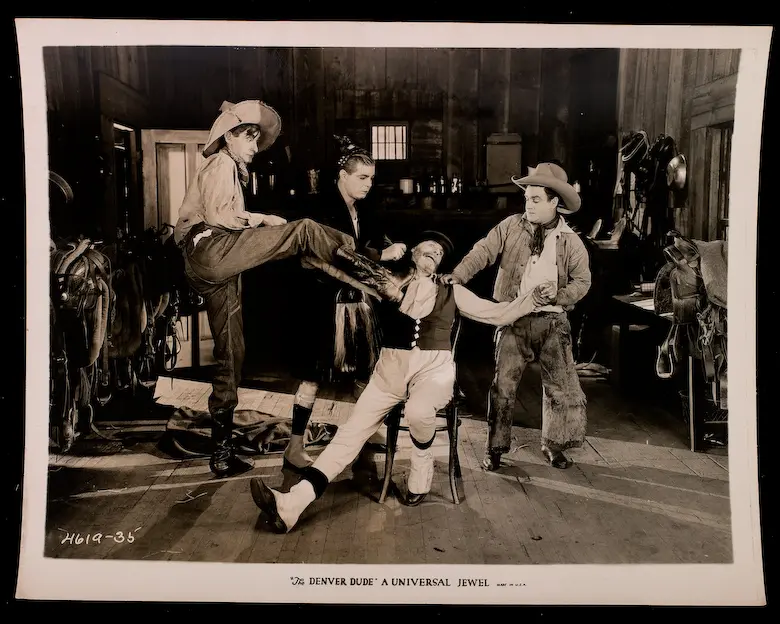
Beyond its surface-level comedy, The Denver Dude inadvertently offers a fascinating social commentary. It suggests that even in the rugged American West, the performative aspects of identity were already at play. The cowboy isn't just changing for himself; he's performing a new self to meet perceived societal standards, or at least the standards of the girl he desires. This struggle between authenticity and presentation feels surprisingly modern, echoing contemporary debates about online personas and curated images.
Furthermore, the film subtly highlights the power dynamics of courtship and the inherent biases towards 'civilized' appearances. The 'dandy' holds an advantage not necessarily through superior character, but through established social graces. Our cowboy must literally scrub away his identity to compete. It’s a quiet observation, but one that adds a layer of depth to what could otherwise be dismissed as a simple romantic comedy. This makes it more than just a historical artifact; it makes it a conversation starter.
It's a testament to the film's understated power that a narrative so brief can provoke such thought. It reminds us that even the simplest stories from cinema's nascent years can hold complex reflections on human nature.
The Denver Dude is a delightful, if slight, piece of early cinema that offers more than just a historical footnote. It’s a testament to the enduring appeal of simple stories well told, even without the benefit of sound. Glenn Tryon’s performance anchors a charming premise, exploring themes of self-reinvention and social aspiration with a gentle comedic touch. While it won't redefine your understanding of cinema, it provides a valuable and entertaining window into a bygone era of filmmaking.
For those willing to engage with its historical context and appreciate its understated charm, The Denver Dude is a rewarding, albeit brief, experience. It’s a reminder that sometimes, the most profound observations can come from the most unassuming sources. Give it a watch if you're curious about the roots of romantic comedy and the early days of the Western. You might just find yourself rooting for the cowboy who dared to take a bath.
IMDb —
1926
Community
Log in to comment.