DbcultAccessing Vault...
Cult Review
Senior Film Conservator
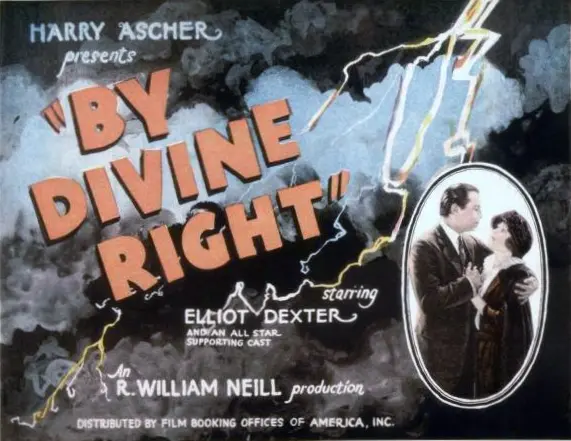
The flickering shadows of early cinema often served as a grand canvas for morality tales, allegories of human frailty, and the enduring power of the spirit. Among these, By Divine Right, a 1924 silent film, emerges not merely as a relic of a bygone era but as a profoundly resonant exploration of faith, justice, and the inexplicable forces that shape our destinies. Directed by the visionary minds behind the camera and penned by the collaborative efforts of Adam Shirk, Florence Hein, and the legendary Josef von Sternberg, this cinematic endeavor delves into the murky waters of political corruption and the luminous depths of spiritual conviction. It’s a narrative that, despite its vintage, speaks to universal truths about vulnerability, resilience, and the sometimes-miraculous intervention of a higher purpose.
At its core, By Divine Right weaves a compelling narrative around Mildred, portrayed with a delicate blend of fragility and burgeoning strength by Mildred Harris. Her character epitomizes the plight of the innocent caught in the inexorable gears of societal power. As a stenographer, she occupies a position of vulnerability, a fact mercilessly exploited by Trent, a politician whose moral compass points squarely towards self-interest and depravity. DeWitt Jennings embodies Trent with a chilling effectiveness, his screen presence exuding an almost palpable sense of menace and unchecked ambition. The film swiftly establishes this stark dichotomy: the pure-hearted Mildred against the corrupt Trent, a classic struggle that underpins much of the dramatic tension.
Mildred's desperate flight from Trent's insidious advances leads her, quite literally and spiritually, to the mission run by Austin Farrol, a figure of almost messianic charisma, known reverently as 'The Prince.' Elliott Dexter portrays Farrol with a captivating blend of gravitas and serene conviction, making his character an anchor of hope in a turbulent world. This mission serves not merely as a physical refuge but as a symbolic sanctuary, a beacon of rectitude in a world teetering on the brink of moral decay. It is within these hallowed walls that Mildred finds not just protection, but also a burgeoning sense of purpose and, inevitably, a deep, abiding affection for Farrol. Their connection blossoms, a silent testament to shared values and mutual respect, promising a future of quiet happiness amidst their noble endeavors.
However, the fragile idyll of the mission is shattered by a calculated act of malevolence. Trent, unable to tolerate Farrol's moral authority or Mildred's escape from his grasp, orchestrates a devastating fire that razes the mission to the ground. In a cruel twist of fate, the very man who offered solace and hope is unjustly accused of arson. This sequence is particularly potent, demonstrating the ease with which truth can be subverted by power, a theme that remains disturbingly relevant. Anders Randolf, as the orchestrator of this downfall, manages to convey a chilling sense of vindictiveness that fuels the film's central conflict. The destruction of the mission is not just a plot point; it's a symbolic annihilation of hope, forcing Farrol into a crucible of suffering and ignominy.
Farrol’s journey into the depths of despair is, however, abruptly interrupted by a stroke of cosmic irony. While being transported, a catastrophic train crash occurs, a violent upheaval that grants him an unexpected, almost miraculous escape. This pivotal moment, a literal and metaphorical derailment, is handled with a dramatic flair characteristic of silent cinema's ability to convey high-stakes action without a single spoken word. The visual storytelling here, though constrained by the technology of the era, would have been impactful, emphasizing the sudden, chaotic nature of fate. This incident is not merely a convenient plot device; it's a divine intervention, a literal 'right' granted by circumstance, setting the stage for his clandestine return.
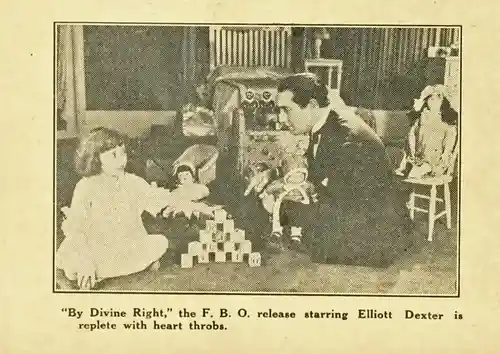
The subsequent phase of Farrol's narrative arc echoes the tropes of mistaken identity and righteous vengeance found in many melodramas, yet By Divine Right elevates it through its underlying spiritual framework. Farrol, assuming a disguise, infiltrates Trent's household, becoming an unseen observer, a silent judge within the very den of his adversary. This period of quiet observation allows for a subtle build-up of tension, demonstrating Farrol’s unwavering resolve and commitment to justice, even when cloaked in anonymity. The film, in this phase, explores the psychological toll of living a dual existence, even for a righteous cause.
The narrative culminates in a dramatic crescendo during a lavish party at Trent's residence, a setting that starkly contrasts the opulence of the villain with the suffering he has caused. It is here that tragedy strikes Trent's own family: his child, portrayed by Jeanne Carpenter, suffers a grievous fall from a window, believed to be permanently crippled. This moment of profound vulnerability within the antagonist’s own household provides the catalyst for Farrol’s ultimate revelation. The child's injury serves as a powerful symbol of innocence suffering, a direct parallel to Mildred's initial plight, yet this time, the suffering is inflicted upon the villain's own kin, creating a complex moral dilemma.
It is in this crucible of despair that Farrol steps forward, shedding his disguise and manifesting an extraordinary, almost supernatural ability. With what the film terms 'divine power,' he is able to cure the child, restoring her to health. This miraculous act is the film’s titular moment, a profound assertion of a higher justice that transcends legal frameworks. It’s a moment designed to evoke awe and wonder, solidifying Farrol’s status not just as a wronged man, but as an instrument of divine will. The impact of this scene, rendered visually in silent film, would have relied heavily on the actor’s expression and the audience’s emotional investment, a true testament to the power of visual storytelling. Grace Carlyle, playing a supporting role, would have contributed to the emotional weight of these climactic moments.
The success of By Divine Right, like many silent films, rests heavily on the shoulders of its performers. Mildred Harris, as Mildred, conveys a remarkable range of emotions without uttering a single word. Her wide, expressive eyes and subtle gestures communicate fear, hope, love, and resilience with an authenticity that transcends the technical limitations of the era. Elliott Dexter’s portrayal of Austin Farrol is equally compelling. He projects an aura of quiet strength and spiritual conviction, making his transformation from revered leader to disguised avenger, and finally to miraculous healer, entirely believable within the film’s heightened reality. His performance is a masterclass in controlled intensity, allowing the audience to feel the weight of his conviction and the depth of his suffering.
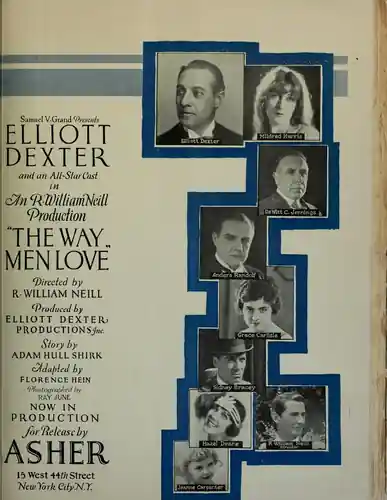
While specific directorial credits for By Divine Right are sometimes debated or lost to time, the influence of its writers, especially Josef von Sternberg, is palpable in the narrative’s structure and thematic depth. Sternberg, later renowned for his directorial prowess in films like The Blue Angel, brought a sophisticated understanding of character psychology and visual storytelling to his screenwriting. The screenplay for By Divine Right is meticulously crafted, building tension through escalating conflicts and providing satisfying, if somewhat fantastical, resolutions. The visual compositions, even in still images, suggest a strong directorial hand that understood how to frame human drama against grand backdrops, utilizing light and shadow to enhance emotional impact. This visual artistry is crucial for a silent film, where every gesture, every set piece, and every camera angle must speak volumes.
The central theme of divine intervention and a higher moral order places By Divine Right within a rich tradition of early cinema that often explored spiritual and ethical dilemmas. This film doesn't shy away from presenting a world where earthly justice can be flawed, but divine justice ultimately prevails. This resonates with other films of the era that grappled with similar moral quandaries, albeit with different narrative approaches. For instance, the struggle of a protagonist against an unjust system and their eventual vindication through extraordinary means can be seen in The Ne'er-Do-Well (1923), where a privileged man is wrongly accused and forced to find his own redemption. Similarly, the concept of a character embodying an almost spiritual influence on others, inspiring them towards better paths, echoes themes found in Man and His Soul or Inspiration, both of which delve into the transformative power of an individual's spirit.
The pervasive political corruption embodied by Trent also finds parallels in contemporary cinema. The battle against systemic venality and the fight for integrity in public life were recurring motifs. While not a direct comparison in terms of plot, the moral struggle against powerful, unscrupulous figures is a thread that connects By Divine Right to films like Body and Soul (1920), which, despite its different narrative focus, also explores the ethical compromises made by individuals in positions of power and the eventual triumph of moral rectitude. The idea of a character being forced into a new identity to seek justice, as Farrol does, also mirrors the narrative convolutions seen in films such as Alias Ladyfingers, where hidden identities drive much of the plot's intrigue and resolution.
Furthermore, the element of a devastating fire, a catastrophic event that reshapes the protagonist's life, is a classic dramatic device. The sudden, destructive force of nature or human malice forcing a new path upon characters is a powerful storytelling tool. This can be seen in various melodramas where external forces act as catalysts for profound personal change. The dramatic weight of such events is universal, transcending specific plot points to tap into primal fears and hopes.
While By Divine Right may not be as widely known today as some of its more famous silent contemporaries, it stands as a significant artifact of its time, offering valuable insights into the social anxieties and moral frameworks of the 1920s. Its exploration of themes like justice, redemption, and the potential for transcendence continues to resonate. The film’s narrative, though sometimes leaning into the melodramatic, is underpinned by a sincerity of purpose that elevates it beyond mere entertainment. It asks profound questions about where true power lies—in political office or in spiritual conviction—and ultimately suggests that moral authority, even when tested by the cruelest of circumstances, possesses an enduring, almost miraculous strength.
The film's capacity to communicate complex emotions and a compelling story without spoken dialogue is a testament to the artistry of silent cinema. Every gesture, every facial expression, every intertitle, and every carefully composed shot contributes to a rich tapestry of meaning. It’s a reminder of a period when filmmakers had to be exceptionally inventive in their visual storytelling, honing techniques that continue to influence cinema today. By Divine Right, with its blend of social critique, personal drama, and spiritual wonder, offers a captivating glimpse into the heart of early American filmmaking, proving that some stories, and some powers, are indeed, by divine right, timeless.
Review by your resident film connoisseur.

IMDb —
1918
Community
Log in to comment.