DbcultAccessing Vault...
6.6/10
Senior Film Conservator
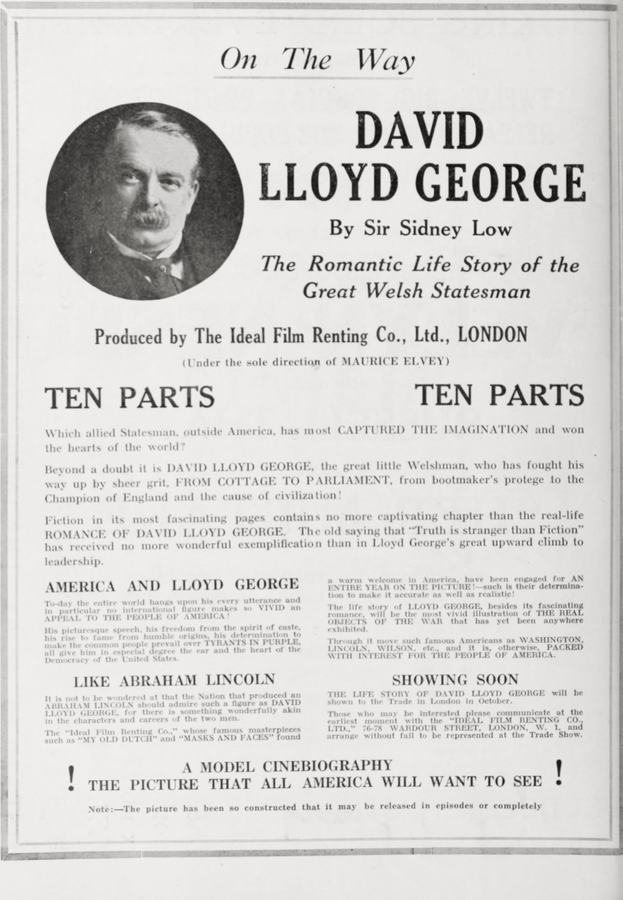
A definitive 6.6/10 rating for a film that redefined the boundaries of cult cinema. The Life Story of David Lloyd George remains a cornerstone of transgressive art.
Stepping into the hallowed halls of early cinematic history, one encounters a truly ambitious undertaking: The Life Story of David Lloyd George. This film, a silent epic, attempts to encapsulate the sprawling, often tempestuous career of the man who became Britain's wartime Prime Minister, a figure whose political acumen and oratorical prowess were legendary. It's a formidable challenge for any medium, let alone one reliant solely on visual storytelling and intertitles, yet the film embarks upon this biographical journey with a remarkable conviction that commands attention. The sheer scope of the project, aiming to distil decades of political maneuvering and national crisis into a coherent narrative, speaks volumes about the filmmaking aspirations of its era.
The film's initial sequences meticulously lay the groundwork, tracing Lloyd George’s humble Welsh origins. We are presented with a young man, driven by an almost palpable ambition, navigating the local political landscape. These early scenes, though perhaps less dramatic than the later wartime segments, are crucial for establishing the character's roots and the foundational principles that would guide his later, more public life. The visual language employed here, through careful staging and character interaction, attempts to convey a sense of burgeoning intellect and an innate understanding of the common man's plight, qualities that would define his populist appeal.
As the narrative progresses, the political stakes escalate. We witness Lloyd George's ascent through the Liberal Party ranks, his involvement in contentious social reforms, and his often-antagonistic relationship with the established order. The portrayal of these political skirmishes, while necessarily simplified for the silent screen, manages to convey the intensity and ideological clashes of the period. One might draw parallels to the dramatic tension found in films like The Conspiracy, where intricate power plays form the core of the storytelling, albeit in a fictional context. Here, the historical weight lends an added layer of gravitas to every calculated move and public declaration.
The cast shoulders a considerable burden, translating complex emotions and political rhetoric without the benefit of spoken dialogue. Eric Stuart, in the titular role, delivers a performance that strives for both authenticity and charismatic presence. His gestures, facial expressions, and overall demeanor are critical in conveying Lloyd George’s shifting moods – from fiery orator to burdened statesman. It's a demanding role requiring a deep understanding of pantomime and subtle emotional cues, and Stuart largely rises to the occasion, projecting the necessary blend of shrewdness and passion.
Supporting performances also play a vital role in populating this historical canvas. Winifred Sadler and Alma Reville, among others, contribute to the tapestry of characters surrounding the central figure, each embodying the societal roles and personal relationships that shaped Lloyd George's life. Their interactions, though brief, are instrumental in providing context and emotional resonance, grounding the grand political narrative in human experience. The film understands that even the loftiest political dramas are ultimately driven by individual choices and relationships.
The outbreak of the First World War marks a dramatic shift in the film's tone and focus. The narrative plunges into the urgency and despair of wartime Britain, with Lloyd George emerging as a figure of national salvation. The film attempts to depict his herculean efforts in mobilizing the war economy, reorganizing the government, and rallying public morale. These sequences are imbued with a sense of escalating tension, reflecting the real-world pressures faced by the nation. The visual representation of wartime industry and the grim reality of the home front, though necessarily constrained by early filmmaking techniques, are rendered with an earnestness that speaks to the era’s profound impact.
Ernest Thesiger, known for his later, more eccentric roles, likely brings a distinct gravitas or perhaps a subtle antagonist edge to his character, whatever that role may be. In silent cinema, the smallest gesture from an actor of Thesiger's caliber could imbue a scene with layers of meaning, often conveying more through a raised eyebrow or a slight turn of the head than pages of dialogue. His presence undoubtedly adds a layer of theatricality and depth, common in the acting styles of the period, to the ensemble.
The directorial hand, guided by the script of Sidney Low, navigates the complexities of historical biography with a keen eye for dramatic potential. Low's challenge was to distill a vast historical record into a compelling, visually driven narrative. This often meant emphasizing key moments, iconic speeches (translated into intertitles), and pivotal decisions that defined Lloyd George’s legacy. The structure of the film, therefore, becomes a series of carefully selected vignettes, each designed to propel the story forward and deepen the audience's understanding of the man at its center. This episodic yet coherent approach is a hallmark of successful early biopics.
Cinematographically, the film relies heavily on strong compositions and effective use of light and shadow to convey mood and atmosphere. While the technical limitations of the period are evident, the filmmakers employ the available tools to maximum effect, creating striking images that resonate with the historical weight of the subject matter. Close-ups are used judiciously to highlight emotional states, while wider shots establish the grandeur of parliamentary settings or the somber mood of a nation at war. The visual artistry, though perhaps rudimentary by modern standards, is nonetheless deliberate and impactful.
The portrayal of wartime leadership, particularly Lloyd George's transition from Minister of Munitions to Prime Minister, is central to the film's dramatic arc. It's here that the narrative truly seeks to capture the immense burden of command, the strategic dilemmas, and the relentless pressure of guiding a nation through unprecedented global conflict. One can almost feel the weight of responsibility resting on Stuart's shoulders as he portrays the Prime Minister grappling with the exigencies of war. The film aims to humanize this historical giant, showcasing not just his triumphs but also the immense personal cost of his dedication.
In terms of its historical interpretation, the film naturally reflects the perspectives and sensibilities of its time. It presents a largely heroic, albeit complex, vision of Lloyd George, emphasizing his strengths and his pivotal role in securing Allied victory. While later historical analyses might offer more nuanced or critical perspectives, the film's primary objective is to celebrate and monumentalize a figure who was, for many, a national saviour. This celebratory aspect is a common feature of biographical films produced relatively close to their subject's lifetime.
The supporting ensemble, including Thomas Canning, Judd Green, Norman Page, Douglas Munro, Leonard Tugwell, and Miriam Stuart, all contribute to the authenticity of the historical setting. Each actor, in their own capacity, helps to build the world of early 20th-century Britain, from the bustling corridors of power to the solemnity of public gatherings. Their collective efforts ensure that the backdrop against which Lloyd George's life unfolds feels lived-in and credible, a crucial element for any historical drama.
Considering the broader cinematic landscape of its time, The Life Story of David Lloyd George stands as an early example of ambitious historical biopic. Its narrative sweep and thematic depth distinguish it from many of its contemporaries, which often focused on more sensational or melodramatic plots, such as those found in The Whirl of Life or The Purple Mask. This film consciously aims for a more elevated, educational, and inspiring tone, befitting its subject.
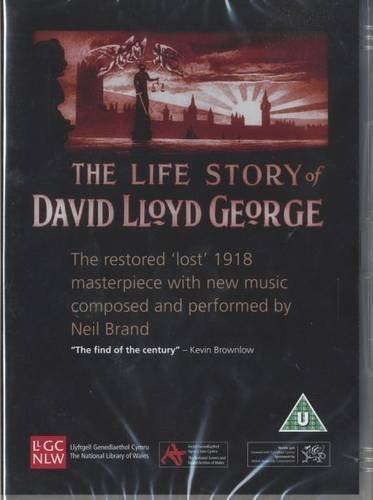
The challenges of depicting such a complex figure as Lloyd George in a silent film are immense. Without dialogue, the filmmakers relied on robust performances, clear intertitles, and evocative imagery to convey his political philosophies, his charisma, and his moments of doubt. The film's success lies in its ability to transcend these limitations, creating a portrait that, while necessarily broad, remains compelling. It’s a testament to the power of visual storytelling and the interpretive capabilities of early cinema audiences, who were accustomed to filling in the blanks with their own imagination.
One particularly striking aspect is the film's handling of public opinion and the role of the media in shaping perceptions. Lloyd George was a master communicator, and the film attempts to capture the essence of his populist appeal through scenes of public rallies and the reactions of the populace. These moments, conveyed through crowd shots and the emotive acting of the ensemble, underscore the film's commitment to portraying the broader social and political context of his leadership. It's a fascinating look at how a leader's image was constructed and disseminated in an era before mass electronic media.
Sidney Low's screenplay, while bound by the conventions of silent film, manages to maintain a narrative coherence that is often difficult to achieve in historical epics. He skillfully selects key events and character interactions to build a compelling arc, ensuring that even viewers unfamiliar with the intricate details of British politics can follow Lloyd George's journey. The pacing, though deliberate, never feels stagnant, moving through political crises and personal struggles with a steady, purposeful momentum.
The film serves as a valuable historical document, offering a contemporary cinematic perspective on a figure whose impact on 20th-century Britain cannot be overstated. It provides a window into how the public and the media of the time viewed their wartime leader, presenting a narrative that, while perhaps idealized, captures the spirit of national unity and resolve that Lloyd George sought to embody. This kind of immediate historical interpretation is often as illuminating as later, more detached analyses.
The portrayal of parliamentary debates and political negotiations, while simplified, conveys the essence of the democratic process. The tension of crucial votes, the drama of policy formulation, and the struggle for consensus are all depicted through a series of carefully composed shots and expressive acting. These scenes, though lacking spoken words, are surprisingly effective in communicating the gravitas and procedural intricacies of governance, demonstrating the silent film's capacity for conveying intellectual and political drama.
Comparing its dramatic scope to other early films, one might consider the narrative ambition of The Struggle or the character-driven intensity of The Reckoning. However, The Life Story of David Lloyd George distinguishes itself by its overt historical purpose, aiming not just for drama but for a didactic and commemorative function. It seeks to inform and inspire, rather than solely entertain, a balance that few films of its period successfully strike with such a weighty subject.
The aesthetic choices, from set design to costume, are meticulously curated to transport the viewer to the early 20th century. The attention to historical detail, even in the background elements, reinforces the film's commitment to authenticity. This visual immersion is crucial for a silent film, as it helps to build a believable world for the audience, compensating for the absence of auditory cues. The careful reconstruction of parliamentary chambers, wartime offices, and public spaces adds significantly to the film’s overall impact and credibility.
The film also touches upon the personal sacrifices inherent in public life. While not delving into overly intimate details, it hints at the strain and isolation that often accompany leadership, particularly during a national crisis. These subtle undertones add a layer of human vulnerability to the otherwise heroic portrayal, making Lloyd George a more relatable, if still formidable, figure. It acknowledges that even the most powerful individuals are susceptible to the psychological tolls of their responsibilities.
Ultimately, The Life Story of David Lloyd George stands as a significant artifact of early British cinema. It represents an ambitious attempt to capture the essence of a transformative political leader and a pivotal era in national history, all within the demanding framework of silent filmmaking. Its enduring value lies not just in its historical subject matter, but in its demonstration of the expressive power of the cinematic medium in its nascent stages. It’s a film that demands appreciation for its pioneering spirit and its earnest, grand vision, a vision that continues to resonate with anyone interested in the intersection of history and film. The effort to convey such a complex narrative without spoken word is a masterclass in silent storytelling, inviting viewers to engage deeply with the visual and emotional cues presented on screen. The film's legacy is a testament to the power of early cinema to tackle subjects of profound national importance, paving the way for future historical dramas and biopics to explore similarly weighty themes with increasing sophistication and technical prowess.
The sheer scale of the production, considering the technological limitations of the time, is remarkable. The filmmakers managed to recreate historical settings and evoke the atmosphere of a nation at war with commendable artistry. This dedication to craft, from the detailed set pieces to the period-appropriate costumes, underscores the seriousness with which the project was approached. It wasn't merely a fleeting entertainment, but a deliberate attempt to etch a national hero's story into the collective consciousness through the burgeoning power of the moving image. This kind of ambition was rare, setting a high bar for historical dramas that would follow.
The film serves as an invaluable primary source for understanding the public perception of Lloyd George during or shortly after his political prime. It reflects the prevailing sentiments, the narratives that were being constructed around his leadership, and the qualities that were deemed most admirable or crucial during a period of immense national upheaval. For historians and film scholars alike, it offers a fascinating glimpse into the interplay between media, public memory, and the construction of historical figures, making it far more than just a simple biopic. It’s a cultural artifact that speaks volumes about its own time.
Moreover, the film’s narrative structure, though linear, is punctuated by moments of heightened drama and emotional intensity, designed to engage the audience on a visceral level. The visual metaphors employed, though subtle, often convey underlying tensions or symbolic meanings, enriching the viewing experience. For example, a shot of Lloyd George alone in a vast office might symbolize the immense isolation of leadership, while scenes of bustling factories speak to the nation's industrial might under his direction. These visual cues are essential to the silent film's communicative power.
The legacy of The Life Story of David Lloyd George extends beyond its immediate historical context. It contributed to the evolving language of cinematic biography, demonstrating how complex political narratives could be adapted for the screen. It set a precedent for depicting real-life figures with a combination of reverence and dramatic flair, influencing how subsequent filmmakers would approach similar subjects. Its place in the pantheon of early British cinema is secure, not just as a historical record, but as a pioneering work of a genre that continues to captivate audiences worldwide. It stands as a powerful reminder of the foundational artistry upon which modern cinema is built, showcasing how early filmmakers tackled grand themes with ingenuity and passion.
IMDb 5
1919
Community
Log in to comment.