DbcultAccessing Vault...
5.9/10
Senior Film Conservator
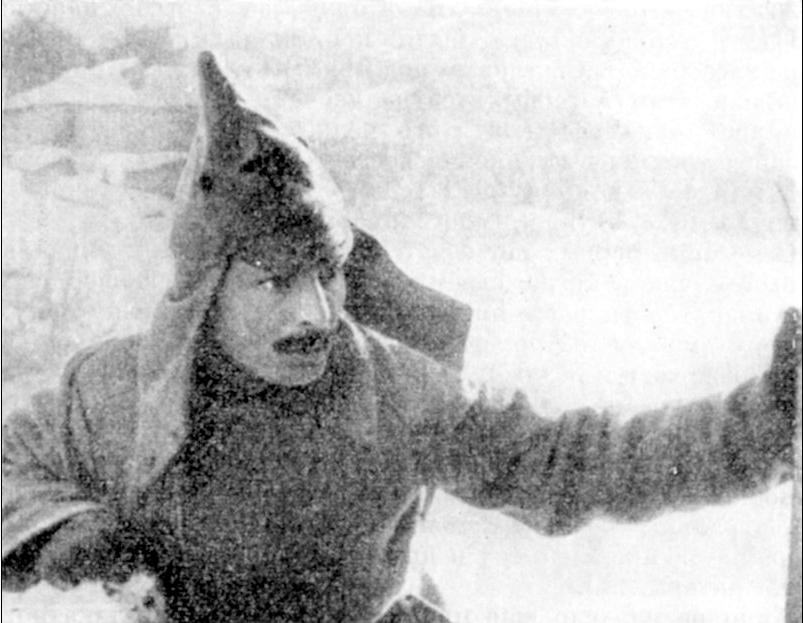
A definitive 5.9/10 rating for a film that redefined the boundaries of cult cinema. Serp i molot remains a cornerstone of transgressive art.
In the annals of Soviet cinema, few films so starkly crystallize the ideological tremors of the 1920s as Serp i Molot. Directed by a collective of avant-garde pioneers, this 1929 silent film is less a narrative than a philosophical exercise—a collision of Marxist dialectics and existential despair. Its title, translating to "The Snake and the Hammer," is a metonymic cipher for the dual forces of subversion and tradition, both of which are rendered inhumanly precise by the film’s stark visual grammar and its actors’ methodically restrained performances.
Sergey Komarov, as the titular serpent, embodies a menace that is neither overtly villainous nor outright heroic. His character, a factory manager with a veneer of paternalism, wields information like a scalpel, slicing through the community’s cohesion to consolidate power. Komarov’s performance—monotone yet electrifying, a study in micro-expressions—is the film’s emotional axis. His manipulation of laborers and local officials alike is not driven by malice but by a cold, almost bureaucratic calculation. The camera lingers on his hands, fingers twitching like a pianist’s, as if conducting the chaos he orchestrates. This is a man who believes in the necessity of his methods, even as they corrode the very fabric of the society he claims to serve.
Opposing Komarov’s serpentine pragmatism is the hammer-wielding Anatoli Gorchilin, a character who is less a person than an archetype. Gorchilin’s laborer, with his chipped teeth and perpetually furrowed brow, represents the Soviet ideal of the "New Man"—a blunt instrument of proletarian virtue. Yet, his simplicity is not naive; it is tragic. His reliance on brute force, both physical and ideological, is a blunt attempt to preserve a crumbling order. In a pivotal scene, Gorchilin’s hammer becomes a phallic symbol of authority, smashing a factory window not out of malice but in a desperate bid to "cleanse" the space of Komarov’s influence. The film’s most poignant moment arrives when Gorchilin, having struck the final blow, stares at his blood-stained hands, realizing too late that his violence has mirrored the very corruption it sought to eradicate.
The film’s cinematography, a collaboration between Vsevolod Pudovkin and N. Belyakov, is a masterclass in visual symbolism. The decaying factory town is rendered in desaturated tones, with shadows and light playing a game of cat-and-mouse across the characters’ faces. The snake and hammer are not merely props but recurring motifs: a coiled hose in a boiler room, a hammer left abandoned in the snow, a serpent-like vine creeping up a crumbling wall. The most audacious sequence is the final act’s montage, where Komarov’s face fractures into shards of glass, each reflecting a different worker’s fate, while Gorchilin’s hammer descends in slow motion, shattering the mirror. This sequence, though silent, is a symphony of despair.
Serp i Molot is steeped in the revolutionary ethos of its time, yet its relevance extends far beyond its historical context. The film’s interrogation of power dynamics finds parallels in Oliver Twist, Jr., where innocence is similarly weaponized by systemic corruption. Like Mistress Nell, it explores the fragility of moral clarity in a world governed by compromise. However, Serp i Molot’s greatest strength lies in its refusal to offer catharsis. The film ends not with a resolution but a question mark: Komarov and Gorchilin, their ideologies exhausted, sit in a derelict tavern, drinking silently as the camera pans to a poster of Lenin, his visage peeling like wallpaper. It is a haunting reminder that even revolutions are subject to entropy.
Though Serp i Molot is a product of its time, its themes of moral ambiguity and the cyclical nature of power remain startlingly prescient. In an era where political discourse is increasingly polarized, the film’s refusal to demonize either the "snake" or the "hammer" invites viewers to confront their own complicity in systems of control. Its influence can be traced in later works like The Little Samaritan, which similarly dissects altruism through a lens of irony. For cinephiles, Serp i Molot is not just a relic of Soviet cinema but a provocation—a mirror held up to the contradictions of human nature.
Technically, the film is a marvel. The sound design (or lack thereof) is its own commentary; the absence of music forces the audience to listen to the mechanical groans of the factory, the muffled coughs of the workers, the brittle snap of a hammer strike. This aural austerity complements the visual minimalism, creating an atmosphere of claustrophobic tension. The editing, by N. Zubova and Ye. Bedunkevich, is razor-sharp, with cross-cutting between Komarov’s manipulations and Gorchilin’s escalating violence that suggests a fated collision. Even the costumes—drab, utilitarian, and often patched—serve the film’s thesis: in this world, individuality is a luxury the system cannot afford.
Serp i Molot is a film that demands to be read as much as it is seen. Its allegorical depth, combined with its technical rigor, elevates it beyond its era, positioning it as a cornerstone of global cinema. For modern audiences, it is a cautionary tale wrapped in a historical artifact, a reminder that the forces of cunning and strength are not relics of the past but perennial players in the theater of human conflict. If the hammer and snake can be found in every revolution, then Serp i Molot is the manifesto that warns us of the cost of their embrace.
IMDb —
1936
Community
Log in to comment.