DbcultAccessing Vault...
6.1/10
Senior Film Conservator
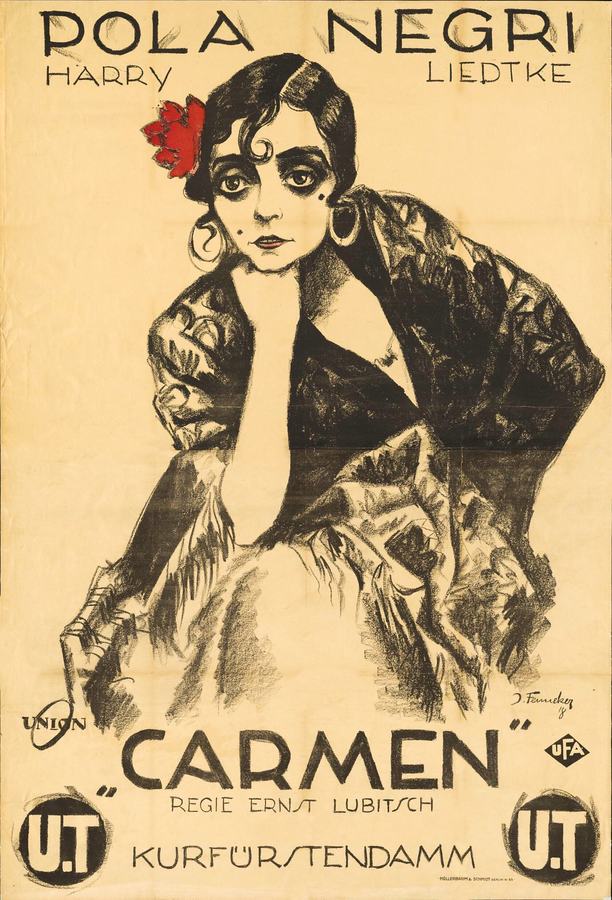
A definitive 6.1/10 rating for a film that redefined the boundaries of cult cinema. Carmen remains a cornerstone of transgressive art.
In the aftermath of the Great War, as the ashes of old empires settled and the geopolitical map of Europe was irrevocably redrawn, Germany found itself in a period of profound introspection and artistic ferment. The nation, grappling with defeat and societal upheaval, sought new forms of expression to articulate the complex psychological landscape of its people. This era marked a dramatic pivot in German cinema, moving away from the ephemeral escapism of pre-war comedies towards narratives imbued with a newfound gravitas, psychological depth, and often, a stark, expressionistic aesthetic. Amidst this cultural crucible, a film emerged that would not only captivate international audiences but also lay crucial groundwork for what would become one of the most influential movements in cinematic history: Ernst Lubitsch’s 1918 adaptation of 'Carmen', known in Germany as 'Gypsy Blood' (Sumurun).
This particular iteration of 'Carmen' stands as a fascinating artifact, a testament to the burgeoning talent of both its director and its magnetic star, Pola Negri. Lubitsch, then still honing the sophisticated wit and nuanced character studies that would later define his 'touch' in Hollywood, here demonstrates an astonishing command of dramatic tension and visual storytelling. His approach to the classic tale of a passionate Romani woman and the soldier she ensnares is less about the grand operatic spectacle of Bizet and more about the raw, visceral human emotions at play, magnified through the lens of early German Expressionism. The film, though not as overtly stylized as the later The Cabinet of Dr. Caligari, nonetheless pulsates with an intensity and a fatalistic undercurrent that were hallmarks of the emerging movement, reflecting a national psyche grappling with destiny and desire.
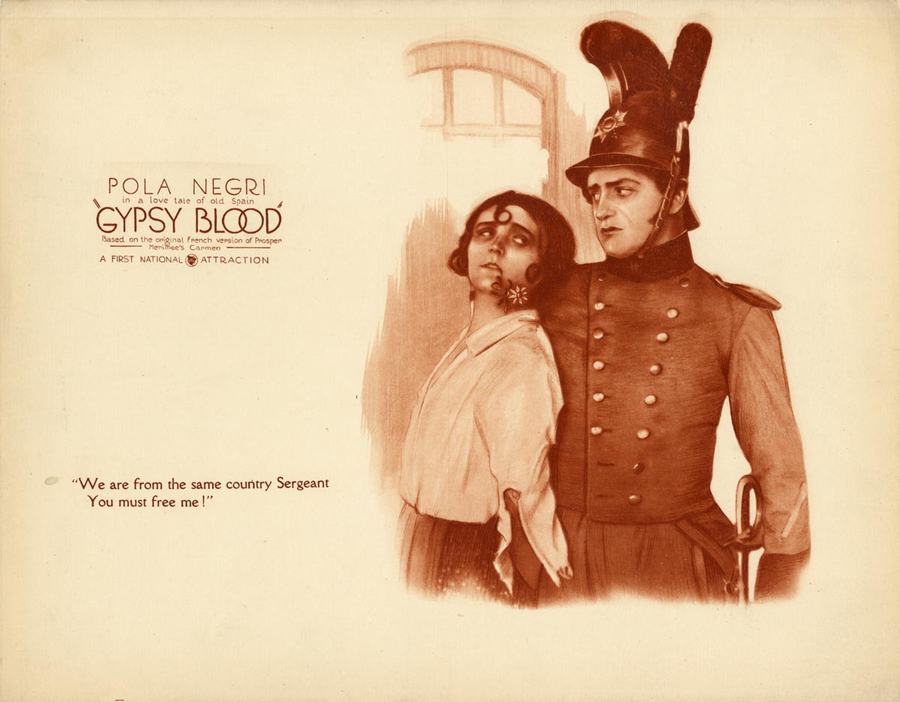
At the incandescent heart of Lubitsch’s 'Carmen' is Pola Negri, a performer whose very presence commanded the screen with an almost predatory magnetism. Negri's Carmen is no mere ingenue; she is a tempestuous, untamed spirit, a veritable force of nature whose desires and caprices drive the narrative with an irresistible momentum. Her performance is a masterclass in silent film acting, utilizing a potent combination of expressive physiognomy, body language, and piercing gazes to convey a spectrum of complex emotions. From the playful seduction to the defiant contempt, Negri inhabits Carmen with an authenticity that transcends the melodrama inherent in the story. Her portrayal is less about subtle gestures and more about grand, sweeping declarations of passion and independence, a style perfectly suited to the nascent Expressionist leanings of the film. She embodies the allure and danger that would define the 'femme fatale' archetype for decades to come, a character so compelling that she could lead a man to ruin with a mere flick of her wrist or a smoldering glance.
Negri’s star power was undeniable, and 'Carmen' cemented her status as a leading lady in German cinema, paving her way to Hollywood. Her Carmen is a character of formidable agency, a woman who refuses to be constrained by the patriarchal expectations of her era or the possessive desires of any man. This fierce independence, while ultimately leading to her tragic end, is precisely what makes her so captivating. One cannot help but draw parallels to other powerful female figures of the silent era, such as Theda Bara in her vampish roles or even Asta Nielsen, though Negri’s approach often felt more earthy and volatile, less ethereal. Unlike the more subdued heroines sometimes seen in contemporary films like Still Waters, Carmen is a creature of raw, unbridled impulse, a living embodiment of freedom. Her performance here is a stark contrast to the more conventional portrayals of women found in earlier, more conservative cinema, such as The Love Liar, showcasing a seismic shift in how female characters could be depicted on screen.
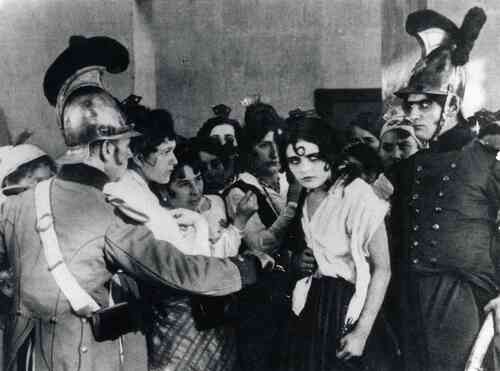
Even in this early dramatic work, Lubitsch’s directorial genius is evident. While he would later become synonymous with sophisticated comedies and a light, ironic touch, 'Carmen' reveals a director capable of profound emotional depth and dramatic force. He leverages the visual medium of silent film to its fullest, employing expressive lighting, stark contrasts, and carefully composed frames to heighten the psychological tension. The sets, while not as overtly distorted as those in pure Expressionist films, nonetheless contribute to a sense of claustrophobia and impending doom, particularly in the scenes depicting Don José's imprisonment or the intimate, charged encounters between the lovers. The camera often lingers on Negri’s face, allowing her powerful expressions to convey the narrative’s emotional core, a technique that would become a staple of dramatic silent cinema.
Lubitsch masterfully orchestrates the performances of his ensemble cast, extracting nuanced portrayals even from the most archetypal characters. Harry Liedtke, as the ill-fated Don José, perfectly embodies the naive soldier utterly undone by Carmen's charms. His transformation from disciplined military man to desperate, obsessed lover is rendered with a heartbreaking sincerity. Magnus Stifter, portraying the dashing bullfighter Escamillo, exudes a confident masculinity that provides a stark contrast to José’s increasingly desperate demeanor, further fueling Carmen’s fickle affections. The supporting cast, including Albert Venohr, Victor Janson, and Grete Diercks (who also contributed to the screenplay), contribute to the rich tapestry of this cinematic world, each face adding a layer of authenticity to the bustling Spanish settings, whether it's the vivacity of the cigarette factory or the solemnity of the bullring. The synergy between the performers, guided by Lubitsch’s precise vision, creates an atmosphere thick with yearning, jealousy, and ultimately, despair.
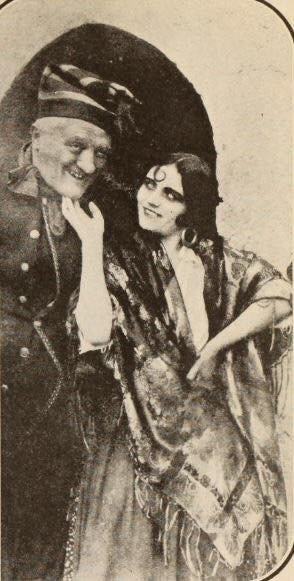
The thematic resonance of 'Carmen' in 1918 Germany cannot be overstated. The story, originally penned by Prosper Mérimée and later popularized by Bizet's opera, deals with universal themes of love, jealousy, and fate. However, in the context of a nation reeling from the psychological scars of war and grappling with an uncertain future, these themes took on a particularly poignant significance. The idea of an individual's destiny being irrevocably intertwined with uncontrollable forces, whether internal passions or external societal pressures, would have resonated deeply with audiences. Carmen’s relentless pursuit of personal freedom, even at the cost of her own life, can be seen as a metaphorical yearning for liberation in a society that felt increasingly constrained and disillusioned. This exploration of individual will against an almost predestined tragedy aligns perfectly with the burgeoning Expressionist sensibility, which often delved into the darker, more irrational aspects of the human psyche.
The film’s narrative structure, meticulously crafted by writers Norbert Falk, M.M. Stearns, Hanns Kräly, and Grete Diercks, ensures a relentless march towards its tragic climax. There is a palpable sense of inevitability that permeates every frame, building a suffocating tension that keeps the viewer enthralled. This fatalism distinguishes it from earlier, more optimistic narratives. One can compare this dramatic shift to the thematic seriousness found in other post-war European films, contrasting sharply with the often lighthearted American productions of the same period, such as One Wonderful Night or Little Pal. The psychological realism, even within the stylized framework, was groundbreaking. The profound exploration of human frailty and the destructive power of obsession paved the way for more complex character studies in German cinema, moving beyond simple moral fables to delve into the murky ethical waters of human experience.
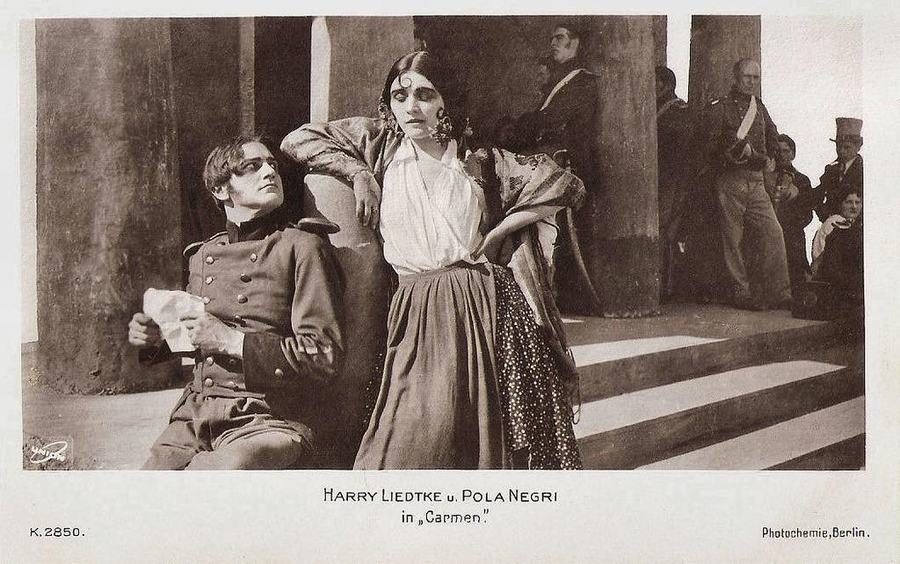
While 'Carmen' (1918) might not possess the overtly distorted sets and chiaroscuro lighting that would become the quintessential markers of German Expressionism in films like 'Caligari', it undeniably shares its spirit. Lubitsch employs a dramatic use of shadows and light to sculpt the emotional landscape, imbuing scenes with a sense of foreboding or heightened passion. The performances, particularly Negri’s, are characterized by an exaggerated expressiveness that aims to externalize inner turmoil, a hallmark of Expressionist acting. This emphasis on subjective experience and heightened reality, rather than a mere naturalistic depiction, marks 'Carmen' as a crucial transitional work. It bridges the gap between earlier, more conventional silent dramas and the radical aesthetic experiments that were soon to follow.
The film’s visual language, though perhaps less overtly experimental than some of its successors, nonetheless pushes boundaries. The careful framing of shots, the dynamic use of camera angles to emphasize power dynamics or emotional states, and the overall atmospheric construction contribute to its lasting impact. It’s a far cry from the more straightforward narrative style of films like Seven Keys to Baldpate or The Secret of the Submarine, which prioritize plot mechanics over psychological depth. Instead, 'Carmen' leans into the symbolic power of imagery, allowing the audience to feel the weight of fate pressing down on its characters. This stylistic ambition, coupled with its profound emotional core, helped to elevate German cinema from mere entertainment to a respected art form on the international stage, drawing attention away from more sensationalized, yet less artistically daring, productions like The Tyranny of the Mad Czar.

'Carmen' (1918) is more than just another adaptation of a classic story; it is a vital document of a specific moment in cinematic and cultural history. It showcases Ernst Lubitsch's early mastery of dramatic storytelling before his pivot to sophisticated comedies, and it cemented Pola Negri’s status as an international star, a captivating screen presence whose intensity was unparalleled. The film's critical and commercial success abroad, particularly in the United States, played a significant role in establishing German cinema's reputation for artistic innovation and serious dramatic content. This was a stark contrast to earlier, more insular national cinemas, and it paved the way for the global recognition of films like The Cabinet of Dr. Caligari and Nosferatu.
The film’s influence reverberated through the industry, inspiring other filmmakers to explore more complex narratives and visual styles. It demonstrated that silent cinema could be a powerful vehicle for exploring profound human emotions and societal anxieties, moving beyond mere spectacle. Its dramatic gravitas stands in contrast to the often lighter or more propagandistic films of the era, such as The Nation's Peril or Strejken. This commitment to artistic depth over superficial thrills was a defining characteristic of the post-war German film industry. Looking back, 'Carmen' (1918) serves as a fascinating precursor to the 'Weimar cinema' period, a bridge between the old and the new, a film that dared to plumb the depths of human passion with an artistry that still resonates today. Its legacy is not just in its individual merits but in its foundational role in shaping the trajectory of German cinema and, by extension, world cinema itself.
The narrative of Carmen, with its timeless themes of love, betrayal, and fatal attraction, has been reinterpreted countless times across various media. However, Lubitsch’s 1918 silent version remains a particularly compelling entry due to its historical context and the sheer force of its lead performance. It’s a stark reminder of a time when cinema was still finding its voice, experimenting with visual language to compensate for the absence of spoken dialogue. The intensity captured on screen by Negri and Liedtke, under Lubitsch’s meticulous direction, speaks volumes without uttering a single word, proving the universal power of visual storytelling.
The film’s ability to evoke such profound emotion and psychological complexity through purely visual means is a testament to the artistry of silent film, often underestimated in today’s sound-saturated world. It stands proudly alongside other silent era marvels, not just as a historical curiosity but as a vibrant, living piece of art. Its contribution to the understanding of German Expressionism, even if an early and somewhat restrained example, is invaluable. It offers insights into how the turbulent socio-political climate of post-WWI Germany fostered a unique artistic sensibility that prioritized inner experience and dramatic intensity. Comparing it to contemporary productions like Cleopatra (1917), one sees a clear divergence in artistic ambition and thematic depth, with Lubitsch's 'Carmen' leaning heavily into the psychological rather than merely the spectacular.
In conclusion, 'Carmen' (1918) is a foundational work in the canon of German cinema, a powerful and poignant adaptation that showcases the nascent genius of Ernst Lubitsch and the mesmerizing star power of Pola Negri. It is a film that captures the fiery heart of a nation in transition, grappling with its past and forging a new artistic identity. For anyone interested in the evolution of cinema, the genesis of German Expressionism, or simply a compelling, passionate tragedy, Lubitsch’s 'Carmen' remains an essential viewing experience, a vibrant echo from the tumultuous dawn of modern film. Its bold narrative and striking performances ensure its place not just in history, but in the hearts of those who appreciate the enduring power of silent storytelling.
IMDb 4.8
1929
Community
Log in to comment.