DbcultAccessing Vault...
Cult Review
Senior Film Conservator
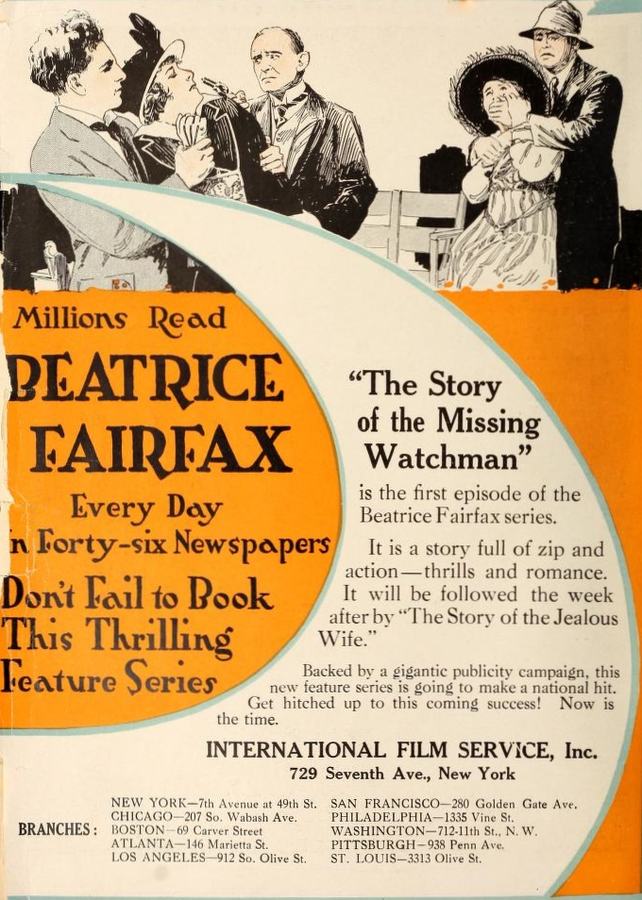
Stepping back into the flickering glow of early cinema, one often finds themselves amidst narratives that, while seemingly simplistic by today's standards, were revolutionary in their time. Such is the case with Beatrice Fairfax Episode 1: The Missing Watchman, a compelling inaugural chapter in a serial that captivated audiences with its blend of journalistic intrepidness and thrilling detective work. This isn't just a film; it's a historical artifact, a vibrant snapshot of a nascent art form grappling with its own potential, experimenting with storytelling techniques that would define an entire century of cinematic expression.
The very concept of a serialized mystery, delivered weekly to eager patrons, speaks volumes about the cultural landscape of the 1910s. It was an era hungry for ongoing narratives, for characters that could grow and evolve, drawing audiences back to the picture palaces week after week. Beatrice Fairfax, as portrayed by the luminous Elaine Hammerstein, stands as a fascinating precursor to countless female protagonists who would grace the silver screen, a woman of intellect and action in a world often depicted as solely the domain of men. Her very existence, a sharp-witted advice columnist turned amateur sleuth, challenges conventional gender roles of the period, offering a glimpse into evolving societal aspirations.
The film opens not with a dramatic chase or a mysterious crime, but within the prosaic yet powerful confines of the New York Evening Journal office. Mr. Brisbane, the editor, is a figure of authority, his desk a nexus of information and command. This setting immediately grounds the narrative in a sense of realism, hinting at the journalistic backbone that will underpin Beatrice's adventures. The brief appearance of 'Tad,' the cartoonist, and the managing editor, serve to establish the bustling, dynamic environment where news is not just reported but actively shaped. It's here that Beatrice Fairfax makes her formal introduction, not as a passive observer, but as a proactive force, outlining her vision for a new kind of public engagement. This initial sequence, though brief, is crucial; it positions Beatrice as an intellectual, a thinker, whose powers of deduction will stem from an understanding of human nature and societal intricacies, rather than brute force. It's a clever way to introduce a character who will navigate both the intimate dilemmas of personal letters and the grand scale of criminal enterprise.
The true narrative thrust of the episode begins at Beatrice's desk, where she sifts through a deluge of correspondence. One letter, however, cuts through the mundane: a plea from Mary Ryan (Grace Darling), whose fiancé, a bank watchman, has grown inexplicably distant. The specter of 'another woman' looms large, a classic trope that immediately injects human drama into the nascent mystery. This personal anguish is then starkly contrasted with the professional urgency that erupts in the reportorial rooms. Jimmy Barton (George Connor), the archetypal intrepid reporter, bursts in with the sensational news of a bank robbery, and the chilling detail that suspicion has fallen upon the very watchman Mary Ryan is concerned about. This narrative intertwining – the personal heartache meeting the public scandal – is a stroke of genius, effectively drawing Beatrice into a complex web where emotional truths and criminal acts are inextricably linked.
Beatrice's immediate connection of Mary's letter to Jimmy's breaking story showcases her sharp intellect and her role as a bridge between the private sorrows of individuals and the public pursuit of justice. Her decision to involve Jimmy, a man of action, underscores the synergistic partnership that will define their adventures. Their swift journey to Mary's home, a taxi ride symbolizing the accelerated pace of modern life and crime, is a pivotal moment. Here, Mary's tearful confirmation of 'another woman' solidifies the emotional stakes, deepening the audience's investment in the watchman's fate. It's a narrative device that was frequently employed in serials like The Strange Case of Mary Page, where personal lives become entangled with grander criminal designs, drawing viewers into a more intimate understanding of the stakes involved.
The film skillfully employs parallel storytelling, cutting away from Beatrice and Jimmy's investigation to reveal the sinister machinations of the bank robbers. We witness the watchman's vulnerability, his susceptibility to the charms of the 'other woman' (Elsie Baker). This portrayal, while perhaps leaning into a common moralistic narrative of the era, effectively humanizes his lapse in judgment, making his subsequent plight all the more tragic. The 'other woman' is not just a romantic rival; she is a calculated lure, a key component of the criminal enterprise. Her manipulation of the watchman, leading him to the robbers' den where he is bound, gagged, and stripped of his uniform, is a chilling sequence, demonstrating the ruthless efficiency of the criminal element.
The impersonation that follows is a classic suspense device, executed with a precision that belies the film's early production date. One of the robbers, donning the watchman's uniform, assumes his post at the bank, a silent sentinel of deception. The midnight admission of his confederates, followed by the thrilling scene of them drilling the vault door, is a masterclass in building tension. The visual language of silent film, relying on exaggerated gestures and evocative close-ups, makes these moments particularly potent. The shadowy figures, the glint of tools, the sheer audacity of the act – all combine to create a visceral sense of dread and excitement. The successful escape with the money leaves a palpable sense of injustice and urgency, driving the narrative forward with renewed vigor. This sequence shares thematic resonance with other crime serials of the time, such as The Rogues of London, which similarly delighted in showcasing intricate criminal plots.
The narrative then splits, following the distinct investigative paths of our heroes. Beatrice and Mary embark on a quest to locate the elusive rival, their journey highlighting Beatrice's empathetic approach to detective work, understanding that personal relationships often hold the key to larger mysteries. Simultaneously, Jimmy Barton, the quintessential hard-boiled reporter, delves into the grittier side of crime. His sleuthing leads him to the home of a notorious bank robber, a daring move that pays off when he overhears the criminal recounting the details of the heist to his mother. This eavesdropping scene is fraught with peril, culminating in a violent confrontation when Jimmy is discovered. The ensuing struggle and the robbers' escape from the house are moments of raw, physical action, showcasing the dangers inherent in Jimmy's line of work.
But the drama doesn't end there. Jimmy's keen ears pick up groans from the cellar, leading him to the true watchman, still bound and gagged. This discovery is a moment of profound relief, not only for Jimmy but for the audience, who can finally see the path to justice opening. The watchman's recounting of how the 'other woman' lured him into the trap provides crucial exposition, filling in the gaps and confirming the depth of the criminal conspiracy. His story is a testament to the power of human vulnerability and the insidious nature of deceit. Together, Jimmy and the watchman, now united by a shared purpose, set out to locate the robbers' hideout, their journey converging with that of Beatrice and Mary in a beautifully orchestrated narrative crescendo. This intricate layering of plotlines and concurrent investigations was a hallmark of the serialized format, keeping audiences engaged and guessing, much like the unfolding drama in The Devil's Bondwoman.
The convergence of the two investigative teams at the robbers' lair ignites the film's thrilling climax. Beatrice and Mary, having arrived first, peer through a keyhole, witnessing the criminals in the act of counting their ill-gotten loot – a potent visual symbol of their greed. The moment the robber from Jimmy's earlier altercation spots them, the realization of being trapped dawns on the criminals, triggering a desperate scramble for flight. A desperate struggle ensues, showcasing the physical courage of Beatrice and Mary, even against overwhelming odds. They are ultimately forced into a room, where one of the robbers, chillingly identified as a 'doctor,' prepares a deadly gas mixture. This sequence, with its impending chemical threat, adds a layer of psychological terror, raising the stakes to an almost unbearable level. The sight of Beatrice and Mary succumbing to the gas, their consciousness fading, is a harrowing image, emphasizing their vulnerability and the true danger they face.
Just as hope seems lost, a beacon of justice arrives. Jimmy and the watchman, accompanied by a contingent of detectives, burst onto the scene. What follows is a terrific battle, a chaotic mêlée of fists and fury. The synchronized arrival of the rescuers, a classic narrative trope, is executed with maximum impact, providing a cathartic release of tension. The robbers are finally overpowered, their criminal enterprise dismantled. The immediate restoration of Beatrice and Mary to consciousness, followed by the recovery of the bank's funds, brings a satisfying resolution to the immediate crisis. The film then ties up its emotional loose ends with heartfelt explanations and a poignant reunion between Mary and the now-vindicated watchman, affirming the restorative power of truth and justice.
The final moments see Beatrice and Jimmy hurrying back to their office, the adrenaline still coursing through them, to write the story of the capture and recovery for a midnight 'extra.' This concluding scene cleverly circles back to the journalistic roots established in the prologue, underscoring the vital role of the press in publicizing justice and informing a hungry populace. It solidifies Beatrice Fairfax's dual identity as both an intrepid detective and a compelling storyteller, cementing her legend in the annals of early cinema. The efficiency with which the story is wrapped up, yet still leaving room for future adventures, is a testament to the serial format's enduring appeal.
Elaine Hammerstein, as Beatrice Fairfax, delivers a performance that transcends the often-exaggerated acting styles of the silent era. She projects intelligence, determination, and a nuanced empathy that makes her character genuinely engaging. Her Beatrice is not just a damsel in distress, nor is she a one-dimensional action hero; she is a thinking woman, capable of both physical courage and intellectual prowess. George Connor's Jimmy Barton is the perfect foil, embodying the energetic, slightly reckless spirit of the investigative reporter. Their chemistry, though subtle, is a cornerstone of the series' appeal, hinting at a budding partnership that is both professional and personally resonant.
Grace Darling as Mary Ryan effectively conveys the emotional turmoil of a woman caught between love and betrayal, while Harry Fox and Elsie Baker, as the watchman and the 'other woman' respectively, navigate their complex roles with a compelling blend of vulnerability and villainy. The ensemble cast, under the direction of Leopold Wharton and Theodore Wharton, works cohesively to bring this intricate narrative to life. The cinematography, though limited by the technology of the time, uses effective close-ups and dynamic staging to maintain visual interest and convey emotional depth. The editing, crucial in silent film, keeps the pace brisk, expertly cutting between parallel storylines to heighten suspense and engagement.
Beatrice Fairfax Episode 1: The Missing Watchman is more than just a historical curiosity; it is a foundational text in the development of the detective serial and the portrayal of strong female characters in film. It demonstrated the power of episodic storytelling to build audience loyalty and create enduring cinematic icons. Comparing it to other serials of the period, such as The Fairylogue and Radio-Plays (though a different genre, it showcases the early experimental nature of film) or even dramatic features like Camille, one can appreciate the unique niche Beatrice Fairfax carved out. It combined the thrilling escapism of crime drama with the intellectual appeal of puzzle-solving, all while championing a progressive vision of female agency.
This episode, with its intricate plot, compelling characters, and pioneering spirit, remains a testament to the ingenuity of early filmmakers. It showcases how, even in its nascent stages, cinema was capable of crafting narratives that were both entertaining and thought-provoking, laying the groundwork for the rich tapestry of film history that would follow. It's a reminder that the seeds of modern storytelling were sown in these flickering, silent images, where a determined woman like Beatrice Fairfax could unravel mysteries and capture the imagination of a nation, one thrilling episode at a time.
Community
Log in to comment.