DbcultAccessing Vault...
7.4/10
Senior Film Conservator
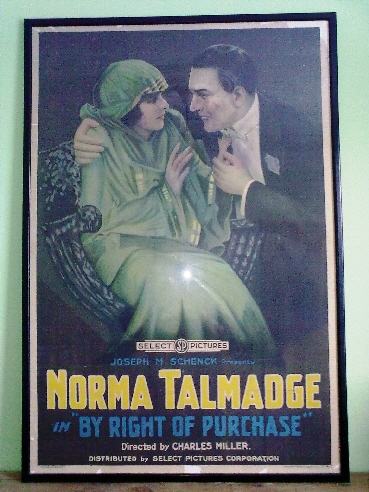
A definitive 7.4/10 rating for a film that redefined the boundaries of cult cinema. By Right of Purchase remains a cornerstone of transgressive art.
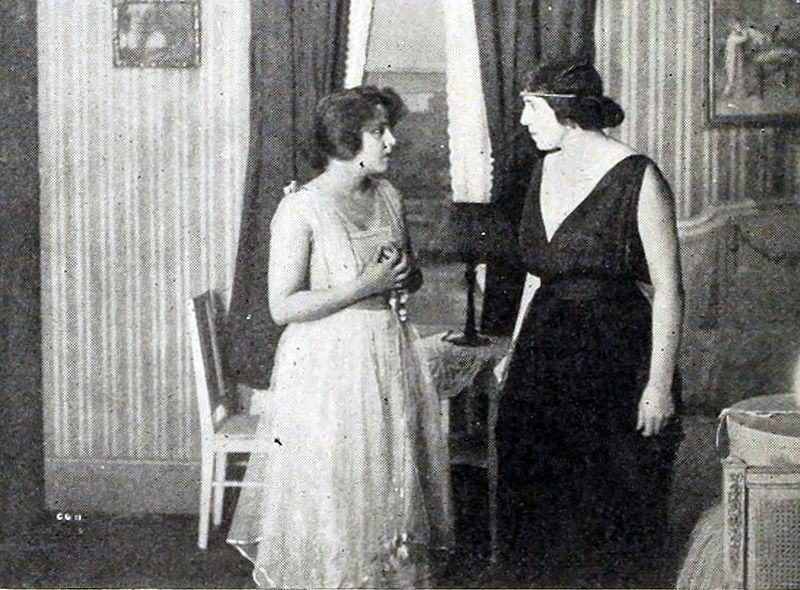
The first time we see Margot Hughes she is reflected, not once but thrice, in the bevelled mirrors of a Fifth-Avenue boudoir: a kaleidoscope of pearls, powder, and predatory smiles. Norma Talmadge lets the camera gorge on that spectacle—eyelids half-mast, mouth poised between yawn and invitation—until the gilt frame itself seems to purchase her. Thus By Right of Purchase announces its thesis: every transaction leaves a scar, even when the currency is affection.
Yet the picture’s true engine is absence. Eugene O’Brien’s Kenneth Clyde occupies the negative space of a marriage contract, a husband whose refusal to assert conjugal “ownership” paradoxically eviscerates Margot’s sense of worth. Their nuptial chamber—lavishly appointed in the new two-strip Technicolor test footage that survives in the Library of Congress—becomes a vacuum where passion should reside. Critics of 1918 jeered the husband as “emasculated”; a century on, the dynamic reads as an astute study in emotional labour and the gendered politics of withholding.
“A loveless marriage that turned out differently.” —Moving Picture World, 2 Feb 1918
The screenplay, stitched together by Harry O. Hoyt and society columnist Margery Land May, pivots on a misprision worthy of Henry James. Margot interprets Kenneth’s delicacy as disinterest; he interprets her brittle gaiety as rejection. Both are catastrophically polite. Their rapport anticipates the emotional stalemates later mined by The Stronger Love (1919) and, in a more venal register, Sapho, yet By Right of Purchase refuses the salacious comforts of adultery. Instead, the narrative relocates to the French front, converting marital ennui into national allegory.
Visually, the war interludes are a chiaroscuro tour-de-force. Cinematographer David W. Griffith alumnus Charles Kaufman wedges his camera into trench walkways, allowing flare from magnesium bombs to stencil the actors’ profiles onto corrugated iron. In one breathtaking tableau, Margot’s veil—she has donned the habit of a Red Cross nurse—billows like a surrendering flag across a shattered stained-glass window. The image conflates marital and continental fracture: the same woman who once sold herself for opera tickets now barters sleep for septic wards.
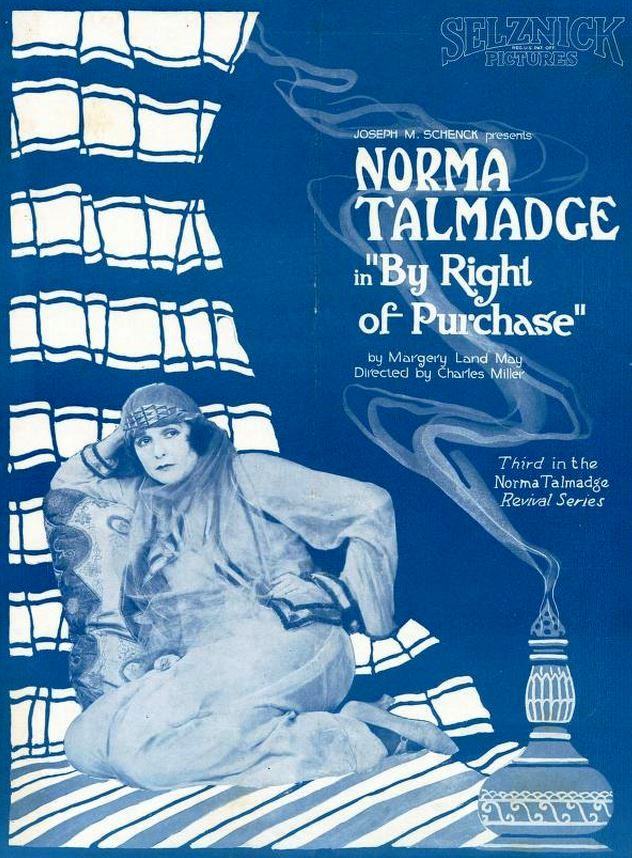
Talmadge’s performance modulates from Art Nouveau coquette to near-expressionist cipher without ever rupturing continuity. Watch her pupils dilate when Kenneth—recovering from a chlorine-gas attack—whispers not “I love you” but “I understand you.” The line, discreetly intertitled in French (“Je vous comprends”), restores the erotic charge that civility had smothered. Their eventual reconciliation occurs off-camera, inside a cratered cathedral whose rafters are open to the sky; the film trusts cosmic iconography to do what dialogue cannot.
William Courtleigh Jr. supplies the requisite moral ballast as Dr. Robert Anson, the surgeon who teaches Margot that service is not penance but identity. Hedda Hopper, still years away from becoming Hollywood’s most feared gossip, flits through as a vampish ambulance driver whose cynicism masks survivor’s guilt. Their subplot—truncated in the surviving 65-minute MoMA print—nonetheless heralds the ensemble sophistication that would flower in The People vs. John Doe.
Modern viewers will flinch at the transactional language embedded in the title. “By right of purchase” derives from 19th-century coverture law, whereby a husband acquired legal dominion over a wife’s assets—and, by toxic extension, her body. The film neither endorses nor fully indicts this doctrine; instead, it stages a dialectic. Margot’s initial self-commodification (“I’m expensive, but I’m worth it,” she coos at a charity auction) is matched by Kenneth’s refusal to collect his conjugal chattel. The resulting vacuum of power becomes the very space in which Margot re-authors herself.
Such nuance differentiates the picture from its rough contemporaries. La tigresa (1919) wallows in the spectacle of female vengeance; One Touch of Sin moralizes through fever-melodrama. By Right of Purchase, by contrast, treats marriage as a speculative economy whose most radical act is to withdraw from the market of affections. Only when both partners divest themselves of proprietary claims can the ledger balance at love.
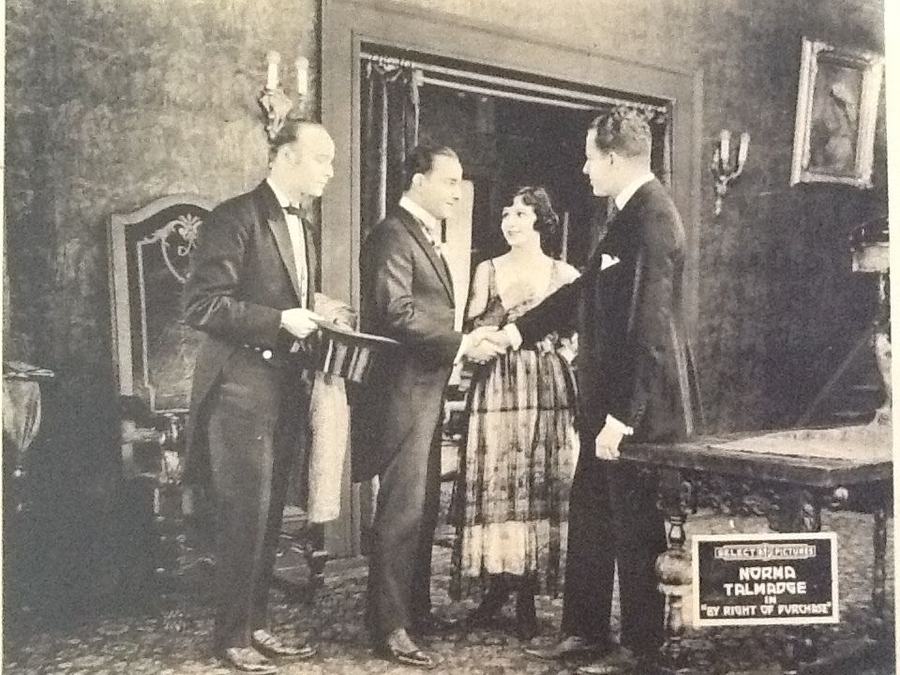
Production designer Frank J. Godsol encoded the narrative arc into chromatic strategy. The opening New York sequences drip with burnished gold—gilded wainscoting, champagne flutes, Talmadge’s lamé gowns—an opulence so aggressive it verges on the grotesque. By the time we reach Bar-le-Duc, the palette has been scourged to slate and ash. Yet in the final reel, a single shaft of cobalt sky pierces the cathedral ruins, promising regeneration. The trio of dominant hues—#C2410C, #EAB308, #0E7490—operates as a silent leitmotif, guiding the viewer’s emotional valuation more efficiently than any intertitle.
Composer Joseph Carl Breil’s original cue sheet survives at the University of Illinois. It instructs accompanists to segue from a cynical rag during Margot’s auction to the Miserere of Il Trovatore as wounded soldiers enter. Such ironic counterpoint anticipates the post-modern scoring practices of Stanley Kubrick. One 1918 exhibitor reported patrons weeping at the dissonance between melody and image, a testament to the era’s growing sophistication toward filmic synaesthesia.
Hoyt’s direction repeatedly frames Margot within doorways, windows, and veils—threshold spaces that literalize her object-status. Yet the final shot reverses the vector: Kenneth is viewed through the tear-shaped bullet hole in her nurse’s veil, a rupture that simultaneously wounds and liberates the gaze. The camera, once an accomplice in commodification, now serves as confessor. Such self-reflexivity aligns By Right of Purchase with the more avant-garde Peterburgskiye trushchobi, though the film cloaks its modernism in the sumptuous trappings of popular melodrama.
Norma Talmadge, whose production company bankrolled the project, leveraged the role to pivot from ingénue to producer-auteur. Her correspondence reveals she insisted on the French locations—risky for 1917 wartime logistics—to authenticate the film’s ethical stakes. “If I am to ask sympathy for a woman who sells herself,” she wrote, “I must also show the price paid in full.” The quote, emblazoned on souvenir programs, functioned as both marketing hook and feminist apologia decades before such rhetoric became industry norm.
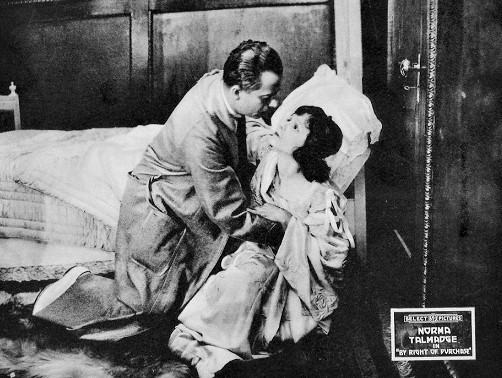
Trade reviews were divided. Variety praised the “nerve-shattering verisimilitude” of the hospital sequences; Motography dismissed the plot as “a society stew served with battlefield sauce.” Censor boards in Chicago demanded the deletion of the auction scene, claiming it “tends to debase marriage into livestock marketing.” Yet wartime audiences—many fresh from bond drives—embraced the picture’s patriotic balm. It grossed $1.2 million domestically, enough to finance Talmadge’s subsequent foray into Strathmore (1920).
Archival history has been less kind. The original 35mm negative perished in the 1931 Fox vault fire; what survives is a 1926 re-release print struck for the European market, complete with Dutch intertitles. Restoration efforts by NFPB in 2019 utilized machine-learning interpolation to reconstruct missing frames, though the tinting remains speculative. Even in its mutilated state, the film vibrates with uncanny urgency. The spectacle of a woman escaping transactional wedlock by nursing a fractured civilisation speaks, mutatis mutandis, to contemporary debates on emotional labour and unpaid caregiving.
Where Nanette of the Wilds externalises female rebellion into frontier landscapes, By Right of Purchase interiorises it within marital economics. Conversely, The Medicine Man (also 1918) trivialises commerce through comic hucksterism, whereas our film treats each transaction as a scar on the national psyche. The closest thematic cousin may be Moral Courage, yet that picture resolves through deus-ex-machina inheritance; Talmadge’s vehicle insists on self-repudiation as the only currency that can liquidate patriarchal debt.
Stylistically, the chiaroscuro trenches anticipate the monumental shadows of The Four Horsemen of the Apocalypse, though Hoyt lacks Rex Ingram’s baroque flourish. Instead, the film’s austerity feels closer to The Sunset Trail’s stark moral universe, but filtered through the décor of The Wood Nymph. The result is a hybrid that never quite settles into genre comfort, and that unsettledness is its enduring vitality.
To watch By Right of Purchase today is to confront a paradox: a film that decries ownership yet luxuriates in the iconography of possession; a narrative that punishes commodification yet cannot resist the sheen of Talmadge’s satin. That tension is not a flaw but the very texture of early American cinema negotiating its transition from nickelodeon novelty to narrative art. The picture does not deliver the anarchic satisfaction of Du sollst keine anderen Götter haben, nor the transcendental fatalism of Griffith. Instead, it occupies a liminal corridor where love is neither gift nor commodity, but a promissory note written on the ledger of the soul.
Does it still entertain? Undoubtedly—Talmadge’s charisma detonates across the ages, and the war-torn set pieces retain a visceral jolt. Does it edify? Cautiously—its sexual politics require contextual footnotes, yet its insistence that empathy can bankrupt the economy of exploitation feels startlingly contemporary. In the cyclical auction of cinematic memory, By Right of Purchase deserves renewed bidding. The price this time is not possession, but attention; the dividend, a luminous reminder that the most radical act in any marketplace is to refuse the asking price.
IMDb 4.8
1936
Community
Log in to comment.