DbcultAccessing Vault...
Cult Review
Senior Film Conservator
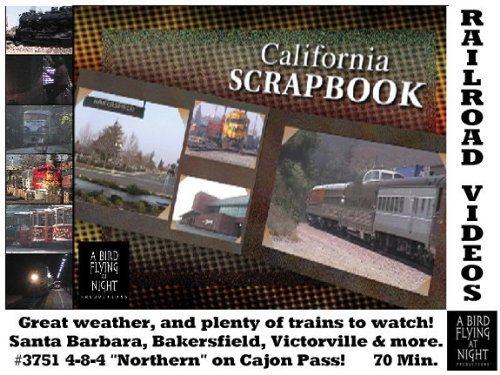
In an era saturated with hyper-edited, fast-paced content, the emergence of a film like California Scrap Book feels like a balm for the overstimulated soul. This isn't merely a collection of train footage; it's an earnest, unadorned love letter to the mechanical titans that have shaped the American landscape and imagination. Clocking in at seventy minutes, this compilation offers an immersive experience, inviting audiences to slow down, observe, and truly listen to the symphony of steel on rail, the hiss of steam, and the rumble of diesel engines against the vast, sun-drenched backdrop of California.
The film distinguishes itself through its unwavering commitment to authenticity. There's no voice-over narration to guide your gaze, no dramatic score to manipulate your emotions. Instead, we are presented with "all natural sound," a choice that elevates the viewing experience from passive observation to active engagement. This unfiltered auditory landscape transforms each sequence into a profound sensory encounter, allowing the viewer to connect directly with the raw power and subtle nuances of these magnificent machines. It’s a testament to the idea that sometimes, the most compelling narratives are those that simply allow reality to unfold, unembellished.
What is it about trains that continues to captivate? Is it their colossal scale, their relentless momentum, or the romantic echoes of an era when they were the primary arteries of a burgeoning nation? California Scrap Book doesn't explicitly answer these questions, but it powerfully illustrates the enduring fascination. From the sleek, modern lines of the Coast Starlight to the venerable, steam-powered might of the #3751, the film showcases the incredible diversity and evolution of rail technology. It reminds us that these aren't just modes of transport; they are living relics, moving monuments to human ingenuity and perseverance. The film serves as a quiet, yet potent, argument for the preservation of these historical and engineering marvels, highlighting their intrinsic beauty and the indelible mark they've left on our collective consciousness.
The act of "railfanning" itself is explored implicitly through the film's very existence. It speaks to a deep, almost primal connection some individuals feel towards trains – a passion that drives them to spend countless hours waiting, watching, and documenting. This dedication, akin to the detailed and focused observation found in early ethnographic films or even the meticulous historical preservation efforts seen in something like The Battle of Gettysburg, albeit for a different subject, underscores a universal human desire to capture and understand significant aspects of our world. The film is a product of this devotion, a curated collection born from a genuine appreciation for the subject matter, offering an intimate glimpse into a world often overlooked by the casual observer.
The opening sequences at the Santa Barbara depot immediately establish the film's aesthetic. The iconic Coast Starlight, a gleaming ribbon of steel, glides into view, its passage marked by the rhythmic clatter of wheels and the distant hoot of its horn. The setting sun casts long shadows, illuminating the intricate details of the station architecture and the serene coastal backdrop. It’s a moment of elegant transition, capturing the train not just as a machine, but as an integral part of the Californian tableau – a moving piece of the landscape itself. The camerawork here is patient, allowing the train to occupy the frame fully, emphasizing its scale and presence.
Further inland, the film ventures to the Mojave River crossing at Victorville, a stark contrast to the coastal serenity. Here, the trains traverse a more rugged, arid environment, their passage a testament to engineering triumph over challenging terrain. The visual language shifts, embracing the expansive, desolate beauty of the desert. The soundscape becomes particularly pronounced here, with the echoes of the train's passage reverberating across the vast, empty spaces. It's a powerful demonstration of how the same mechanical marvels interact distinctly with varied environments, each locale imparting its unique character onto the journey. The film’s ability to highlight these subtle geographical and atmospheric shifts without explicit commentary is a testament to its observational prowess, inviting the viewer to draw their own conclusions about the interplay between industry and nature.
Perhaps the most compelling segment of California Scrap Book is the footage of the legendary #3751 4-8-4 "Northern" steam locomotive tackling the formidable Cajon Pass. This isn't just a train; it's a living legend, a magnificent relic of a bygone era, painstakingly preserved and occasionally brought back to life for special occasions. The Cajon Pass itself is an engineering marvel, a steep, winding ascent that has challenged locomotives and engineers for over a century. To witness #3751, a behemoth of steam and steel, laboring up this incline is nothing short of breathtaking.
The visual spectacle is enhanced by the sheer exertion evident in every puff of smoke and every turn of the massive drive wheels. The natural sound recording truly shines here: the thunderous chugging, the rhythmic blast of the whistle echoing through the canyons, the hiss of steam escaping its valves. It’s a visceral experience, transporting the viewer directly onto the mountainside, feeling the ground tremble with the locomotive’s immense power. This sequence is a masterclass in capturing the raw, unadulterated drama of rail travel. It underscores not just the mechanical prowess of the engine, but the sheer human effort and dedication required to restore and operate such a historical artifact.
The choice to include this specific event speaks volumes about the filmmakers' understanding of their audience and the cultural significance of these machines. It's a profound nod to the history of railroading, celebrating not just the technology but the spirit of innovation and adventure it represents. The journey up Cajon Pass is more than a geographical ascent; it's a symbolic climb through time, connecting the present-day observer with the industrial might and romanticism of the early 20th century. It’s a powerful reminder that some stories are best told through the roar of an engine and the whisper of the wind.
Beyond the dramatic steam-powered spectacle, California Scrap Book also offers glimpses of contemporary rail operations. The appearance of the Southwest Chief, a vital Amtrak route connecting Chicago to Los Angeles, is captured in the high desert near Lancaster. The inclusion of a question mark in the film's description for this location – "Lancaster, CA ?!" – adds a touch of authentic, human uncertainty, a nod to the spontaneous nature of railfanning where perfect identification isn't always guaranteed, but the thrill of the chase and the capture remains paramount. This sequence, while perhaps less overtly dramatic than the steam engine on Cajon Pass, provides a crucial counterpoint, demonstrating the continued relevance and quiet majesty of modern passenger rail.
The film then shifts its focus to Bakersfield, offering a fascinating comparative study of its Amtrak depots, both old and new. This segment subtly touches upon themes of progress, architectural evolution, and the enduring presence of rail infrastructure in urban landscapes. The juxtaposition highlights how rail travel adapts and changes while maintaining its fundamental purpose. The old depot, perhaps a testament to a grander, more ornate era of travel, stands in contrast to the functional efficiency of the new. These locations are more than just stops; they are gateways, historical markers, and bustling hubs that pulse with the energy of arrivals and departures. The film’s deliberate framing allows us to appreciate the subtle stories embedded within these structures, the countless journeys that have begun and ended within their walls.
One cannot overstate the profound impact of the film's commitment to "all natural sound." In an age where sound design is often an elaborate, post-production construction, the raw, unadulterated audio here is revolutionary in its simplicity. It’s a bold artistic choice that defines the entire viewing experience. The absence of music or narration forces the viewer to truly listen, to discern the nuances in the rumble of the engines, the squeal of the brakes, the distant clang of a crossing bell, and the subtle interplay of these mechanical sounds with the ambient environment – the wind, the birds, the distant hum of human activity. This auditory purity creates an unparalleled sense of presence, making the viewer feel as if they are standing right alongside the tracks, experiencing the spectacle firsthand.
This approach transforms the film from a mere visual record into a meditative soundscape. It allows the inherent drama and beauty of the trains to speak for themselves, unfiltered and uninterpreted. The rhythmic pulse of the wheels on the tracks becomes a hypnotic beat, drawing the audience deeper into the moment. It’s a powerful reminder of how much information and emotion can be conveyed through sound alone, stripping away the artificial layers to reveal the core essence of the subject. Much like the specialized focus seen in films such as The Flying Twins, which dedicates itself to a unique pursuit, 'California Scrap Book' exemplifies the profound dedication inherent in chronicling a specific passion with such fidelity.
The title, California Scrap Book, is particularly apt. It suggests a personal collection, a lovingly assembled compendium of cherished moments. Yet, this isn't just a private memento; it's a valuable public document. In its unpretentious capture of these moments, the film serves as an informal yet significant archive of rail history and contemporary operations in California. It preserves not only the visual record of these magnificent machines but also the ephemeral soundscapes that accompany their passage. For future generations, this "scrap book" will offer an invaluable window into the sights and sounds of California's railways at this particular juncture in time.
As an artistic endeavor, the film's strength lies in its humility and directness. It doesn't attempt to impose a grand narrative; rather, it invites the viewer to create their own. Each segment, a fleeting glimpse, contributes to a larger tapestry of movement, power, and scenic beauty. It’s a form of found art, where the beauty is discovered in the everyday, in the industrial ballet of locomotives traversing vast distances. This approach echoes the earliest forms of cinema, where the simple act of recording life in motion was itself a profound revelation. The film is a quiet celebration of a niche passion, yet its appeal extends far beyond the realm of dedicated railfans, offering a calming, transportive experience for anyone willing to surrender to its rhythmic charm.
Ultimately, California Scrap Book is a compelling argument for the inherent poetry of movement and machinery. It challenges the viewer to find beauty in the industrial, majesty in the mundane, and profound resonance in the natural sounds of the world around us. It’s a film that doesn't demand attention through flashy techniques but earns it through its steadfast dedication to its subject and its unflinching authenticity. It stands as a powerful reminder that sometimes, the most impactful stories are those that are simply observed, allowing the subject to speak for itself with the thunderous voice of an engine and the whisper of the wind across the desert. It is a unique, meditative, and deeply satisfying journey along the steel veins of California, a true gem for enthusiasts and a calming, contemplative experience for all.
This compilation, while specific in its focus, manages to evoke universal themes: the passage of time, the conquest of nature by human engineering, and the enduring romance of travel. It’s a film that rewards patience and close attention, revealing layers of detail and sensory richness with each passing train. The legacy of railroading in California is vast and intricate, and this scrap book offers a heartfelt, personal, yet universally appreciable glimpse into its vibrant, living pulse. It’s not just a document; it’s an experience.
IMDb —
1933
Community
Log in to comment.