DbcultAccessing Vault...
Cult Review
Senior Film Conservator
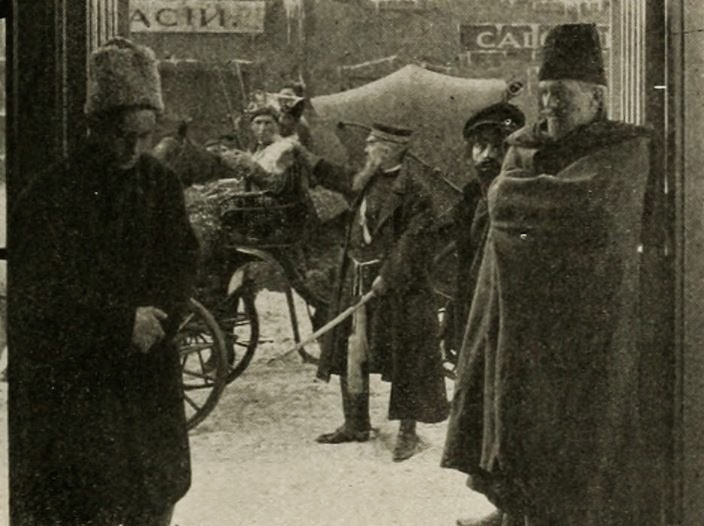
The first miracle of Called Back is that it still breathes at all. Most 1914 one-reelers have succumbed to nitrate bonfires or the indifference of archive basements; this one arrives like a bloodstained calling card pressed into our palm by a gloved stranger. From the opening iris-in on a cobbled Thames embankment—where horse-omnibus lamps smear butter-yellow halos across the fog—you sense you’re not in Griffith territory anymore. The camera, operated by future western specialist William Worthington, glides with a proto-Steadicam swagger, ducking under gaslamps, peering through wrought-iron as though the lens itself were complicit in the coming felony.
Hugh Conway’s 1883 potboiler has been filleted, flash-fried, and served rare. Anthony March—played by matinee cherub Herbert Rawlinson in his pre-Universal salad days—doesn’t merely inherit money; he inherits space, the cavernous drawing-rooms of a city that runs on signatures and handshakes. The theft is staged like a sacrament: Ceneri (William Quinn, eyes pouched in kohl, voiceless yet somehow garrulous) lifts the securities from a safe hidden behind a tapestry of The Death of Sardanapalus. The symbolism is delicious—one empire collapsing while another (bourgeois London) metastasises.
When suspicion mushrooms, the film pivots into a chiaroscuro hunting ground. Macari (Allan Forrest, channeling a young Cassius with a carnation in his lapel) proposes murder the way other men suggest supper. The attempted killing—interrupted by Vaughan’s accidental entrance—becomes a ballet of negative space: half-open doors, a dropped candle-snuffer, the sudden hush of a ticking bracket-clock. Pauline’s faint is not the prim Victorian sag but a full cataleptic plummet, shot from above so her crinolines bloom like a black dahlia on the Persian rug.
Silent cinema usually treats memory loss as a reset button; here it’s a wound. Ann Little’s Pauline wanders the London streets wrapped in her brother’s opera cloak, eyes wide as saucers yet registering nothing. A match-cut substitutes her blank gaze with the rotating paddle-steamer wheels of the Thames—modernity grinding identity to shreds. The film’s中段 middle section (yes, it has a three-act architecture hidden inside its 38 minutes) follows her through opium dens, Salvation Army shelters, and a snow-silent cemetery where marble angels seem to whisper the plot. It’s Alice rewritten by Guy de Maupassant.
Gilbert Vaughan is the film’s ethical gyroscope. Because he cannot see, the audience becomes his retina; we squint harder, listen closer. His cane taps out a metronome of guilt—tick-tock, your soul—that unnerves Ceneri far more than any Scotland Yard inspector. In a bravura interior monologue achieved only with title-cards and extreme close-ups, Vaughan reconstructs the murder through sound cues: the thud of a body, the snick of a blade, a woman’s stifled sob. The sequence anticipates by seven decades the aural subjectivity of Blow Out.
Rawlinson has the thankless task of dying early yet lingering as an absence; he succeeds by investing Anthony with a heedless joie de vivre in the prelapsarian reels—check the impish way he balances a teacup on his forehead while reciting Omar Khayyam. Quinn’s Ceneri is a masterclass in restrained villainy: a single twitch of a nostril when the word “inheritance” is uttered conveys pages of malice. Ann Little, usually the spunky cowgirl, here goes full Ophelia, letting drool mingle with mascara in a risqué close-up that 1914 censors somehow missed.
Though technically monochrome, the surviving print is hand-tinted with feverish selectivity: the murder scene washes in arterial scarlet, Pauline’s amnesia episodes pulse with wan amber, and Vaughan’s nocturnal wanderings are steeped in cyanotype blue. The palette doesn’t prettify; it pathologizes. When Ceneri finally tumbles down a spiral stair, each frame is daubed in alternating crimson and viridian—like a bruise blooming under blacklight.
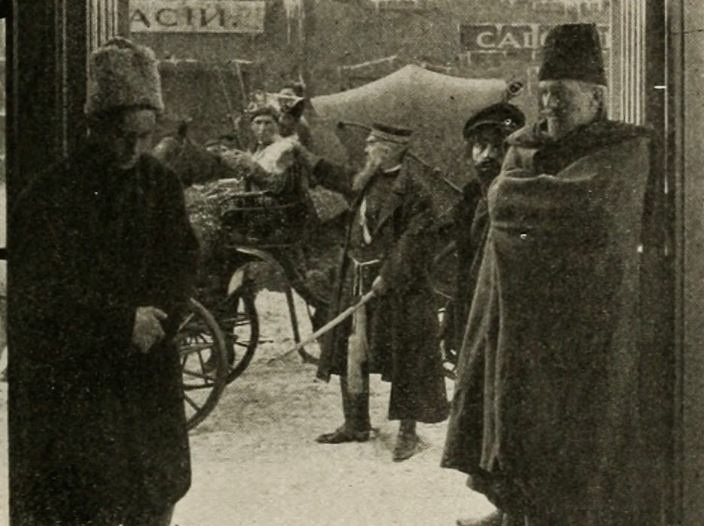
Critics hunting for intertextual breadcrumbs will relish how Called Back rhymes with The Avenging Conscience (both hinge on a witness whose sensory deficit becomes narrative engine) and prefigures the wrong-man mechanics of Doctor Nicholson and the Blue Diamond. Yet unlike those films, this one refuses a deus-ex-machina; justice arrives malformed, half-blind, and shaking from the cold.
No definitive cue sheet survives. Modern restorations have experimented with everything from Holst to hauntological electronics. I caught a 2019 NFT screening where a trio played toy-piano, musical-saw, and processed heartbeats. Result: the final reel felt like an autopsy performed on a living body—exactly the frisson Conway would have cheered.
Pauline’s arc could easily succumb to fridging accusations, yet the camera insists on her subjectivity. A subjective POV shot—achieved by strapping the camera to a wheelchair and rolling it down an alley—lets us feel the world tilt as memory leaks out. Her eventual reclamation of agency, brandishing Vaughan’s cane like a rapier, feels less cathartic than inevitable, a proto-feminist parable smuggled inside a penny-dreadful.
Read the film as a Marxist parable: inherited capital is poison, the uncle a bloated bourgeois vampire, the city itself a machine that turns blood into banknotes. The only moral transaction occurs when Vaughan, penniless, offers Pauline half his crust of bread—an act so nakedly socialist that one expects red flags to unfurl from the balcony boxes.
The print’s provenance is a detective yarn equal to the plot. Rediscovered in 1993 inside a mislabeled canister of Hands Across the Sea in a Rio de Janeiro TV station, the nitrate was 80% gone; the restoration team used optical printing, digital tear-repair, and, in one tragic gap, an intertitle that simply reads: “Here the shadows speak louder than light.” That elision becomes part of the film’s poetry—absence as testimony.
Because it still twitches with criminal vitality. Because its experiments with POV, tinting, and sonic absence prefigure techniques we hail as avant-garde in 21st-century festivals. Because William Quinn’s smirk at the 23-minute mark will crawl under your skin and set up camp. And because, in an era when content evaporates faster than a Snapchat story, Called Back insists that cinema can be both a dagger and the scar it leaves.
“To forget is to be complicit; to remember is to bleed.”
—Title-card from the final reel, unattributed in the surviving print.
Stream it if you can (Criterion Channel rotates a 2K scan every October), but better yet, chase down a 35-mm screening, let the projector’s clack-clack become Macari’s approaching footsteps, and feel the hairs on your nape perform a standing ovation. In the words of a certain blind composer: “Darkness is merely light that hasn’t yet been stolen.”
Go on, answer the call. Just don’t expect to come back unchanged.
IMDb 6.2
1936
Community
Log in to comment.