DbcultAccessing Vault...
Cult Review
Senior Film Conservator
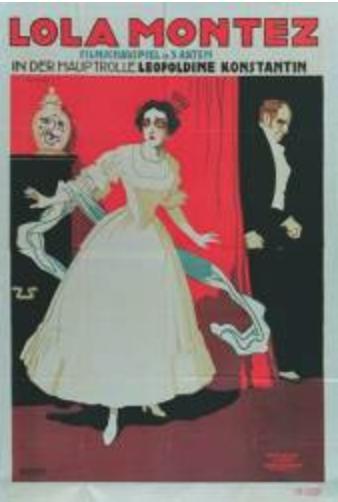
The 1918 iteration of Lola Montez is a startling artifact of early cinema that transcends the simple biography of its titular character to become an intricate tapestry of political machination and romantic fatalism. Directed with a keen eye for the dramatic chiaroscuro that would later define the height of European silent film, the production captures a Madrid that feels both immediate and mythic. Unlike the sprawling CGI landscapes of modern spectacles like Avatar, this film relies on the visceral intensity of its performers and the claustrophobic tension of its stage-bound origins to convey a world on the brink of collapse.
Leopoldine Konstantin delivers a performance of remarkable kinetic energy. In the early 20th century, the role of the 'dancer' in cinema was often a shorthand for moral ambiguity, yet Konstantin imbues Lola with a fierce agency. She is not merely an object to be won by the English ambassador or the Carlist rebels; she is the sun around which these lesser celestial bodies orbit. While The Sultana explored themes of exoticism and power, Lola Montez grounds its protagonist in a gritty reality where her survival is predicated on her ability to navigate the egos of powerful men. The choreography, though limited by the technical constraints of the era, is filmed with a reverence that highlights the dancer's role as a cultural disruptor.
The introduction of the Carlist movement leader—a gang of desperados in the eyes of the crown, but freedom fighters in their own estimation—shifts the film from a drawing-room melodrama into something far more dangerous. The kidnapping sequence is handled with a surprising lack of sentimentality. The chemistry between Konstantin and the insurgent leader (Bodo Serp) is palpable, moving away from the Victorian sensibilities seen in The Little Girl That He Forgot. Instead, we see a woman recognizing a kindred spirit in the lawlessness of the mountains. This is a romance born of rebellion, a theme that resonates far more deeply than the manufactured sentimentality found in A Man of Sorrow.
Alfred Abel’s involvement brings a calculated, almost sinister weight to the production. As the narrative pivots toward the interference of the English ambassador, the film adopts the pacing of a proto-thriller. The ambassador’s spies, creeping through the shadows of Madrid’s alleyways, provide a stark contrast to the bright, theatrical lights of the opening acts. This duality of light and shadow is reminiscent of the visual experimentation found in The Evil Eye, where the camera becomes an active participant in the character's paranoia. The Spanish government’s desire for the insurgent’s head adds a layer of existential dread; the stakes are no longer just Lola’s reputation, but the very life of the man she has chosen.
The writing by Robert Heymann and Adolf Paul is sophisticated, avoiding the didactic traps that often plagued silent-era scripts. They understand that the true drama lies in the unspoken tensions between nations and lovers. Where Should She Obey? might have focused on a moralizing lesson regarding a woman's place, Lola Montez allows its heroine to defy every societal expectation without the narrative punishing her for her autonomy.
One cannot discuss this film without acknowledging its technical prowess. The cinematography manages to capture the dust of the Spanish plains and the velvet decadence of the embassy with equal fidelity. The use of tinting in surviving prints—sepia for the outdoors, a cool blue for the night-time espionage—creates a sensory experience that modern digital color grading often fails to replicate. It shares a certain aesthetic DNA with Miraklet, particularly in its reverence for the architectural grandeur of its settings. The way the camera lingers on Konstantin’s face during the proposal scene reveals a mastery of the close-up, capturing a transition from fear to a defiant, transformative love.
The film’s pacing is deliberate, allowing the tension to simmer as the ambassador’s net closes in. There is a sequence involving a coded message that rivals the intricate plotting of The Outsider. It is this commitment to the 'slow burn' that makes the eventual climax—a collision of military force and romantic desperation—so impactful. Unlike the frenetic energy of The Love Doctor, Lola Montez understands that the most effective silence is the one that precedes a storm.
In comparing this work to contemporary dramas like Brændte vinger or Springtime, it becomes clear that Lola Montez was ahead of its time in its portrayal of female agency. Lola is not a victim of her circumstances; she is the architect of them. Even when kidnapped, she dictates the emotional terms of her captivity. This subversion of power dynamics is what gives the film its enduring relevance. It is a precursor to the epic historical dramas of the mid-century, yet it possesses a raw, unpolished honesty that later big-budget productions often lost in their quest for perfection.
The supporting cast, including Hans Wassmann and Hugo Werner-Kahle, provides a solid foundation for the central drama. Their performances reflect the rigid social structures of the 19th century—the very structures Lola is intent on dismantling. The film functions as a critique of these structures, much like An Alabaster Box or Herod, but it does so through the lens of a personal, intimate journey rather than a grand religious or historical allegory. It is the story of a woman who chose a bandit over an ambassador, and in doing so, nearly toppled a government.
The final act of the film is a masterclass in tension. As the Spanish authorities close in on the rebel hideout, the editing becomes increasingly rhythmic, mirroring the frantic heartbeat of the protagonists. We see the influence of this style in later works like Vor, where the environment itself seems to conspire against the characters. The tragic inevitability of the situation is balanced by a sense of romantic triumph; though the world may be against them, Lola and her groom have achieved a moment of pure, unadulterated truth in a world of diplomatic lies.
Ultimately, Lola Montez is a film about the cost of freedom. Whether it is the freedom of a nation from a monarch or the freedom of a woman from the expectations of her suitors, the price is always high. The film does not shy away from this reality. It embraces the tragedy, wrapping it in the beautiful, flickering light of the silent era. It is a necessary watch for anyone interested in the evolution of the historical epic, standing tall alongside classics like The Heart of Lincoln in its attempt to humanize the giants of history.
As we look back at this 1918 gem, we are reminded that cinema has always been a medium of rebellion. Lola Montez, with her cast of spies, rebels, and diplomats, remains a testament to the power of the individual to disrupt the grandest of designs. It is a dance of shadows and light that continues to captivate, over a century after its first projection.
IMDb 5.4
1919
Community
Log in to comment.