DbcultAccessing Vault...
Cult Review
Senior Film Conservator
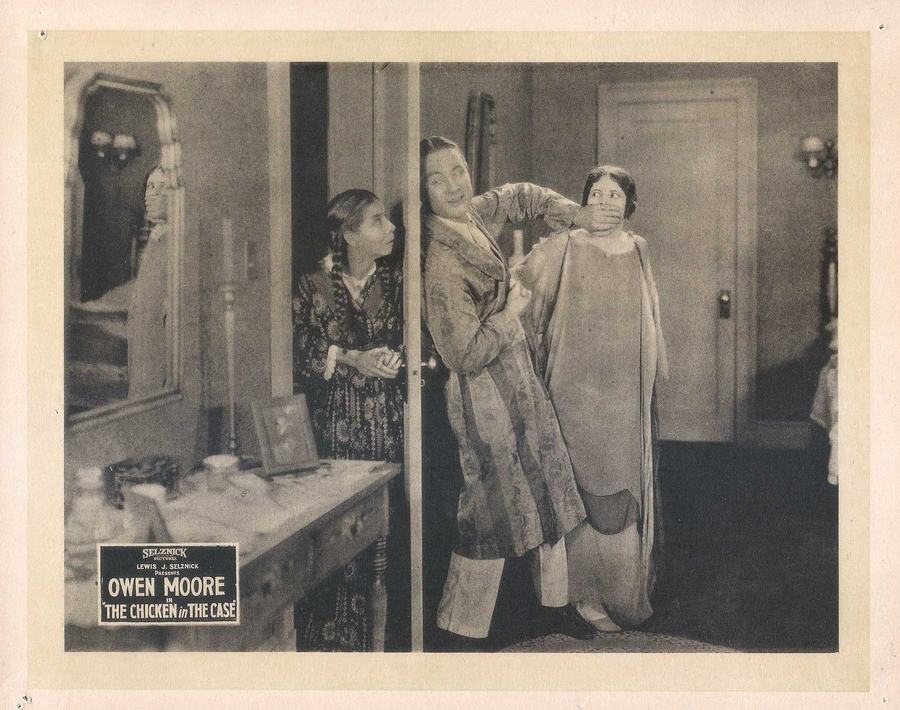
Ah, the Roaring Twenties! A decade of jazz, flappers, and, perhaps most delightfully, the blossoming of cinematic farce. Among the glittering array of silent comedies that graced the silver screen, The Chicken in the Case stands as a charming, if often overlooked, testament to the era's keen understanding of situational humor and the intricate dance of deception. Directed by Victor Heerman and penned by the clever duo of Heerman and Sarah Y. Mason, this film isn't just a relic; it's a vibrant, enduring piece of storytelling that continues to pluck the strings of comedic delight, reminding us that some human predicaments are truly timeless. If you've ever found yourself entangled in a white lie that spiraled wildly out of control, then this cinematic gem will resonate with a wonderfully uncomfortable familiarity.
At its core, The Chicken in the Case presents a delicious premise: a young man, desperate to secure his inheritance, finds himself in a matrimonial bind. His formidable aunt, a matriarch of considerable means and even more considerable stipulations, has made it abundantly clear that his fortune will remain locked away until he ties the knot. A common enough trope, perhaps, but it's the execution that elevates this film beyond mere cliché. Our protagonist, portrayed with a captivating blend of earnestness and frantic desperation by Owen Moore, concocts what he believes to be a foolproof plan: he'll simply 'borrow' a wife. Enter his unwitting friend's spouse, who, through a series of increasingly elaborate contrivances, is introduced as his newly minted bride. What could possibly go wrong, right? Everything, of course, and that's precisely where the magic of this farce begins to unfold.
The film masterfully builds its comedic tension on the foundation of this single, audacious lie. The initial scenes are a delicate ballet of pretense, with Moore's character attempting to maintain the illusion of marital bliss while simultaneously navigating the precarious reality of his friend's wife (played with delightful vivacity by Teddy Sampson) being in a constant state of simulated affection. Sampson’s portrayal is particularly noteworthy; she embodies the 'borrowed bride' with a nuanced performance that balances the necessity of her role with the inherent absurdity of her situation. Her glances, her subtle shifts in posture, her feigned endearments – all contribute to a truly engaging performance that anchors the escalating chaos. You can almost feel her internal struggle between playing the part and reacting authentically to the bizarre circumstances.
The true catalyst for the film's spiraling hilarity, however, arrives in the form of the aunt, brought to life with formidable presence by Vivia Ogden. Ogden’s aunt is not merely a plot device; she is a force of nature, a woman whose intentions, however well-meaning, serve only to compound the protagonist's woes. Her initial scrutiny of the 'newlyweds' is nerve-wracking enough, but the narrative takes a brilliant turn when she develops an unexpected and intensely possessive affection for her nephew's 'bride.' This isn't just a casual liking; it's a burgeoning, almost smothering, fondness that throws a monumental wrench into the finely tuned machinery of deception. The aunt’s character is a perfect foil, representing the external, unpredictable forces that inevitably unravel even the most meticulously planned deceptions. Her genuine warmth for Sampson’s character, however misplaced, adds a layer of pathos to the otherwise farcical proceedings, making her more than just a caricature.
The stakes are further raised when the aunt, observing the natural (and entirely appropriate) interactions between the 'bride' and her actual husband (Owen Moore’s friend, portrayed by Edgar Nelson), misinterprets their connection as an illicit flirtation. This misunderstanding, born from the very lie designed to secure an inheritance, propels the plot into a new realm of absurdity. Fearing that her nephew's 'marriage' is already on the rocks, the aunt decides a change of scenery is in order, whisking the bewildered 'bride' off to a secluded retreat. This development is pure comedic gold, isolating the key players and forcing the true husband (Nelson) into an agonizing state of separation and suspicion, while Moore’s character grapples with the accelerating disintegration of his carefully constructed reality. Nelson's performance, though perhaps less overtly flamboyant than Moore's, is crucial in depicting the quiet torment and growing frustration of a man whose wife has been 'borrowed' and subsequently 'kidnapped' by a well-meaning but utterly misguided relative. His silent expressions of jealousy and bewilderment are priceless.
What truly elevates The Chicken in the Case is its exploration of the consequences of deception. It’s not just a series of slapstick gags, though there are plenty of delightful physical comedic moments. It delves into the emotional toll such a charade takes on all involved. Owen Moore’s character, initially driven by financial necessity, finds himself increasingly mired in a moral quagmire. The initial thrill of the deception gives way to genuine panic and the dawning realization that the truth, however inconvenient, must eventually emerge. This journey from confident trickster to flustered truth-teller is expertly handled, showcasing Moore’s range as an actor. He captures the essence of a man caught between a rock and a hard place, his inheritance on one side, his conscience and the complicated affections of his aunt and friends on the other.
The supporting cast, including Katherine Perry, Linus Aaberg, and Walter Walker, contribute significantly to the film's rich tapestry of characters. Their reactions, whether of confusion, complicity, or genuine concern, add layers to the narrative, making the world of the film feel robust and believable, despite its farcical premise. Each character, no matter how minor, plays a crucial role in either furthering the misunderstanding or providing a counterpoint to the central deception, adding to the general hubbub and chaotic charm that defines the film.
Victor Heerman's direction is precise, demonstrating a keen understanding of comedic timing and visual storytelling, which was paramount in the silent era. The pacing is brisk, never allowing the audience to dwell too long on the improbability of the situation, instead sweeping them along on a tide of escalating complications. Sarah Y. Mason’s screenplay, even without spoken dialogue, conveys wit and character through well-crafted intertitles and the actors' expressive performances. The choice of shots, the blocking of the actors, and the rhythm of the editing all work in concert to maximize the comedic impact, ensuring that each misunderstanding lands with perfect precision. It's a masterclass in how to tell a complex, character-driven story without relying on a single spoken word.
Thematically, The Chicken in the Case touches upon several universal concepts. It's a delightful commentary on societal expectations surrounding marriage and wealth, particularly in an era where social standing and financial security were often inextricably linked. The pressure on young men to 'settle down' and prove their worth was immense, and our protagonist's desperate measure is a hyperbolic, yet understandable, response to these pressures. It also explores the delicate balance of truth and lies in personal relationships, and how even well-intentioned deceptions can lead to unforeseen and often hilarious consequences. The film suggests that while a little white lie might seem like an easy fix, the unraveling of that lie can be far more complicated and ultimately, far more rewarding in its resolution.
Comparing The Chicken in the Case to other films of its time helps to contextualize its brilliance. While not as overtly slapstick as some of the era's more physical comedies like The Stage Hand, it shares a similar spirit of good-natured chaos. It’s less about physical gags and more about the intricate dance of social maneuvering and verbal (or rather, intertitle-driven) wit. One might draw parallels to the complexities of romantic entanglements seen in films such as The Flirt, where social niceties and personal desires often clash, creating a delightful tension. The central theme of a fabricated reality to achieve a goal also brings to mind the moral quandaries explored in films like Somebody Lied, albeit with a much lighter, more comedic touch here. The film also delves into the institution of marriage, much like The Marriage Ring, but through the lens of a desperate, contrived union rather than a genuine exploration of marital bliss or discord. The underlying message about the consequences of one's actions and the eventual need for honesty, however painful, resonates with the thematic depth found in films like As a Man Sows, though again, presented with a distinctly comedic flair. It's a film that perfectly encapsulates the social anxieties and humorous coping mechanisms of a bygone era, yet its core narrative remains remarkably relatable.
The eventual climax, where the young man must finally confront the truth and untangle the Gordian knot of his own making, is handled with both comedic precision and a satisfying emotional resolution. Will he manage to straighten out all the misunderstandings without losing his inheritance, his friends, or his mind? The journey to this revelation is what makes The Chicken in the Case such an engaging watch. It’s a testament to the enduring appeal of well-crafted farce, where the stakes are high, the characters are relatable (even in their absurdity), and the path to resolution is paved with laughter.
In conclusion, The Chicken in the Case is more than just a historical curiosity; it’s a vibrant, clever, and endlessly entertaining silent film that deserves a rediscovery. Its sharp writing, energetic direction, and delightful performances by Owen Moore, Teddy Sampson, Edgar Nelson, and the formidable Vivia Ogden make it a standout example of early 20th-century comedic cinema. It’s a film that proves that even a century later, the simple premise of a lie spiraling out of control can still elicit genuine laughs and thoughtful reflection on the human condition. If you appreciate the artistry of silent film, the intricacies of a well-executed farce, or simply a good old-fashioned story of mistaken identity and romantic shenanigans, then this film is an absolute must-see. It’s a delightful reminder of cinema’s timeless power to entertain and enchant, proving that sometimes, the most complicated situations yield the most uproarious results. Don't let this delightful piece of cinematic history remain in the shadows; seek it out and prepare for a truly charming and memorable experience.
IMDb 5.5
1922
Community
Log in to comment.