DbcultAccessing Vault...
5.6/10
Senior Film Conservator
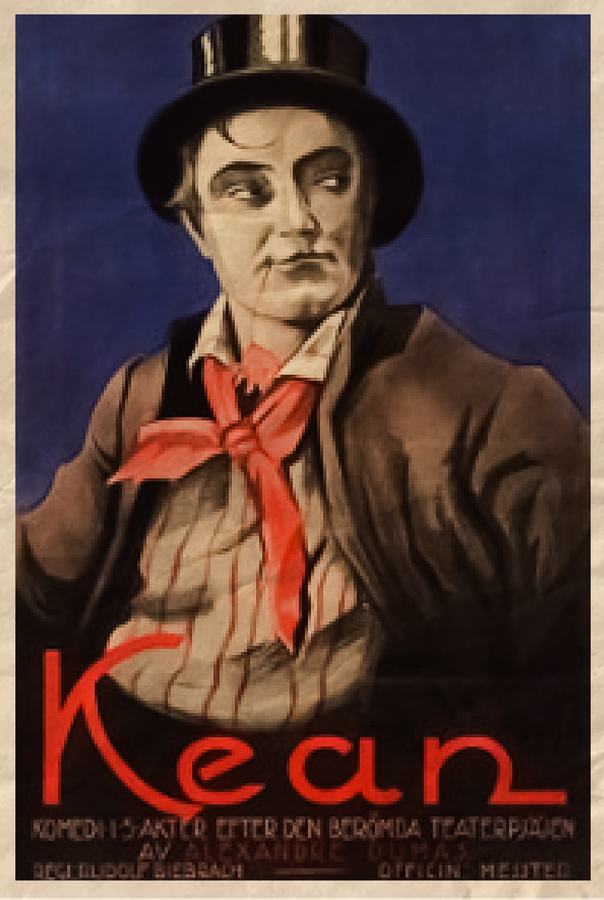
A definitive 5.6/10 rating for a film that redefined the boundaries of cult cinema. Kean remains a cornerstone of transgressive art.
The 1917 silent film Kean, directed by Alexandre Dumas and written by Thomas Hall, is a forgotten gem that pulsates with the same dramatic intensity as the plays it dramatizes. This biographical chronicle of the legendary actor Edmund Kean transcends mere hagiography, morphing into a psychological dissection of the artist as a doomed iconoclast. The film’s opening scenes, rendered in sepia-toned grandeur, immediately establish Kean as both a man and a myth—his shadow looming larger than the gaslit theaters he graces.
Rudolf Biebrach’s portrayal of Kean is less a performance than a possession; his physicality recalls the frenzied gestures of a 19th-century Hamlet, yet his eyes betray a man perpetually one step from collapse. The film’s first act meticulously constructs Kean’s dual life: onstage, he is a demigod of the drama, his soliloquies eliciting rapturous applause from audiences in the grandiose auditoriums of its time. Offstage, he is a man adrift in a sea of vices, his liaison with a married woman (played with icy allure by Olga Limburg’s co-star, the married aristocrat) a mirror to his theatrical excesses.
What sets Kean apart from its contemporaneous biopics is its unflinching exploration of artistic narcissism. The film’s second act pivots to Anna Danby (a name that feels both English and mythic), the young woman whose infatuation with Kean becomes a tragic subplot that parallels the audience’s own fascination with the antihero. Her scenes, shot in stark contrast to the golden glow of the theater, emphasize her naivety against Kean’s world-weariness. This duality is heightened by the film’s visual motif of mirrors—Kean constantly glimpsing his reflection, as if haunted by the duality of his existence.
The third act spirals into operatic tragedy as Kean’s affairs and artistic pretensions collide. A pivotal scene—where he delivers a thundering soliloquy from Othello while his real-life lover, the married woman, watches from the shadows—captures the film’s central thesis: that the artist’s truth is always performative. The film’s final sequence, a literal and metaphorical descent into darkness, lingers long after the credits roll, its silence speaking volumes about the cost of genius.
What elevates Kean beyond its era’s typical melodramas is its layered storytelling. The film’s narrative structure, non-linear yet cohesive, interweaves Kean’s theatrical triumphs with his personal failures. One particularly striking sequence juxtaposes his onstage triumph in Richard III with a private moment of despair, the two scenes connected by a single, lingering close-up of his crumpled hat—a detail that becomes a symbol of his fractured identity.
The supporting cast, including Ernst Behmer and Margarete Schlegel, add texture to the film’s exploration of 19th-century society’s constraints. Their characters—ranging from envious peers to judgmental critics—serve as foils to Kean’s larger-than-life persona. The film’s dialogue, though silent, communicates volumes through expression: a raised eyebrow from Kean conveys disdain for societal norms, while Anna’s trembling hands in a pivotal scene speak to her crumbling world.
While Kean shares thematic DNA with films like Within Our Gates (1920)—both interrogating the clash between public image and private truth—it diverges in its focus on male fragility. Unlike the more socially conscious On Trial (1917), which centers on institutional corruption, Kean is a deeply personal study of a man consumed by his own magnetism. Its treatment of infidelity also echoes the tragic entanglements in Had og Kærlighed (1911), yet Kean’s story is uniquely tied to the theater’s illusions.
Technically, the film is a marvel. The use of shadow and light in scenes set in smoky theaters creates a chiaroscuro effect that feels both period-appropriate and avant-garde. The camera work, particularly in the climactic act, employs long takes that mimic the pacing of a play while subtly violating the conventions of early cinema. In one breathtaking shot, Kean’s journey from the stage to his private study is captured in a single unbroken sequence, the camera gliding like an audience member following his every step.
Though Kean has largely faded from mainstream memory, its influence lingers in the works of later filmmakers who grappled with the artist’s paradox. The film’s unflinching look at the corrosive nature of fame prefigures the tragic arcs of Stranded in Arcady (1922) and the psychological depth of The Devil’s Garden (1926). Its exploration of theatricality as a prison also resonates with the meta-commentary of Vera, the Medium (1918).
For modern viewers, Kean offers a rare glimpse into the silent film era’s capacity for sophistication. Its narrative risks—such as its refusal to sanitize its protagonist—make it a precursor to the auteur-driven cinema of the mid-20th century. The film’s enduring power lies in its ability to make the audience complicit in Kean’s downfall, mirroring Anna’s doomed adoration and the critics’ fickle acclaim.
In Kean, Alexandre Dumas and Thomas Hall crafted a film that is at once a period piece and a timeless meditation on the artist’s curse. Rudolf Biebrach’s performance, a blend of ferocity and fragility, remains a benchmark for silent film acting. The film’s unresolved questions—about the cost of genius, the illusion of control, and the seductive power of art—resonate with disquieting immediacy. For cinephiles seeking to understand the silent era’s artistic ambitions, Kean is not just a film to watch, but an experience to inhabit.
A century later, the gaslit theaters of Kean still flicker with life, their shadows reminding us that even in the brightest performances, darkness waits in every spotlight.
IMDb 5.3
1928
Community
Log in to comment.