DbcultAccessing Vault...
Cult Review
Senior Film Conservator
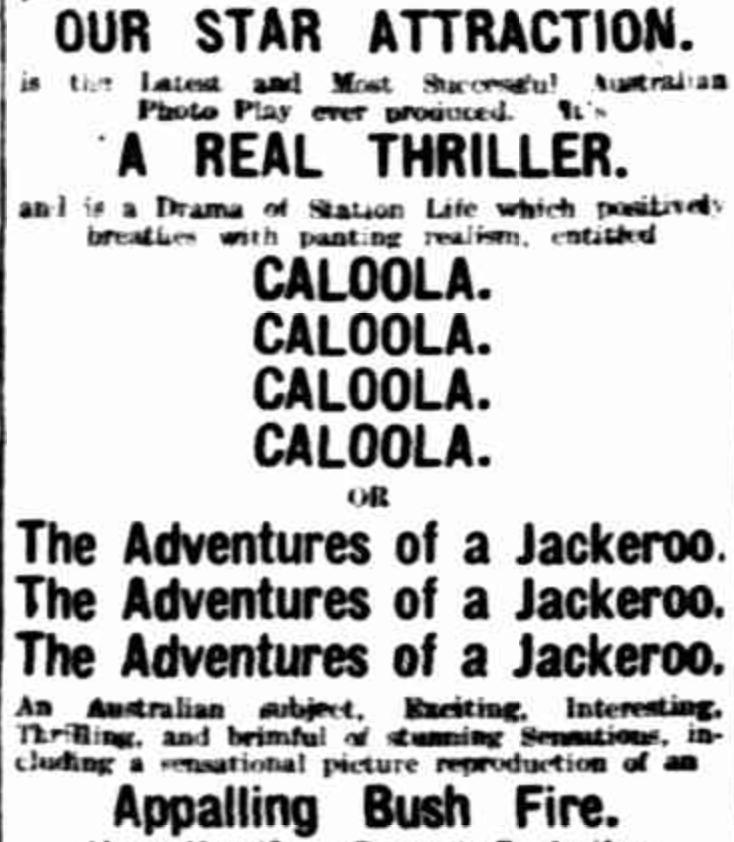
Stepping back into the nascent days of Australian cinema, one encounters a fascinating tapestry of ambition, resourcefulness, and a profound desire to capture the essence of a young nation. Among these early cinematic endeavors, Caloola, or The Adventures of a Jackeroo stands as a remarkable, albeit perhaps lesser-known, testament to this burgeoning artistic and cultural identity. This film, emerging from an era when the very language of moving pictures was still being articulated, offers more than just a narrative; it presents a window into the prevailing myths and self-perceptions of Australia at the dawn of the 20th century. It’s a journey not just for its protagonist, but for the audience, into a past where the landscape itself was a central character, shaping destinies and forging identities.
The allure of the 'jackeroo' — a young, often inexperienced man seeking to learn the ways of the bush on a sheep or cattle station — is a potent symbol in Australian folklore, embodying themes of transformation, resilience, and the quintessential 'fair go'. Caloola harnesses this archetype with a palpable earnestness. We witness the urban-bred Charles Villiers, presumably from a background of relative comfort, cast into the raw, demanding environment of the Caloola station. His initial clumsiness and unfamiliarity with the rhythms of station life are portrayed with a charming, almost comedic, awkwardness. This isn't merely a character beat; it's a deliberate narrative choice that sets the stage for his inevitable metamorphosis. The film meticulously, if silently, charts his progression from tenderfoot to a man capable of holding his own amidst the rugged demands of the outback. This arc resonates deeply with the broader national narrative of taming a wild continent and cultivating a unique Australian character.
What truly elevates Caloola beyond a mere adventure tale is its profound engagement with the Australian landscape. The bush is not a passive backdrop; it is an active, formidable presence, alternately benevolent and merciless. The filmmakers, with the limited tools at their disposal, strive to convey its vastness, its untamed beauty, and its inherent dangers. We can imagine sweeping vistas captured with a fixed camera, emphasizing the sheer scale of the pastoral enterprise. The stark contrast between the arid plains and the occasional life-giving waterholes, the towering gum trees, and the endless horizon would have been central to the film’s visual rhetoric. This cinematic landscape serves as both a classroom and a crucible for Villiers, teaching him humility, patience, and the profound interconnectedness of life on the land. The challenges he faces — perhaps a sudden bushfire, a lost flock, or a treacherous river crossing — are personifications of the land’s indomitable will, forcing him to adapt or perish.
The narrative, while rooted in Villiers's personal journey, broadens its scope to encompass the broader societal aspirations of the time. The establishment and successful operation of a station like Caloola represented a triumph of human endeavor over nature, a cornerstone of the colonial project. The film, in its depiction of daily life and work — the mustering, the shearing, the camaraderie amongst the station hands — implicitly celebrates this pioneering spirit. It’s a subtle form of nation-building propaganda, showcasing hard work, community, and the promise of prosperity in a land still largely perceived as frontier. The silent era’s reliance on visual storytelling and intertitles would have been expertly employed here to convey the dignity of labor and the strategic importance of pastoralism to the nascent Australian economy.
One cannot discuss early Australian cinema without acknowledging the foundational influence of films like The Story of the Kelly Gang (1906) and its thematic cousin, Robbery Under Arms (1907 and 1911 versions). These films, dealing with the legendary (or notorious) bushrangers, represent a different facet of the Australian mythos: the anti-establishment figure, the rebel against authority. Caloola, in contrast, champions the virtues of order, industry, and assimilation. While the bushranger films romanticized figures who defied the law, Caloola extols those who built and maintained the structures of a new society. Both genres, however, share a common thread: a deep fascination with the Australian bush and its capacity to shape character and destiny. They both utilized the expansive natural settings to great effect, albeit for different narrative ends. Where Kelly Gang showed the bush as a hiding place and a battleground for outlaws, Caloola portrays it as a proving ground for honest toil and a source of national pride. This dichotomy highlights the complex and often contradictory narratives that underpinned early Australian identity.
The cinematic techniques employed in Caloola, while rudimentary by today's standards, would have been cutting-edge for its time. The use of natural light, the expansive outdoor settings, and the practical challenges of filming livestock and horses would have presented considerable hurdles for the production team. One can imagine the meticulous staging required for scenes of cattle mustering or sheep shearing, demanding a keen eye for composition and an understanding of how to convey movement and action within the confines of a static camera. Intertitles, the silent film's narrative backbone, would have provided crucial exposition, character dialogue, and perhaps even poetic descriptions of the landscape, guiding the audience through Villiers's emotional and physical journey. The acting style, characteristic of the era, would likely have been broad and expressive, relying on exaggerated gestures and facial expressions to convey emotion without spoken dialogue, a theatricality that now holds a unique charm and historical significance. It's a reminder of the ingenuity required to tell a compelling story when the medium itself was still in its infancy.
Beyond the individual's struggle, Caloola likely integrates elements of human drama and conflict. Perhaps a rival station owner, a natural disaster threatening the herd, or even an internal conflict among the station hands provides the impetus for Villiers to step up and demonstrate his newfound leadership. The climax, almost certainly involving a heroic act on his part, would solidify his transformation and earn him the respect of his peers and, perhaps, the affection of a love interest — a common narrative flourish in films designed to appeal to a broad audience. This blend of personal courage and communal well-being reinforces the film's underlying message: that true character is revealed not in isolation, but in service to others and the land itself.
The enduring legacy of films like Caloola lies not just in their historical value as early cinematic artifacts, but in their ability to resonate with timeless themes. The struggle for belonging, the challenge of self-discovery, and the profound connection between humanity and the environment are universal narratives that transcend the limitations of silent film. While modern audiences might initially find the pacing deliberate or the acting style unfamiliar, a deeper engagement reveals a richness of purpose and a genuine attempt to craft meaningful storytelling. It's a reminder that even in its infancy, cinema possessed the power to reflect, shape, and celebrate cultural identity. The raw beauty of the Australian landscape, coupled with the compelling journey of a young man finding his place within it, makes Caloola a compelling piece of cinematic heritage, deserving of continued study and appreciation.
Revisiting such a work also compels us to consider the sheer logistical feats involved in its creation. Without portable sound equipment, sophisticated lighting, or even reliable transportation, filming in the remote Australian bush would have been an arduous undertaking. Each shot, each sequence, would have required immense planning and dedication. The commitment of the cast and crew, working under challenging conditions, speaks volumes about the passion that fueled these early cinematic pioneers. It’s a testament to their belief in the transformative power of film, not just as entertainment, but as a medium for chronicling a nation's soul. The film's very existence, let alone its narrative ambition, is a triumph over the formidable constraints of its era.
Furthermore, Caloola offers a fascinating counterpoint to global cinematic trends of its time. While European cinema was often exploring historical epics or nascent psychological dramas, and American cinema was developing its distinctive Western genre, Australia was carving out its own niche with narratives deeply embedded in its unique geographical and social fabric. The 'bush film' genre, of which Caloola is a prime example, became a distinct and important contributor to the global cinematic landscape, showcasing a particular set of values and experiences that were uniquely Australian. It's a reminder that cinematic innovation wasn't confined to a few major centers, but rather flourished in diverse cultural contexts, each contributing its own flavor to the evolving art form.
The character of Charles Villiers, portrayed with a blend of youthful earnestness and burgeoning strength, embodies the ideal of the 'new Australian man' — adaptable, resilient, and deeply connected to the land. His journey is a microcosm of the immigrant experience, albeit one within a colonial framework, where an individual must shed old habits and embrace new ways of being to thrive in a challenging environment. This narrative emphasis on self-improvement through engagement with nature offers a powerful message, one that would have resonated strongly with audiences seeking to understand and celebrate their national character. The film, therefore, functions as a cultural touchstone, reflecting and reinforcing the values deemed essential for the young Commonwealth.
In conclusion, Caloola, or The Adventures of a Jackeroo is more than just a historical curiosity; it is a vibrant, engaging piece of early Australian cinema that continues to speak volumes about its time and place. Its portrayal of the bush, its exploration of identity, and its celebration of the pioneering spirit make it an invaluable artifact for anyone interested in the evolution of film and the cultural history of Australia. It reminds us that even in the silent era, filmmakers were crafting complex narratives that explored the human condition against the backdrop of an awe-inspiring world. It invites us to appreciate the foundational efforts that paved the way for the rich and diverse cinematic landscape we enjoy today, urging a rediscovery of these forgotten gems that illuminate so much about where we’ve come from. The cinematic journey with Charles Villiers through the Caloola station is, in essence, a journey into the heart of early Australian identity, rendered with a sincerity and visual ambition that transcends its temporal distance.
Community
Log in to comment.