DbcultAccessing Vault...
6.4/10
Senior Film Conservator
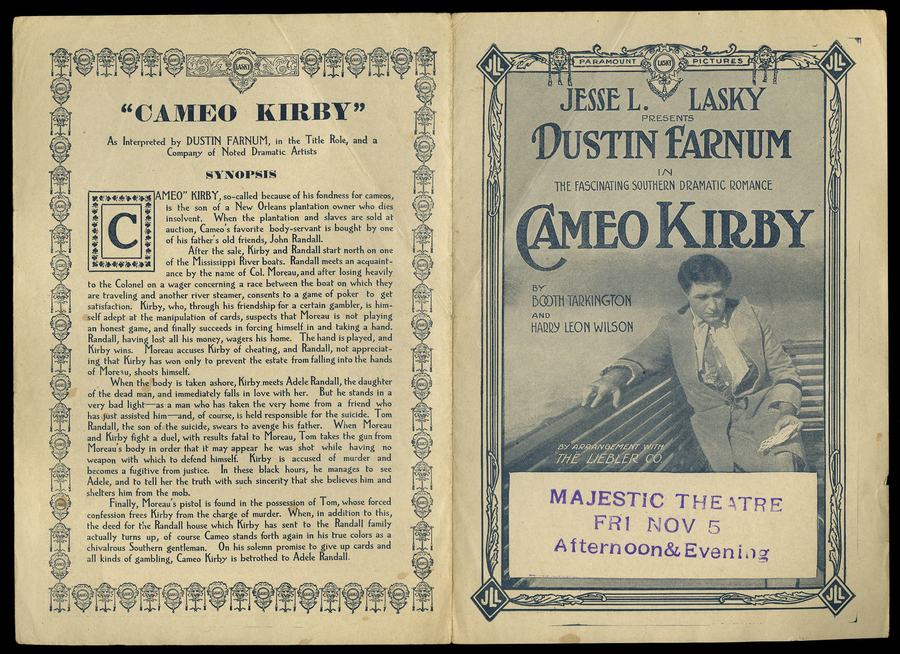
A definitive 6.4/10 rating for a film that redefined the boundaries of cult cinema. Cameo Kirby remains a cornerstone of transgressive art.
Step back into an era when moving pictures spoke volumes without uttering a single word, an epoch where narrative was conveyed through grand gestures, expressive visages, and elegantly crafted intertitles. Such is the immersive experience of 'Cameo Kirby', a silent film that plunges its audience into the tumultuous social landscape of the Old South, weaving a complex tapestry of honor, betrayal, and an almost impossible romance. This isn't just a historical relic; it's a vibrant, if melodramatic, exploration of human nature under duress, a testament to the enduring power of storytelling.
Our protagonist, the eponymous "Cameo" Kirby, so christened for his distinctive penchant for cameos, is introduced as a figure of inherited Southern gentility. Yet, this veneer of aristocratic grace is violently shattered upon the death of his father, whose legacy is not one of wealth but of profound insolvency. The subsequent auction of the family plantation, and with it, the enslaved people who formed its bedrock, serves as a stark, poignant opening, immediately establishing the precariousness of Kirby's world. This scene, devoid of spoken dialogue, communicates volumes about the economic fragility of the post-bellum South and the devastating personal cost of financial ruin. It’s a moment that resonates with a certain tragic grandeur, laying bare the brutal realities beneath the romanticized façade of Southern life, much like the stark class divisions explored in Manon Lescaut, albeit in a different social context.
The sale of Kirby's cherished body-servant to John Randall, a family friend, is a critical pivot. It underscores the deep personal bonds, however problematic and rooted in an unjust system, that could exist between master and servant, and the painful severance of these ties through economic necessity. This act sets the stage for the fateful riverboat journey that follows, a journey northwards that symbolizes not just geographical movement but a departure from the familiar, if crumbling, structures of Kirby's past.
The Mississippi riverboat becomes a microcosm of the wider world: a confined space where destinies collide, where fortunes are won and lost, and where character is laid bare. Here, Randall, a man of perhaps less shrewd judgment than good intentions, falls prey to the predatory machinations of Colonel Moreau, a card sharp whose honesty is as dubious as his charm. The stakes escalate rapidly, culminating in Randall's desperate wager of his ancestral homestead—the very symbol of his family's enduring legacy. It's a scene fraught with tension, masterfully conveyed through the actors' expressions and the deliberate pacing of the intertitles.
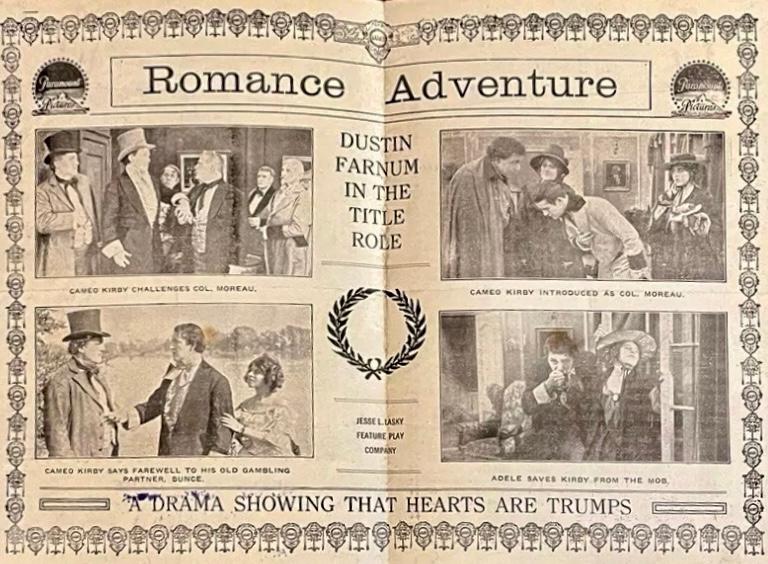
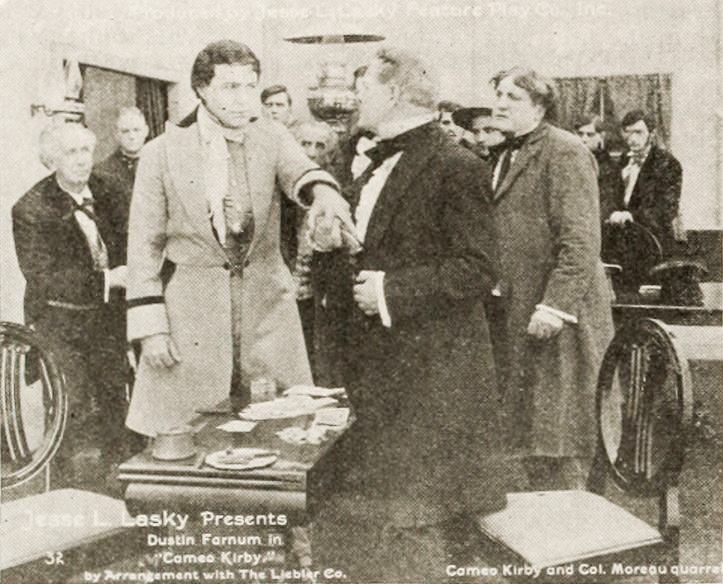
Kirby, a man of many talents, including an unexpected proficiency in the subtle art of card manipulation, observes Moreau's deceit. His intervention is a complex act: a blend of loyalty to Randall, a desire to uphold justice, and perhaps a flicker of the gambler's own thrill. He joins the game, not for personal gain, but to protect Randall's dwindling fortune. His masterful play secures the victory, saving Randall's estate. But this triumph is short-lived and bitterly ironic. Moreau, exposed, lashes out, accusing Kirby of cheating. In a devastating turn of events, Randall, misinterpreting Kirby's actions and believing himself ruined and dishonored, takes his own life. This moment is a powerful commentary on the fragility of reputation and the catastrophic consequences of miscommunication, a theme that echoes in the tragic misunderstandings found in films like De lefvande dödas klubb, where perception often dictates fate.
The tragedy on the riverboat spills onto land, where Kirby encounters Adele, Randall's daughter, as her father's body is brought ashore. It's an instant, undeniable attraction, yet one born under the most inauspicious stars. Adele, consumed by grief and convinced that Kirby is the architect of her father's suicide, treats him with a profound, almost theatrical, Southern disdain. Her scorn is a formidable barrier, rendering his burgeoning affection seemingly impossible. This immediate, yet conflicted, connection sets up the central romantic tension, a classic trope of love blooming amidst profound animosity, a dramatic device that remains compelling across cinematic eras.
The narrative swiftly introduces another formidable obstacle: Adele's brother, Tom, whose grief quickly hardens into a fierce, unwavering vow of revenge against Kirby. This sets the stage for a dramatic escalation, an inevitable clash driven by the rigid codes of Southern honor. The duel between Kirby and Moreau, though unwitnessed by most, is a pivotal moment. Kirby, a "dead shot," dispatches Moreau, a testament to his prowess and perhaps a necessary act of self-preservation. However, Tom's subsequent, calculated act of removing the gun from Moreau's fallen hand, thereby fabricating the illusion that Kirby had murdered an unarmed man, transforms Kirby from a man who defended his honor into a fugitive. This act of cold dissimulation casts a long shadow over Kirby's future, irrevocably complicating his pursuit of Adele and forcing him into a life on the run.
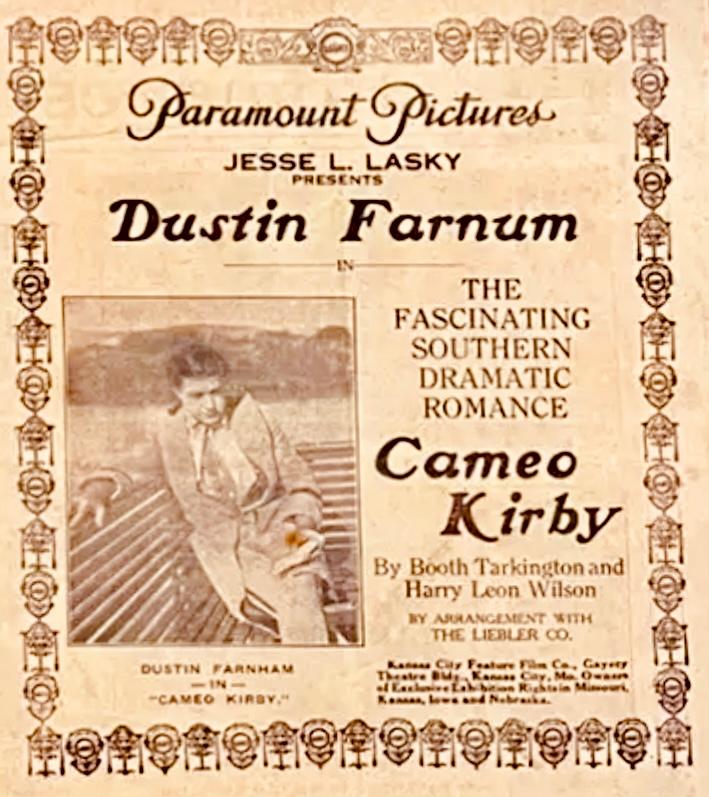
At the heart of 'Cameo Kirby' is the magnetic performance of Dustin Farnum. In an era before synchronized sound, the actor's ability to convey complex emotions, internal struggles, and resolute determination through facial expressions, body language, and carefully choreographed movements was paramount. Farnum embodies Kirby with a compelling blend of aristocratic charm, quiet intensity, and a palpable sense of inner turmoil. His eyes, in particular, speak volumes, reflecting the character's initial confidence, his shock at his father's insolvency, his strategic cunning at the poker table, his tender nascent love for Adele, and the grim resolve of a man unjustly pursued. He manages to make Kirby a sympathetic figure despite the moral ambiguities of his past and present circumstances. This kind of physical storytelling, where every gesture is imbued with meaning, is a hallmark of the silent era, reminiscent of the powerful visual narratives found in epics like Julius Caesar or even the dramatic portrayals in Life and Passion of Christ, where the absence of dialogue amplified the power of the visual.
Winifred Kingston, as Adele, provides a spirited counterpoint to Farnum's Kirby. Her initial portrayal of a grief-stricken daughter, filled with righteous indignation, is convincing and vital to establishing the dramatic conflict. The gradual thawing of her animosity, as she inevitably begins to question the narrative of Kirby's villainy, is delicately handled, allowing the audience to witness her internal struggle. The supporting cast, including Dick La Reno as the villainous Moreau, James Neill as the tragic Randall, and Ernest Joy as the vengeful Tom, each contribute effectively to the unfolding drama, their performances calibrated to the heightened, expressive style of silent cinema. The collective effort creates a believable, if stylized, world where passions run high and honor is a matter of life and death.
The direction of 'Cameo Kirby' demonstrates a sophisticated understanding of visual storytelling, especially for its time. The filmmakers, working with a script by William C. de Mille, Clara Beranger, Booth Tarkington, and Harry Leon Wilson, masterfully use blocking, camera angles, and editing to maintain narrative clarity and emotional impact. The riverboat scenes, in particular, are well-staged, creating a sense of claustrophobic tension during the card game. The duel, though brief, is impactful, relying on swift action and the aftermath to convey its gravity. Intertitles are deployed judiciously, providing necessary exposition without bogging down the visual flow, a common challenge in early cinema. This careful balance ensures that the audience remains engaged, following the intricate plot twists with ease.
The film's aesthetic also plays a crucial role. The costuming, from Kirby's impeccably tailored suits to Adele's elegant Southern dresses, helps to define character and era. The sets, whether the opulent interiors of the plantation or the functional yet atmospheric riverboat, immerse the viewer in the world of the story. While early cinema may lack the kinetic dynamism of later films like Protéa with its action sequences, 'Cameo Kirby' excels in its dramatic staging and character focus, allowing the emotional arcs to take precedence.
At its core, 'Cameo Kirby' is a profound meditation on the concept of honor, particularly as it was understood in the antebellum and post-bellum South. Kirby, though forced to confront his family's financial ruin and the ignominy of auction, consistently strives to uphold a personal code of conduct. His intervention in the card game, while technically involving manipulation, is driven by a desire to prevent Randall's dishonor. Yet, the very act meant to save a man's reputation leads to his tragic demise, highlighting the inherent paradoxes and ironies of such rigid codes.
The film also grapples with themes of justice and injustice. Kirby's status as a fugitive, framed by Tom's cunning, underscores the fragility of legal justice when confronted by personal vendettas and societal perception. The narrative suggests that true justice, or at least vindication, must come through a more personal, perhaps even divine, intervention. This struggle for justice against overwhelming odds is a timeless theme, explored in various forms across cinematic history, from the pursuit of truth in A Melbourne Mystery to the grander battles for freedom in El grito de Dolores o La independencia de México.
The romantic element, the impossible love between Kirby and Adele, serves as the emotional anchor. Their journey from mutual animosity to understanding and affection is central to the film's appeal. It's a classic narrative arc, where love must overcome not just external obstacles but also deeply ingrained prejudices and tragic misunderstandings. The promise that a "true-blue southern gentleman" will eventually win the day speaks to a desire for moral order and romantic triumph, a comforting resolution in a world fraught with chaos.
While 'Cameo Kirby' is undeniably a product of its time, a silent film from the early 20th century, its narrative power and thematic depth ensure its continued relevance. It offers a fascinating glimpse into the social mores of the Old South, the rigid codes of honor that governed its inhabitants, and the dramatic potential inherent in their violation. The film's portrayal of a protagonist caught between societal expectations, personal integrity, and the relentless pursuit of love and redemption remains compelling.
For enthusiasts of early cinema, 'Cameo Kirby' is a rewarding experience, showcasing the artistry and skill of actors like Dustin Farnum who mastered the unique demands of the silent screen. It stands as a testament to the enduring appeal of classic melodrama, where strong emotions, clear moral stakes, and intricate plotlines combine to create a deeply engaging viewing experience. Much like the timeless tales of chivalry and conflict in The Three Musketeers or the intricate character studies in Legion of Honor, 'Cameo Kirby' uses its historical setting to explore universal human struggles.
In an age saturated with sound and special effects, there's a unique charm in revisiting a film that relies solely on visual poetry and the raw power of human expression. 'Cameo Kirby' reminds us that the fundamental elements of compelling storytelling—character, conflict, and consequence—transcend technological advancements. It's a film that, despite its silence, speaks volumes about the human heart, its capacity for both grand gestures and tragic folly, and the relentless quest for honor and love against all odds. It's a true gem that deserves its place in the pantheon of classic cinema, inviting modern audiences to appreciate the foundational artistry that paved the way for all that followed.
IMDb 5
1922
Community
Log in to comment.