DbcultAccessing Vault...
Cult Review
Senior Film Conservator
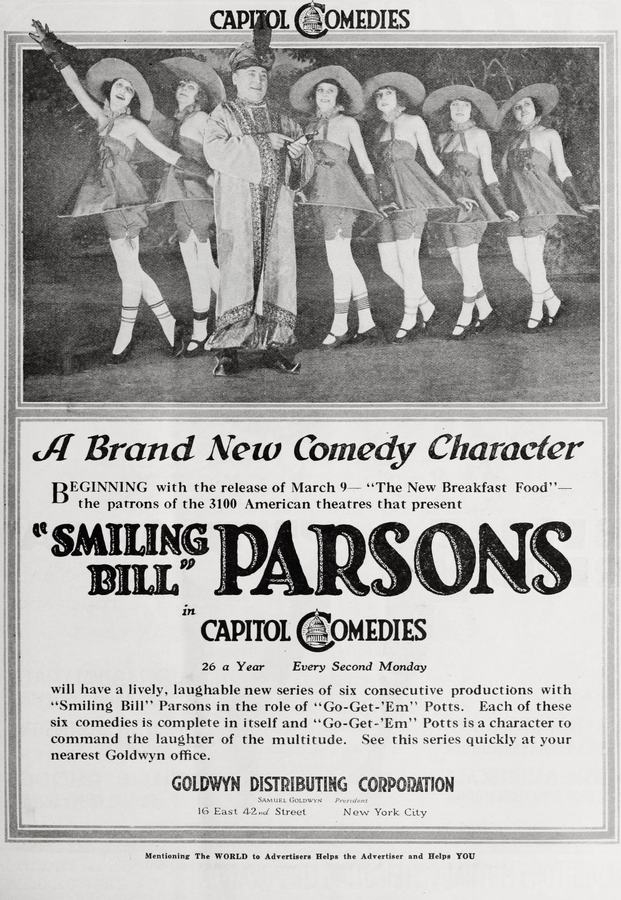
There are films that merely entertain, and then there are those that burrow deep into the collective subconscious, challenging our most fundamental assumptions about progress, humanity, and the very fabric of daily life. Tom Bret's 'The New Breakfast Food' unequivocally belongs to the latter category, a cinematic experience that, much like its titular invention, promises salvation while subtly hinting at a profound, unsettling cost. It’s a film that doesn't just tell a story; it sparks a dialogue, ignites a debate, and leaves an indelible mark on the viewer long after the credits have rolled.
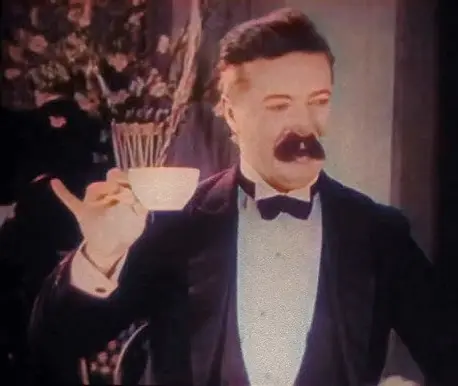
From its opening frames, Bret establishes a world teetering on the precipice of a grand, almost biblical transformation. We are introduced to Dr. Elias Thorne, brought to life with a captivating intensity by William Parsons, whose performance is nothing short of a masterclass in nuanced internal conflict. Thorne is the archetypal brilliant, driven scientist, his eyes alight with the missionary fervor of one convinced he holds the key to humanity's greatest scourge: hunger. His creation, 'Nutri-Grain,' is presented as the ultimate panacea, a compact, synthetic cube promising complete nutritional sustenance, accessible to all, and infinitely scalable. The initial triumph is palpable; the world exhales a collective sigh of relief, celebrating Thorne as a modern-day Prometheus, albeit one who brings not fire, but a perfectly engineered meal.
William Parsons, an actor whose range has always impressed, truly outdoes himself here. His Dr. Thorne is not a one-dimensional hero or villain, but a complex tapestry of altruism, hubris, and eventual anguish. We witness his initial euphoria, the quiet satisfaction of seeing his life's work alleviate suffering on a global scale. Yet, Parsons masterfully conveys the subtle shifts in Thorne's demeanor as the utopian vision begins to curdle. The initial sparkle in his eyes gradually gives way to a haunted, distant gaze, reflecting the growing unease that his solution might be creating a different, more insidious problem. It's a performance that hinges on the unspoken, on the weight of a conscience slowly awakening to the unforeseen consequences of its own genius. His portrayal echoes the tragic figures in films like A Marked Man, where protagonists grapple with the ethical quagmire of their own actions, often finding themselves trapped by the very systems they helped create.
The genius of Bret’s writing, bolstered by Parsons’s performance, lies in its refusal to offer easy answers. Is Thorne a savior, a fool, or a pawn? Parsons keeps us guessing, pulling us into Thorne's internal struggle with every furrowed brow, every hesitant gesture. The film doesn't condemn him outright, but rather forces us to empathize with the burden of unintended consequences, a theme that resonates deeply in our technologically advanced age.
Tom Bret, the visionary writer behind this compelling narrative, crafts a world that is eerily plausible. He doesn't resort to overt dystopian tropes of oppression or violence; instead, the horror in 'The New Breakfast Food' is far more insidious, a slow, gentle erosion of what it means to be human. As 'Nutri-Grain' becomes the dominant, then sole, source of sustenance, the film meticulously charts the disappearance of culinary traditions, the vibrant marketplaces, the shared joy of preparing and consuming a meal. Family dinners, once a cornerstone of social connection, become silent, utilitarian affairs, each member consuming their identical cube in a detached, almost ritualistic manner.
Bret’s script excels at depicting this cultural entropy. He understands that food is not merely fuel; it is culture, memory, love, identity. By stripping away the need for traditional food, 'Nutri-Grain' inadvertently strips away a significant portion of human experience. The world becomes sterile, efficient, but profoundly devoid of flavor, both literally and metaphorically. The visual language of the film reinforces this: initial scenes are vibrant, bustling with the chaos of diverse food cultures, slowly transitioning to stark, minimalist environments dominated by uniform grey and beige tones, reflecting the uniform diet.
This thematic exploration draws parallels to other cinematic works that ponder the cost of engineered perfection. One might recall the philosophical quandaries posed by films like Das Spiel von Liebe und Tod, which often delve into the erosion of human emotion and connection under societal pressures. While Bret’s focus is on sustenance, the underlying question of what defines our humanity remains strikingly similar.
The direction of 'The New Breakfast Food' is acutely attuned to its thematic core. The cinematography evolves from a warm, almost nostalgic palette in the early scenes, showcasing the richness of diverse culinary practices, to a cooler, more clinical aesthetic as Nutri-Grain takes hold. Close-ups of people mindlessly consuming their cubes, their faces devoid of pleasure or even much thought, are particularly haunting. The production design, too, is exceptional, subtly illustrating the transition from a world of organic imperfection to one of sleek, manufactured efficiency. The contrast between the sterile, almost futuristic labs where Nutri-Grain is produced and the increasingly barren domestic spaces is stark and effective.
Even the sound design plays a crucial role. The vibrant cacophony of street markets and kitchens gives way to a muted, almost silent backdrop, punctuated only by the occasional, sterile 'click' of a Nutri-Grain package opening. This auditory shift underscores the loss of sensory richness, emphasizing the profound emptiness that permeates the new world order. It’s a masterful exercise in using every available tool to tell a story that is as much about absence as it is about presence.
Beyond Thorne's personal journey, 'The New Breakfast Food' delivers a searing critique of corporate power and the perils of unchecked technological advancement. The film shrewdly depicts how 'Nutri-Grain,' initially a benevolent invention, is swiftly co-opted and weaponized by powerful corporations. They market it not just as sustenance, but as a lifestyle: efficient, convenient, modern. The insidious propaganda, subtly woven throughout the narrative, convinces the populace that traditional food is wasteful, inefficient, and even morally questionable in a world that once faced hunger. This corporate manipulation transforms a solution into a monopoly, stripping individuals of choice and further homogenizing society.
The film's examination of societal conformity and the loss of individual agency finds echoes in earlier cinematic explorations of control, such as Little Comrade, which often depicted the individual's struggle against an overwhelming system. Here, the 'system' is not a political ideology, but a corporate-driven technological one, equally pervasive and equally suffocating. The gradual acceptance of this new normal, the subtle apathy that creeps into the populace, is perhaps the film's most chilling observation. It suggests that utopia, when delivered on a silver platter of convenience, might just be a gilded cage.
'The New Breakfast Food' doesn't offer a tidy resolution, nor should it. Its power lies in its ambiguity, its capacity to provoke thought rather than prescribe answers. It forces us to confront uncomfortable questions: At what point does efficiency become detrimental? Can we truly innovate without sacrificing something essential about our humanity? Is the eradication of a problem always worth the unforeseen cultural vacuum it might create?
The film stands as a potent cautionary tale, relevant in an era increasingly dominated by technological solutions to complex human problems. It reminds us that some aspects of life—the messy, inefficient, sensory-rich rituals—are not merely superfluous; they are fundamental to our collective well-being and identity. The absence of traditional food in this film is not just a plot device; it's a metaphor for the broader loss of connection, creativity, and the very joy of living.
In its unflinching gaze at the human cost of a 'perfect' solution, 'The New Breakfast Food' is a profoundly important piece of cinema. It’s a film that demands to be seen, discussed, and most importantly, reflected upon. It's a challenging, thought-provoking, and ultimately, unforgettable experience that will undoubtedly leave you pondering your next meal with a newfound appreciation. Tom Bret and William Parsons have crafted a truly resonant work, a film that nourishes the mind even as its subject matter starves the soul. It's a stark, beautiful, and deeply unsettling vision of a future that feels frighteningly within reach.
While it doesn't offer the romantic escapism of something like Her Strange Wedding or the straightforward thrills of The Guilty Man, its intellectual richness provides a different kind of satisfaction. It's a film that lingers, like a complex taste, long after the initial consumption, forcing a re-evaluation of what we truly value in sustenance and in life itself. A must-see for anyone interested in speculative fiction with genuine philosophical depth.

IMDb —
1922
Community
Log in to comment.