DbcultAccessing Vault...
5.8/10
Senior Film Conservator
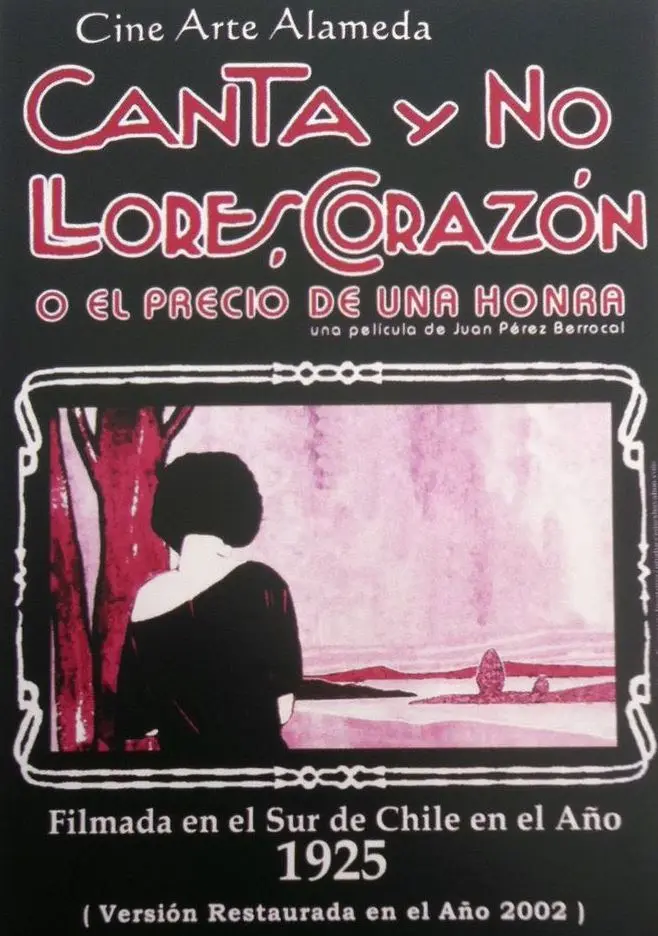
A definitive 5.8/10 rating for a film that redefined the boundaries of cult cinema. Canta y no llores, corazón remains a cornerstone of transgressive art.
Stepping into the world of 'Canta y no llores, corazón' is akin to being transported to a bygone era, a cinematic journey that feels both deeply personal and universally resonant. This Chilean classic, a narrative tapestry woven with threads of fervent passion and stark societal divides, offers more than just a story; it presents a mirror reflecting the enduring complexities of human emotion, particularly when entangled with the rigid structures of class and expectation. From its very opening frames, the film establishes a tone of pastoral serenity, almost a deceptive calm, before plunging the viewer into the turbulent waters of a young woman's awakening and subsequent heartbreak. It's a testament to the power of early cinema that a narrative so seemingly straightforward can still evoke such profound emotional responses, decades after its initial release.
At the heart of this compelling drama is Fresia, brought to life with an understated yet powerful performance by Amparo Alsina. She resides with her venerable father, played with dignified gravitas by Juan Pérez Berrocal, on a sprawling, opulent ranch in the idyllic southern reaches of Chile. Their existence, outwardly idyllic, hints at an underlying vulnerability, a delicate balance poised to be disrupted. Fresia is a character painted with broad strokes of innocence and an earnest capacity for love, a young woman whose sheltered life has perhaps shielded her from the more cynical machinations of the world. Her beauty, often a catalyst in such narratives, here becomes a magnet for both genuine affection and, tragically, casual dalliance. The film's early scenes exquisitely capture the rhythms of her life, hinting at a quiet longing for something beyond the ranch's boundaries, a yearning for an emotional connection that transcends the familial.
The catalyst for this emotional tempest arrives in the form of the ranch owner's son, portrayed by the charismatic yet ultimately callow Tom McKey. His arrival introduces a dynamic friction into Fresia's hitherto tranquil world. The initial sparks between them are palpable, charged with the intoxicating allure of first love and forbidden romance. For Fresia, this burgeoning relationship is a monumental event, a profound blossoming of her spirit. She invests every fiber of her being, every nascent hope and dream, into this connection, envisioning a future intertwined with his. This unreserved commitment is what makes her subsequent disillusionment all the more poignant, all the more crushing. McKey's character, conversely, embodies a certain aristocratic nonchalance, a privileged detachment that views such encounters as mere diversions, fleeting escapades in a life of endless leisure. This fundamental disparity in their perceptions of the relationship forms the tragic core of the narrative, a stark reminder that not all hearts beat with the same sincerity.
The screenplay, meticulously crafted by Juan Pérez Berrocal, who also graces the screen with his presence, masterfully navigates this treacherous emotional terrain. It avoids overly melodramatic pitfalls, instead opting for a more nuanced exploration of the characters' internal landscapes. The dialogue, though period-specific, feels authentic, conveying the unspoken tensions and the subtle power dynamics at play. The film doesn't shy away from depicting the harsh realities of class structure in early 20th-century Chile, where social standing often dictated the very trajectory of one's heart. Fresia's father, despite his wealth, operates within a specific societal tier, one that, while comfortable, is still distinct from the landowning aristocracy whose son holds sway over Fresia's affections. This subtle yet pervasive class divide is a silent character in itself, influencing decisions and shaping destinies with an invisible, iron fist.
Visually, 'Canta y no llores, corazón' is a feast for the eyes, even through the prism of time and the inherent limitations of archival film. The cinematography captures the breathtaking beauty of southern Chile, transforming the landscape into an active participant in the story. Sweeping vistas of rolling hills, sun-drenched fields, and perhaps glimpses of rugged mountains provide a majestic backdrop to the intimate human drama unfolding. The director's eye for composition is evident, utilizing deep focus and thoughtful framing to emphasize the characters' isolation or their moments of connection. The use of natural light, a hallmark of early cinema, lends an ethereal quality to many scenes, particularly those depicting Fresia's burgeoning romance, imbuing them with a sense of romantic idealism that is destined to be shattered. This visual poetry elevates the film beyond a simple love story, transforming it into a sensory experience.
Comparing this film to its contemporaries reveals fascinating insights into narrative trends and thematic concerns of the era. While films like Going Straight or The Little Diplomat might have focused on themes of redemption or youthful ingenuity, 'Canta y no llores, corazón' aligns more closely with the tragic romanticism seen in works like Sapho or St. Elmo, where societal constraints and the cruelty of fate often dictate the bitter ends of passionate affairs. The film echoes the emotional intensity and the focus on female protagonists navigating treacherous social landscapes, a common thread in many dramas of the period. However, 'Canta y no llores, corazón' distinguishes itself through its specific cultural context, rooting its universal themes in the unique soil of Chilean identity and societal norms.
The supporting cast, including Emilio Muñoz, Carlos Fuica, Tomás Medina, Rodrigo de Triana, Alberto Scalls, Clara del Castillo, José Domenech, Pedro Eguiluz, Anita Giraudo, and Juanito Perez C., all contribute to the film's rich texture, creating a believable community around the central figures. Even in minor roles, their performances add depth and authenticity, grounding the more dramatic elements in a relatable reality. The collective effort ensures that the world of the ranch feels lived-in, populated by individuals with their own unspoken stories, further enhancing the film's immersive quality. This ensemble work is crucial in building the societal framework against which Fresia's personal tragedy unfolds, making her isolation and pain more acutely felt.
One cannot discuss 'Canta y no llores, corazón' without acknowledging its profound emotional impact. The film doesn't simply present a story; it invites the audience to experience Fresia's journey alongside her, to feel the initial flush of hope, the gradual dawning of doubt, and the ultimate sting of betrayal. The pacing is deliberate, allowing moments of quiet contemplation to breathe, building tension not through frantic action but through the slow, agonizing realization of an impending heartbreak. This measured approach is immensely effective, drawing viewers deeper into Fresia's psychological state. When the inevitable disillusionment arrives, it's not a sudden shock but a culmination of subtle hints and unspoken truths, making the emotional fallout all the more devastating. It's a masterclass in portraying the slow erosion of innocence.
The film's exploration of gender roles, though implicit, is also noteworthy. Fresia, despite her wealth, is largely confined by the expectations placed upon women of her time and social standing. Her emotional vulnerability, while a source of strength in its purity, also renders her susceptible to the machinations of a man who operates with greater freedom and less emotional accountability. This dynamic is not unique to this film; many narratives of the era, such as Girls or Paid in Full, grappled with similar themes of female agency and societal constraints. However, 'Canta y no llores, corazón' imbues Fresia's struggle with a particular Chilean flavor, making her plight resonate within its specific cultural context while retaining its universal appeal.
The directorial choices throughout are consistently strong, demonstrating a clear vision for the narrative and its emotional arc. There's a sensitivity in how the more intimate scenes are handled, avoiding gratuitousness and instead focusing on the emotional subtext. The use of symbolic imagery, though subtle, adds layers of meaning to the unfolding drama. A wilting flower, a distant horizon, a stormy sky – these elements are not merely decorative but serve to underscore the internal turmoil and external pressures faced by the characters. This intelligent direction ensures that the film remains engaging and thought-provoking, inviting repeated viewings to uncover new nuances.
Furthermore, the film's title, 'Canta y no llores, corazón' (Sing and don't cry, my heart), is itself a poignant refrain, encapsulating the very essence of its narrative. It speaks to a resilience, a defiant optimism in the face of profound sorrow, even if that optimism is hard-won or ultimately fleeting. This titular wisdom serves as a guiding light, a philosophical undercurrent that suggests even in the deepest despair, there is a call to endure, to find a melody amidst the tears. It’s a beautifully chosen phrase that resonates long after the credits roll, urging contemplation on the nature of suffering and the human capacity for recovery.
The legacy of 'Canta y no llores, corazón' lies not only in its compelling storyline or its exquisite cinematography but also in its ability to transcend its era and locale. It speaks to timeless themes: the vulnerability of the human heart, the indelible mark of class distinctions, and the pain of unrequited love. While it might share thematic echoes with films like In the Spider's Grip or The Marcellini Millions in terms of dramatic entanglement or societal commentary, 'Canta y no llores, corazón' carves out its own distinct niche through its profound emotional sincerity and its deeply rooted Chilean identity. It is a film that demands to be seen, not just as a historical artifact, but as a vibrant, living piece of storytelling that continues to stir the soul.
Ultimately, 'Canta y no llores, corazón' is more than just a period drama; it’s an enduring exploration of the human condition, a testament to the power of film to capture and convey the most complex of emotions. It reminds us that while circumstances may change, the agony of a broken heart, the sting of betrayal, and the quiet dignity of endurance remain universal experiences. This film solidifies its place as an essential piece of cinematic history, particularly within the rich tapestry of Chilean cinema, offering a viewing experience that is both melancholic and deeply rewarding. It leaves an indelible impression, a whispered song of love and loss that continues to resonate long after the final frame fades to black.

IMDb —
1926
Community
Log in to comment.