DbcultAccessing Vault...
6.5/10
Senior Film Conservator
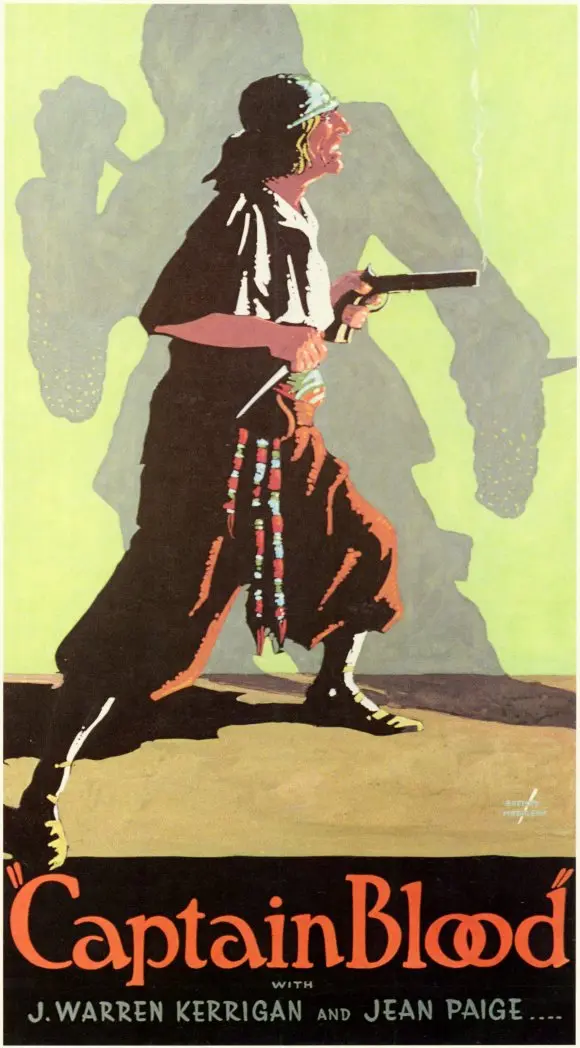
A definitive 6.5/10 rating for a film that redefined the boundaries of cult cinema. Captain Blood remains a cornerstone of transgressive art.
To speak of 'Captain Blood' is to invoke the very spirit of cinematic adventure, a foundational text in the grand tradition of swashbuckling narratives. It’s more than just a tale of pirates and derring-do; it's a profound exploration of justice, freedom, and the moral complexities that arise when an honorable man is pushed beyond the brink. The film, adapted from Rafael Sabatini's seminal novel, plunges us into a 17th-century world rife with political intrigue, colonial brutality, and the untamed expanse of the Caribbean Sea, crafting a narrative that resonates with timeless themes of rebellion against tyranny and the forging of one's own destiny. It stands as a vibrant testament to the power of a compelling story, expertly told, leaving an indelible mark on the landscape of adventure cinema.
At its heart, 'Captain Blood' introduces us to Peter Blood, a man of intellect and compassion, an Irish physician whose life is irrevocably altered by a single, humanitarian act. His decision to treat a wounded rebel soldier, a testament to his Hippocratic oath, is immediately misconstrued as an act of sedition by the zealous authorities. This initial injustice, swift and brutal, serves as the crucible for Blood's transformation. He is summarily arrested, subjected to a sham trial for treason, and condemned to the living hell of chattel slavery in the far-flung colony of Barbados. This segment of the film is particularly poignant, highlighting the arbitrary nature of power and the devastating consequences for those caught in its unforgiving gears. It's a stark reminder that even the most benevolent intentions can be twisted into damning evidence by a system bent on control.
The transition from a respected professional to a dehumanized slave is depicted with a raw intensity that allows the audience to fully grasp the enormity of Blood's plight. His intellectual prowess, once a source of pride, is now rendered useless in the face of brute force and systemic oppression. Yet, it is precisely this intellect, combined with an unyielding spirit, that prevents him from succumbing to despair. The film masterfully lays the groundwork for his eventual defiance, illustrating how even in the darkest corners of human experience, the spark of resistance can ignite. The suffering endured by Blood and his fellow slaves under the cruel hand of Colonel Bishop, who purchases him for his niece Arabella, paints a vivid picture of colonial barbarity, setting the stage for the explosive rebellion to come.

The narrative truly ignites with Blood's galvanization of his fellow slaves. His leadership emerges not from a desire for personal gain, but from an inherent demand for justice and freedom. He rallies them, transforming a disparate group of downtrodden individuals into a cohesive force, united by a shared grievance and a desperate hope for liberation. The meticulous planning and daring execution of their escape, culminating in the seizure of a Spanish galleon, is a triumph of strategic thinking and sheer audacity. This sequence is a thrilling spectacle, marking the definitive moment when Peter Blood sheds the shackles of slavery and embraces a new, albeit outlaw, identity. The irony is palpable: to find true freedom, he must become an enemy of the established order, a pirate.
As Captain Blood, he and his crew become the veritable scourge of the Caribbean, their exploits echoing across the waves. Yet, unlike many cinematic pirates who are depicted as purely avaricious or villainous, Blood maintains a code of honor. His piracy is a means to an end, a forced existence born out of necessity and a refusal to bow to an unjust system. This moral compass distinguishes him, elevating him beyond a mere brigand to a complex anti-hero. One might draw a thematic parallel here to the struggle against societal corruption or oppressive systems seen in a film like The Vampires: Satanas, where characters find themselves outside the law, fighting against a seemingly insurmountable, nefarious power. While the genres diverge wildly, the spirit of defiance against an established, corrupt order rings true.
Amidst the high-seas action and the constant threat of capture, a nuanced romantic subplot unfolds between Blood and Arabella, Colonel Bishop's niece. Their relationship is fraught with tension, born from their initial opposing positions. Arabella initially views Blood as nothing more than a dangerous slave, but as she witnesses his integrity, his leadership, and his unwavering commitment to his men, her perception gradually shifts. This evolving dynamic adds a crucial layer of emotional depth to the narrative, preventing it from becoming a mere succession of action sequences. Their interactions are charged with unspoken feelings, a delicate dance between duty, prejudice, and burgeoning affection. The film expertly uses their relationship to highlight Blood's inherent goodness, proving that even as a pirate, his core values remain intact.
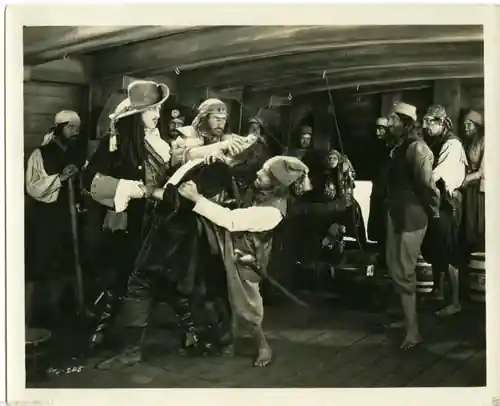
The performances, particularly from the lead actors, imbue these characters with a compelling realism. Robert Bolder as Blood conveys both the intellectual gravitas of the physician and the resolute determination of the pirate captain, a duality that is central to his appeal. Julie Bishop, as Arabella, brings a spirited independence to her role, refusing to be a mere damsel in distress. Their chemistry is understated yet potent, driving much of the film's emotional core. The ensemble cast, including Otto Matieson and George B. Williams, provides robust support, each portraying their characters with conviction, whether as loyal crewmen or formidable adversaries. The detailed character work, even in supporting roles, lends a rich texture to the film's world, making the stakes feel genuinely personal.
The latter half of 'Captain Blood' introduces its most compelling ethical dilemma. England, embroiled in a losing war against France, finds itself in dire need of experienced naval commanders. In a desperate bid to bolster its forces, the crown extends an olive branch to Blood, offering him a commission in the Royal Navy and a full pardon for his piratical past. This proposition forces Blood into an agonizing choice. He harbors no love for the French, but his contempt for the English, who stripped him of his freedom and dignity, runs even deeper. The decision is not merely about personal vengeance versus strategic alliance; it's about the loyalty he owes his men, who have followed him through thick and thin, and the integrity of his own principles. This complex ethical knot elevates the narrative beyond simple good-versus-evil tropes, delving into the grey areas of patriotism, self-preservation, and justice.
The film brilliantly portrays Blood's internal conflict, allowing the audience to feel the weight of his decision. Does he forgive past wrongs for the greater good, or does he remain true to his outlaw status, a symbol of defiance against an oppressive state? This moral tightrope walk is what truly distinguishes 'Captain Blood' from more simplistic adventure tales. It forces the protagonist, and by extension the viewer, to confront uncomfortable truths about allegiance and the nature of authority. It’s a powerful examination of how circumstances can force individuals to make choices that blur the lines between right and wrong, much like the challenging personal journeys depicted in films where characters are forced to navigate difficult societal traps or personal betrayals, such as in The Divorce Trap, albeit in vastly different contexts.
Technically, 'Captain Blood' is a marvel for its time. The cinematography captures the vastness of the sea and the claustrophobia of the slave ships with striking effectiveness. The action sequences, particularly the naval battles, are choreographed with an exhilarating dynamism that still holds up, showcasing a pioneering approach to on-screen spectacle. The film's pacing is relentless, propelling the audience through a series of dramatic events without ever feeling rushed or disjointed. This masterful storytelling is a credit to writers Jay Pilcher, C. Gardner Sullivan, and Rafael Sabatini, whose original vision is translated to the screen with remarkable fidelity and innovative flair. The attention to historical detail, while perhaps romanticized, adds a layer of authenticity that immerses the viewer entirely in its world.
The film's influence on subsequent pirate and adventure films cannot be overstated. It established many of the tropes and archetypes that would become synonymous with the genre, from the dashing, morally ambiguous hero to the thrilling sword fights and grand sea battles. Its success proved the viability of the swashbuckler as a cinematic staple, paving the way for countless imitators and homages. Even today, echoes of 'Captain Blood' can be seen in modern adventure narratives, a testament to its timeless appeal and narrative strength. It’s a film that doesn't just entertain; it transports, challenges, and ultimately, captivates. For anyone seeking a quintessential pirate adventure with genuine depth and character, 'Captain Blood' remains an essential viewing experience, a true jewel in the crown of classic cinema.

IMDb 5.5
1919
Community
Log in to comment.