DbcultAccessing Vault...
Cult Review
Senior Film Conservator
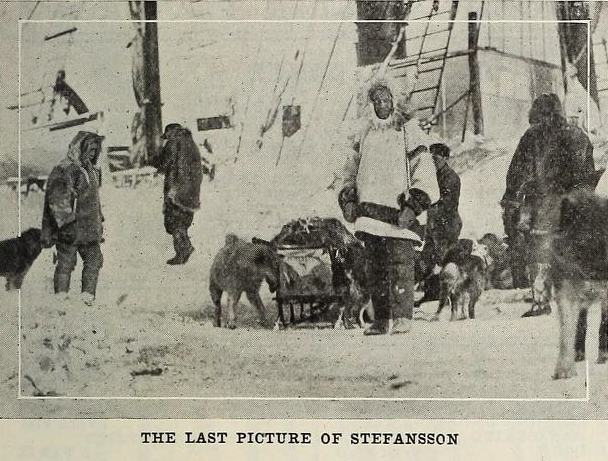
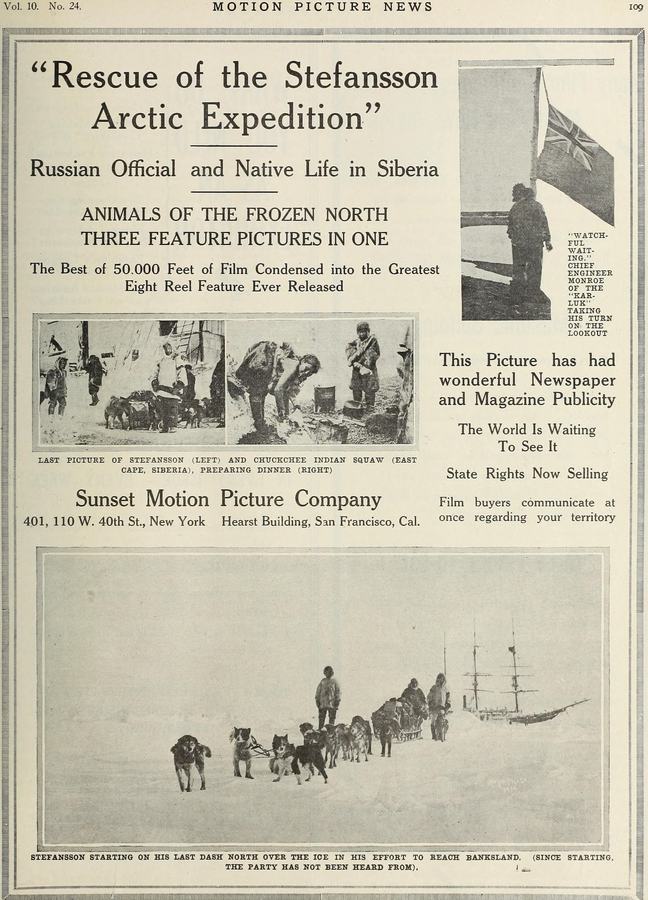
Imagine a film that arrives not in canisters but in a coffin of ice, its emulsion cracked like antique porcelain. Rescue of the Stefansson Arctic Expedition is that frigid phantom: a 1914 one-reeler shot on the shoulder of the planet where compiles spin wildly and exposed stock can splinter like spun sugar.
The Sunset Film Company dispatched a nameless cameraman—listed only as “our representative”—to chronicle the search for Vilhjalmur Stefansson’s missing exploration party. What he captured is less documentary than a fugue state: men trekking into a whiteout so pure it erases the very concept of horizon. We never see Stefansson; we scarcely see any human face unobscured by wool and frost. Instead, the landscape becomes protagonist, antagonist, and unreliable narrator.
Cinema historians often fetishize the “indexicality” of early film—the myth that the camera is a neutral stenographer of light. This artifact spits on that fantasy. The footage jitters, over-exposes, and at times dissolves into solar flares that look like auroras trapped under glass. The reason? Temperatures plunging to –45 °C shrink the film base, perforations misalign with the sprockets, and the shutter acts like a guillotine chopping reality into stroboscopic shreds. Each scar on the image is a climatic event, a meteorological fingerprint.
In one hallucinatory passage, the lens tilts skyward to film sundogs—parhelia that twin the sun in mock triptych. The over-exposure obliterates the celestial body itself, leaving three glowing wounds in a cobalt field. The moment feels eerily akin to the expressionist nightmares later forged in German studios, yet here nature provides the gouache and cruelty gratis.
Though shot without audible dialogue, the film is sonically suggestive. Intertitles creak onto the screen like ice floes grinding against hull plates. A title card declaring “48 hours without fuel” lingers so long you can almost hear teeth chattering in the projector booth. The absence of diegetic sound becomes its own form of white noise, a void into which viewers subconsciously pour the phantom crackle of canvas tents, the wheeze of huskies, the slow drip of kerosene lamps guttering out.
Contemporary accompanists—whether at the 1914 premiere in Vancouver’s Allen Theatre or recent restoration screenings at MoMA—tend to underscore this void with bowed cymbals or glass harmonica. Yet I prefer the sensory deprivation: let the silence bruise the ear until you swear you hear snowflakes colliding mid-air.
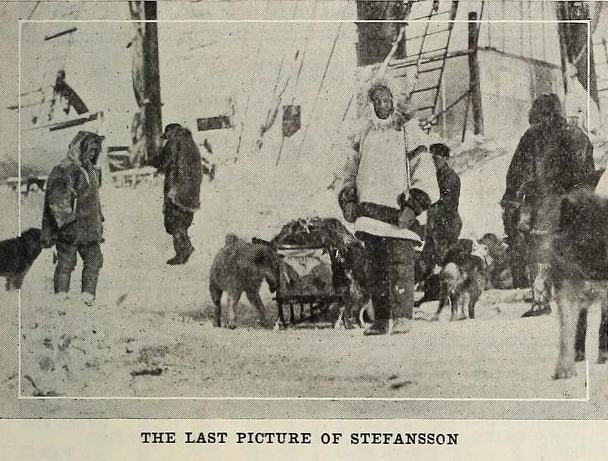
Modern eyes will flinch at the imperial gaze. Inuit hunters appear chiefly as picturesque labor, their sled dogs commodified like fuzzy engines. The intertitles laud “our loyal Eskimo aides” in the same breath that catalogs ration tins. Still, the camera undermines its own ideology: a lingering close-up on an Inuit elder’s fur-hooded face—possibly the first close-up of an Inuk in North American non-fiction—captures a skepticism so withering it punctures the expedition’s civilizing hubris. His eyes seem to prophesy climate collapse, oil spills, the whole twentieth-century hangover.
Compare this to the villainous caricatures in The Black Chancellor or the martyr hagiography of Joan of Arc, where indigenous or female bodies serve merely as semiotic furniture. Here, the unnamed Inuk’s micro-performance of resistance destabilizes the film’s colonial scaffolding from within.
Plot, in the conventional sense, is starved of oxygen. The rescue party sets out; they encounter pressure ridges taller than church spires; two sleds plunge through a lead of newly formed ice; a dog team mutinies. But resolution is perpetually deferred. The last third of the reel is a loop of white frames sutured to darker frames, creating a pulse that mimics cardiac arrhythmia. Then the aforementioned iris-in on the Union Jack, a flag so frost-encrusted its colors are unknowable. No hero returns to civilization, no intertitle congratulates the audience on patriotic perseverance. History itself stalls, panting.
This structural incompletion prefigures the open-ended vertigo of later masterpieces such as The Man Who Disappeared, yet does so without studio artifice—only the candid refusal of the Arctic to deliver a third act.
Recent 4K laser scans reveal microscopic details: ice crystals on a parka cuff sparkle like mica; a tin cup’s dent contains a reflection of the cameraman’s gloved thumb, half amputated by frostbite. Such minutiae convert the image into an inadvertent time capsule of global cooling. Scientists at the British Columbia Climate Lab have matched the film’s depicted sea-ice density to logbooks proving that winter extent in 1913-14 was 40 % greater than today. Thus, the footage operates as both art object and proxy data set—a glacier grieving its own future retreat.
Cinematographic truth becomes climate testimony, a duality no CGI polar extravaganza can replicate.
There are no “performances” in the Hollywood sense. Bodies merely try not to die. Yet the camera records micro-gestures: a rescuer’s eyelashes encased in hoarflicker, blinking Morse code against hypothermia; a half-smirk when a sled finally crests a pressure ridge, instantly erased by wind burn. These are documentaries of physiology, not psychology.
Contrast that with the expressionistic grimaces in Herod or the stylized villainy of Vendetta, where faces are hieroglyphs of moral absolutes. Here, faces are topographies of survival, maps of capillaries surrendering to frost.
The original one-reeler ran roughly 14 minutes at 16 fps. But due to improper storage in a Vancouver basement, segments fused into vinegary lumps. Restorers had to excise these chemical tumors, resulting in jump-cuts that feel avant-garde. A sled dog mid-leap suddenly vanishes; a horizon line fractures into two mismatched shots. Critics often credit Eisenstein for intellectual montage, yet this accident of decay achieves a similar synaptic jolt—history’s own Soviet-style cut without ideological diktat.
Where Das schwarze Los chills through fatalistic allegory and The Toll of Mammon moralizes over greed, Rescue achieves existential frostbite by simply withholding comfort. Even A Message from Mars, with its cosmic chastisement, ultimately offers redemption. This film offers only an iris closing like a frostbitten eye.
Some archivists argue for “cleaning” the image—scrubbing away the white flecks that dance like snow. I side with the leave-it-frozen faction. Those imperfections are meteorological co-authors; to erase them is to airbrush a storm out of history. When a 35 mm print screened at the 2022 Telluride Mountainfilm festival, the audience reportedly gasped as a hair trapped in the gate froze in place, casting a shadow resembling a polar bear. That serendipitous scar is worth more than a thousand pixels of sterile clarity.
Is watching frozen men flounder a form of 21st-century disaster porn? Perhaps. Yet the film’s material fragility—the fact it can combust if projected above 24 °C—forces exhibitors to treat it like an ailing patient. Screening becomes stewardship. Auditions of empathy replace passive voyeurism. Compare that ethical aftertaste to the slick brutality in Attack on the Gold Escort, where violence is sugar-coated for matinee thrill.
What lingers is not the sting of cold but the vertigo of impermanence. The film is a mere 14-minute shard, yet its incompleteness mirrors our current ecological cliff edge. Every fleck of emulsion lifting off the surface feels like a canary in the climate coal mine. When the iris shuts, the darkness in the centre seems to dilate outward, swallowing the viewer’s reflection in the laptop screen or cinema Plexiglass. You walk out—or click away—haunted by the suspicion that history, like ice, is never solid for long.
Verdict: A frostbitten masterpiece whose very flaws are climactic revelations. Imperative viewing for cinephiles, climatologists, and anyone who needs reminding that nations, egos, and even images eventually surrender to thaw.
Community
Log in to comment.