DbcultAccessing Vault...
3.3/10
Senior Film Conservator
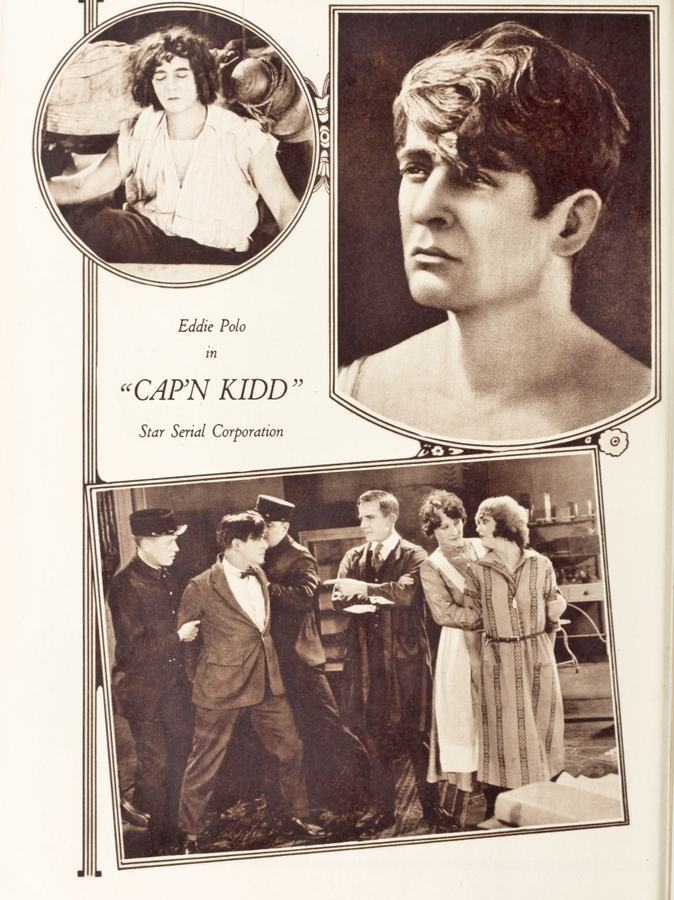
A definitive 3.3/10 rating for a film that redefined the boundaries of cult cinema. Captain Kidd remains a cornerstone of transgressive art.
There are movies you watch, and then there are riptides that watch you. Captain Kidd—a 1924 silent so rare even the archivists speak of it in whispers—belongs to the latter.
Forget every Errol-Saturday-matinee cliché you carry. This is piracy as Puritan fever dream, shot on sets that reek of tar and candle-animal fat, cut with intertitles that read like bruised psalms. The plot, ostensibly a treasure hunt, is merely the barnacle on a much larger whale: an autopsy of how empire teaches even its outlaws to speak the language of flags and floggings.
Anthony Coldeway and Philip Lonergan—scribblers more accustomed to penny-dreadful punchlines—here channel a hallucinatory ferocity. Their Kidd is no lovable rogue but a Manichean wound, equal parts Miltonic Satan and ledger-book accountant. The screenplay’s spine is a triptych of betrayals: first against the Crown, then against his crew, finally against the camera itself which he seems to notice in the final reel, glaring at us as if to say, you would have done the same.
Technically, the film is tinted like stained-glass gone septic: sea-green nitrate for the open water, tobacco-amber for tavern interiors, a bruise-violet for the lone love scene that feels more like an interrogation. Director Bradley Barker—better known as a character actor with a profile like a cracked hatchet—proves an expressionist at heart. He tilts the horizon until the world seems to slide off the screen, then superimposes a ghost-galleon that may be Kidd’s future, or his conscience, or both.
The camera, hand-cranked and vengeful, lingers on Malvina Polo’s face as she watches her kidnapper-turned-protector. One second her pupils contain molten want; the next, only the reflection of a copper coin dropping into a missionary’s box. It’s a silent performance that speaks in frequencies modern actors have forgotten how to hear.
Kathleen Myers, all clavicle and quiet fury, plays Anne Bonny in everything but name. Her first appearance—rising from a cargo hold like Venus from a gunpowder shell—rewrites the testosterone-choked mythology of maritime outlawry. She negotiates shares, loads pistols, and teaches the cabin-boy to read using fragments of a torn Bible and a stolen map. The film’s most erotic moment is not a kiss but the scene where she teaches him to tie a reef knot: fingers brushing, salt air, the sense that knowledge itself is contraband.
Leslie Casey, age twelve and already a veteran of three Heap Big Chief shorts, plays Jacob with a wariness that feels documentary. When Kidd finally offers the boy a silver piece “for services rendered,” Casey’s hesitation lasts only four frames—yet those frames contain an entire childhood of dockside predation.
Original reviewers complained the film lacked a “symphonic score.” They missed the point: the creak of the projector, the flap of the nitrate, the collective inhalation of an audience discovering it is complicit—those are the orchestra. When Kidd’s signature sea-shanty appears as an intertitle—“We slit the throat of the setting sun / and drink the dripping light”—the silence that follows is more rousing than any trumpet crescendo.
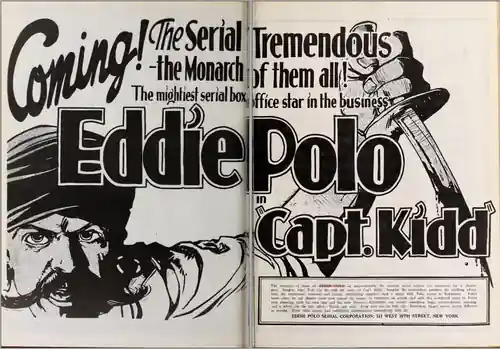
Place Captain Kidd beside The Sneak and you see two opposite moral laboratories: one where guilt is an anvil, the other where it is a silk scarf soon snatched away. Pair it with The Pursuit of the Phantom and you’ll notice both films share a doppelgänger motif—yet whereas Phantom externalizes the double as a jewel-thief, Kidd internalizes it until the pirate and the Puritan preacher become Siamese twins sharing the same black heart.
Even the German nihilist poison-drama Erdgift feels almost therapeutic by comparison; at least its toxins are straightforward. Kidd’s poison is memory, and the dose increases with every retrospective viewing.
The last five minutes should be issued with a mental-health warning. Kidd, captured, stands on a scaffold built from repurposed yardarms. The camera ascends—an early crane shot achieved with fishing nets and a fire-ladder—until his figure becomes a crucifix silhouetted against a turmeric sky. Crowd faces melt into a fresco of anticipation. Then the trapdoor drops, but Barker cuts to the cabin-boy’s eyes instead of the twitching body. We are denied catharsis; we inherit the视角 of the boy who must grow up knowing that justice is just another word for sanctioned cruelty.
Over the shot, a final intertitle burns: “The gold lies still beneath the sand / but the sand lies deeper in a man’s hand.” Cue fade-out, not to black but to the same sickly sea-green that opened the film. The loop is complete; the audience is the new crew.
The sole surviving 35 mm print—unearthed in a Slovenian monastery in 1987—was restored by the Cinematheque of the Damned, who tinted each reel according to Barker’s original fire-damage notes. The digital 4K now streaming on select arthouses retains the cigarette burns of 1924 projectionists, a touch both maddening and oddly humane: scars as autograph.
Modern pirate sagas—from Disney’s franchise to the neo-noir On a Summer Day—owe less to Stevenson than to this feverish urtext. Watch Johnny Swagger swing across steroidal galleons and you’re seeing the grandchild of Barker’s guerrilla shoot aboard a rotting schooner off Catalina Island, where actors were paid in rum and day-old bread.
Because every frame interrogates the price of looking. Because the female characters possess more maritime competence than most modern navy procedurals. Because the film’s central terror is not death but accountability—a concept our current century treats with allergic hives. And because, in the words of the monk who hid the negative, “It shaves the soul like salt on an open sail.”
Don’t watch it alone. Don’t watch it drunk. Watch it, instead, the way you would watch a storm roll in over the Atlantic: with the humbling certainty that something vast is passing through you, and it will leave wreckage you will spend years cataloguing.
Verdict: a bruise-colored masterpiece that makes the viewer the final mutineer. Approach with caution; depart with sand in your shoes and a ticking in your chest.
IMDb 5.5
1935
Community
Log in to comment.