DbcultAccessing Vault...
7.9/10
Senior Film Conservator
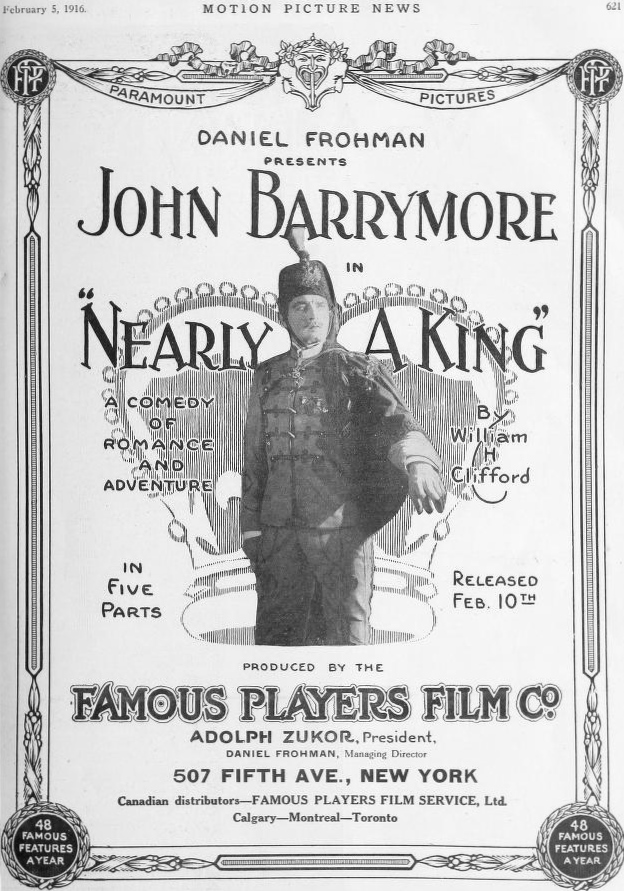
A definitive 7.9/10 rating for a film that redefined the boundaries of cult cinema. Nearly a King remains a cornerstone of transgressive art.
In the annals of silent cinema, few narratives capture the inherent theatricality of life, particularly royal life, with the same nuanced charm and understated brilliance as Nearly a King. This 1916 production, a fascinating vehicle for the burgeoning talent of John Barrymore, delves into a conceit as old as storytelling itself: the mistaken identity, the imposter. Yet, it elevates this familiar trope beyond mere comedic misunderstanding, transforming it into a compelling meditation on authenticity, duty, and the very nature of performance. It’s a film that, even a century later, still resonates with a surprising modernity, questioning the fixed roles we are assigned and the masks we choose to wear.
The central premise is deceptively simple: a crown prince, burdened by the weight of an arranged marriage to a foreign princess he has no desire to wed, seeks an escape. His ingenious, albeit precarious, solution is to employ an actor to stand in his place. This isn't merely a youthful rebellion; it's a profound rejection of a pre-ordained destiny, a desperate plea for agency in a life where every step is choreographed. The prince's reluctance isn't painted as simple petulance but rather a deeper yearning for a life unburdened by the expectations of the crown. He is, in essence, an actor in his own life, forced to play a part he detests, and his solution is to outsource that performance.
Barrymore's dual role as both the reluctant prince and the eager, yet ultimately conflicted, actor is where the film truly shines. His portrayal of the actor is particularly captivating, showcasing a man who is not only skilled in mimicry but also possesses a keen understanding of human nature. This duality allows for a rich exploration of character, as the actor slowly, almost imperceptibly, begins to inhabit the royal persona with a conviction that sometimes surpasses that of the actual prince. It’s a performance that prefigures later works exploring the blurring of self and role, such as Uma Transformista Original, though with a different kind of theatricality. The film asks us to ponder: if one plays a role convincingly enough, does it eventually become their truth?
William H. Clifford's screenplay, adapted for the screen, navigates the complexities of the plot with admirable clarity, a testament to the storytelling prowess of the silent era. The visual language employed in Nearly a King is elegant and effective, relying heavily on expressive gestures, intricate set designs, and subtle intertitles to convey emotion and narrative progression. The direction understands the power of visual contrast: the opulence of the royal court against the more humble origins of the actor, the forced smiles of diplomatic protocol versus genuine expressions of dismay or affection. There's a particular scene where the actor, attempting to emulate the prince, must learn the intricate dances and social graces, a sequence that is both humorous and poignant, highlighting the demanding nature of even a 'pretend' royal life.
The pacing, while characteristic of films from this period, never drags. Each scene contributes meaningfully to the unfolding deception and its inevitable complications. The film masterfully builds suspense, not through overt action, but through the constant threat of exposure. Will the actor be discovered? Will the real prince return? These questions simmer beneath the surface, keeping the audience engaged. The visual staging of key interactions, particularly those involving Beatrice Prentice as the unsuspecting princess, are particularly well-executed, allowing her reactions to convey her growing affection for the 'prince' without a single spoken word.
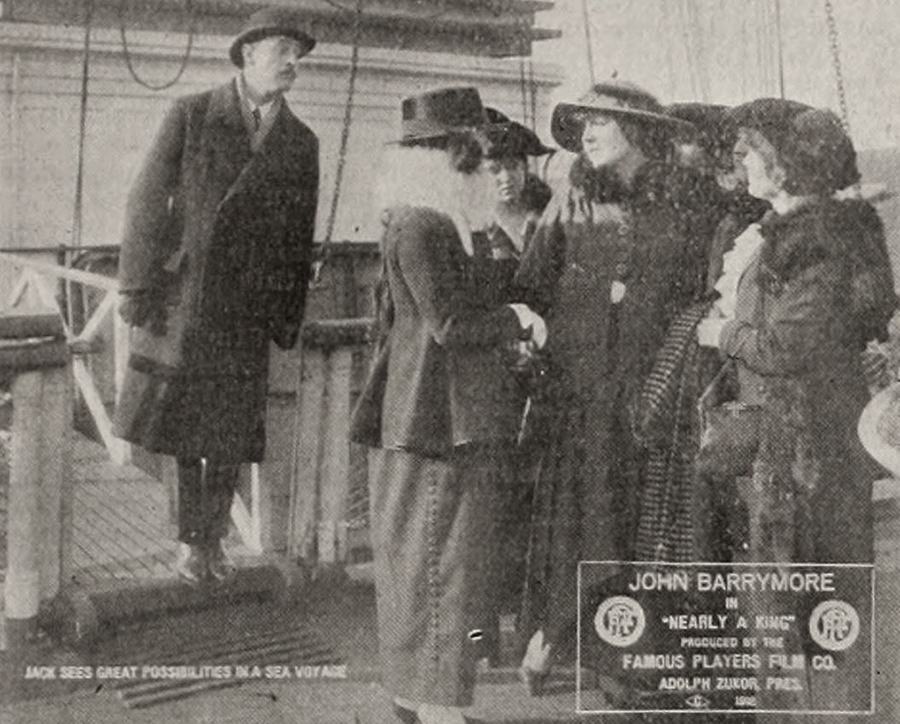
While Barrymore undoubtedly dominates the screen, the supporting cast provides essential anchors to the narrative. Adolphe Menjou, though perhaps in a smaller role than he would later command, brings a certain gravitas, hinting at the distinguished career that lay ahead. Beatrice Prentice as the foreign princess delivers a performance brimming with quiet dignity and burgeoning emotion. Her character is not a mere plot device but a fully realized individual whose feelings are genuinely engaged, making the deception all the more impactful. Russell Bassett and Katherine Corri Harris, among others, contribute to the tapestry of courtly figures, each adding a layer of authenticity to the world being constructed.
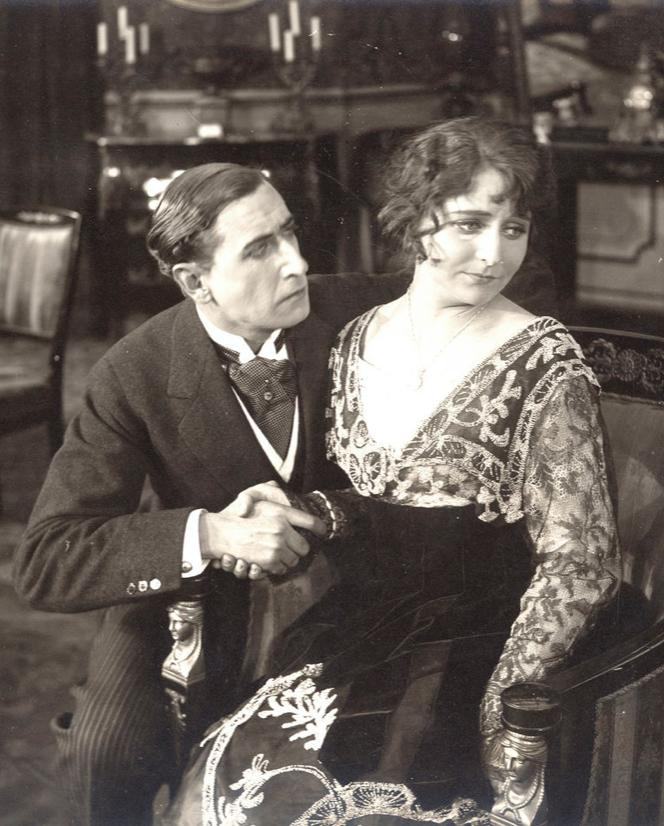
The chemistry, particularly between Barrymore's 'prince' and Prentice's princess, is palpable. It's a testament to the actors' skill that they manage to convey a burgeoning romance through the highly stylized conventions of silent film acting. This emotional core elevates the film beyond a simple farce, grounding it in genuine human feeling. The stakes, therefore, become not just about maintaining a deception but about the potential heartbreak that could ensue when the truth inevitably surfaces. This focus on emotional depth, even within a comedic framework, is a hallmark of superior silent filmmaking, distinguishing it from more purely slapstick contemporaries.
At its core, Nearly a King is a nuanced exploration of the eternal conflict between personal desire and public duty. The prince's initial rebellion is born from a desire for self-determination, a longing to escape the gilded cage of royalty. Yet, as the actor steps into his shoes, he too finds himself grappling with the weight of expectation and the surprising allure of the power he wields. The film cleverly reverses the dynamic: the 'real' prince seeks freedom, while the 'fake' prince finds himself drawn into the very responsibilities the other shirked. This thematic resonance can be seen echoed in later films concerning royal obligations, albeit with different contexts, such as With Our King and Queen Through India, which, while documentary, highlights the performative aspect of monarchy.
The deception itself becomes a character, evolving and taking on a life of its own. It's not a simple switch but a continuous performance that demands improvisation and quick thinking. This aspect of the narrative shares a kinship with stories like The Pride of Jennico, where mistaken identity drives significant plot points and character development. The film raises questions about the nature of identity: is it inherent, or is it a role we play? And what happens when the lines between the two become irrevocably blurred? The actor, initially a mere stand-in, begins to exhibit kingly qualities, perhaps even discovering a latent capacity for leadership that the true prince lacked.
Watching Nearly a King today offers a valuable window into the sophistication of early feature filmmaking. The narrative complexity, the character development, and the visual storytelling techniques demonstrate that cinema, even in its relative infancy, was capable of far more than mere novelty. It was already a powerful medium for exploring complex human emotions and societal structures. The film’s ability to sustain its central conceit over its runtime, while simultaneously developing its characters and building genuine emotional stakes, is a testament to the skill of its creators.
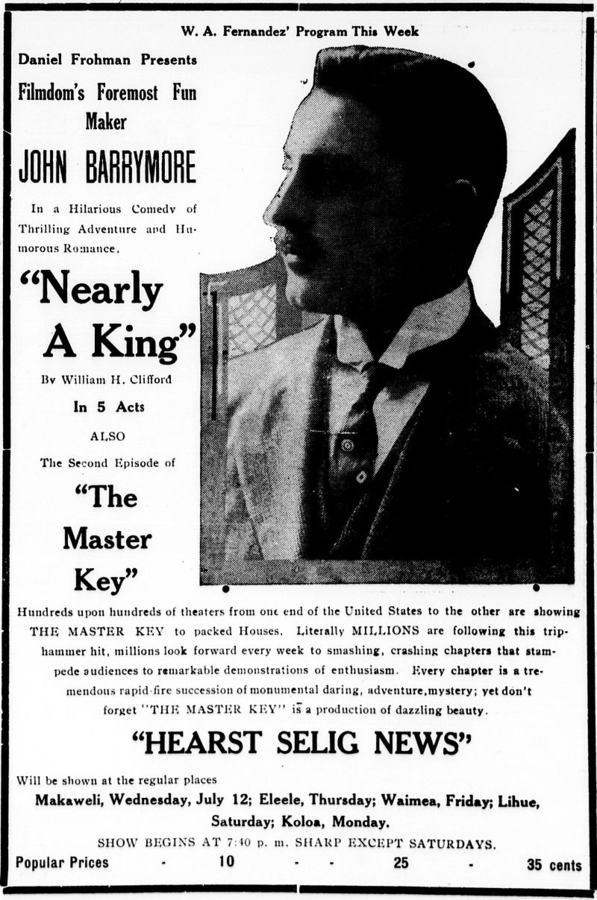
The technical aspects, while perhaps primitive by modern standards, were cutting-edge for their time. The use of lighting to create mood, the careful framing of shots to emphasize certain characters or reactions, and the seamless integration of intertitles all contribute to a cohesive and engaging cinematic experience. It reminds us that fundamental principles of filmmaking were being established and refined during this period, laying the groundwork for the more elaborate productions that would follow. Compared to simpler narrative structures found in some earlier shorts, Nearly a King stands out for its ambition and execution.
Nearly a King might not be as widely celebrated as some of Barrymore's later, more flamboyant roles, but it remains a crucial piece in understanding his artistic evolution and the capabilities of silent cinema. It showcases his remarkable range, his ability to convey both comedic lightness and dramatic depth without uttering a single word. The film's enduring appeal lies in its timeless themes: the desire for freedom, the burden of expectation, and the transformative power of love and responsibility.
Its narrative echoes through countless subsequent stories of mistaken identity and royal romance, from lighthearted comedies to poignant dramas. The idea of someone stepping into another's shoes, particularly those of a monarch, is a powerful fantasy that continues to captivate audiences. This film, in its quiet, elegant way, explores the very human impulse to escape one's fate, only to potentially find a new, unexpected one. It’s a compelling reminder that even the most elaborate deceptions can lead to unforeseen truths, making Nearly a King a delightful and thought-provoking cinematic artifact that deserves renewed attention.
The film's exploration of identity and role-playing also connects it to broader artistic traditions, from Shakespearean comedies like The Merchant of Venice (in its intricate deceptions) to various theatrical productions where actors assume multiple personas. It highlights the inherent theatricality of social structures, particularly those as rigid as a monarchy. The film's conclusion, without giving too much away, manages to satisfyingly resolve the central dilemma while leaving the audience with a sense of the profound impact the charade has had on all involved. It solidifies its place not just as a historical curiosity, but as a genuinely engaging piece of storytelling that offers more than surface-level entertainment.
Ultimately, Nearly a King stands as a testament to the enduring power of classic storytelling and the magnetic presence of its lead actor. It’s a film that asks us to consider what truly makes a king – birthright, or the ability to embody the virtues and responsibilities of leadership? It suggests that perhaps the truest royalty lies not in blood, but in character, and that sometimes, it takes a skilled actor to reveal that truth. This silent gem, with its intricate plot and compelling performances, remains a fascinating watch, providing both entertainment and ample food for thought. It's a delightful journey into a world where the stage and the throne are almost indistinguishable, and where a mere player can indeed become nearly a king.
IMDb 5.8
1926
Community
Log in to comment.