DbcultAccessing Vault...
7.4/10
Senior Film Conservator
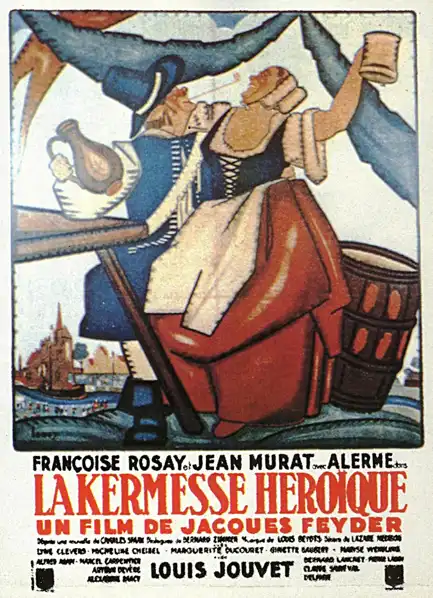
A definitive 7.4/10 rating for a film that redefined the boundaries of cult cinema. Carnival in Flanders remains a cornerstone of transgressive art.
Okay, so the premise of "Carnival in Flanders" (originally La Kermesse héroïque, which sounds much grander, doesn't it?) is pretty simple. It’s 1616, and a quiet Flemish town is suddenly in the path of a Spanish army. If you've got a soft spot for classic black-and-white comedies, especially ones that poke fun at serious history, then absolutely, give this a watch. It's a clever little gem. Folks who need constant action or super-fast pacing might find it a bit slow at first. But trust me, it builds.
The men, led by their mayor, are basically useless. They're convinced they're doomed, ready to play dead, literally, by holding a fake funeral for themselves. It's such a male response, isn't it? This whole idea of "let's pretend we're dead, they'll surely leave us alone." You can almost hear the gears grinding in their heads, trying to come up with the least heroic plan possible.
But the women. Ah, the women. They decide to take things into their own hands. Françoise Rosay, playing the mayor's wife, Cornelia, just shines. She's got this glint in her eye the whole time, a kind of knowing mischief. You just know she’s got a scheme brewing, something entirely different from the men's sad little funeral procession.
The way they hide all the men, like stuffing them into barrels or up in the attic. It’s almost cartoonish, but it works because the stakes feel real, even with the humor. The panic on the men's faces is just priceless when the Spanish arrive. They're peeking through cracks, holding their breath. It’s a classic comedic setup, really.
And when the Spanish Duke (Louis Jouvet) rolls in, with his whole entourage. The visual contrast between the heavily armored, stern soldiers and the bustling, determined women of the town is really something. The Duke is initially all business, very serious, ready to sack the place. He's got that aristocratic weariness, you know? Like he's seen a hundred towns just like this one.
But Cornelia, she just marches right up to him. No fear, no hesitation. She proposes a feast, a celebration, a way to charm the army rather than fight them. It’s so bold. And the Duke, well, he’s a man, isn't he? He's disarmed by her sheer audacity, and maybe a little by her... *presence*. There’s a quiet moment where he just considers her, and you can almost see him thinking, "This is new."
The entire sequence of the women hosting the Spanish soldiers, throwing this huge party. It feels so vibrant, even in black and white. There’s so much food, so much wine. The women flirt and cajole, making sure the soldiers are well-fed and *distracted*. It’s a masterclass in soft power, really. They're not fighting, they're enveloping.
There’s a moment, I remember, where one of the Spanish captains tries to get a bit too familiar with a young woman. Her husband is literally hiding in the wall, peering out. The look on his face! It’s this mix of rage and utter helplessness. It’s a very quick shot, but it tells you so much about the power shift happening. He can't do a thing. It's almost tragic, but the movie keeps it light.
The movie manages to be anti-war without ever really being preachy. It just shows the absurdities. The men are cowards, the invaders are easily swayed by food and pretty faces. It’s all very human, isn't it? No grand speeches about peace, just practical, subversive action.
I loved how the Duke, who started off so imposing, slowly but surely softens. Louis Jouvet plays him with this gradual thawing. He finds himself enjoying the hospitality, being charmed. It’s a subtle performance, but so effective. His initial sternness just melts away into something... almost fond.
And the outfits! The period costumes are fantastic, the big hats, the cloaks. The whole set design for the town square just feels authentic. You really get a sense of this little slice of Flanders. The way the light hits the cobblestones, the detailed woodwork on the houses. It's all quite beautiful.
This isn’t a perfect film, no. Some of the pacing feels a little... *leisurely* by today's standards. There are moments where a scene lingers just a touch too long. But it’s part of its charm, I think. It lets you soak in the atmosphere, almost like you're there.
The ending, when the Spanish finally leave, and the men reappear. The women are exhausted
IMDb 6.6
1934
Community
Log in to comment.