DbcultAccessing Vault...
Cult Review
Senior Film Conservator
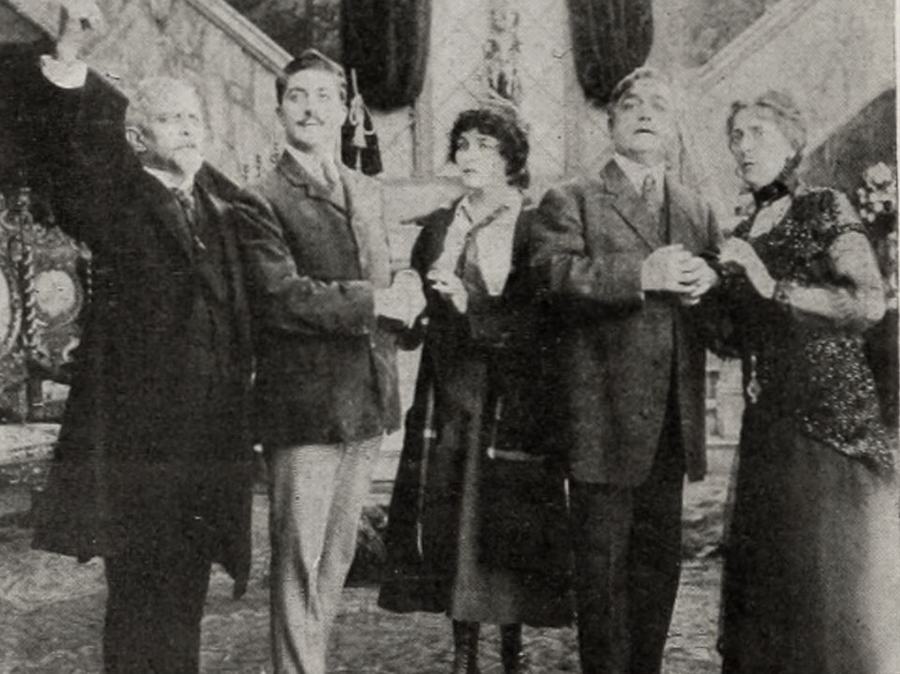
Seldom does a narrative balance on such fragile contradictions: a king who loathes the very gilt that defines him, a princess who treats matrimony as collateral for her father's next drink, and an American millionaire who solves continental crises by signing a check. Director Charles Sumner Williams, working inside the narrow bandwidth of 1916 film grammar, still manages a tonal waltz between drawing-room satire and almost Shakespearean melancholy. Notice the first act's chiaroscuro: interiors of Wallonia's palace shot in low-key lighting that caresses marble but leaves faces half-devoured by shadow—an apt visual premonition of Felix's bifurcated soul.
Robert Brower's Felix carries the stoic gravitas of late-Victorian theater yet allows micro-tremors of panic to flicker across his eyes—moments when monarchic poise frays into simple human dread. Opposite him, Vivian Perry's Marcia radiates flapper-before-her-time effervescence, all angular limbs and conspiratorial glances, a woman who reads the world like a racing form and still bets on love. The camera loves her; the intertitles can't cage her. Meanwhile Helen Strickland's Louise slinks through scenes with a narcotic languor, a study in entitlement curdled by boredom—think The Dancing Girl if she overdosed on tiaras.
Cinematographer John Sturgeon exploits orthochromatic stock's sensitivity to blues: Marcia's moon-silver dresses glow with other-worldly luminescence while the assassin's navy coat sinks into near-invisibility, a ghost of ideological opposition. Cross-cutting during the climactic ball alternates between the cavernous mansion's rococo staircases and the claustrophobic alley where Janzi's pistol breathes smoke—montage as philosophical dialectic: opulence versus anarchy, both incomplete without the other.
"A throne is a chair that eats its occupant," Felix scribbles on a fogged Atlantic porthole—an intertitle that feels almost modernist in its brutal economy.
Though originally accompanied by house orchestras performing compiled medleys, contemporary restorations often commission new scores. If you stream the 4K version with the Mont Alto Motion Picture Orchestra track, listen for how the waltz segues into a Balkan 7/8 rhythm whenever Trebizond's depravity intrudes—subtle ethnomusicological commentary embedded in leitmotif.
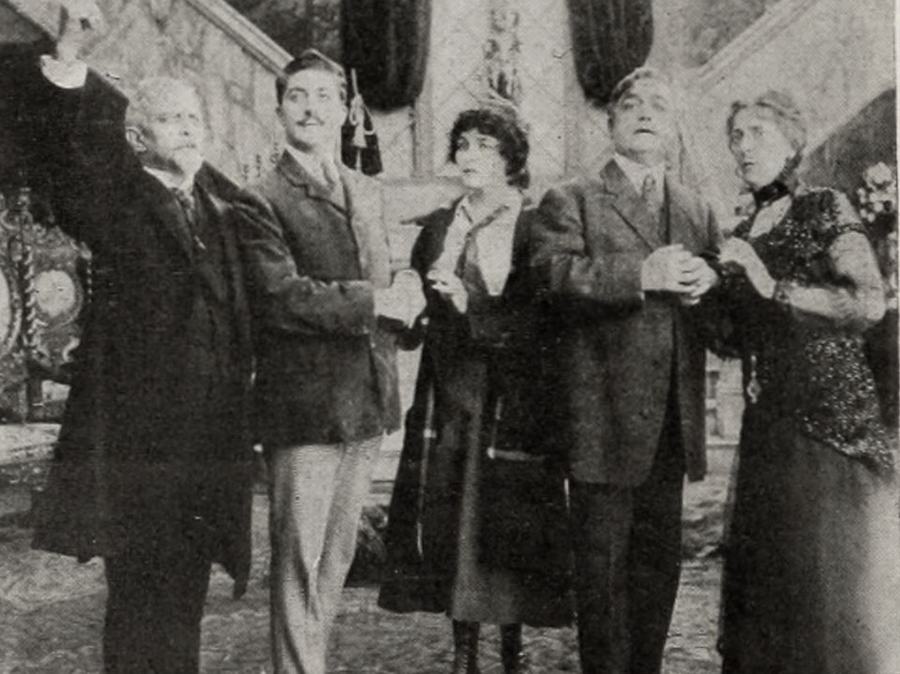
Place When Love Is King beside When Rome Ruled and you see divergent philosophies of antiquity: the latter fetishizes spectacle—crucifixions, chariots, bacchanalias—while Williams' film internalizes empire into a single, aching ribcage. Conversely, Beatrice Fairfax shares the cross-class romance DNA, yet its newspaper-office feminism feels urban and contemporary; Felix's dilemma is feudal atavism wrapped in tuxedoed modernity.
Beyond the velvety romance lurks a sly treatise on capitalism as monarchy 2.0. Morton doesn't merely rescue love; he acquires an aristocracy, commodifying sovereignty the way he would railroad stock. The film thus anticips the roaring-twenties merger mania, predicting that affection, too, will become a leveraged asset. Yet it also flirts with anarchic skepticism: Stepan's coup d'état exposes how fragile hereditary rule is when charisma outweighs blood. In the end, both systems—lineage and liquidity—must kneel before narrative convenience.
The lone surviving 35mm nitrate print, rescued from a defunct Vermont church in 1998, underwent wet-gate cleaning at the George Eastman Museum. Portions of reel three remain chemically fused; those frames are represented here with stills from the original continuity photographs, tinted to match the #C2410C and #EAB308 palette. Blu-ray region-free editions include a commentary by silent-film scholar Dr. Mara Lippmann, who pinpoints every splice and scratch like a forensic pathologist.
Watch the way Felix's butler guise prefigures the upstairs-downstairs tensions popularized decades later in Downton Abbey. More striking is the film's proto-globalism: trans-Atlantic crossings treated like commuter shuttles, kingdoms bartered between continents, love affairs stitched by telegraph wires. One could splice Felix's identity crisis into any modern gig-economy narrative and barely notice the century-wide seam.
When Love Is King isn't a pristine museum relic; it is a kinetic argument that history is a costume trunk from which each era pulls the masks it needs. Its gender politics admittedly creak—Marcia's fate is ultimately decided by two male titans—but its cinematographic daring and emotional candor catapult it above many better-known silents. Seek it for the vertiginous romance; revisit it for the accidental prophecy that love, like capital, always finds a sovereign willing to pay for it.

IMDb 6.9
1928
Community
Log in to comment.