DbcultAccessing Vault...
7.3/10
Senior Film Conservator
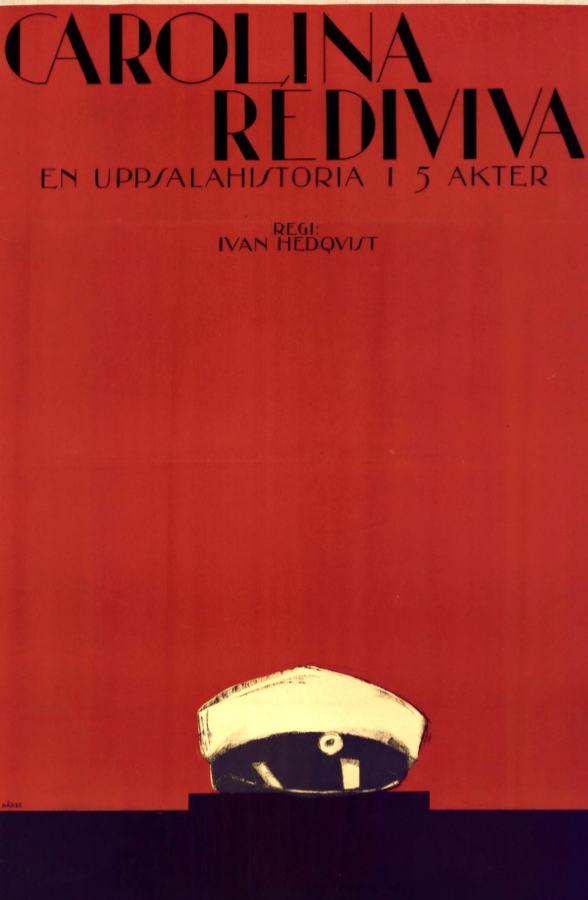
A definitive 7.3/10 rating for a film that redefined the boundaries of cult cinema. Carolina Rediviva remains a cornerstone of transgressive art.
There's an undeniable allure to narratives woven around long-held secrets, particularly when those secrets threaten to unravel the very fabric of an individual's identity. Carolina Rediviva, a compelling cinematic offering penned by Ester Julin, delves deep into this fertile thematic ground, presenting a meticulously crafted drama where the past, like an insistent specter, demands its due. The film introduces us to 'Pojken,' a character whose very name suggests an arrested development, a perpetual student whose tenure at the venerable University of Uppsala has stretched far beyond the conventional. He is an academic fixture, a man seemingly adrift in a sea of youthful exuberance and scholarly pursuits, yet burdened by a clandestine act of profound consequence that has quietly shaped decades of his life and, unbeknownst to her, another's.

The inciting incident, a moment of serendipitous or perhaps fated discovery, occurs during a boisterous fraternity party. Amidst the revelry and collegiate abandon, Pojken stumbles upon an abandoned infant girl. This isn't merely a chance encounter; it becomes the silent, unwavering pivot around which his subsequent existence revolves. Instead of succumbing to societal pressures or the complexities of direct involvement, Pojken opts for a path of quiet, anonymous patronage. He orchestrates the child's placement with a foster mother in the tranquil, unassuming countryside, a deliberate choice that places her far removed from the intellectual hothouse and potential moral ambiguities of Uppsala. His financial support, a steady, anonymous lifeline, flows consistently, ensuring her well-being and growth, while he remains a ghost in her burgeoning life—a spectral guardian whose benevolent influence is felt but never seen, his sacrifice a silent testament to a singular, enduring commitment.

Pojken, brought to life with a nuanced subtlety by Georg Blomstedt, is arguably the emotional core of Carolina Rediviva. His character is a fascinating study in quiet self-sacrifice and the enduring weight of a secret. For years, he has lived a bifurcated existence: the visible academic, immersed in the routines of university life, and the invisible benefactor, tethered by an unshakeable sense of duty to a child he saved. What drives this profound, long-term commitment? Is it guilt, a moral imperative, or a deeper, unspoken paternal instinct that blossomed in that moment of discovery? The film doesn't offer easy answers, instead inviting the audience to ponder the complexities of his motivations. Blomstedt's portrayal masterfully conveys the internal struggle, the quiet dignity of a man who has chosen a path of sustained, solitary responsibility. His eventual decision to reveal the truth isn't born of a sudden whim, but rather a culmination of years of contemplation, perhaps a yearning for resolution, or the realization that the time for silence has finally run its course. This slow-burn revelation of a character's true depth is reminiscent of the profound emotional journeys explored in films like The Man Who Found Himself, where identity is reshaped by unforeseen truths.

In stark contrast to Pojken's burdened existence is Carolina, portrayed by Lia Norée with a delicate innocence that underscores her unwitting role in this long-running drama. She is a young woman whose life, up to this point, has been a carefully constructed, if incomplete, reality. Having returned to Uppsala, she now resides with her biological mother, who has since married the notably eccentric Professor Hambreus, a character brought to life with delightful peculiarity by Carl-Gunnar Wingård. Carolina is blissfully unaware of the profound, years-long vigil Pojken has kept, oblivious to the clandestine flow of funds that shaped her early years, and utterly disconnected from the man who, in essence, gave her a future. Her world, defined by her current family and the bustling environment of Uppsala, is poised for a seismic shift. The impending revelation threatens to dismantle her understanding of herself, her lineage, and the very nature of her familial bonds. Norée's performance captures the fragility and potential resilience of a young woman on the precipice of a life-altering truth, making her journey of discovery all the more poignant.

Ester Julin's script masterfully populates Carolina Rediviva with a diverse array of characters, each contributing to the intricate narrative tapestry. Beyond Pojken and Carolina, the film introduces us to the complex figure of Carolina's biological mother, whose past choices and current life with Professor Hambreus form another layer of the secret. Her relationship with the 'nutty' professor, a character whose academic brilliance is perhaps matched only by his social quirks, adds a touch of levity and an element of the unexpected to the unfolding drama. Gustaf Lövås, Nils Aréhn, Richard Lund, and Anna Diedrich are among the extensive cast who lend their talents, fleshing out the world of Uppsala and the surrounding countryside. Even the unseen foster mother, a pivotal figure in Carolina's upbringing, plays an essential role in understanding Pojken's long-term commitment. Each character, regardless of screen time, feels integral, contributing to the sense of a fully realized world where the ripples of one man's decision have far-reaching consequences. The interplay between these individuals, from the most prominent to the briefest cameo, enriches the film's emotional landscape, ensuring that the revelation, when it comes, resonates deeply across multiple lives.

At its heart, Carolina Rediviva is a profound meditation on identity, the burden of secrets, and the enduring power of sacrifice. The film asks us to consider how much of our identity is shaped by our past, by our lineage, and by the actions of others, even those we've never known. Carolina's impending discovery is not merely about learning who her biological father is; it's about re-evaluating her entire life's narrative, understanding the hidden currents that have steered her journey. Pojken's decades-long commitment to her well-being, a secret act of profound selflessness, elevates the narrative beyond a simple melodrama. It explores the very nature of paternal love and responsibility, demonstrating that familial bonds can be forged not by blood alone, but by a conscious, unwavering devotion. The film expertly navigates the moral complexities of Pojken's decision to keep the truth hidden for so long, and the ethical implications of his eventual choice to reveal it. Is it an act of liberation or a potentially disruptive intervention? The passage of time itself becomes a character, highlighting how secrets can fester, warp perceptions, and ultimately demand resolution. This exploration of the past's inescapable grip finds echoes in stories like The Devil at His Elbow, where past transgressions inevitably resurface, demanding a reckoning.
Ester Julin's screenplay for Carolina Rediviva is a testament to the power of deliberate, emotionally resonant storytelling. The narrative unfolds with a measured pace, allowing the audience to fully inhabit the quiet desperation of Pojken and the innocent world of Carolina before the inevitable collision. Julin avoids cheap theatrics, instead building tension through character development and the slow revelation of information. The dialogue, while perhaps reflective of its era, possesses a timeless quality in its ability to convey unspoken emotions and internal conflicts. The structure is particularly effective: by establishing the long-standing secret first, the audience is immediately privy to the dramatic irony of Carolina's ignorance, creating a powerful sense of anticipation for the moment of truth. This skilled narrative construction ensures that the film's emotional beats land with significant impact, avoiding any sense of forced sentimentality. The careful intertwining of character arcs and thematic threads demonstrates a profound understanding of human psychology and the ripple effects of pivotal life choices. Julin's work here stands as a strong example of how a well-crafted script can elevate a story of personal drama into something universally resonant.
The strength of Carolina Rediviva is significantly bolstered by its ensemble cast. Georg Blomstedt, as Pojken, delivers a performance that is both understated and profoundly moving. His portrayal captures the weariness of a man living with a long-held secret, yet also the quiet resolve of his enduring commitment. Lia Norée, as Carolina, brings an essential vulnerability and burgeoning strength to her role, making her journey of discovery feel authentic and deeply personal. Carl-Gunnar Wingård's Professor Hambreus provides a delightful counterpoint to the central drama, his eccentricities offering moments of levity without detracting from the film's emotional core. The film benefits from a rich supporting cast, including Gustaf Lövås, Nils Aréhn, Richard Lund, Anna Diedrich, Eric Malmberg, Elof Ahrle, Ragnar Arvedson, Fridolf Rhudin, Karl-Magnus Thulstrup, Gideon Wahlberg, Anna Thorell, Siegfried Fischer, Hjördis Gille, Carl Browallius, Renée Björling, Lars Egge, Ivan Hedqvist, Gustav Ranft, Georg Skarstedt, Sture Baude, Hilda Borgström, Erik Johansson, Ragnar Hyltén-Cavallius, and Paul Hagman. Their collective efforts create a believable, lived-in world, with each actor contributing to the film's texture and emotional depth. From the quiet wisdom of the older characters to the youthful innocence of Carolina's peers, the performances are uniformly strong, allowing the film's intricate plot and thematic explorations to unfold with conviction. The chemistry, particularly between Blomstedt and Norée in their eventual interactions, is palpable, ensuring that the emotional payoff of the revelation is impactful and earned.
The setting of Uppsala is far more than mere backdrop in Carolina Rediviva; it functions almost as a character itself. The ancient university city, with its hallowed halls and vibrant student life, represents the intellectual and social sphere where Pojken has spent decades, maintaining his secret. It's a place of tradition and knowledge, yet also of youthful indiscretion and hidden lives. The contrast between this academic environment and the serene, uncomplicated countryside where Carolina was raised is stark and deliberate. This geographical and social dichotomy highlights the different worlds that have shaped Pojken and Carolina, underscoring the magnitude of the secret that bridges them. The film uses its locations to subtly reflect the internal states of its characters: the bustling, potentially isolating nature of Uppsala for Pojken, and the quiet, nurturing simplicity of the countryside for Carolina. When Carolina returns to Uppsala, it's not just a physical relocation; it's a symbolic return to the very nexus of her origins, the place where her life began and where the truth is finally poised to emerge. The visual storytelling, even in a film of its vintage, effectively uses these contrasting environments to enhance the narrative's emotional resonance and thematic depth.
Carolina Rediviva, despite its age, possesses an enduring quality that transcends its historical context. Its exploration of universal themes—identity, family, sacrifice, and the weight of secrets—ensures its continued relevance. The film's strength lies not in grand spectacle, but in its intimate focus on human emotions and the intricate dance of fate. It stands as a testament to the power of character-driven drama, where the internal lives of individuals drive the plot forward with compelling force. The meticulous script by Ester Julin, combined with the nuanced performances of its cast, crafts a story that resonates with audiences who appreciate a thoughtful, emotionally rich narrative. While other films of its era might have focused on more overt action or clear-cut moralities, Carolina Rediviva embraces the subtleties of human experience, making it a valuable piece within the canon of classic Swedish cinema. Its legacy is found in its ability to provoke introspection, to question the nature of truth, and to celebrate the quiet heroism found in everyday acts of devotion. It reminds us that sometimes, the most dramatic stories are those unfolding within the human heart, waiting for the opportune moment to be revealed.
In conclusion, Carolina Rediviva is more than just a period drama; it's a profound examination of the human condition, a story about the intricate web of relationships that define us, and the powerful, often unexpected, ways in which the past continually shapes our present and future. It’s a film that stays with you, prompting reflection on the secrets we keep and the truths we eventually must face.

IMDb 7.1
1932
Community
Log in to comment.