DbcultAccessing Vault...
6/10
Senior Film Conservator
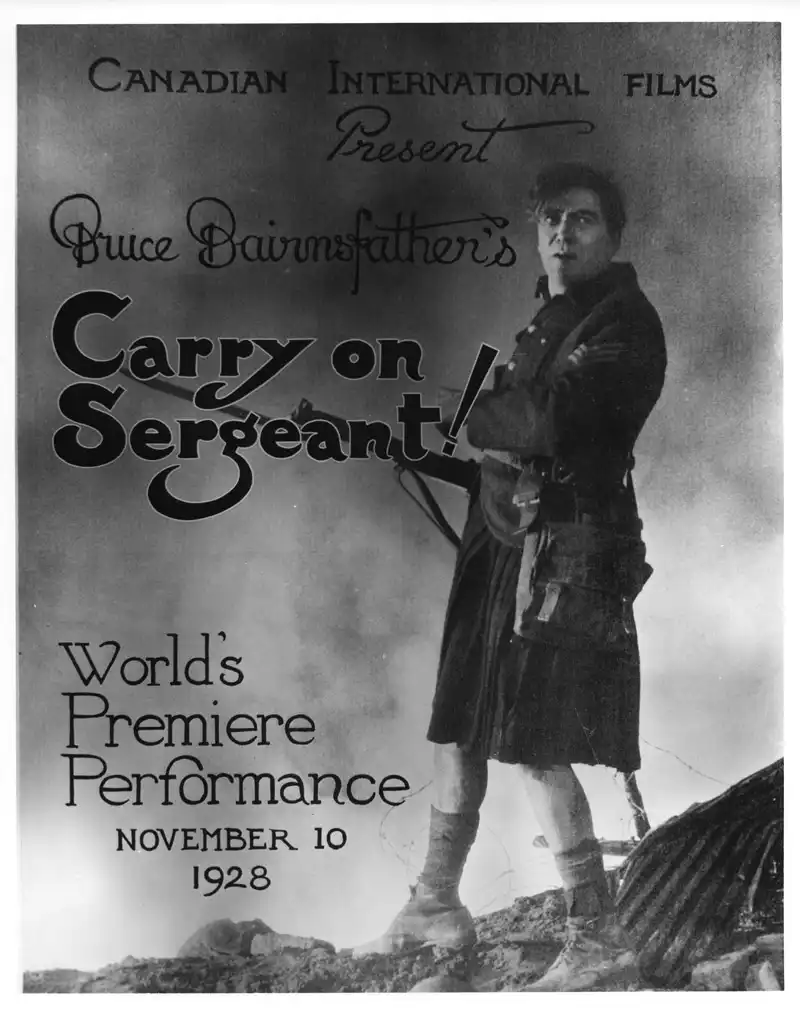
A definitive 6/10 rating for a film that redefined the boundaries of cult cinema. Carry on, Sergeant! remains a cornerstone of transgressive art.
If you are looking for a cohesive war masterpiece, Carry on, Sergeant! is not it. However, if you are a student of early cinema history or someone fascinated by the transition from silent films to talkies, this 1928 Canadian epic is an essential curiosity. It is worth watching today primarily as a historical artifact—a massive, expensive gamble that tried to do too many things at once. It will likely bore casual viewers who prefer the tight pacing of modern war films, but it will fascinate anyone interested in how the Great War was processed by the generation that lived through it.
Directed by Bruce Bairnsfather, the man famous for creating the 'Old Bill' cartoons, the film feels exactly like what it is: a series of comic strips stitched together with the budget of a blockbuster. Bairnsfather wasn't a natural filmmaker, and it shows in the way the camera sits static for long stretches, waiting for the actors to finish their business. Yet, the sheer scale of the production is undeniable. The trench sets, built in Trenton, Ontario, are remarkably detailed. You can almost smell the damp earth and stale tobacco in the dugout scenes.
The film opens in a factory, and there is a genuine grit to these early scenes. The workers look like real men, not Hollywood extras. When they decide to enlist, the tone is jaunty, almost naive. This is where the film is at its most comfortable, leaning into the 'soldiering as a lark' trope that was popular in post-war comedies. But the transition to the front lines is jarring. The film struggles to reconcile the slapstick antics of the men with the sudden, violent reality of the war. It’s a tonal whiplash that never quite resolves itself.
The standout performance—for better or worse—is Jimmy Savo. A vaudevillian by trade, Savo brings a physical language to the screen that feels entirely different from the rest of the cast. His movements are rubbery and exaggerated, reminiscent of the slapstick found in Hard Luck. There are moments where his wide-eyed expressions and tiny stature are genuinely funny, particularly during the drill sequences where he is perpetually out of step.
However, the rest of the cast plays it much straighter, leading to a strange disconnect. Hugh Buckler, as the Sergeant, tries to ground the film in a more traditional military drama, but he often feels like he’s in a different movie than Savo. The romantic subplot involving the French waitress (played with a sort of frantic earnestness by Louise Cardi) feels tacked on, a concession to the perceived needs of a feature film rather than a natural outgrowth of the plot. The marriage scene is particularly awkward, played with a seriousness that the film hasn't earned.
The biggest hurdle for a modern viewer is the pacing. At over two hours in its original form, Carry on, Sergeant! drags significantly in the second act. There are long sequences of soldiers sitting around, drinking, and joking that don't move the narrative forward. While these moments might have felt authentic to veterans in 1928, they lack the narrative tension needed to sustain a feature-length film today. The editing rhythm is sluggish; reaction shots are held for several seconds too long, and the intertitles are often redundant, explaining actions that are perfectly clear from the performances.
Visually, the film has flashes of brilliance. The use of shadow in the night-time trench scenes is impressive for a Canadian production of this era. There is a specific shot of soldiers moving through a smoke-filled no-man's-land that feels hauntingly real, stripped of the theatricality found in the rest of the movie. It’s in these moments—where Bairnsfather stops trying to be funny and leans into the atmosphere—that the film actually works.
The film’s greatest strength is its lack of artifice regarding the soldiers themselves. They aren't portrayed as gleaming heroes but as tired, messy individuals looking for a way to pass the time. This groundedness stands in stark contrast to the more polished, melodramatic war films coming out of Hollywood at the same time, such as The Snob or other character-driven dramas of the mid-20s.
Its greatest weakness is its structural incoherence. It feels like a collection of anecdotes rather than a story. One moment we are watching a comedy about a soldier trying to find a decent meal, and the next we are expected to feel the weight of a comrade's death. Because the characters aren't deeply developed, the emotional beats often land with a thud. We don't know these men well enough to care when the shells start falling.
Carry on, Sergeant! is a fascinating failure. It was the most expensive Canadian film ever made at the time, and its commercial collapse effectively ended the country's first real attempt at a domestic film industry. You can see the money on the screen—the hundreds of extras, the massive sets, the pyrotechnics—but you can also see the lack of a steady hand in the director's chair.
Watch it if you want to see a unique, non-Hollywood perspective on the First World War. Watch it for Jimmy Savo’s bizarre, hypnotic physical comedy. But be prepared to check your watch during the long, meandering middle section. It is a film that demands patience, offering small rewards in exchange for a lot of narrative treading water. It doesn't have the technical precision of the great silent epics, but it has a sincerity that is hard to ignore.
IMDb 7.2
1932
Community
Log in to comment.