DbcultAccessing Vault...
Cult Review
Senior Film Conservator
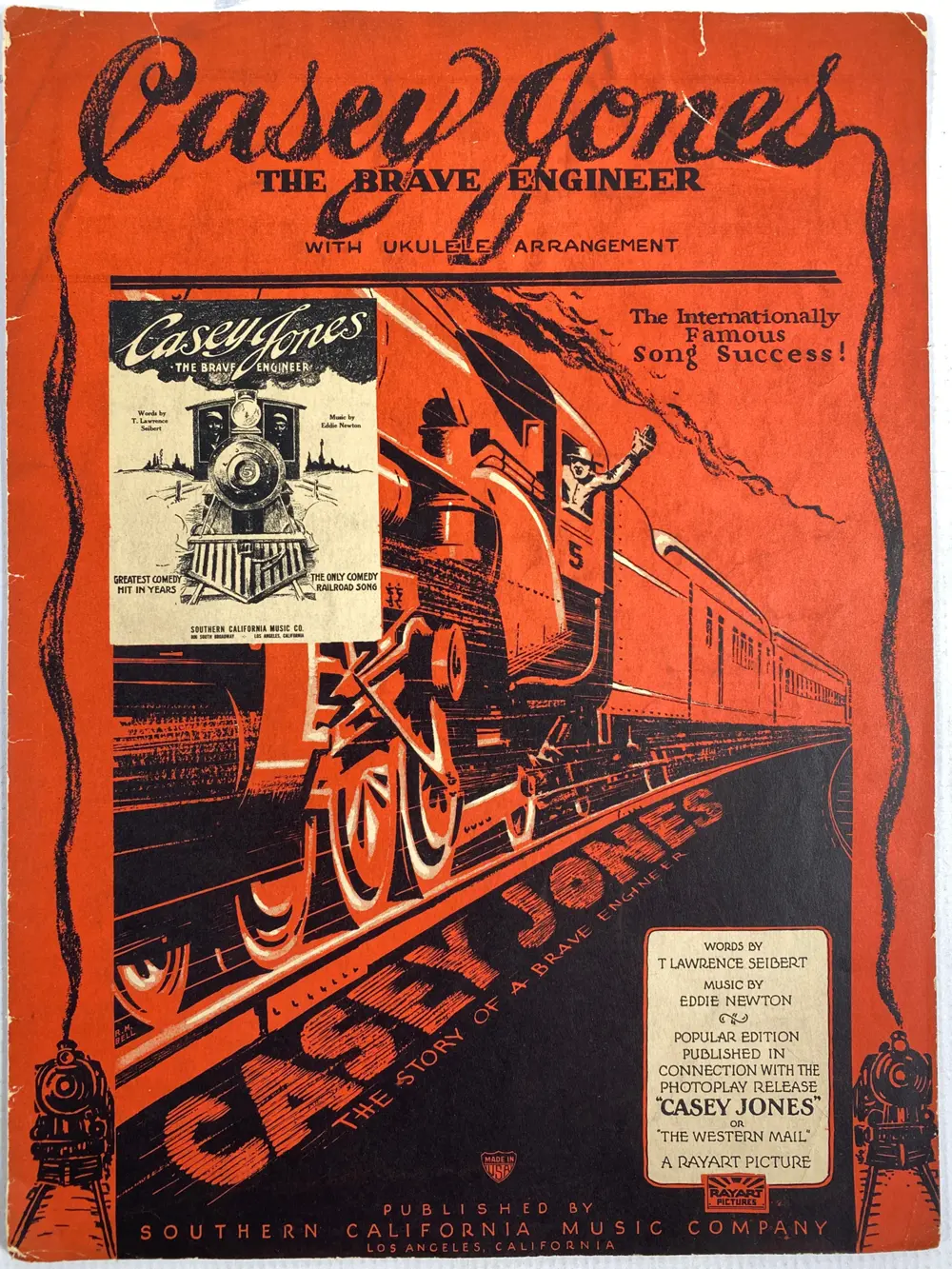
Is this film worth your time today? Short answer: Yes, but only if you are willing to trade modern high-octane pacing for a masterclass in industrial atmosphere. This isn't a film for those who need rapid-fire editing; it is for the patient observer of early cinematic craft.
This film is specifically for historians of the American mythos and fans of practical, pre-CGI stunt work. It is absolutely not for viewers who find silent-era domestic melodrama tedious or those who demand a strictly factual biographical account.
1) This film works because it treats the locomotive as a living, breathing character, utilizing actual engines to create a sense of scale and danger that modern green screens cannot replicate.
2) This film fails because the secondary plot involving the family dynamics feels like a standard-issue silent melodrama that occasionally stalls the momentum of the main narrative.
3) You should watch it if you want to see Jason Robards Sr. deliver a performance that bridges the gap between theatrical grandiosity and modern internal realism.
The legend of Casey Jones has been told in song and story, but the 1927 film attempts something more ambitious than a simple ballad. It seeks to capture the heavy, oily reality of the railroad. Directorially, the film leans into the grit. We see the sweat on the brows of the firemen and the rhythmic dance of the pistons. It’s industrial poetry.
The pacing is deliberate. It builds tension through repetition—the recurring sight of the watch, the pressure gauge, and the track ahead. This isn't the lighthearted adventure found in Youth and Adventure; it is a weightier exploration of professional obsession. When Casey grips the throttle, you feel the vibration of the tracks in the cinematography.
Jason Robards Sr. gives us a Casey Jones who is stoic yet haunted. There is a specific scene where he looks at his engine after a long run, and for a moment, the machine seems to look back. It’s a subtle piece of acting that avoids the over-the-top gesticulation common in the era. He plays it straight. He plays it hard.
The supporting cast, including Violet N. Cane, provides the necessary emotional stakes, though their roles are often relegated to the 'worried family' trope. However, the chemistry between the crew members feels authentic. There is a sense of camaraderie that reminds one of the ensemble dynamics in The Heart of a Police Officer, where duty often comes before personal safety.
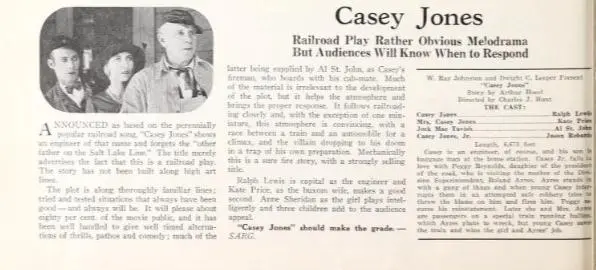
One cannot discuss this film without mentioning the cinematography. The night shots of the train are genuinely impressive for 1927. The use of shadow and the flare of the engine’s firebox create a chiaroscuro effect that is both beautiful and menacing. It lacks the polish of The Unguarded Hour, but it gains a raw, documentary-like quality instead.
The final crash sequence is the film’s centerpiece. There is no trickery here; it’s the physical reality of steel meeting steel. The editing in this sequence is surprisingly modern, cutting between the panicked crew, the stationary train on the tracks, and the relentless approach of the Cannonball Express. It is a mechanical choreography of doom.
Yes, Casey Jones (1927) is worth watching for its historical value and its impressive practical effects. It serves as a bridge between the early silent shorts and the more complex feature-length dramas of the late 1920s. If you enjoy seeing how filmmakers handled massive machinery before the advent of digital effects, this is a must-see.
A surprising observation about this film is how little it cares for the 'hero' in the traditional sense. Casey Jones is often portrayed as a martyr, but here, he is a man caught in a system. The railroad is the true master. This cynical undertone makes the film feel more modern than its contemporaries like The Hope Chest.
The film takes a stance: progress has a body count. It doesn't shy away from the cost of the industrial revolution. The soot isn't just on the faces of the actors; it’s in the soul of the story. It works. But it’s flawed. The tonal shifts between the lighthearted moments with Al St. John and the impending doom of the tracks can be jarring.
Pros:
- Authentic 1920s railroad atmosphere.
- Strong, grounded lead performance by Jason Robards Sr.
- Innovative night-time cinematography for the era.
- A climax that still holds tension nearly a century later.
Cons:
- Some comedic relief characters feel out of place.
- The pacing in the second act drags slightly.
- The print quality of surviving versions can be inconsistent.
When compared to The Red Circle, Casey Jones feels more grounded in physical reality. While other films of the era were exploring mystery and the supernatural, this film is firmly planted in the mud and coal. It shares some of the urban grit found in Broadway Rose, but exchanges the city streets for the endless expanse of the rails.
The writing by Richard Weil and Arthur Hoerl is functional. It doesn't reach for the poetic heights of some European silent films, but it understands the American blue-collar ethos. They don't make Casey a god; they make him a worker. That is the film's greatest strength.
Casey Jones (1927) is a rugged piece of filmmaking that prioritizes the machine over the man. While it suffers from some of the narrative bloat common in the transition to longer feature films, its technical achievements and the sheer physical presence of the locomotives make it a compelling watch. It is a loud, vibrating, soot-covered testament to an era when the railroad was the pulse of the nation. It isn't perfect, but it is essential for anyone tracking the evolution of the action-drama genre. It is a machine that still runs, even if the tracks are a bit rusty.

IMDb —
1931
Community
Log in to comment.