DbcultAccessing Vault...
Cult Review
Senior Film Conservator
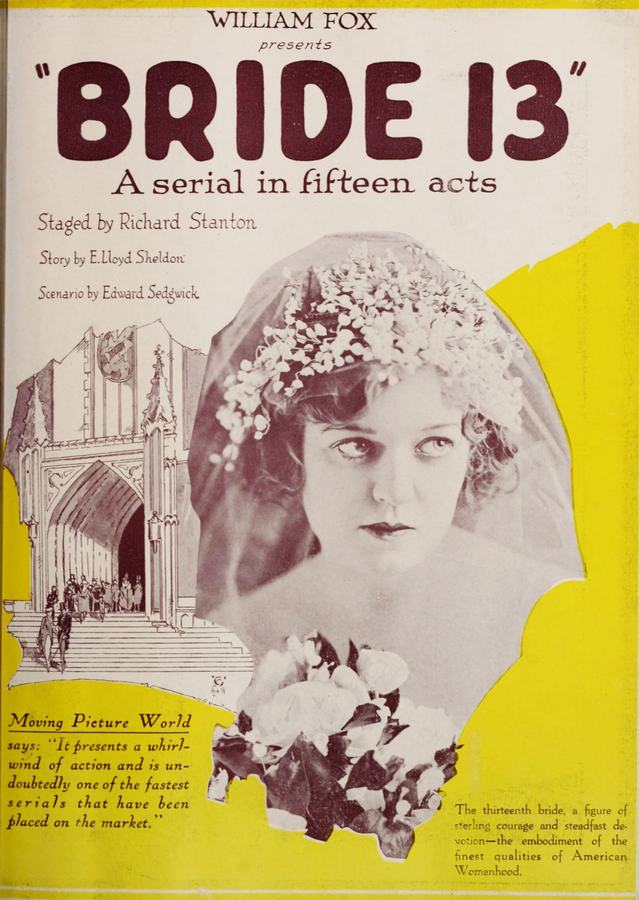
In the burgeoning landscape of 1920s cinema, the serial format occupied a peculiar and potent space, bridging the gap between the short-form curiosities of the previous decade and the burgeoning maturity of the feature-length narrative. Bride 13, a Fox Film Corporation production, stands as a testament to this transitional era. It is a work of histrionic intensity and logistical ambition that sought to captivate audiences through the sheer momentum of its episodic cliffhangers. Unlike the more grounded dramas of the period, such as The Divorce Trap, this serial embraced a fantastical, almost subterranean logic of crime and punishment.
The direction, often attributed to Richard Stanton, though the creative DNA is heavily influenced by writers Edward Sedgwick and E. Lloyd Sheldon, exhibits a fascination with the mechanics of abduction. The premise—thirteen brides stolen from the upper echelons of society—functions as a sophisticated MacGuffin, allowing the filmmakers to explore diverse locales and technical set-pieces. While many contemporary films like Molly Make-Believe leaned into the whimsical or the domestic, Bride 13 plunged headlong into the abyss of maritime adventure, prefiguring the high-octane escapades that would eventually define the action genre.
The cast, led by Marguerite Clayton and Helen Johnson, navigates the stylized requirements of silent acting with varying degrees of nuance. Clayton, already a veteran of the screen by 1920, brings a resilient grace to her role, avoiding the trap of perpetual victimhood that often plagued female leads in similar serials. Her performance provides a necessary emotional core to a narrative that might otherwise feel like a mechanical series of escapes. In contrast to the psychological depth found in international works like Den Vanærede, the acting in Bride 13 is broad, designed to communicate peril and relief across the flickering shadows of a nickelodeon screen.
Lyster Chambers, portraying the antagonist Stephen Theron, delivers a masterclass in silent villainy. His Theron is not merely a common thief but a visionary of vice, a character who would not feel out of place in Fritz Lang’s pulpier endeavors, such as The Spiders - Episode 1: The Golden Sea. Chambers uses his physicality to dominate the frame, creating a sense of omnipresent threat that lingers even when he is off-screen. The supporting cast, including W.E. Lawrence as the heroic Lieutenant Bob, provides a sturdy, if somewhat conventional, counterpoint to Theron’s flamboyant malice.
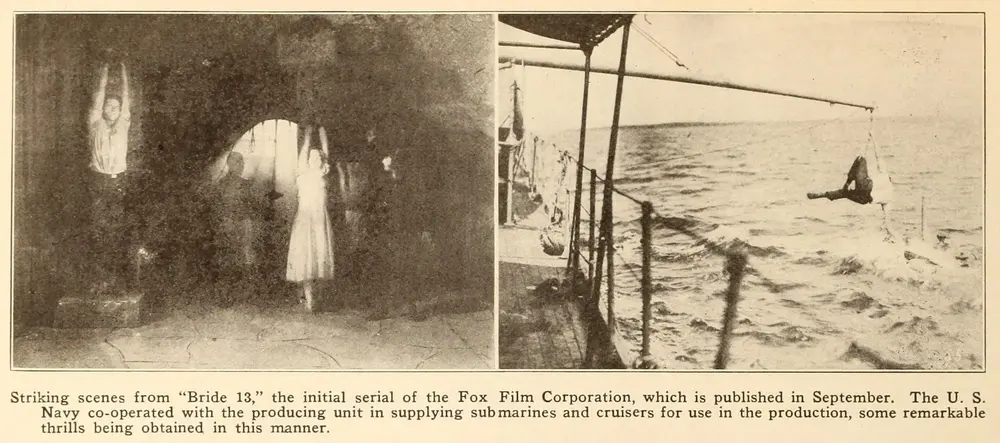
Technically, Bride 13 is a fascinating artifact of its time. The cinematography captures the rugged beauty of the coastline and the claustrophobic tension of the pirate’s lair with a surprising degree of verisimilitude. The use of light and shadow, while not as expressionistic as the later Die Ahnfrau, nonetheless creates a mood of impending doom. The editing is particularly noteworthy; the serial format required a specific rhythmic cadence, a pulse that accelerated toward the end of each chapter to ensure the audience's return the following week.
One cannot ignore the influence of the sea as a character in its own right. The maritime setting allows for a variety of stunts and visual flourishes that were cutting-edge for 1920. While films like On the Spanish Main would later refine the pirate aesthetic, Bride 13 possesses a raw, unpolished energy. The sequences involving the submarine and the secret island base suggest a world that is much larger than the frame allows us to see, a hallmark of successful world-building in early genre cinema. It shares this sense of mystery with Het geheim van Delft, though it trades that film's European intrigue for American bravado.
The writing by Edward Sedgwick is perhaps the most significant element of the production. Sedgwick, who would go on to have a prolific career directing some of the silent era's most iconic comedies and adventures, displays an early mastery of the 'thrill' here. His ability to weave thirteen disparate subplots—represented by the thirteen brides—into a cohesive whole is no small feat. The script avoids the narrative stagnation that often occurs in long-form serials by constantly introducing new variables and shifting the theater of conflict.
Comparing this to the more singular focus of The Unknown, which relies on a centralized psychological horror, Bride 13 is an expansive, peripatetic journey. It is less concerned with the 'why' of the human soul and more with the 'how' of the escape. This focus on external conflict makes it a precursor to the modern blockbuster, where the momentum of the plot is the primary driver of the cinematic experience. Even when compared to westerns like The Bargain, Bride 13 feels more modern in its structure, utilizing a multi-protagonist approach that was rare for the time.
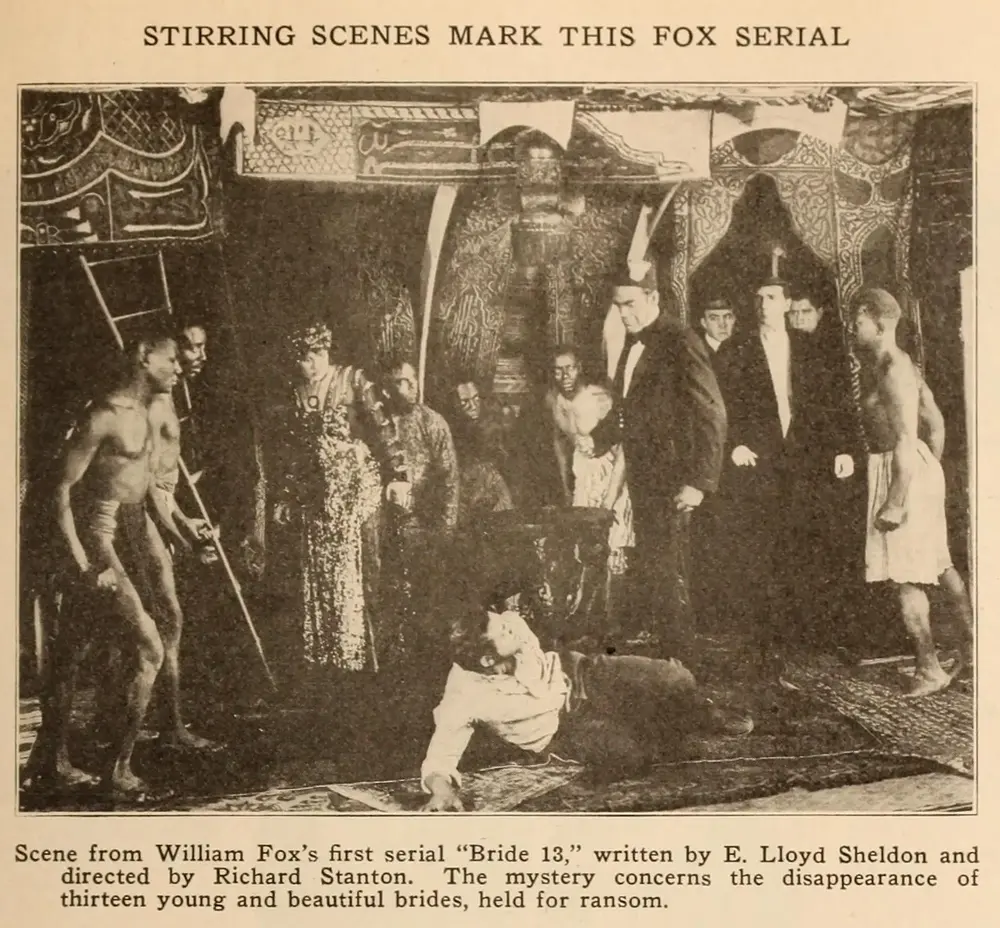
Beyond the thrills, Bride 13 offers a curious glimpse into the anxieties of the post-Great War era. The kidnapping of the wealthy brides can be read as a metaphor for the perceived vulnerability of the American establishment in the face of lawless, international threats. The pirate king Theron is a proto-terrorist, operating outside the bounds of traditional warfare. This theme of an external threat invading the domestic sphere is also present in films like The Alien and Man and Beast, reflecting a cultural preoccupation with the 'Other'.
Furthermore, the film’s portrayal of the U.S. Navy as a tireless protector reinforces a burgeoning sense of American exceptionalism. Lieutenant Bob is not just a hero; he is the embodiment of institutional stability. This contrast between the chaotic, lawless island of Theron and the disciplined, technological superiority of the Navy provides a comforting narrative for an audience seeking order in a rapidly changing world. Even the more somber The Midnight Stage explores these themes of law and order, albeit in a more localized, frontier context.
Today, Bride 13 exists largely in the shadow of its more famous contemporaries. Much of the original footage has suffered from the ravages of nitrate decomposition, leaving us with a fragmented understanding of its full scope. However, the fragments that remain—and the historical accounts of its reception—point to a work that was deeply influential in the development of the action serial. It lacks the stark realism of Border River or the melodramatic weight of Lola, but it compensates with a relentless, kinetic energy.
For the modern viewer, watching Bride 13 requires a recalibration of expectations. One must appreciate the craftsmanship involved in creating such a massive undertaking without the aid of modern visual effects. The stunts were real, the locations were harsh, and the stakes were palpable. It is a reminder of a time when cinema was still discovering its own power to transport audiences to impossible places. Like Ann's Finish, it captures a fleeting moment of cinematic innocence before the industry became more codified and risk-averse.
In the final analysis, Bride 13 is a magnificent, if flawed, monument to the silent era's ambition. It is a kaleidoscope of maritime peril, a labyrinth of episodic tension, and a fascinating study of early 20th-century archetypes. While it may not possess the philosophical depth of the greatest masterpieces of the 1920s, its contribution to the grammar of the action film cannot be understated. It remains a vital chapter in the history of the Fox Film Corporation and a compelling example of the enduring power of the serial format to captivate the human imagination through the simple, primal promise of 'to be continued.'
IMDb —
1918
Community
Log in to comment.