DbcultAccessing Vault...
Cult Review
Senior Film Conservator
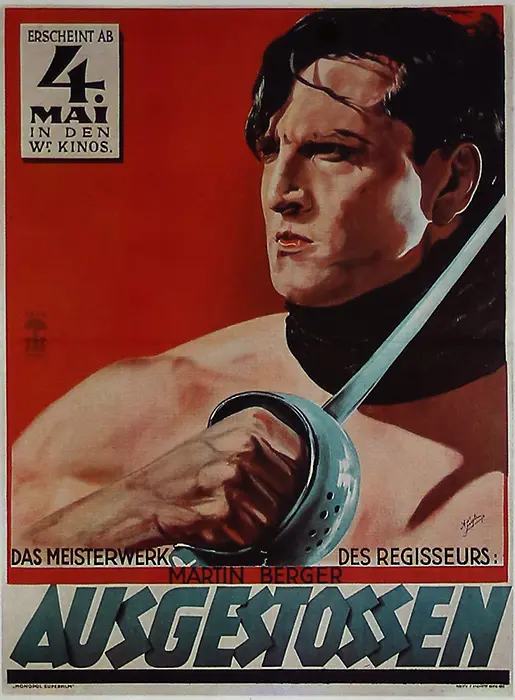
Caught in Berlin's Underworld (1927) is a difficult film to like, and that is precisely why it remains interesting. It is not a pleasant experience, nor does it try to be. If you are looking for the high-art expressionism of Murnau, you will be disappointed. This is street-level filmmaking that trades in misery and moral decay. It works for viewers who appreciate the darker, unvarnished side of silent cinema, but it will likely alienate anyone hoping for a fast-paced thriller or a romanticized view of history.
This film works because of Fritz Kortner’s grotesque magnetism; he understands that a film about the 'underworld' needs a villain who looks like he was birthed by a damp alleyway. His presence gives the film a weight that the script often lacks.
This film fails because it confuses frantic pacing with actual tension. The second act feels like a series of repetitive raids and narrow escapes that lose their impact through sheer volume. It becomes a bit of a slog by the hour mark.
You should watch it if you are a completist of Weimar cinema or have an interest in how early film handled the taboo subject of drug addiction. It is a harsh, often ugly look at a society in freefall.
Fritz Kortner is the primary reason to sit through this film. While other actors of the era were leaning into a soft, theatrical grace, Kortner was doing something much more abrasive. He uses his face like a blunt instrument. In the scenes where he manipulates the doctor, there is a palpable sense of threat that doesn't require title cards to explain. He represents the predatory nature of the city. He isn't a cartoon villain; he is a man who knows exactly how to exploit a person's lowest moment.
Contrast this with Hans Stüwe, who plays the doctor. Stüwe is stiff. His performance feels like it belongs in a different, more polite movie. When he is supposedly under the influence of morphine, he looks more like he's having a mild dizzy spell than a life-altering crisis. This mismatch in acting styles creates a strange friction. You find yourself rooting for the villain simply because he is the only one who seems to be inhabiting the world the director has built.
The film’s portrayal of drug use is, by modern standards, incredibly primitive. Morphine is treated as a shorthand for 'evil.' There is no nuance here. You take the drug, and you become a criminal or a victim immediately. This lack of psychological depth makes the middle section of the film feel repetitive. We see the same cycle of desperation and betrayal played out multiple times without much evolution in the characters' internal lives.
Unlike Innocence, which handles its social themes with a bit more grace, Caught in Berlin's Underworld hits you over the head with its message. It wants you to be shocked, but the shock is surface-level. The gambling dens are dark and the smoke is thick, but the emotional stakes feel thin. It’s a film that is more interested in the mechanics of the underworld than the people caught in its gears.
Visually, the film is a mixed bag. There are moments where the cinematography captures the grime of the city effectively. The use of low-key lighting in the basement scenes creates a genuine sense of unease. However, the editing is often clunky. Transitions between scenes are abrupt, and the narrative flow is frequently interrupted by title cards that over-explain what we’ve just seen. It lacks the fluid visual storytelling found in The Spy.
The sets feel lived-in, but the direction often feels static, failing to capitalize on the inherent drama of the locations.
The pacing is the film's biggest enemy. There is a sequence in a police station that seems to go on forever, serving very little purpose other than to remind us that the law is watching. It’s padding. In a film that should feel urgent and dangerous, these stretches of boredom are fatal. The director, Dosio Koffler, seems unsure whether he wants to make a gritty documentary-style exposé or a high-stakes melodrama, and the film suffers for this indecision.
Caught in Berlin's Underworld is a fascinating failure. It is a film that wants to be important but settles for being sensational. It provides a look at the anxieties of its time, but it doesn't offer much in the way of timeless storytelling. It is stiff, often dull, and commercially cynical. Yet, for those who want to see the 'unwashed' side of Weimar cinema, it remains a curious object of study. Just don't expect to be moved by it.
IMDb 4.8
1935
Community
Log in to comment.