DbcultAccessing Vault...
Cult Review
Senior Film Conservator
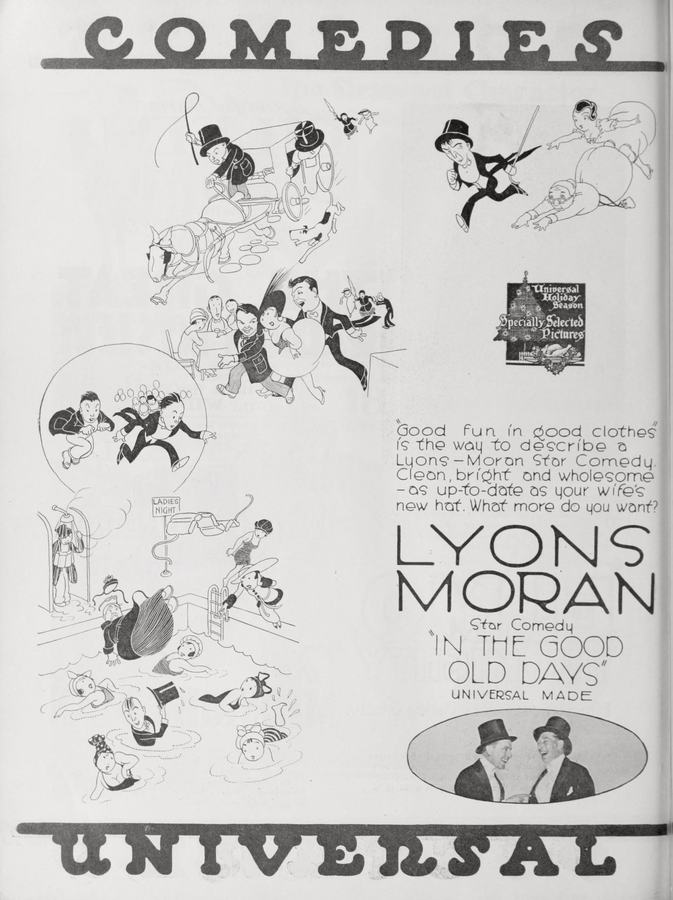
In the annals of early cinema, where narratives often grappled with the seismic shifts of a rapidly industrializing world, "In the Good Old Days" emerges as a profoundly resonant artifact. It's a film that, despite its vintage, speaks with an unnerving prescience to our contemporary anxieties about progress, heritage, and the relentless march of time. Far from a mere sentimental stroll down memory lane, this picture, penned with a keen understanding of human longing by Eddie Lyons and Lee Moran, delves into the very soul of a community caught between a cherished past and an inexorable future. It's a testament to the enduring power of silent storytelling, where every gesture, every flicker of an eye, and every meticulously composed shot carries the weight of unspoken emotion.
The film opens not with grand exposition, but with an intimate tableau: a quaint, anachronistic cottage, a verdant island besieged by an encroaching tide of urban development. Within its time-worn walls reside Martha and Silas, an elderly couple whose love story, etched in the creases of their faces and the quiet rhythm of their days, serves as the narrative's emotional anchor. Their home is not merely a dwelling; it is a repository of a lifetime, a sanctuary brimming with faded photographs, antique trinkets, and the echoes of cherished memories. This domestic haven stands in stark contrast to the burgeoning city outside, a concrete behemoth symbolizing the very progress they gently resist. Martha, portrayed with a delicate blend of wistfulness and quiet strength by Edith Roberts, frequently gazes at the changing skyline, her eyes reflecting a profound sense of loss for a world slipping away. Silas, embodied by the ever-reliable Eddie Lyons, is her pragmatic romantic counterpart, a man determined to safeguard their shared history against the encroaching tide of modernity. Lyons imbues Silas with a quiet dignity, a stubborn resolve that resonates deeply, making him a compelling figure of resistance.
Their granddaughter, Eleanor, becomes the narrative's central fulcrum, a character embodying the inherent generational chasm. She adores her grandparents, revering their stories and traditions, yet simultaneously finds herself drawn to the vibrant, dynamic world beyond their cottage gates. This modern allure is personified by Mr. Sterling, an ambitious and charismatic developer, brought to life with a nuanced performance by Lee Moran. Moran eschews a simplistic villain portrayal, instead crafting Sterling as a figure of relentless ambition, driven by a vision of progress that, while seemingly rational, lacks the warmth of human connection. He sees the cottage not as a home, but as an obstacle, a mere parcel of land in the way of his grand urban design. His offers, initially tempting, progressively escalate, appealing to Eleanor's latent desire for her grandparents to live out their twilight years in comfort, free from financial worry. This dynamic between Eleanor's divided loyalties and Sterling's unwavering pursuit of development forms the core conflict, making the film a compelling study of conflicting values.
The brilliance of "In the Good Old Days" lies in its narrative structure, which eschews a linear progression in favor of a series of evocative vignettes. These moments artfully juxtapose the couple's idyllic recollections of their youth—a time of community picnics, innocent courtships, and close-knit neighbors—with the sterile, impersonal reality Sterling represents. Flashbacks, rendered with a beautiful sepia tone and soft focus, serve as visual poems, illustrating their youthful romance, their quiet struggles, and their unwavering devotion. These glimpses into the past, where younger versions of Roberts and Lyons shine, are not mere diversions; they are essential emotional beats, providing context and depth to the couple's present-day resistance. The film understands that memory is not just a recall of events, but a visceral connection to who we once were, and who we are now because of it. This technique is reminiscent of the nostalgic framing seen in films like May Blossom, which similarly used a past romance to underscore present-day emotional stakes, though "In the Good Old Days" elevates this to a commentary on societal transformation.
A crisis point is reached when Sterling, impatient with the couple's steadfast refusal, issues an ultimatum, threatening legal action to acquire their cherished land. This moment forces Eleanor to confront the full weight of her divided loyalties. She witnesses her grandparents' quiet despair, their fear of losing not just a house, but an entire lifetime of shared history, a tangible connection to their very identities. Silas, in a moment of profound, quiet defiance, rallies the few remaining old-timers in the neighborhood. His words, though unspoken in the silent medium, are conveyed through powerful acting and subtle gestures, reminding them of the intangible value of their heritage, the stories embedded in the very bricks and mortar of their homes. This communal resistance echoes the spirit found in films like La forza della coscienza, where individual resolve often blossoms into collective action against overwhelming odds. The film here moves beyond a personal drama to touch upon themes of community preservation and the struggle against unchecked industrial expansion.
The climax of "In the Good Old Days" is not one of explosive confrontation, but of poignant, quiet revelation. It unfolds during a heartfelt community gathering at the cottage, where Silas and Martha share their story, a narrative that transcends their personal experience to evoke a collective longing for the past. It's a moment of shared humanity, where the weight of memory becomes palpable. Eleanor, deeply moved and inspired by their unwavering resilience and the palpable sense of history that permeates their home, makes a resolute stand. She appeals to Sterling, not with cold logic or legal arguments, but with the raw, emotional weight of memory and community. Her plea highlights the irreplaceable value of what cannot be quantified or bought. Moran's Sterling, initially unmoved, is subtly affected by the genuine affection and profound history he witnesses. This moment of empathy, however fleeting, elevates the film beyond a simple good-versus-evil dichotomy, offering a more nuanced exploration of human nature.
The resolution of the film is a masterclass in bittersweet compromise. While progress, as an unstoppable force, cannot be entirely halted, a delicate balance is struck. The cottage, rather than being demolished, is preserved as a historical landmark, a small park, or a communal space—a green heart in the burgeoning concrete jungle. It becomes a living testament to enduring love, a beacon of memory, and a reminder of the irreplaceable value of heritage. Martha and Silas remain, their home a poignant symbol of the "good old days," a place where past and present can coexist in a delicate, respectful harmony. Eleanor, having navigated the turbulent waters of generational conflict, finds her place bridging both worlds, a custodian of memory while embracing the future. This nuanced ending provides a satisfying emotional arc, avoiding simplistic resolutions typical of some contemporary melodramas like The Fatal Wedding, which often opted for more definitive, dramatic conclusions.
The performances in "In the Good Old Days" are uniformly excellent, especially considering the constraints of the silent era. Edith Roberts, as Martha, conveys a world of emotion through subtle facial expressions and graceful movements. Her quiet dignity and underlying sadness are palpable, drawing the audience into her character's internal world. Eddie Lyons, as Silas, is equally compelling, his portrayal of a man both stubborn and deeply loving resonating with authenticity. Lee Moran, as Sterling, manages to create a character who is not just a villain, but a complex figure driven by a vision that, while ultimately at odds with the protagonists, is not without its own internal logic. The chemistry between Roberts and Lyons, particularly in the flashback sequences, is utterly convincing, painting a vivid picture of a love that has weathered the storms of time. Their performances rival the emotional depth seen in character studies like The Girl and the Judge, where nuanced acting carried significant dramatic weight.
The direction, likely a collaborative effort given Lyons and Moran's writing credits and common practices of the era, is remarkably assured. The film employs a sophisticated visual language, utilizing deep focus, thoughtful framing, and evocative lighting to convey mood and narrative. The contrast between the sun-drenched, idyllic past and the grittier, more shadowed present is handled with a delicate touch, never feeling heavy-handed. The pacing is deliberate, allowing moments of quiet contemplation to breathe, yet never dragging. Each scene serves a purpose, advancing either the plot or the emotional arc of the characters. The use of intertitles is sparse and effective, letting the visuals do the heavy lifting of storytelling. This directorial finesse is a hallmark of the period's best works, demonstrating a clear understanding of the medium's unique strengths, in contrast to some of the more frenetic pacing found in action-oriented films like The Railroad Raiders.
The thematic richness of "In the Good Old Days" is perhaps its greatest strength. It’s a profound meditation on the nature of nostalgia itself—not as a mere longing for what was, but as a vital connection to identity and collective memory. The film asks critical questions about the cost of progress: what do we sacrifice in our relentless pursuit of the new? Is there a way to integrate the lessons and beauty of the past into a rapidly evolving future? These questions remain as relevant today as they were a century ago. The clash between tradition and modernity is not presented as a simple dichotomy, but as a complex negotiation, a dance between preservation and adaptation. This complexity is often explored in more philosophical cinematic endeavors, such as Cardinal Richelieu's Ward, which, despite its different setting, also delves into the tension between old orders and emerging forces.
Furthermore, the film explores the enduring power of love and family. Martha and Silas's relationship is portrayed with a tender authenticity that transcends the silent screen. Their love is not just a romantic ideal, but a lived reality, forged through shared experiences and unwavering commitment. Eleanor's journey, from being torn between two worlds to becoming a bridge between them, speaks to the strength of familial bonds and the responsibility of inheriting history. Her character arc provides a hopeful counterpoint to the more somber reflections on time's passage. This emphasis on familial ties and their crucial role in times of change echoes the sentiments found in films like Annoula's Dowry, where family dynamics are central to the unfolding drama.
The production design and cinematography are equally commendable. The cottage, with its meticulous details and lived-in feel, becomes almost a character in itself, imbued with personality and history. The urban landscapes, though perhaps simpler by today's standards, effectively convey the scale and impersonality of modern development. The choice of locations, from the intimate interiors of the cottage to the sprawling cityscapes, is deliberate and effective. The cinematography, with its careful composition and use of light and shadow, enhances the film's emotional depth, creating a visual tapestry that is both beautiful and poignant. The silent film era often relied heavily on visual storytelling, and "In the Good Old Days" is a prime example of this artistry. The attention to detail in the visual narrative can be compared to the intricate set designs and atmospheric shots in The Spotted Lily, where visual elements were crucial to conveying narrative subtleties.
In conclusion, "In the Good Old Days" is far more than a historical curiosity; it is a timeless piece of cinema that continues to resonate with contemporary audiences. Its exploration of memory, progress, and the enduring human spirit is handled with a sensitivity and depth that belies its age. The masterful performances, particularly from Roberts and Lyons, coupled with the astute direction and rich thematic content, elevate it to a status beyond mere entertainment. It serves as a gentle yet powerful reminder that while the future is always rushing in, there is immeasurable value in pausing to honor the past, to preserve the stories that define us, and to find beauty in the quiet defiance of remembrance. It’s a film that leaves a lasting impression, prompting reflection on our own relationships with history and the relentless march of time, much like the introspective journey offered by Philip Holden - Waster, albeit with a different focus. This film is an essential viewing for anyone interested in the foundational art of cinema and its enduring capacity to capture the complexities of the human condition.

IMDb —
1936
Community
Log in to comment.