DbcultAccessing Vault...
Cult Review
Senior Film Conservator
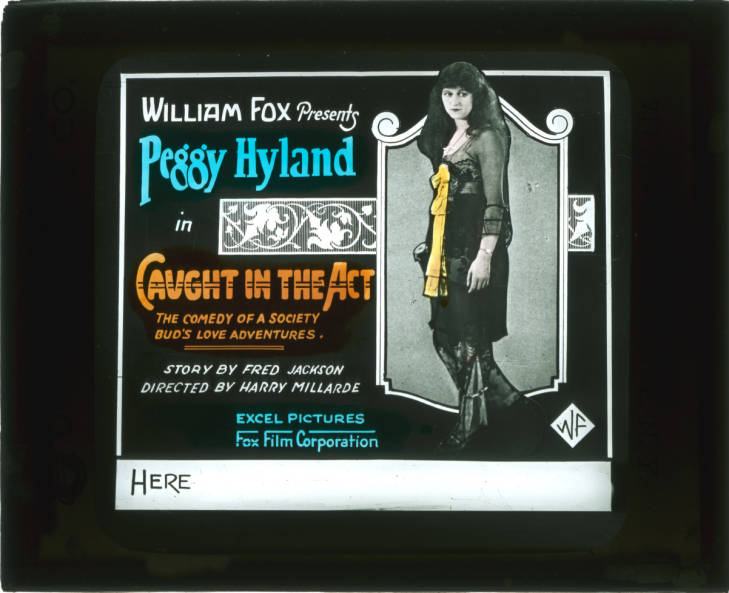
The first time we see Priscilla Kane she is scaling a stone arch that looks filched from a Gothic cathedral and dropped onto a New England campus: petticoat hitched, hairpins scattering like grapeshot, moonlight lacquered across the blade of her grin. In that single, breath-held shot, director Edward LeSaint anoints his heroine not as ingénue but as insurgent, and the film never once lowers that banner.
Caught in the Act—released in March 1917 by World Film and now rescued from nitro-oblivion by an EU archive—deserves a seat beside the era’s sharper social farces. It is less a love story than a duel fought with scissors, typewriter keys, and the flash-pan of yellow journalism. The plot pirouettes so briskly you can almost hear the celluloid crackle: boarding-school escape, parental ultimatum, chance masquerade, scandal snapshot, dawn elopement. Yet within that screwball scaffolding, screenwriters Frederick J. Jackson and Raymond L. Schrock smuggle a manifesto on women’s autonomy that feels eerily contemporary.
Priscilla’s father, Silas Kane (played with porcine gravitas by Henry Hallam), has cornered the wartime wheat market; his elevators bulge while Europe starves. Enter Langdon Trevor (Leslie Austin, all razor cheekbones and ink-stained conscience), a star reporter who skewers Kane in a front-page exposé. The mogul retaliates by hiring a Weegee-before-Weegee shutterbug to entrap Trevor in a “compromising situation,” thus vaporizing his credibility. The bait? A photograph of Trevor apparently dallying with his “nurse.” The fly-in-amber moment arrives when the hired lensman barges into the journalist’s garret and finds Priscilla—still incognito—stooping over Trevor with a sponge and a thermometer. Morality, meet montage.
What follows is a chase worthy of The Secret Seven’s urban clangor, though here the quarry are two lovers clutching not pistols but a half-finished shirt. They scurry down the fire escape, hijack a milk truck, and exchange vows in a freight car fragrant with oranges and coal dust. LeSaint cross-cuts their escape with the darkroom where the negative is being bathed in mercury—an alchemical reminder that truth, in the right solvent, can be whatever the powerful decree.
Peggy Hyland’s Priscilla is a marvel of calibrated chaos. Watch her eyes when Trevor first calls her “my little working girl”: the pupils flare like struck matches, then cool into a conspiratorial squint. She never overplays the tombish caricature, letting the charade crack only when her gloved finger grazes a callus on Trevor’s palm—a tactile epiphany that labor is not costume but scar. Opposite her, Leslie Austin channels the moral turbulence that would later anchor Moondyne’s convict anti-hero. His Trevor is less crusader than collision: ink-pot idealism ramming into libido, each leaving dents.
The supporting bench glitters: George Bunny as the dyspeptic editor who keeps a pickle jar of confiscated hip-flasks on his desk; Carlotta Coerr as a fellow seamstress whose side-eye could curdle cream; Elizabeth Garrison’s governess, a whispered husk of a woman who has seen every rebellion and chooses to oil rather than obstruct it.
Cinematographer Lucien Andriot—years before he lensed Tarzan of the Apes—shoots 1917 Manhattan as a chiaroscuro labyrinth. Note the scene where Priscilla first descends into the garment district: the camera tilts up from puddles reflecting neon Yiddish signage to her silhouette swallowed by steam. It’s a visual proclamation that class descent is also a form of baptism. Later, in Trevor’s tenement, the walls bear water stains shaped like continental maps—an accidental prophecy that private scandal will spill into geopolitical stain.
Buttons recur as erotic punctuation. Every time Priscilla bites off a thread, LeSaint jump-cuts to close-ups of her wrist flicking a thimble like a coin into Trevorian wishing-wells. These micro-gestures accumulate until the shirt she mends becomes a flag of surrender stitched inside enemy territory.
Unlike the wan damsels populating Samson or Der Onyxknopf, Priscilla engineers her own fate with the precision of a saboteur. She refuses two patriarchal contracts: the boarding school’s regimen of ornamental femininity and her father’s merger-by-marriage. The film’s radicalism lies not in her rebellion but in its refusal to punish her. Even when the scandal photo surfaces, the narrative does not pivot to shame; instead, it weaponizes the exposure, turning the illicit still into a wedding announcement. In 1917, this qualifies as insurrectionary wit.
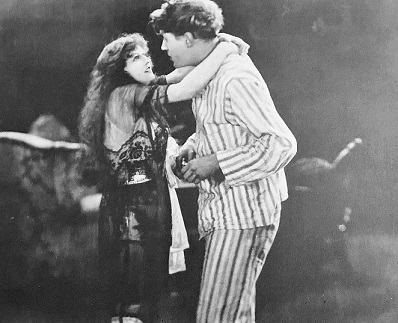
Compare it with The Lady of Lyons, where class-crossing lovers are redeemed only through renunciation and death. Here, love’s triumph is carnal, pragmatic, and public. The final intertitle—“The byline changed, the surname stayed”—flashes as the newlyweds stride past a newsstand whose placard screams KANE INDICTED. Love has not merely conquered; it has annexed the means of production.
The film runs a brisk five reels—roughly 58 minutes at modern projection speed—but its metronome toggles between staccato and legato. Act I is Keystone-quick: schoolyard pranks, carriage getaways, a hat-pin theft scored by iris-out gags. Act II decelerates into Lubitsch-like seduction, lingering on the hush between glances. Act III detonates with Griffithian cross-cuts: the darkroom’s red bulb, the lovers’ rooftop dash, Kane’s boardroom apoplexy. This rhythmic variegation anticipates the jazz structures that will dominate the coming decade.
Composer Ben Model’s 2021 restoration score (commissioned for the Hippodrome Silent Film Festival) leans into that proto-jazz, threading banjo rags with wah-wah trumpet to mirror Priscilla’s zigzag appetites. When the couple share their first kiss—filmed in daring medium-close-up—the score drops to solo clarinet, a choice so intimate you can almost hear the reed moisten.
Beneath the rom-com froth bubbles a scalding critique of capital. Kane’s warehouses bulge with grain while U-boats throttle Allied convoys; Trevor’s article accuses him of “selling bread for battleships.” The line lands harder now, in an era of algorithmic grain speculation and food deserts. The film suggests journalism’s only antidote is not objectivity but exposure—an ethic that feels both heroic and queasily voyeuristic. Trevor’s eventual marriage to the subject’s daughter could be read as capitulation: the reporter becomes the story, the muckrake turns to matrimonial kiss-and-tell. Yet the film refuses cynicism. Its closing shot—Trevor typing with Priscilla perched on the desk, baby in arms—implies that domesticity can coexist with dissent, that the personal column can still punch holes in the corporate one.
Devotees of A Message from Mars will spot the reverse-allegory: instead of a celestial visitor teaching empathy, we have an heiress descending to the proletarian pavement to relearn humanity through labor. Fans of Saturnino Farandola’s picaresque will relish the same episodic velocity, though here the globe-trotting is emotional rather than geographic. Meanwhile, the snow-bitten cynicism of The Darkening Trail finds its antidote in this film’s belief that love, when yoked to a printing press, can still be a transformative engine.
Like many World Film releases, the negative was presumed lost in the 1931 Fox vault fire. A partial 28-minute acetate surfaced at a Buenos Aires flea market in 1998; the Cineteca di Bologna combined it with a 35mm Czech print to reconstruct 52 minutes. The remaining six minutes—chiefly the boarding-school prologue—were sourced from the paper reels held by the Library of Congress. The 4K scan reveals granular delights: the glint of a locket, the fray on Trevor’s suspenders, the chalk dust on Priscilla’s skirt after she vaults the gate. Streaming rights currently reside with Kanopy in North America and MUBI in the EU, though both cycles rotate monthly. Physical media devotees can snag the Flicker Alley Blu-ray, which bundles the film with Breaking the News (1917) and an audio essay on Jackson’s screenwriting career.
We live in an age where billionaires cosplay as astronauts while planet Earth queues at food banks; where social media “exposés” often serve more to clout-chase than to dethrone. Against that backdrop, Caught in the Act plays like a battle hymn composed in ragtime. Its thesis—that scandal can be rebranded as liberation, that a woman can sew her own destiny with stolen thread—remains radical a century on. Watch it for the kinetic romance, stay for the economic subtext, return for the sheer pleasure of seeing celluloid rebellion that refuses to burn out.
Verdict: 9/10—an incandescent curio that stitches screwball zip to muckraker ire, leaving a scar you’ll proudly flaunt.
Tags: silent film, 1917 cinema, gender in film, early journalism movies, Peggy Hyland, Leslie Austin, Edward LeSaint, Frederick J. Jackson
IMDb 5.2
1925
Community
Log in to comment.