DbcultAccessing Vault...
Cult Review
Senior Film Conservator

No, unless you are a dedicated historian of the French silent era or have a specific obsession with the works of May Edginton. For the average viewer, Celle qui domine is a heavy, often-static piece of social theatre that feels every bit its age. It lacks the kinetic energy found in the better European films of 1927 and relies too heavily on theatrical gesturing to convey its stakes.
This film works because of Mary Odette. She possesses a screen presence that feels more modern than the production surrounding her. She avoids the wild-eyed flailing common in late-silent melodramas, opting instead for a calculated stillness that makes her character's manipulative nature believable.
This film fails because its pacing is glacial and its direction is unimaginative. Léon Mathot, who both stars and co-directs, seems more interested in his own profile than in creating a sense of narrative urgency. The scenes often outstay their welcome by several minutes, lingering on reactions that the audience has already parsed.
You should watch it if you want to see how French cinema was attempting to compete with Hollywood's glossier melodramas by leaning into high-society cynicism. You should skip it if you have a low tolerance for repetitive domestic drama and intertitles that do most of the heavy lifting.
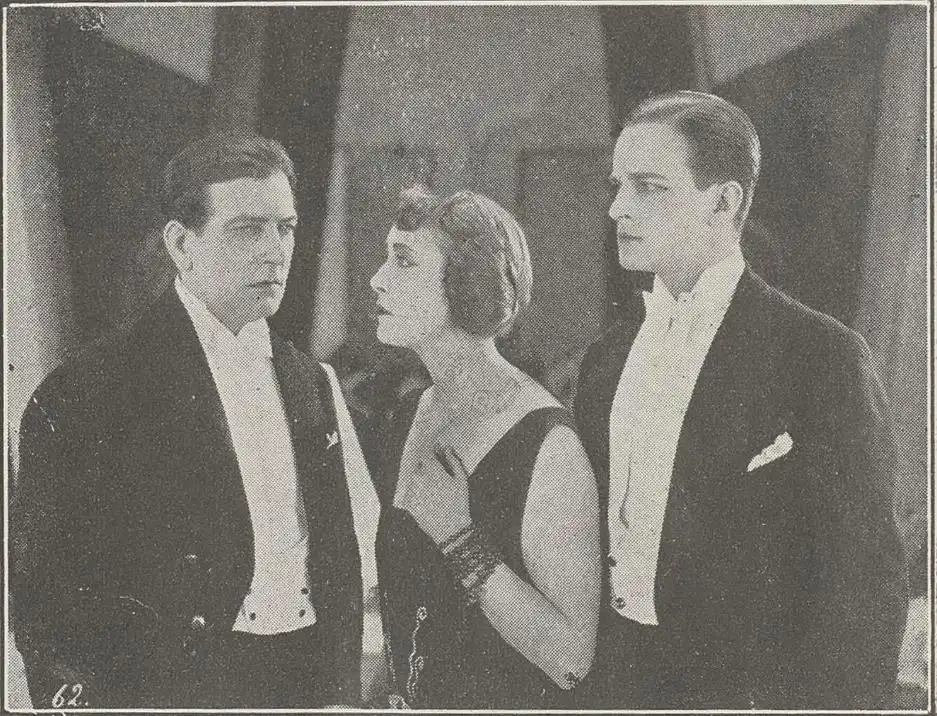
The plot is a standard-issue morality tale about a woman who views people as rungs on a ladder. While the premise has teeth, the execution is gummy. The film treats its central woman like a biological hazard, yet it never quite commits to making her a true villain. This hesitation leaves the character in a dramatic limbo. She isn't sympathetic enough to root for, nor is she monstrous enough to be fascinating. Compared to the sharper characterizations in The Man with the Limp, the motivations here feel thin and dictated by the script rather than the characters.
Mathot’s camera sits still too long. There is a lack of depth in the staging; characters often stand in a line as if they are waiting for a stage curtain to drop. In 1927, cinema was already experimenting with fluid movement and expressive editing, but Celle qui domine feels like it was made five years earlier. The sets are expensive-looking but sterile, providing a backdrop that feels more like a showroom than a lived-in environment.
The collaboration between Mathot and Carmine Gallone should have produced something more visually arresting. Instead, we get a series of medium shots that fail to capture the psychological tension inherent in a story about domination. When the film does attempt a close-up, it’s usually to highlight a moment of obvious distress, rather than to reveal a hidden layer of the character. It’s a literal-minded film that doesn't trust the audience to understand subtext without a blunt intertitle explaining it.
The supporting cast, including John Gliddon and André Volbert, provide the necessary friction, but they are mostly there to be acted upon. They are the victims of the protagonist's whims, and their passivity makes for dull viewing. There is a specific scene at a dinner party where the power dynamic is supposed to shift, but the editing is so sluggish that the tension evaporates before the first course is served. It lacks the rhythmic precision seen in something like When Seconds Count.

Technically, the film is competent but uninspired. The lighting is flat, washing out the textures of the costumes and sets. In an era where shadow was being used to define mood, this film opts for a bright, stagey look that robs the drama of its edge. It feels like a production that was comfortable with its budget but bored with its medium. The few moments of visual interest come from the exterior shots, which offer a brief respite from the claustrophobic and uninspired interiors.
The script, adapted from May Edginton, carries the hallmarks of early 20th-century popular fiction—heavy on coincidence and light on psychological nuance. Every turn in the plot is signaled miles away. When the protagonist finally faces the consequences of her actions, it doesn't feel like a tragic downfall; it feels like the movie is finally checking off the last box on its list of moral obligations.
Pros:
- Mary Odette is genuinely good.
- High production values in terms of costumes and set pieces.
- A few exterior sequences provide a nice sense of place.
Cons:
- The direction is static and unadventurous.
- Léon Mathot’s performance is distracting and vain.
- The plot is predictable and overly moralistic.
- The editing lacks any sense of rhythm or tension.
Celle qui domine is a relic that hasn't aged particularly well. While it isn't a total failure, it suffers from a lack of identity. It wants to be a sophisticated drama about power, but it settles for being a slow-moving soap opera. If you've already seen the major works of the 1920s and are digging into the deep cuts, it’s a functional watch, but it won't stay with you. It is a film of staring contests and slow exits, and by the time the end credits would have rolled in a modern theatre, you'll likely be checking your watch.

IMDb 6.9
1933
Community
Log in to comment.