DbcultAccessing Vault...
Cult Review
Senior Film Conservator
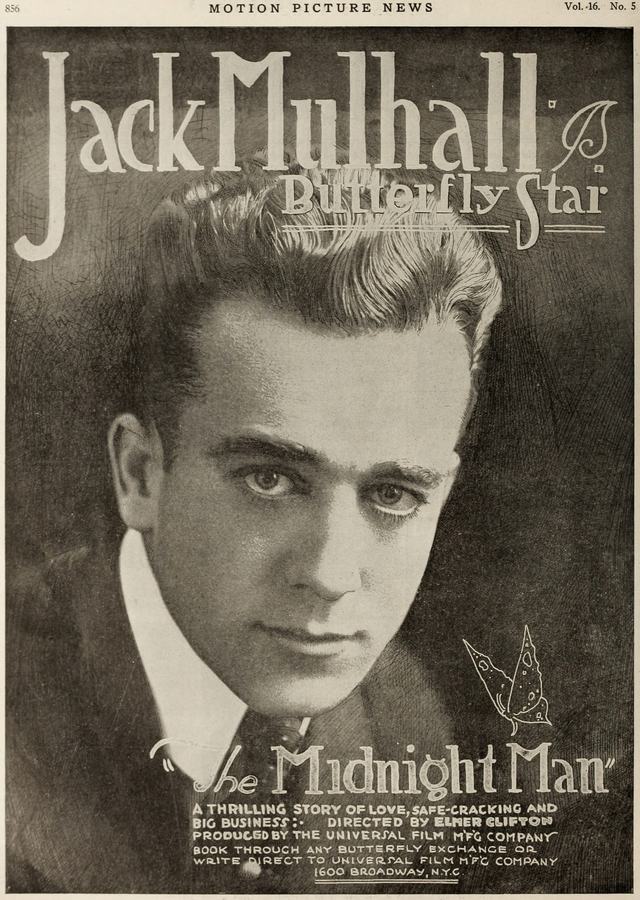
Stepping back into the flickering shadows of early cinema, one occasionally unearths a narrative that, despite its age, still pulsates with a surprising vitality. Such is the case with The Midnight Man, a film from the nascent days of the moving picture that, even without the benefit of spoken dialogue, constructs a compelling world of innovation, intrigue, and unexpected romance. It's a delightful concoction, blending the nascent thrills of a crime drama with the earnest sentiments of a burgeoning love story, all set against a backdrop of mechanical marvels and moral dilemmas. For those accustomed to the rapid-fire pacing and complex soundscapes of contemporary blockbusters, a venture into the silent film era might seem a quaint expedition. Yet, The Midnight Man serves as a potent reminder of the sheer storytelling power inherent in visual narrative, an art form perfected through pantomime, expressive acting, and cleverly deployed intertitles. It’s more than just a historical curiosity; it’s a vibrant piece of cinematic craftsmanship that deserves a closer look, revealing layers of human ambition and vulnerability beneath its surface.
At its heart, The Midnight Man is a fascinating exploration of the fine line between genius and guile, ambition and avarice. We are introduced to Bob Moore, a young inventor whose prodigious talents are ironically shackled by a single, elusive goal: to engineer a safe lock utterly impervious to human ingenuity. His father, a titan in the safe manufacturing industry, looms large, and Bob’s inability to perfect this ultimate security mechanism casts a shadow over his aspirations. In a move that is both audacious and utterly unconventional, Bob seeks out the city's most notorious safecracker, a legendary figure known only as 'The Eel.' This isn't a confrontation, but an invitation—an offer of legitimate employment within the very industry he has so skillfully circumvented. The Eel, perhaps sensing a chance for redemption or simply a new challenge, accepts, seemingly ready to trade his illicit expertise for honest work. This initial premise alone sets the stage for a narrative rich in irony and potential conflict, a psychological dance between the creator and the destroyer, the protector and the penetrator.
However, the path to straight and narrow is seldom without temptation. The catalyst for The Eel's relapse arrives in the form of Irene Hardin, the charming daughter of a rival safe manufacturer, who becomes the proud owner of a magnificent pearl necklace. The sheer allure of such a prize proves too great for The Eel to resist, reigniting his dormant criminal instincts for what he intends to be one final, glorious score. Meanwhile, Irene's father, in a bizarrely romantic, almost medieval, gesture, places the precious pearls within his own state-of-the-art safe. He then presents Bob with an extraordinary challenge: if Bob can successfully open the safe, Irene’s hand in marriage is his. It’s a plot device that cleverly intertwines the professional with the deeply personal, elevating the stakes for our earnest inventor. Bob, smitten with Irene, rises to the occasion. He expertly navigates the safe's mechanisms, triumphantly placing the necklace on the handle as a symbol of his success and his impending claim on Irene's heart. Yet, this moment of triumph is fleeting, a window of opportunity precisely what The Eel had been waiting for. With Bob’s departure, The Eel slips in, executes his long-planned heist, and vanishes with the pearls. The ensuing fallout is swift and devastating: Bob, the very man who opened the safe, is accused of the theft. His quest for Irene’s love now transforms into a desperate pursuit for justice and exoneration, leading to a climactic, visceral confrontation with the wily safecracker. The narrative arc, from intellectual challenge to romantic quest to thrilling chase, is executed with a surprising economy and effectiveness, a testament to the skilled storytelling of writers Tom Gibson and Bess Meredyth.
The effectiveness of any silent film hinges significantly on the expressive capabilities of its cast, and The Midnight Man is no exception. Jack Mulhall, in the role of Bob Moore, embodies the earnest, somewhat naive inventor with a palpable sincerity. His wide-eyed determination and the visible frustration of his early failures make him an immediately sympathetic protagonist. Mulhall’s performance, characterized by broad yet heartfelt gestures, effectively conveys Bob’s intellectual struggles, his romantic yearning, and his righteous indignation when accused. He is the quintessential hero of the era, driven by principles and a pure heart, a stark contrast to his cunning adversary. Warda Lamont, as Irene Hardin, fulfills the role of the charming ingenue. Her beauty is undeniable, and her reactions, though often exaggerated by today’s standards, perfectly communicate her character’s innocence, concern, and eventual relief. She is the prize, the motivation, and the emotional anchor for Bob’s journey, and Lamont portrays her with a grace fitting of the period.
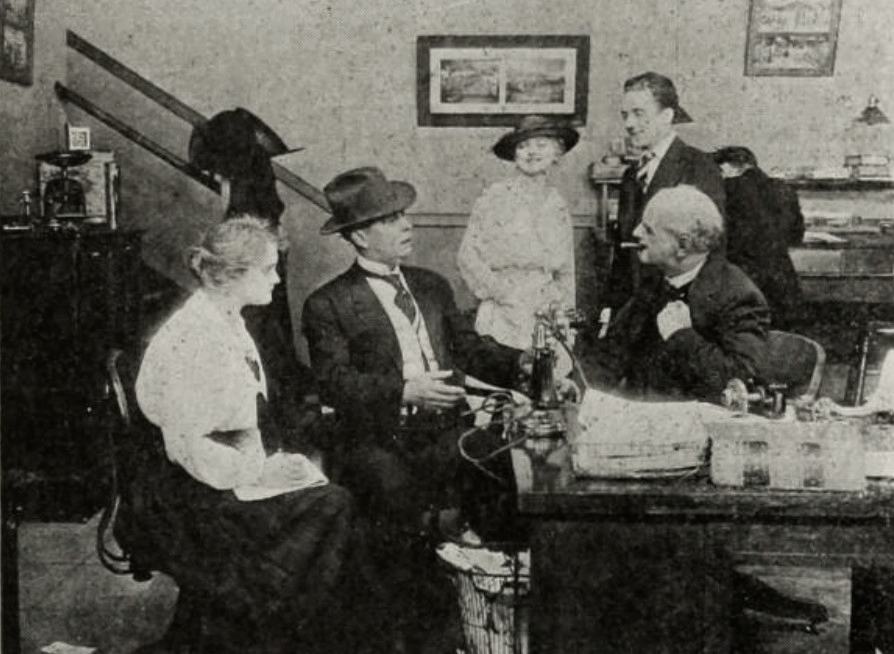
However, it is arguably Albert MacQuarrie as 'The Eel' who truly captivates the audience. MacQuarrie imbues the safecracker with a magnetic charisma, a dangerous charm that makes his transgressions almost forgivable. He’s not simply a villain; he’s a master of his craft, a man whose skills are undeniably impressive, even if misdirected. The Eel's initial acceptance of the factory job, followed by his relapse into crime, paints a portrait of a character wrestling with his nature, caught between a desire for respectability and the irresistible thrill of the illicit. MacQuarrie’s physicality and facial expressions convey this internal conflict with remarkable clarity, making The Eel a far more complex and memorable figure than a simple antagonist. The supporting cast, including Ann Forrest, Hal Wilson, Wilbur Higby, and Jack Carlyle, provide solid foundations for the narrative, each contributing to the film's overall texture. Their performances, while adhering to the more theatrical conventions of silent film acting, effectively move the plot forward and enhance the emotional stakes. The ensemble works in concert to create a believable, if melodramatic, world where every gesture and expression carries significant weight, a hallmark of powerful silent film acting that can still resonate profoundly with modern audiences.
The visual language of The Midnight Man is a fascinating study in early cinematic technique, showcasing how directors of the era manipulated light, shadow, and camera placement to build tension and convey emotion without a single spoken word. The cinematography, while perhaps rudimentary by contemporary standards, is surprisingly effective in establishing mood and guiding the viewer's eye. Close-ups are employed judiciously to highlight crucial details—the intricate workings of a safe, the gleam of the pearls, or the intensity in an actor’s eyes—drawing the audience into the psychological drama unfolding onscreen. The pacing is deliberate, allowing moments of suspense to build gradually, punctuated by intertitles that provide essential dialogue or narrative exposition. These intertitles are not merely functional; they are an integral part of the film's aesthetic, often designed with decorative flair that complements the scene. The film’s visual storytelling relies heavily on mise-en-scène, carefully arranging props, sets, and actors to communicate relationships and intentions. The depiction of the safe manufacturer’s factory, for instance, conveys a sense of industry and innovation, while the shadowy interiors of Irene’s home during the heist amplify the clandestine nature of The Eel’s actions.
One of the film's standout sequences is the climactic fight between Bob and The Eel. This isn't a mere brawl; it’s a dynamic, almost acrobatic struggle that demonstrates a nascent understanding of action choreography. The camera work during this scene is more fluid, following the combatants as they grapple, tumble, and strategize, creating a visceral sense of urgency. The physical intensity is palpable, a testament to the actors’ commitment and the director’s ability to orchestrate compelling action. This scene, devoid of sound, relies entirely on visual cues—the force of a punch, the desperation in a facial contortion, the frantic movements to gain an advantage—to immerse the audience in the conflict. In an era when cinema was still largely an experimental art form, The Midnight Man showcases a sophisticated approach to visual narrative, proving that compelling stories could be told with immense impact through the careful orchestration of images. It's a testament to the ingenuity of early filmmakers who, with limited technology, managed to create works that still resonate with dramatic power, much like the adventurous spirit found in films such as The Pursuit of the Phantom, which also relied on visual dynamism to convey thrilling escapades.
Beyond its surface-level thrills and romance, The Midnight Man subtly weaves in a tapestry of themes that reflect the societal concerns and technological fascinations of its time. At its core lies the tension between innovation and transgression. Bob Moore represents the earnest, forward-thinking spirit of invention, striving to create something for the betterment of society—or at least, for its security. The Eel, conversely, embodies the dark side of ingenuity, a master who applies his considerable intelligence and skill not to creation, but to subversion. This duality offers a compelling commentary on the nature of talent itself: is it inherently good or evil, or is its moral valence determined solely by its application? The film seems to suggest that while criminal enterprise might offer immediate gratification, true fulfillment and societal recognition come through legitimate effort and integrity. The Eel’s initial attempt to go straight, followed by his inevitable relapse, speaks to the powerful allure of old habits and the difficulty of true redemption when faced with overwhelming temptation. Yet, his ultimate defeat by Bob also reinforces a clear moral message: honesty and perseverance will, in the end, triumph over cunning and deceit.
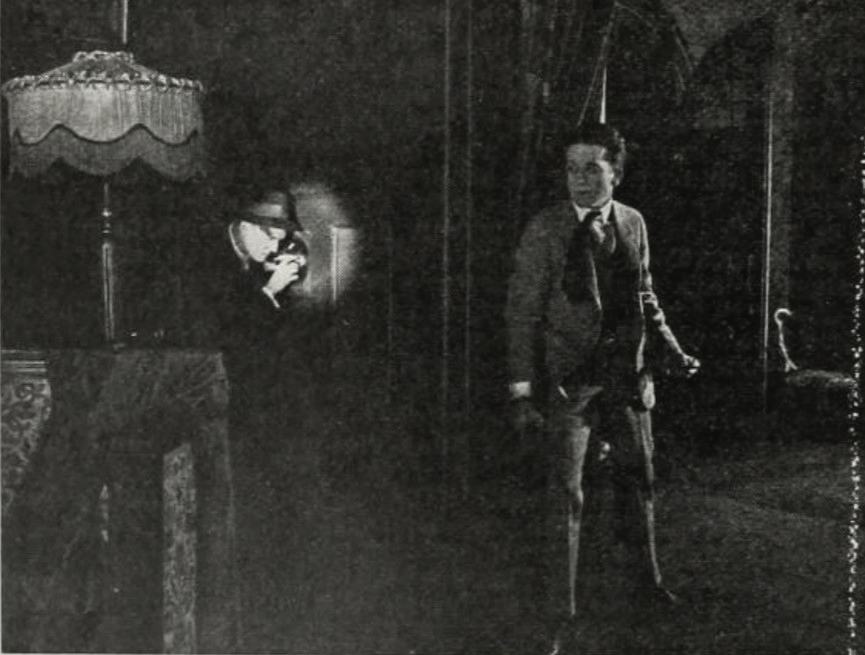
The film also touches upon the burgeoning technological advancements of the early 20th century. The focus on safe manufacturing and the quest for an 'unbreakable' lock is not merely a plot device; it reflects a broader societal fascination with security, progress, and the constant arms race between those who create and those who exploit. This was an era of rapid industrialization and invention, and films like The Midnight Man tapped into the public's imagination regarding new technologies and their implications. The romantic subplot, too, carries thematic weight. Irene is not merely a damsel in distress; she is the catalyst for Bob’s ultimate triumph, her value going beyond the material worth of the pearls. The challenge posed by her father—to open the safe to win her hand—is a symbolic trial, testing Bob’s character, skill, and commitment. It’s a classic narrative trope, but one that is executed with a certain charm, emphasizing that true love often requires overcoming significant obstacles, both external and internal. The film, in its own silent way, explores the very definitions of worth: the worth of a technological breakthrough, the worth of a valuable object, and, most importantly, the worth of a person’s integrity and love. It's a moral fable wrapped in a thrilling package, much like the thematic depth found within The Regeneration, which also explored profound moral transformations against a backdrop of societal challenge.
To fully appreciate The Midnight Man, it’s essential to place it within its historical context. Released in 1919, the film emerged from a vibrant period of cinematic expansion and experimentation. The silent film era was in full swing, and filmmakers were rapidly evolving the language of cinema, moving beyond simple actualités to embrace complex narratives, character development, and genre conventions. Crime dramas, particularly those involving master criminals and clever detectives, were immensely popular, reflecting a public fascination with underworld figures and the thrilling cat-and-mouse games they played with law enforcement. Films like The Midnight Man capitalized on this interest, offering audiences a vicarious thrill while often reaffirming traditional moral values.
The romantic element, too, was a staple of early cinema, often intertwined with adventure or melodrama. The idea of a hero proving his worth through a grand gesture or overcoming an impossible challenge for the hand of his beloved was a trope that resonated deeply with audiences of the time. While not necessarily revolutionary in its plot structure, The Midnight Man demonstrates a sophisticated understanding of how to combine these popular elements into an engaging whole. Its narrative clarity and the distinct personalities of its characters set it apart from some of the more simplistic productions of the period. One can draw parallels to the adventurous spirit and narrative drive of films like For Napoleon and France, which also showcases a protagonist striving against odds, albeit in a different historical setting. The meticulous plotting, even in its silent form, speaks to the burgeoning craft of screenwriting, with Tom Gibson and Bess Meredyth contributing to the foundational grammar of cinematic storytelling. Meredyth, in particular, was a prolific and influential writer in early Hollywood, and her touch for character and dramatic pacing is evident here.
Considering other films of the era, The Midnight Man holds its own as a well-executed example of popular entertainment. While it may not possess the epic scope of a D.W. Griffith production or the overt social commentary of some contemporary works, its strength lies in its focused narrative and compelling character dynamics. It’s a snapshot of a particular moment in cinematic history, showcasing the industry’s growing confidence in its ability to tell captivating stories through purely visual means. The film stands as a testament to the enduring appeal of a good caper, a thrilling chase, and a triumphant love story, all communicated through the universal language of expression and movement that defined the silent screen. Comparing it to something like The Little Gray Lady, which might focus more on social drama, The Midnight Man leans into the excitement of a high-stakes personal battle, offering a different flavor of early cinematic engagement. It reminds us that even in the absence of spoken words, the power of a well-crafted narrative and emotive performances can transcend the limitations of technology and time, connecting with viewers on a fundamental human level.
What, then, does The Midnight Man offer to a modern audience accustomed to hyper-realistic CGI and intricately designed soundscapes? Its primary appeal lies in its charm as a historical artifact and its surprising effectiveness as a piece of pure entertainment. For film historians and enthusiasts, it provides invaluable insight into the storytelling conventions, acting styles, and technical capabilities of the silent era. It demonstrates how early filmmakers tackled genres that remain popular today, laying the groundwork for countless crime thrillers and romantic adventures that would follow. But beyond its academic value, The Midnight Man simply works as a captivating story. The core narrative—an inventor’s struggle, a master thief’s temptation, and a race against time to clear one’s name and win love—is timeless. The characters, though portrayed with the broader strokes typical of the period, are relatable in their motivations and dilemmas. We root for Bob, we are intrigued by The Eel, and we appreciate the straightforward purity of the romance.
Watching The Midnight Man today is also an exercise in appreciating the craft of visual storytelling. Without dialogue, every gesture, every expression, every camera angle takes on heightened significance. It forces the viewer to engage more actively, to interpret and empathize through visual cues alone. This active engagement can be a refreshing change from the often-passive consumption of modern media. While some might find the pacing slower than contemporary films, it allows for a deeper immersion into the characters' emotional states and the unfolding drama. The film's relatively compact runtime, compared to many modern epics, ensures that the narrative remains taut and focused, delivering its thrills and resolutions with satisfying efficiency. It doesn't overstay its welcome, leaving a lasting impression of cleverness and heartfelt emotion. In an age where digital restoration breathes new life into forgotten classics, The Midnight Man serves as a compelling argument for revisiting the silent era. It reminds us that fundamental storytelling principles—strong characters, clear stakes, and engaging conflict—transcend technological limitations. It’s a delightful journey back to the roots of cinema, proving that a well-told story, even without a single spoken word, can still resonate profoundly and entertain thoroughly. It's a testament to the enduring power of classic narratives, much like the timeless appeal of The Three Godfathers, which also relies on fundamental human drama to captivate its audience.
IMDb 5.1
1915
Community
Log in to comment.