DbcultAccessing Vault...
Cult Review
Senior Film Conservator
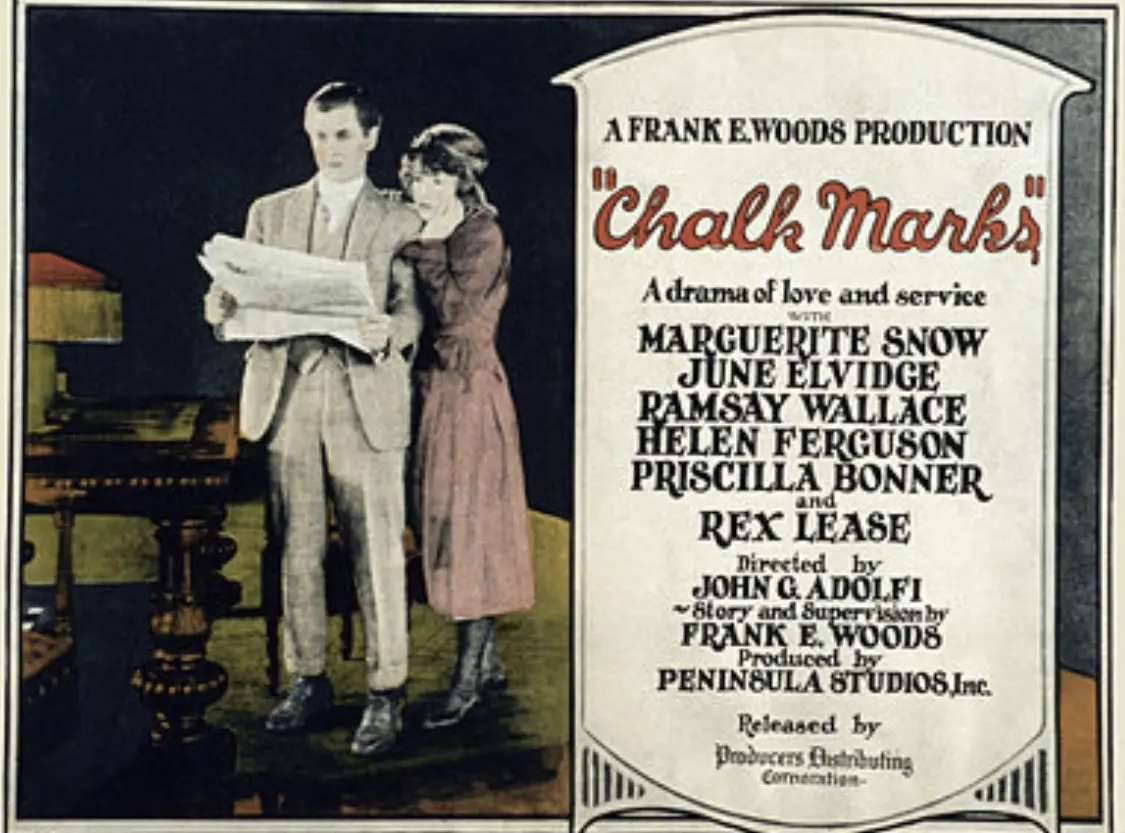
There is a specific, haunting quality to the silent melodramas of the mid-1920s that modern digital cinema struggles to replicate—a tactile sense of destiny etched into the very grain of the film stock. Chalk Marks, directed with a keen eye for the claustrophobia of high society, serves as a quintessential specimen of this era. It is not merely a story of a man who makes a bad choice; it is an investigation into the permanence of character. When we first encounter Herbert Thompson, played with a simmering, repressed intensity by Ramsey Wallace, we see a man whose every gesture is a calculation. He is the architect of his own ascent, but the blueprint is fundamentally flawed. By discarding Angelina Kilboure for the financial fortress of the Morton family, he doesn't just change his zip code; he alters his moral DNA.
The film’s title itself is a stroke of poetic genius. Chalk marks are temporary, easily erased by a stray sleeve or a splash of water, yet in the context of Frank E. Woods’ screenplay, they represent the fragile boundaries we draw between our public virtues and our private vices. Unlike the more overt thematic explorations found in The Marriage Lie, where the deception is the primary engine of the plot, Chalk Marks treats the lie as a foundational state of being. Herbert’s entire life is a chalk drawing on a sidewalk, waiting for the inevitable rain of consequence to wash it away.
The narrative pivot occurs not in the marble halls of the Thompson estate, but in the grime-streaked shadows of a seedy roadhouse. This setting acts as a structural foil to the sterile environment of Herbert’s home. It is here that Bert, the son of privilege, is forced into a primal confrontation. The roadhouse is a recurring motif in 1920s cinema—a place where the social masks of the Prohibition era are discarded. When Bert kills a man to defend his sister’s honor, the film shifts from a domestic drama into a high-stakes legal thriller. The violence is swift and unglamorous, emphasizing the messy reality that Herbert has spent years trying to legislate out of existence.
This descent into the underworld mirrors the thematic trajectory of The Price of Crime, yet it carries a more personal weight. In Chalk Marks, the crime is not an aberration; it is the logical conclusion of a household built on a vacuum of genuine affection. Bert and Virginia are the collateral damage of their father’s emotional bankruptcy. The ruffian at the roadhouse is merely the physical manifestation of the chaos Herbert thought he had escaped through wealth.
Lydia Knott’s portrayal of Angelina Kilboure provides the film’s moral equilibrium. She is the ghost of the life Herbert could have had—a life of authenticity rather than acquisition. Her reappearance in his life, urging him to abandon his prestigious post as District Attorney to defend his son, is the film’s most poignant movement. It forces a collision between Herbert’s public duty and his private guilt. To save his son, he must effectively destroy the very career he sacrificed his soul to build. This is a far more complex ethical quandary than the ones presented in contemporary works like He Couldn't Fool His Wife, where the stakes are primarily comedic or superficial.
The trial scene is a masterclass in silent tension. Frank E. Woods, whose contributions to early cinema cannot be overstated, crafts a courtroom atmosphere that feels both expansive and suffocating. The intertitles are sparse, allowing the visual language of the actors to carry the weight of the testimony. We see Herbert Thompson not as the confident prosecutor, but as a desperate father grappling with the realization that the law he has spent his life upholding is a blunt instrument that cannot account for the nuances of human suffering.
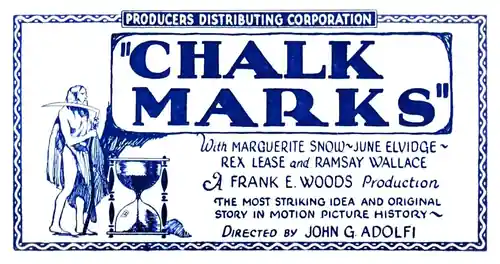
When analyzing the visual grammar of Chalk Marks, one cannot help but draw parallels to the social hierarchies explored in Caste. Both films deal with the rigidity of social structures, but Chalk Marks adds a layer of psychological horror to the mix. The way the camera lingers on the faces of the Thompson children reveals a profound sense of alienation. They are effectively orphans of their father’s ambition. Furthermore, the film’s treatment of the fallen woman trope—embodied by the aging Angelina—is surprisingly progressive for 1924. She is not a figure of pity, but the catalyst for Herbert’s eventual, albeit painful, growth.
In contrast to the more fantastical elements of Alf's Button or the avant-garde leanings of The Brain of Soviet Russia, Chalk Marks remains rooted in a gritty, recognizable reality. Its concerns are the universal anxieties of the middle class: the fear of scandal, the fragility of reputation, and the crushing weight of parental expectation. The cinematography utilizes high-contrast lighting to emphasize the duality of Herbert’s existence—the bright, public light of the courtroom versus the dark, shadowed corners of his conscience.
The resolution of the trial provides a catharsis that is intentionally unsatisfying. Herbert wins the case, ensuring Bert’s freedom, but the "unexpected consequences" mentioned in the plot are the true heart of the film’s climax. The family unit is preserved in name only. The social status Herbert craved is irrevocably tarnished, and the relationship with his children is forever altered by the revelation of his past. It is a sobering reminder that some chalk marks, once drawn, leave a permanent residue on the surface of the soul.
The performances by the supporting cast, including June Elvidge as the cold but socially impeccable Ann Morton and Fred Church as the wayward Bert, provide a rich tapestry of human frailty. Even minor roles feel lived-in, contributing to a sense of a world that exists beyond the frame. This depth of characterization is what separates Chalk Marks from the more ephemeral offerings of the silent era, such as Beauty and the Feast or Pure But Simple.
As a piece of cinematic history, Chalk Marks serves as a bridge between the moralizing Victorian dramas of the early 1910s and the cynical, pre-Code noir films of the early 1930s. It understands that justice is rarely a clean break; it is a messy, expensive, and often unfair process. The film’s refusal to provide a tidy, happy ending is its greatest strength. It acknowledges that while the law may acquit us, our history—those original choices made in the pursuit of status—remains our ultimate judge.
For those interested in the evolution of the legal drama, Chalk Marks is an essential text. It pairs well with a viewing of The Blue Bonnet for its thematic resonance regarding class, or perhaps Es werde Licht! 4. Teil: Sündige Mütter for those seeking a more international perspective on the themes of maternal sacrifice and social stigma. Chalk Marks remains a potent, visual reminder that the paths we choose in our youth are the very ones that will eventually lead us home, whether we wish to return there or not.
IMDb —
1921
Community
Log in to comment.