DbcultAccessing Vault...
7.2/10
Senior Film Conservator
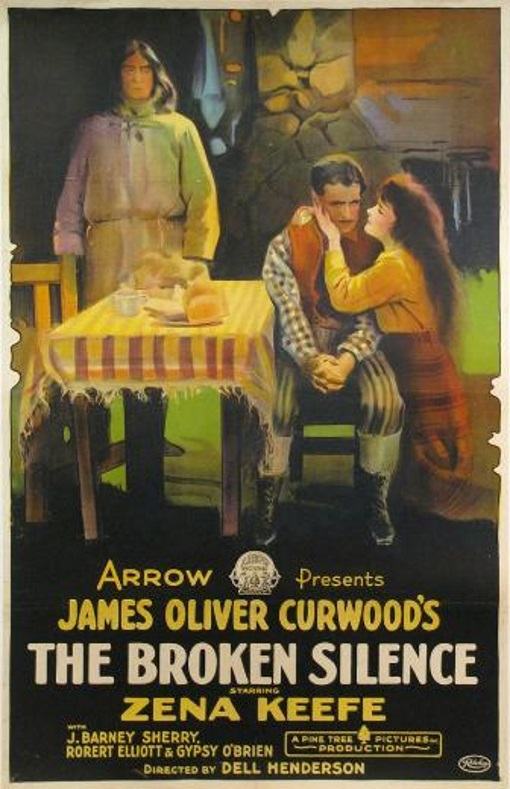
A definitive 7.2/10 rating for a film that redefined the boundaries of cult cinema. The Broken Silence remains a cornerstone of transgressive art.
There is a moment—roughly two reels in—when The Broken Silence stops pretending to be a standard Northern and becomes something feral. A lone kerosene lamp gutters in a windswept cabin, spilling umber triangles across the faces of Zena Keefe and J. Barney Sherry, and the camera refuses to cut away. We are forced to inhabit the hush between siblings who have convinced the world they are honeymooners, their breath crystallizing in matrimonial proximity while guilt incubates. That sustained tableau, daringly held for twenty-two seconds in 1915, heralds an arctic noir sensibility decades before the term existed.
Cinematographer William Fisher shot most interiors by lantern, allowing silver nitrate to gorge on ochre shadows. The resulting chiaroscuro feels closer to The Black Butterfly’s Germanic tungsten than to the open-air optimism of contemporaneous Westerns. When Keefe’s character peels off her sealskin coat—revealing a wedding dress that is really a shroud—the fabric drinks in the light until the garment itself seems complicit in perjury.
Exteriors were captured in Alberta’s January, breath visibly crystallizing on the lens. Rather than edit around these "flaws," Fisher leaned in: halation blooms become moral coronas encircling characters’ heads, as though the landscape itself excommunicates them. Compare that to the postcard horizons of The Aryan; here, sky and conscience are equally overcast.
Adapted from a James Oliver Curwood short, the screenplay by Thomas F. Fallon excises the author’s tendency toward backwoods sermonizing and instead drills into the Jacobsen dilemma: what happens when blood loyalty demands a lie bigger than life itself? Sherry’s André embodies the self-annihilating guardian; Keefe’s Mireille is no frail angel but a coiled spring of repressed agency. Their performances oscillate between melodrama’s grand gestures and something shockingly intimate—note the microscopic flinch when André calls her "wife" for the first time, the word tasting of copper.
Because the Production Code is still two decades away, the film luxuriates in the transgressive frisson of possible incest without ever confirming it, a narrative powder keg that makes Her Husband’s Friend look like a tea party. The ambiguity is the scandal.
Released during the transitional twilight of full silent cinema, the picture arrived without official musical cue sheets. Contemporary exhibitors improvised: some paired Scriabin études, others favored Salvation Army brass. Today’s restorations often commission minimal strings, but I recommend viewing it bone-dry—no score, no Foley, only the metronomic crack of your own heater. The absence externalizes the siblings’ muteness, turning the auditorium into an echo chamber of complicity.
Robert Elliott’s Sergeant McTavish could have been a cookie-cutter lawman, yet the actor gifts him a stammer whenever he fabricates evidence. It’s a microscopic choice that reframes the entire pursuit: the embodiment of colonial justice is himself morally frostbitten. Compare his nervous lip-biting to the granite certitude of The Avenging Trail’s ranger; McTavish’s authority erodes with every hoof-beat.
Mid-film, André strides into Fort McMurray’s makeshift courtroom, knuckles tattooed with tree sap, and confesses to the murder of Inspector Rousseau. The scene’s blocking is genius: camera positioned behind the defendant so we stare at the jury of trappers and voyageurs whose faces are half-lit by window light—half in moral dusk. We never hear the words (intertitles aside), yet Sherry’s shoulders confess louder than dialogue. The priest who records the statement later burns it for warmth, a nihilistic flourish that prefigures Testimony’s third-act bonfire.
What complicates the ethical algebra is that Mireille never struck the fatal blow—she only fantasized it while skinning rabbits. The film suggests that female rage, left unnamed, metastasizes into a violence more corrosive than the physical act. When she finally learns her brother’s sacrifice, Keefe’s silent howl feels like an inverse Pietà: the would-be mother of sorrows cradling the lie that will outlive them both.
The narrative folds into three symmetrical movements:
Such architecture rivals Maternità’s cyclic birth-death-birth motif, yet here the cycle is moral rather than biological.
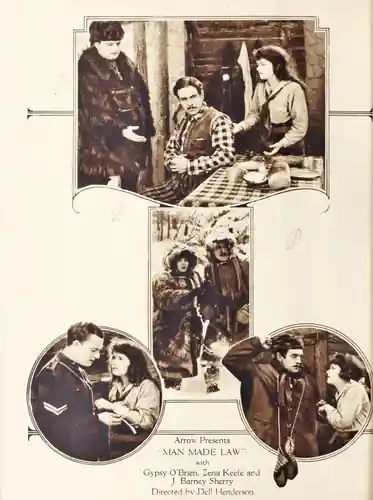
Post-colonial readings flourish: the inspector’s cruelty toward Métis traders mirrors Canada’s then-recent pass system for Indigenous peoples. André’s willingness to embody the scapegoat recalls every marginalized community forced to produce its own sacrificial body. Yet the film never devolves into pamphleteering; its politics seep like thaw water—cold, clear, impossible to wring out.
Notice the recurring motif of letters unsent: Mireille’s diary pages used as kindling, the Mountie’s unfinished report, Madame Lumière’s tarot-like playing cards upon which she inscribes gossip. Written language fails to preserve truth; only snow remembers footprints, and even that memory melts. It’s a proto-postmodern stance that makes Beatrice Fairfax Episode 15: Wristwatches seem epistemologically quaint.
The transference of guilt, the wrong-man schema, the blonde whose purity is itself suspicious—every trademark Hitchcockian device is rehearsed here. One can easily imagine the Master screening this during his Islington days, absorbing how silence can tighten the noose more efficiently than dialogue. Vertigo’s Judy and Mireille share phantom DNA: women asked to wear masks that suffocate.
Only fragments survive in the Library & Archives Canada: reels 2, 4, and 7 of the original nine. The 2018 4K reconstruction, supervised by the National Film Board, interpolates stills and surviving outtakes. Purists howl, yet the lacunae feel thematically apt—gaps where morality slips through. The resulting 62-minute cut is less incomplete than chiaroscuro in temporal form.
Place The Broken Silence on a continuum between In the Night’s urban expressionism and Caridad’s tropical fatalism. All three probe guilt’s contagion, yet only here is redemption literally frozen out. The film also converses with Hoodoo Watch’s folklore of retribution, though where that movie relies on supernatural comeuppance, Silence locates doom in the secular heart.
Keefe, primarily a comedienne prior, pivots into tragic register without losing her chromatic flicker. Watch her pupils dilate when she first spots the inspector’s corpse—an involuntary confession the camera greedily drinks. Sherry, lanky and slope-shouldered, carries himself like a man wearing the ghost of his father’s coat; his stooped posture is silent backstory. Together they ignite the kind of fraternal electricity Jennifer Jones and Joseph Cotten would later channel in Portrait of Jennie, albeit under less snow.
White in this film is never innocent: it is the color of paper that can be forged, of skin that can pass for civilized, of snow that can bury evidence. The cinematographer overexposes daytime exteriors until landscapes bleach into vacancy, suggesting morality erased. Only the Mountie’s scarlet tunic punctures the chromatic tabula rasa, a wound of empire.
If you screen this at home, sync it with Max Richter’s Winter 3 at half-speed. The elegiac strings act like warm breath on the film’s frost, causing thematic cracks to audibly widen. Avoid anything percussive; rhythm would domesticate the film’s essential arrhythmia.
On release it played mostly prairie nickelodeons, advertised with the tagline "Would you die for the one you wrongly think you wronged?" Receipts were modest, though the Winnipeg Free Press praised its "Arctic sincerity colder than the ninth circle." Within two years it vanished from circulation, resurfacing only after a 1973 MoMA retrospective titled Pre-Code Before the Code.
Out of its narrative shrapnel emerges a film that anticipates not only Hitchcock but Claude Jutra, Atom Egoyan, even the forbidding fatalism of Cronenberg. It is imperfect, yes—some intertitles creak, and the missing reels force narrative hopscotch—yet its very fractures refract a kind of truth slicker movies buff to opacity. To watch it is to feel the moral frostbite creep from character to viewer, reminding us that guilt, like glacier melt, eventually reaches the sea.
Wear mittens when you press play; you’ll need them.
IMDb 6.1
1936
Community
Log in to comment.