DbcultAccessing Vault...
Cult Review
Senior Film Conservator
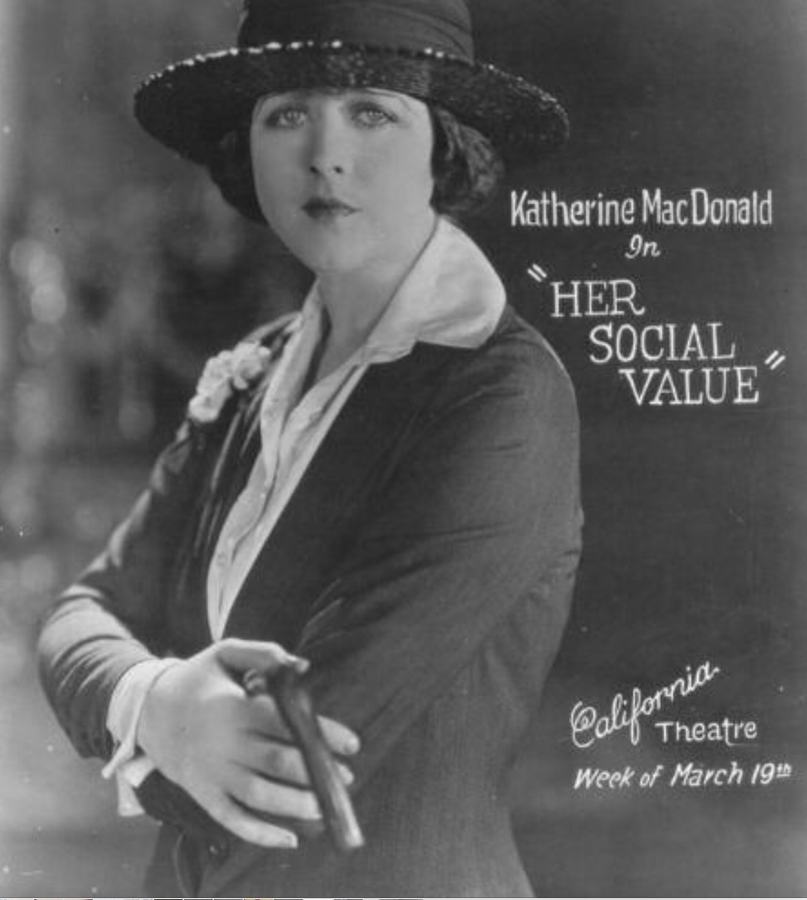
In the shadowed corridors of early 20th-century New York, where social standing is etched into every handshake and glance, Her Social Value emerges as a silent film that still roars with the urgency of modern discourse on class and gender. Directed by an uncredited hand in the pre-code era, this 1920 drama starring Lillian Rich as Marion Hoyte and Roy Stewart as James Lodge is less a romance than a clinical dissection of how marriage functions as both a lifeline and a noose for women bound by economic precarity.
Marion’s arc is a masterclass in subtext. Unlike her family, who accept their station with resigned fatalism, she yearns for upward mobility not for vanity’s sake, but as a pragmatic means of survival. Her encounter with James—sparked by an accusation of theft that he deftly dismantles—sets in motion a relationship that oscillates between mutual admiration and transactional convenience. The film’s brilliance lies in its refusal to romanticize their union; from the first close-up of Marion’s nervous fingers fidgeting with a shop counter, we sense this is a woman calculating risks as much as emotions.
The supporting cast amplifies the central conflict. Bertram Grassby’s Leroy, Marion’s rejected suitor, embodies the patriarchal gatekeeping of the working class, while Violet Phillips’ sister Bertha serves as the family’s tether to outdated ideals. Yet it is Arthur Shipley’s financier, who manipulates James into aligning with his daughter’s marriage plans, who becomes the true antagonist. His withdrawal of funding after Marion’s marriage is not just a plot device but a chilling metaphor for how women’s worth is perpetually measured against their utility to men’s ambitions.
James Lodge’s character, played with aching sincerity by Stewart, is a study in contradictions. His initial defense of Marion—a moment crystallized in a shot where he lifts her chin with both accusation and tenderness—signals a man torn between his conscience and his social conditioning. The decision to have him design the new state capitol while entangled in this personal drama is no accident. The film parallels architectural ambition with the fragility of human relationships, both built on foundations of unseen rot.
The so-called "fake elopement" with Clifford Trent (Winter Hall) is a narrative gambit that exposes the film’s feminist spine. Marion’s arrangement of this charade is not a lapse in judgment but a strategic rebellion against a world that sees her only as a complement to James’s success. The decision to send her to the mining camp after learning of his injury—rather than the expected narrative of her rescue—subverts the damsel-in-distress trope. Here, she reclaims her role as a woman of action, navigating the harsh landscape not as a passive figure but as a catalyst for James’s moral awakening.
In the absence of spoken dialogue, Her Social Value relies on visual storytelling of extraordinary precision. The contrast between the opulent interiors of Shipley’s estate and the stark minimalism of Marion’s shop is rendered through lighting choices that echo her internal state. One particularly striking sequence shows Marion adjusting her posture in a mirror before entering the Lodge household—a silent act of armor-clad transformation. Similarly, the western mining sequences, with their stark, sun-bleached vistas, evoke the desolation of a love stripped of artifice.
The film’s score—credited as a "symphonic accompaniment"—deserves mention for its role in amplifying tension. During key emotional beats, like the moment Marion learns of Shipley’s betrayal, the music swells into a dissonant crescendo that mirrors her psychological unraveling. This aural layering is crucial in a film where much of the drama is internalized, a silent scream behind carefully composed expressions.
To fully grasp Her Social Value, one must consider its place in the canon of early American cinema. While it shares thematic DNA with For France’s patriotic fervor or Oh, You Women!’s comedic takes on gender roles, it stands apart in its unflinching critique of capitalist marriage. Its exploration of economic coercion in relationships finds a darker echo in Other Men’s Shoes, yet Her Social Value retains a tragic core absent in its more farcical counterparts.
The film’s final act—a rekindling of love in the mining camp—is both its most criticized and most visionary sequence. Rather than a cliché redemptive arc, the reunion is framed through the harsh beauty of the landscape, suggesting that true connection can only flourish when stripped of social pretense. This conclusion, while bittersweet, avoids the saccharine resolution of Nearly Married, instead offering a nuanced reflection on the cyclical nature of societal constraints.
Decades later, Her Social Value remains a provocative artifact of its time. Its unapologetic portrayal of women as economic actors in a patriarchal system prefigures the themes explored in later works like The War Bride’s Secret, yet its silent medium gives it a timeless quality. The film’s enduring power lies in its refusal to offer easy solutions; Marion’s choices are neither heroic nor villainous, but humanly complex in a world that demands simple roles.
For modern viewers, the film serves as both a historical document and a cautionary tale. Its exploration of how wealth dictates love resonates in an era where social media marriages and influencer culture replicate the same power dynamics. The final shot of Marion and James walking away from the camera, their silhouettes merging into the horizon, lingers as a reminder that some bonds are worth fighting for—even in systems designed to break them.
IMDb 7.7
1933
Community
Log in to comment.