DbcultAccessing Vault...
Cult Review
Senior Film Conservator
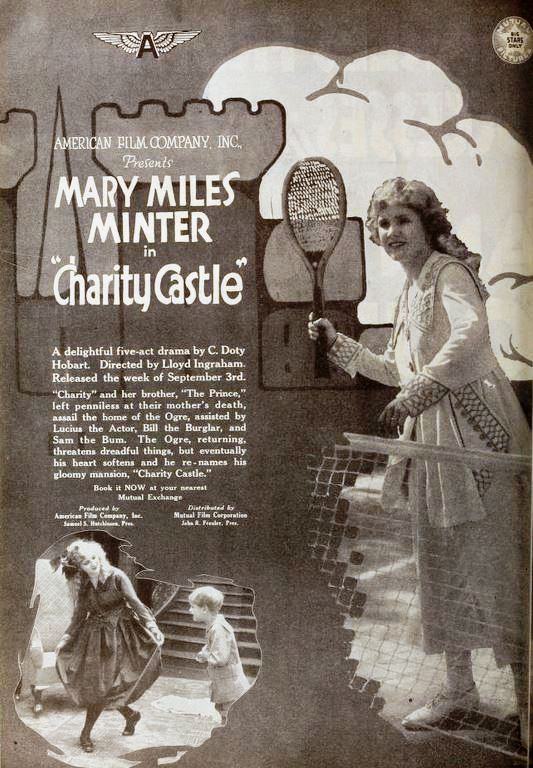
In the annals of early cinema, certain films, despite the passage of time and the advent of sound, retain a peculiar, almost mystical resonance. 'Charity Castle' stands as one such artifact, a silent film that, through its poignant narrative and earnest performances, transcends its era to deliver a message as relevant today as it was a century ago. It's a testament to the power of imagination and the resilience of the human spirit when confronted with the stark realities of life. This cinematic treasure, penned by the insightful Doty Hobart, invites us into a world where the lines between fairy tale and destitution blur, creating a tapestry rich with emotion and subtle social commentary.
At its core, 'Charity Castle' is a fable for the ages, exploring the indomitable power of youthful optimism against a backdrop of societal indifference and personal hardship. It's not merely a story; it's an experience, a journey into the heart of a child who, armed with nothing but belief, transforms a desolate reality into a realm of possibility. The film's enduring appeal lies in its ability to evoke profound empathy while simultaneously entertaining with its unexpected twists and turns. It’s a delicate balance, one that many contemporary productions struggle to achieve, yet Doty Hobart navigates it with remarkable finesse.
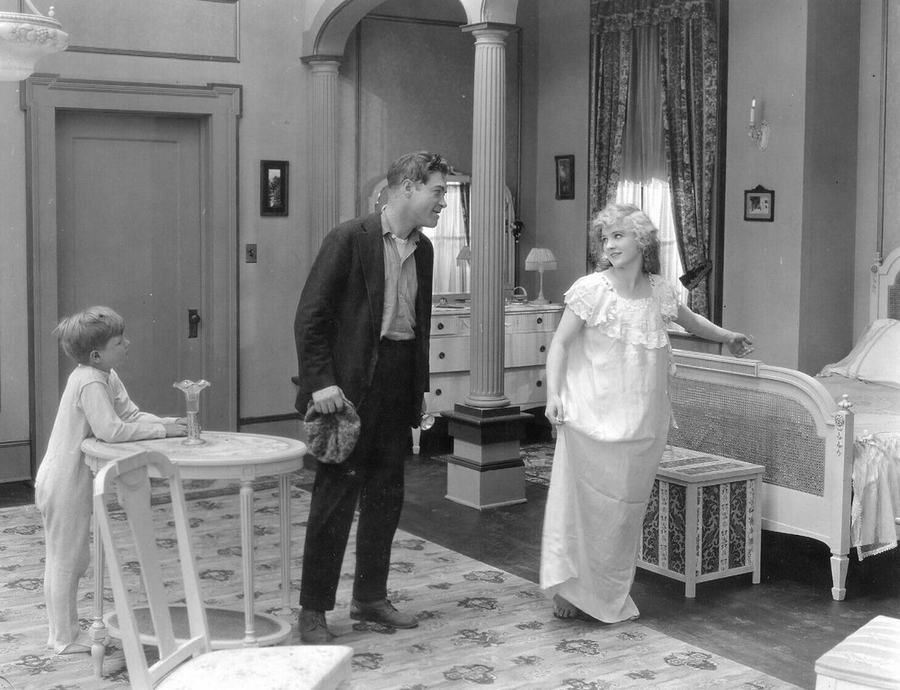
The narrative commences with a stark portrayal of loss: the death of Charity’s mother, a working-class woman whose toil as a cleaning woman barely sustained her children. This tragic event catapults Charity and her young brother into the benevolent, albeit somewhat accidental, care of Merlin Durand, portrayed with a nuanced blend of youthful idealism and burgeoning responsibility by Allan Forrest. Merlin is the progeny of a millionaire whose wealth is inversely proportional to his generosity, setting up an immediate thematic tension between inherited privilege and earned dignity. Charity, brought to life with an almost ethereal innocence by Mary Miles Minter, refuses to let the harshness of her circumstances dim her inner light. Her world is one populated by princes and princesses, a conviction so strong that she bestows the title of 'The Prince' upon Merlin, transforming their precarious existence into a nascent fairy tale. This act of imaginative renaming is not merely a childish whim; it's a profound coping mechanism, a declaration that even in destitution, dignity and wonder can be found. Minter's performance is a masterclass in silent film acting, conveying volumes with a glance, a gesture, a subtle shift in posture. Her Charity is not merely passive; she is an active architect of her own emotional reality, a beacon of hope that illuminates the entire film.
The film skillfully contrasts Charity's vibrant inner world with the mundane, often cruel, external reality. Her unwavering belief in Merlin as her 'Prince' is a beautiful, if fragile, construct that shields them both from despair. This imaginative strength mirrors the resilience often found in characters facing overwhelming odds, much like the spirited protagonist in My Best Girl, who navigates the complexities of love and work with an unyielding spirit. Charity's ability to see beyond the immediate, to project a narrative of grandeur onto their humble circumstances, is the true magic of the film. It's a reminder that sometimes, the greatest treasures are not found in vaults, but forged in the crucible of one's own mind.
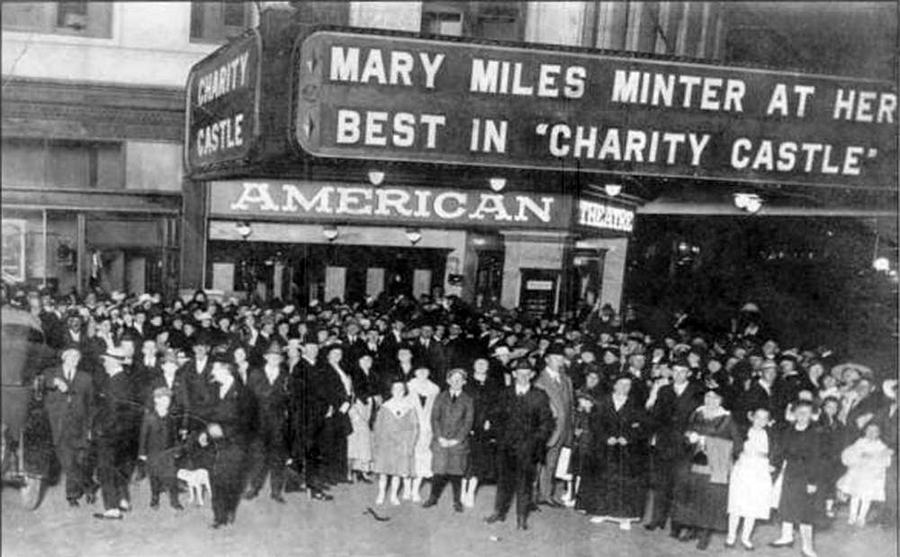
Merlin Durand's trajectory is equally compelling. Initially, he embodies the archetype of the well-meaning but somewhat feckless young man of means. His father, a figure of almost caricature-like avarice, abruptly cuts off his allowance, demanding he earn his keep. This paternal decree, coupled with the father's subsequent departure for a rather ambiguous 'water cure,' strips Merlin of his financial safety net. The ensuing exodus of the household staff, who seize the opportunity for their own impromptu vacations, leaves the sprawling Durand mansion utterly vacant. This pivotal moment forces Merlin to confront the harsh realities of independence, a stark departure from his privileged upbringing. Allan Forrest portrays this transition with understated elegance, showing Merlin's initial bewilderment giving way to a quiet determination. He is not a hero in the conventional sense, but a young man thrust into a role he never anticipated, learning to navigate the world without the crutch of inherited wealth.
The empty mansion, a symbol of abandoned luxury, becomes their clandestine refuge. It is here that Charity, with her boundless capacity for wonder, rebrands it 'Charity Castle.' This renaming is more than a simple act; it’s an assertion of ownership, not of property, but of spirit. The castle, once a symbol of cold, detached wealth, is transformed by Charity's imagination into a fortress of hope and shared dreams. It's a powerful metaphor for finding warmth and belonging in the most unexpected, and often desolate, places. The narrative cleverly uses this shift in perspective to highlight the idea that true richness lies not in material possessions, but in human connection and the power of perception. This transformation of adversity into opportunity is a recurring motif in cinematic history, resonating with tales of grit and determination like that found in The Girl from Outback, where characters carve out a life against formidable odds.
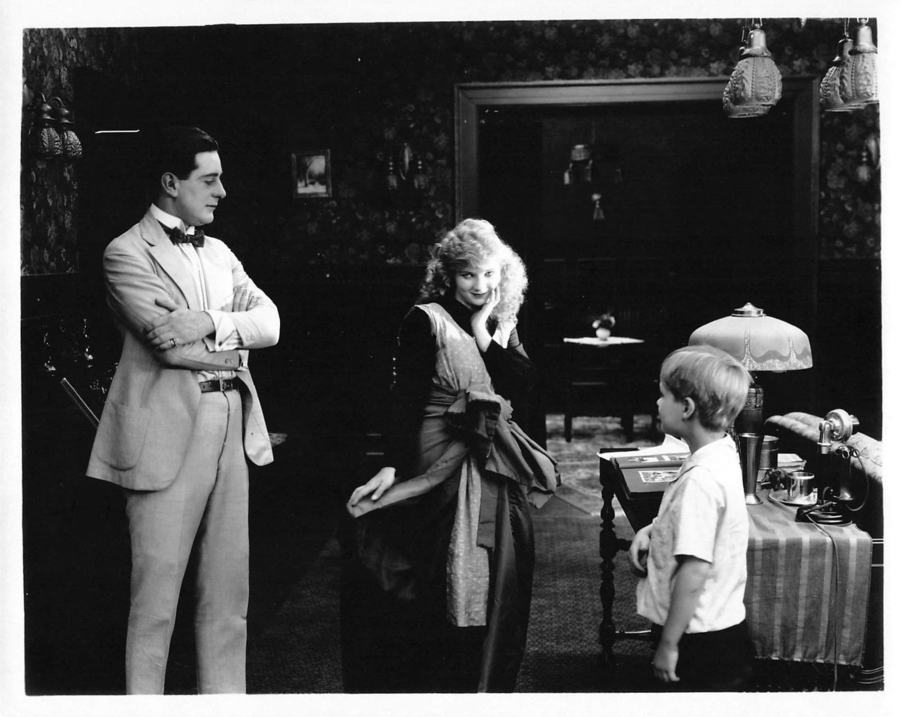
The arrival of the supporting characters injects a delightful blend of humor and pathos into the narrative. A burglar, perhaps less nefarious than desperate, stumbles upon the 'empty' mansion, only to find it occupied by the unexpected duo. This encounter, rather than devolving into mere suspense, becomes an opportunity for unexpected human connection. The film, in a stroke of genius, introduces an unemployed Shakespearean actor, a character who embodies the tragicomic plight of artistic aspiration in a pragmatic world. Played by Clifford Callis, his theatrical grandiloquence provides a wonderful counterpoint to the quiet desperation of the other characters. His dramatic recitations and larger-than-life presence add a layer of whimsical absurdity, elevating the film beyond a simple drama into something more akin to a modern fairy tale with a distinctly urban twist. The interactions between these disparate individuals—the innocent children, the struggling 'prince,' the pragmatic burglar, and the verbose actor—form a miniature society within the confines of the 'Charity Castle.'
The film's strength lies in its ability to find common ground among these seemingly incompatible personalities. The burglar, initially a threat, becomes a reluctant ally, his hardened exterior slowly chipped away by Charity's innocence and Merlin's earnestness. The Shakespearean actor, while perhaps initially a figure of ridicule, offers moments of profound insight and unexpected camaraderie. These characters, including the brief but memorable appearance of Eugenie Forde in an unspecified role, enrich the narrative, demonstrating that human connection can blossom in the most unlikely of circumstances. The comedic timing and character dynamics here bear a subtle resemblance to the lighthearted, yet often poignant, situational humor found in films like The Flirt or even the more mischievous antics of The Fibbers, where character interactions drive much of the plot's charm and resolution.
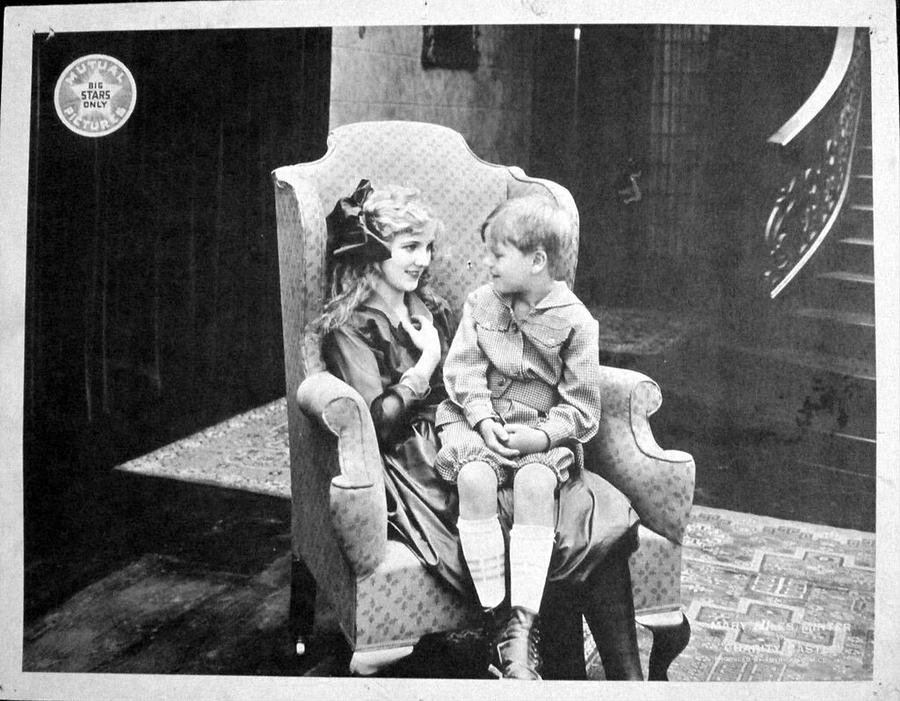
Doty Hobart's screenplay is a marvel of concise storytelling, particularly for the silent era. It deftly tackles themes of class disparity, the illusion of wealth, and the enduring power of human connection. The juxtaposition of Charity's poverty with Merlin's inherited, yet temporarily lost, privilege highlights the arbitrary nature of social standing. The narrative doesn't preach, but rather illustrates, allowing the audience to draw their own conclusions about the societal structures at play. The empty mansion, once a symbol of the father's material success, becomes a crucible for the younger generation's growth, stripped of all artifice. Hobart's genius lies in crafting a story that is both deeply moving and surprisingly light-hearted, avoiding saccharine sentimentality in favor of genuine emotion.
The pacing of the film, characteristic of the period, allows for moments of quiet reflection, punctuated by bursts of comedic action or dramatic tension. The intertitles, crucial in silent cinema, are used effectively to convey dialogue and internal monologues, enhancing the emotional depth without overburdening the visual narrative. Hobart's ability to create memorable characters and place them in a compelling, yet relatable, predicament is what truly elevates 'Charity Castle'. The story's structure, with its clear progression from loss to resilience, and then to unexpected community, provides a satisfying arc that speaks to universal human experiences. This narrative craftsmanship is a hallmark of strong screenwriting, allowing even a simple premise to unfold into a rich and meaningful cinematic experience.
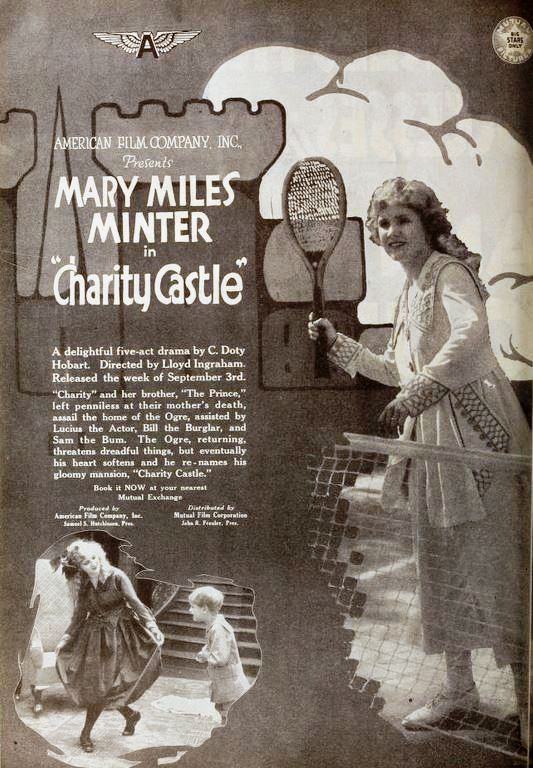
The direction of 'Charity Castle', while uncredited in the provided information, masterfully leverages the visual language of silent film. Cinematography plays a pivotal role, with careful attention paid to composition, lighting, and the expressive power of the actors' faces and bodies. The vastness of the empty mansion, for instance, is conveyed through wide shots that emphasize its cavernous nature, contrasting sharply with the intimate close-ups that capture Charity's hopeful gaze or Merlin's troubled brow. The visual cues are paramount in conveying emotion, character development, and plot progression without the aid of spoken dialogue. Actors like Mary Miles Minter and Allan Forrest understood this implicitly, their performances relying heavily on exaggerated but precise gestures, nuanced facial expressions, and a theatricality that was perfectly suited to the medium.
The visual storytelling is further enhanced by the use of mise-en-scène. The dusty, abandoned furniture of the mansion, for example, quietly communicates the family's sudden departure and the children's precarious situation. Yet, when Charity begins to transform the space with her imagination, the same visual elements take on a new meaning, reflecting her internal world. The contrast between light and shadow is also employed effectively, particularly in scenes involving the burglar, adding a layer of suspense and mystery. These techniques were fundamental to the silent era's ability to captivate audiences, and in 'Charity Castle', they are utilized with a keen understanding of their dramatic potential. The visual narrative, much like the intricate plotting in a film such as The Double Event, is meticulously crafted to guide the viewer through every emotional beat and plot twist.
Despite its age, 'Charity Castle' speaks volumes to contemporary audiences. Its themes of resilience in the face of adversity, the transformative power of imagination, and the unexpected kindness of strangers are universal and enduring. In an era often characterized by cynicism, Charity's unwavering belief in the good, and her ability to create beauty amidst desolation, serves as a powerful reminder of the human spirit's capacity for hope. The film doesn't shy away from the harsh realities of poverty and class division, yet it filters these through a lens of optimism, suggesting that even in the bleakest circumstances, there is potential for joy and connection.
The performances are compelling, particularly Mary Miles Minter's portrayal of Charity, which anchors the film with genuine warmth and vulnerability. Allan Forrest provides a strong, empathetic counterpart as Merlin, evolving from a somewhat naive youth to a responsible caregiver. The supporting cast, though briefly glimpsed, adds rich texture to the narrative. Doty Hobart's writing ensures that every character, no matter how minor, contributes meaningfully to the overall tapestry of the story. This collaborative effort results in a film that is not just a historical curiosity, but a vibrant piece of cinematic art that continues to resonate. It invites us to consider our own 'castles' – the places, both physical and metaphorical, where we find solace and build our dreams. Much like the adventurous spirit of The Sky Hunters, this film encourages viewers to look beyond immediate horizons and discover the unexpected wonders that lie ahead. The film's message is clear: even when the world seems to have forgotten you, the power to create your own magic remains.
In conclusion, 'Charity Castle' is far more than a relic of the silent era; it is a timeless narrative that continues to charm and inspire. It serves as a beautiful illustration of how hope, imagination, and the kindness of others can transform even the most desolate circumstances into a haven. For enthusiasts of classic cinema, or indeed anyone who appreciates a story told with heart and ingenuity, this film is an absolute must-see. It reminds us that sometimes, the grandest adventures begin in the quietest corners, and that a 'prince' can be found not just in fairy tales, but in the most unexpected of allies. Its legacy is one of light, proving that even without a single spoken word, a film can speak volumes to the human soul. This film, like a beautifully preserved artifact, offers a window into the past while reflecting universal truths that remain relevant today, much like the enduring appeal of La leggenda di Pierrette, which similarly captures a unique cultural and emotional landscape.
IMDb —
1934
Community
Log in to comment.