DbcultAccessing Vault...
Cult Review
Senior Film Conservator
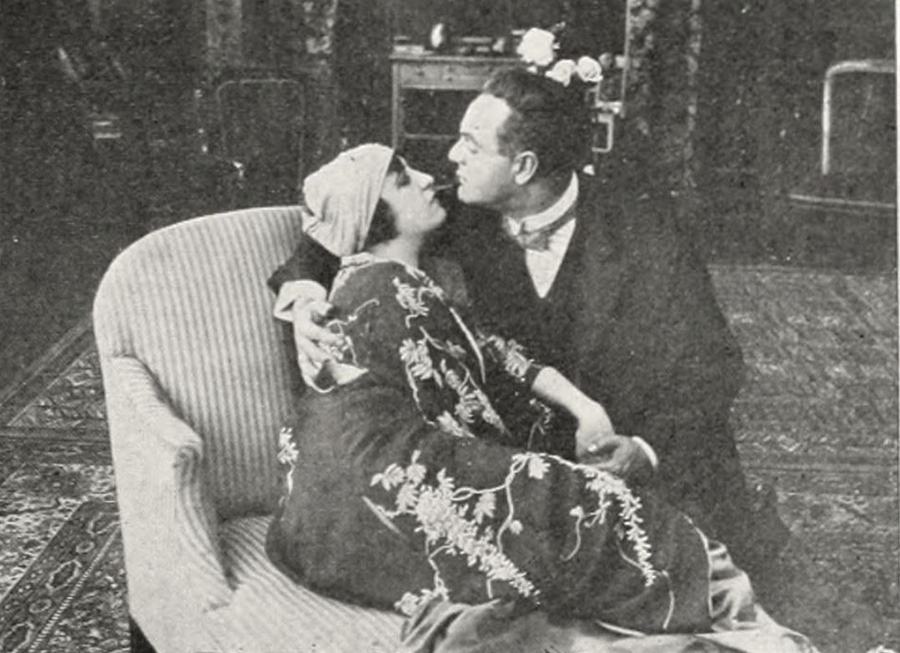
Chicago, 1915: streetcars rattle like mechanical cicadas while nickelodeons exhale the perfume of warm nitrate. Into this electric dusk strides A Mother’s Confession, a five-reel moral earthquake from Ivan Abramson, the Polish-American showman who believed cinema should preach as loudly as it titillated. The film, once thought lost, now survives only in scattered cue sheets, lobby photos, and a pristine tinted print discovered in a Slovenian monastery vault—enough to let us reconstruct its fever dream of bigamy, blood money, and intergenerational penance.
Abramson’s palette is nocturnal: cerulean gels drench Denver snowscapes, sulfuric amber flickers in Chicago parlors, and carmine tinting blooms each time a heart ruptures. The director’s camera, tethered to heavy wooden tripods, nevertheless glides—via ingenious floor grooves—through ballroom waltzes and squalid jail cells alike, stitching disparate moral hemispheres into one suffocating tapestry. Intertitles, lettered in florid Art-Nouveau type, hiss aphorisms such as “A lie is a seed that grows a coffin.” The sentence lingers onscreen long enough to burn into retinas.
Christine Mayo’s Lola is the film’s trembling moral compass, her eyes—kohl-ringed and lake-wide—registering each postal betrayal with micro-tremors of the lower lip. Watch the scene where she slices open Henry’s final letter: the paper quivers like a trapped moth, and her reflection in a hand-mirror fractures into a cubist guilt-trip. Opposite her, Austin Webb’s Henry Patterson exudes the oily magnetism of a man who tells himself his sins are temporary. His shoulders, perpetually angled as if dodging both conscience and creditors, grow more stooped each reel, until by the third act he resembles a marionette whose strings have been sold for scrap.
Carrie Reynolds essays Louise Douglas as a Gilded Age siren—peacock feathers, opera gloves, and a spine of chilled steel. Note the flicker of calculation behind her smile when she offers Henry a cashier’s check fat enough to ballast his doom. Later, when she cradles infant Muriel, her fingertips drum against the lace like a pianist sounding out a funeral march. The performance anticipates Greta Garbo’s later fatalism yet retains a nickelodeon grandeur that belongs only to the teens.
The fatal confrontation—a scuffle over a confession letter—unfolds in a single, unbroken 42-second take. The camera, stationed at waist height, frames Henry’s revolver like an obscene silver tongue. When the gun barks, the screen flares crimson via hand-painted crimson flash-frames, a proto-Scarlet tint that predates DeMille’s epiphanies by several seasons. Warren’s subsequent self-indictment—delivered straight to camera in a chilling medium-close-up—flips the melodramatic script, transforming the artist into a Christ-figure whose easel is now the prison bars.
The narrative’s most audacious gambit is its generational relay: Harold and Muriel, half-siblings ignorant of shared paternity, meet under Milan’s white cathedral spires where Verdi chords seep from open windows. Their courtship—rendered via love letters superimposed over spinning mandolin strings—evokes Shakespearean forest collisions yet reeks of Freud’s return-of-the-repressed. When Harold’s envelope bearing a marriage proposal lands in Louise’s manicured lap, the film smash-cuts to Lola’s prison yard where barbed wire shadows tattoo her face—an Eisensteinian montage before Eisenstein.
Lola’s two-year incarceration—shot on location at Joliet with warden-approved extras—serves as a social x-ray of female penitence. Prison stripes stripe the celluloid itself; the tinting desaturates to slate gray, and the intertitles shrink, as if language itself were doing time. Upon release, she trudges into a New York autumn where dead leaves cling to her threadbare coat like unpaid debts. The scene of her discovering Harold’s wedding announcement in a discarded Times—ink still damp from a gutter puddle—achieves a documentary immediacy that prefigures Italian neorealism by three decades.
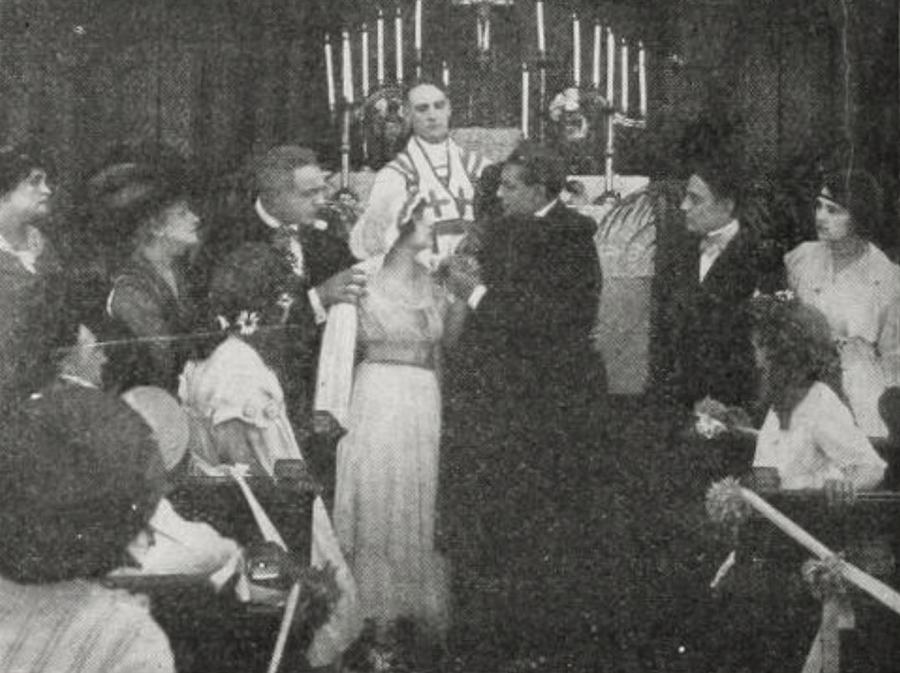
The climactic church incursion—filmed inside St. Vincent de Paul with permission from an archbishop who later regretted it—utilizes the nave’s cavernous depth to stage a moral opera. Lola, hair unmoored, storms the aisle while stained-glass saints blush crimson. Her confession to the priest is delivered in a single intertitle that scrolls upward like a soul ascending: “I have sold my son’s birthright for a bowl of soup, and the bowl cracked.” The camera tilts skyward to the crucifix, then dollies back to reveal Muriel’s veil dropping like a guillotine of renunciation. The scene’s blocking anticipates Hitchcock’s Vertigo spiral, albeit sanctified.
Though silent, the film was conceived with a custom score—piano, celesta, and onstage thunder-sheet—meant to be performed live. Contemporary reviews in the Chicago Defender praise a leitmotif for Muriel that migrates from major to minor the instant she learns Warren killed her father. Modern restorations interpolate a new score by Aleksandra Vrebalov, whose strings scrape against archival silence like a scalpel lifting scar tissue. The effect is unnerving; you swear you hear Louise’s pearls scatter across parquet even when no such footage exists.
Where gritty war tableaux mythologize national wounds, A Mother’s Confession lances personal ones. Its DNA carries chromosomes from Mrs. Henry Wood’s domestic martyrs yet mutates toward the urban fatalism later perfected in film noir. Think of it as the missing link between Victorian parlor guilt and post-war disillusion, a celluloid Rosetta Stone etched with sin and semaphore.
Today, when algorithmic thumbnails peddle polyamorous sitcoms, the film’s moral absolutism feels both quaint and radioactive. Yet its preoccupations—identity fraud, carceral motherhood, karmic accounting—scroll beneath our touchscreens. A 4K transfer screened at MoMA last winter drew gasps when the crimson gun-flash bled across the viewers’ faces, each iPhone dimmed in involuntary homage. Critics compared the experience to watching your own browser history projected at 24 fps.
For all its dime-novel contortions, A Mother’s Confession endures because it trusts that audiences crave catharsis more than credibility. It is a lantern held to the face of American optimism, revealing the soot beneath the powder. Watch it not as antique curio but as premonition: every text message you delete, every second family you follow on Instagram, every Venmo sent under an alias is a frame in your own expanding reel of confession. The film demands you ask: when your credits finally roll, who will be left holding the smoking gun—your spouse, your child, or the algorithm that remembers everything?

IMDb —
1924
Community
Log in to comment.