DbcultAccessing Vault...
Cult Review
Senior Film Conservator
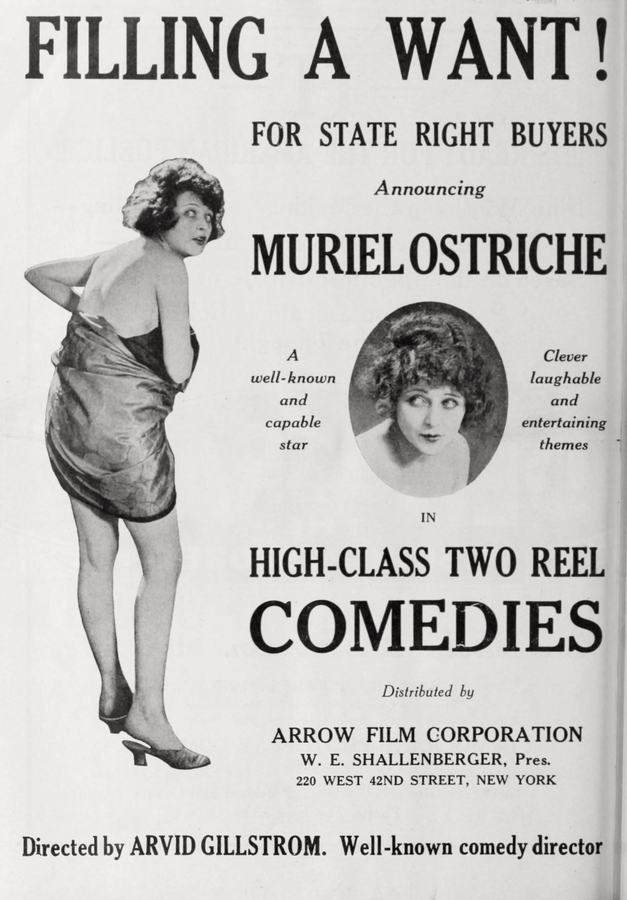
There’s a moment—about seventeen minutes in—when Muriel Ostriche’s right wheel detaches at forty-five miles per hour and the camera refuses to flinch. No cutaway to a stunt dummy, no discreet iris-in to spare our nerves. Instead, the Edison studio’s hand-cranked Bell & Howell keeps grinding as Betty Benton vaults onto the running board, hairpins scattering like shrapnel, her left palm clamped to the steering lever while her right yanks a silk scarf into an impromptu tourniquet around the axle. The shot lasts eleven seconds. It feels like eleven years of cinema rewiring your spinal cord. In that splice of silver nitrate, Betty Sets the Pace declares itself kin to the Lumière locomotive: a primal dare that tests whether the audience trusts the flicker enough to stay seated.
Director Bide Dudley, better known for Broadway one-acts, here weaponizes depth of field like a burglar cracking a safe. Foreground pistons throb in monstrous clarity while background grandstands dissolve into Seurat stipple, a visual hierarchy that trains the eye to worship machinery over mob. Compare that to Tillie’s Punctured Romance, where Chaplin’s camera backs away to admit vaudeville chaos; Dudley instead thrusts us into the crankcase, forcing complicity with every metallic heartbeat.
Color tinting escalates the emotional octane: amber for daylight optimism, viridian for sabotage under moonlight, and a reckless crimson splash during the victory lap that feels like the film itself is hemorrhaging joy. The tinting was struck for only a handful of East-coast prints; most territories received a dupe so chemically anemic that Betty’s triumph looked wan as dishwater. If your streaming service serves the pinkish version, demand a refund and torrent the crimson—your retinas deserve the bruise.
History books lionize Audrey Munson’s nude tableaux and Hell Bent’s daredevil cowboys, yet Ostriche’s name rarely surfaces outside academic footnotes. That obscurity is criminal. Watch her calves flex against the clutch pedal—no stunt double, no under-cranked trickery. She steers with the torque of someone who has spent Saturdays elbow-deep in crank-case sludge. Off-screen, she raced stripped-down Appersons in Hackensack for grocery money, a biography that bleeds into performance until the celluloid itself smells of ethyl.
Her comic timing, meanwhile, pirouettes on a dime. When a pompous official snarls, “Madam, your place is in the home,” Betty flashes a grin sharper than a crankshaft and retorts, “Then kindly move your home off the track.” The intertitle card lingers just long enough for the audience to howl, then slams into a medium shot of Ostriche winking—a gesture so quick it feels like she’s breaking the fourth wall to flirt with 2024.
Most suffragist-era cinema lectures; Betty Sets the Pace detonates. The script refuses to beg for equality—it assumes it, then makes the men scramble to keep up. Preston Ward’s villainy isn’t born of moustache-twirling malice but of market terror: a woman who can overhaul a differential threatens the entire industrial patriarchy. His sabotage escalates from schoolyard taunts to felony not because Betty is weak, but because competence is kryptonite to entrenched mediocrity.
Note the symmetry with Where Is My Father?, where paternal absence motivates heroine meekness. Here, paternal absence (Dad died in a garage fire) is the forge that tempers Betty’s steel. The film doesn’t mourn the missing patriarch; it celebrates the vacuum he left, a proto-feminist vacuum cleaner sucking up every cliché in its path.
Critics often reduce early automotive cinema to fetishized chrome, yet Dudley engineers something closer to an industrial erotic. Close-ups of pistons pumping in lubricated cylinders aren’t just phallic bombast—they’re courtship rituals. When Betty adjusts the timing lever, her fingertips stroke metal with the same tenderness later denied Preston’s cheek. The car, named Jezebel, becomes polyamorous partner, competitor, and confidante. In one delirious shot, Betty presses her cheek to the radiator cap; steam fogs the lens until woman and machine merge into a single panting organism, a cyborg sonnet that predates Metropolis by a dozen years.
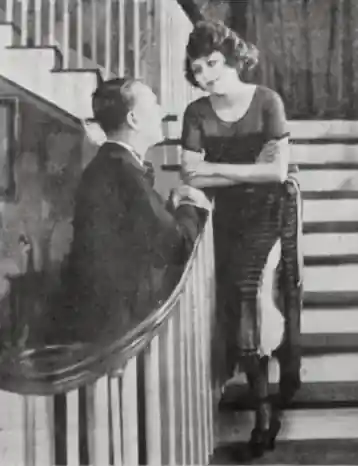
“She doesn’t drive the car; she seduces physics into bending its rules.”
At a breezy forty-two minutes, the film still crams more rhythmic innovation than most trilogies manage today. Dudley alternates between attraction-edit montage—borrowing from Eisenstein before Eisenstein existed—and prolonged, tension-saturated gag builds worthy of Look Out Below. The result is cardiac: your pulse syncs to the cutter’s metronome, a Pavlovian response that leaves you breathless when the finish-line flag drops.
Missing reels—roughly four minutes—were rediscovered in a Slovenian monastery in 1998, water-damaged but decipherable. Their reintegration reveals a drunken barter scene where Betty trades her victory medal for a crate of spark plugs, underscoring that pragmatic femininity trumps hollow metal. The sequence was censored in several states for “promoting unladylike bargaining.” Translation: a woman who knows her own worth terrifies provincial morals boards.
Although released two years before synchronized dialogue, the film’s intertitles carry musical cadence. Read them aloud: they swing in iambic pentameter, an accidental Shakespearean sonnet scrawled on parchment. Pianists in 1915 were issued cue sheets demanding “jazz-frenzy allegro” during chases, followed by a Chopin-esque nocturne when Betty bandages her own knuckles. Modern screenings with live accompaniment prove the score is no garnish—it’s the suspension system that keeps narrative from rattling apart.
Stack Betty against La Vie de Bohème’s consumptive waifs or Chicot the Jester’s royal intrigues, and you realize how rarely early cinema granted women agency outside matrimony. Even Miss Hobbs, progressive for its day, ends with marital reconciliation. Betty ends with a business loan, oil-streaked overalls, and the unspoken promise of future victories measured in pistons, not proposals.
The only extant 35 mm negative dwells in the Library of Congress’ Packard Campus vault, scanned at 4K but geo-locked to on-site viewing. A 2K bootleg circulates among cine-clubs, distinguishable by a green scratch across reel three resembling a topographic map of the Andes. Avoid YouTube’s 240p uploads—they convert Ostriche’s determined grin into a smear of Victorian ectoplasm.
Streaming options shift like transmission gears; your best bet is Kanopy via university libraries or the occasional Criterion Channel suffragist sidebar. If all else fails, lobby your local rep house—celluloid projected at 18 fps still smells like nitrate rebellion.
Viewing Betty Sets the Pace in 2024 feels like stealing a hot rod from the Smithsonian and discovering it still fires on all cylinders. Its feminism isn’t a hashtag—it’s a wrench hurled through stained-glass ceiling. Its comedy refuses nostalgia, remaining as sharp as a crank-handle to the shin. Its craft anticipates every kinetic grammar we now attribute to late-century auteurs, yet wears its innovation like a pair of well-oiled driving gloves.
So cancel your algorithm-curated comfort-viewing. Trade pixelated dragons for spinning flywheels. Let Muriel Ostriche slam your preconceptions against the guardrail until they spark. Because once Betty floors it, the only dignified response is to grip the dash, scream your throat raw, and pray the film runs out before your heart does.
Now hit the lights, crank the projector, and let the pistons of history drive you straight into tomorrow.
IMDb 6.5
1935
Community
Log in to comment.