DbcultAccessing Vault...
5.3/10
Senior Film Conservator
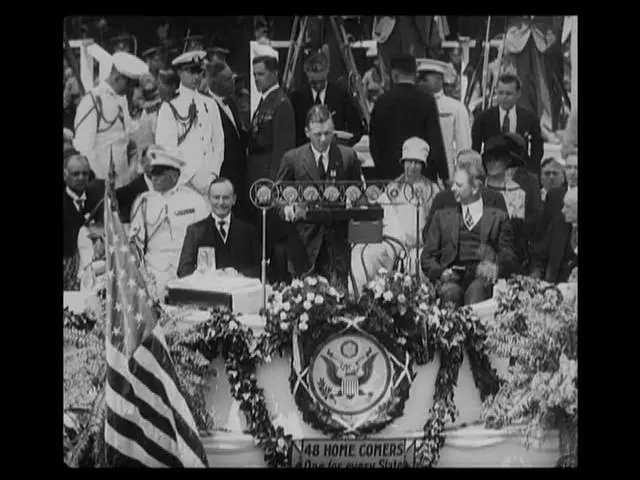
A definitive 5.3/10 rating for a film that redefined the boundaries of cult cinema. Charles A. Lindbergh remains a cornerstone of transgressive art.
Is 'Charles A. Lindbergh' worth watching today? Short answer: yes, but with significant caveats that demand a specific kind of viewer. This film isn't for those seeking modern narrative pacing or high-fidelity production, but rather a rare window into a pivotal historical moment, making it essential viewing for cinephiles and historians, while likely frustrating casual audiences.
It’s a relic, undeniably, but one that hums with the electric energy of a world on the cusp of a new age. This isn't just a film; it's a testament to early 20th-century ambition, both in aviation and filmmaking.
This film works because: It provides an unparalleled, unfiltered glimpse into the cultural zeitgeist surrounding Charles Lindbergh’s legendary transatlantic flight, acting as a crucial historical document.
This film fails because: Its technical limitations, rudimentary narrative structure, and often slow pacing make it a challenging watch for contemporary viewers accustomed to sophisticated cinematic language.
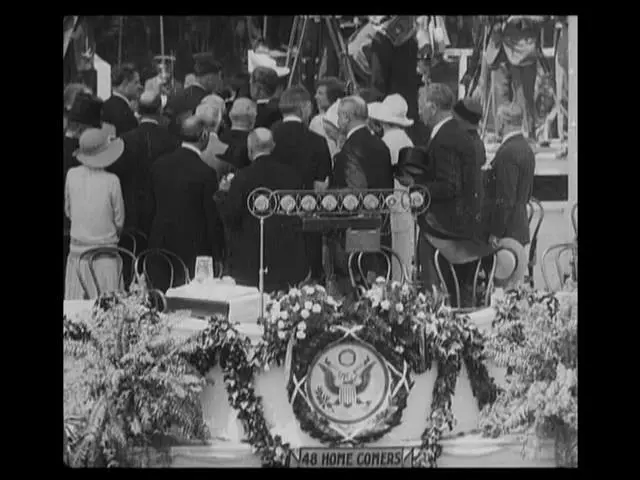
You should watch it if: You possess a deep interest in early 20th-century history, the evolution of aviation, the formative years of cinema, or wish to understand the sheer cultural impact of a singular human achievement.
"Charles A. Lindbergh" isn't a narrative feature in the modern sense; it's more akin to an extended newsreel, a curated collection of moments designed to immortalize an event that gripped the globe. The film opens by setting the stage, introducing the public to Lindbergh not as a complex character, but as an emblem of daring and innovation. We see snippets of his preparations, the careful checks of his aircraft, ‘The Spirit of St. Louis,’ conveying the meticulousness required for such an audacious undertaking.
The film dedicates considerable screen time to the build-up, creating a palpable sense of anticipation. While we don't witness the actual flight across the Atlantic – an impossibility with the technology of the time – the film expertly uses maps, animated sequences, and a dramatic score (if it’s not a purely silent film, which is plausible for the era) to convey the immense challenge. This is where the film truly shines: in its ability to translate an abstract, solitary journey into a public spectacle of hope and fear.
Upon his successful arrival in Paris, the film pivots to the aftermath, documenting the unprecedented hero worship. We are shown parades, thronging crowds, and official receptions, all testament to the sheer magnitude of Lindbergh's feat. It’s a fascinating study in early celebrity culture, demonstrating how quickly a quiet aviator could become a global icon, a phenomenon amplified by nascent mass media.
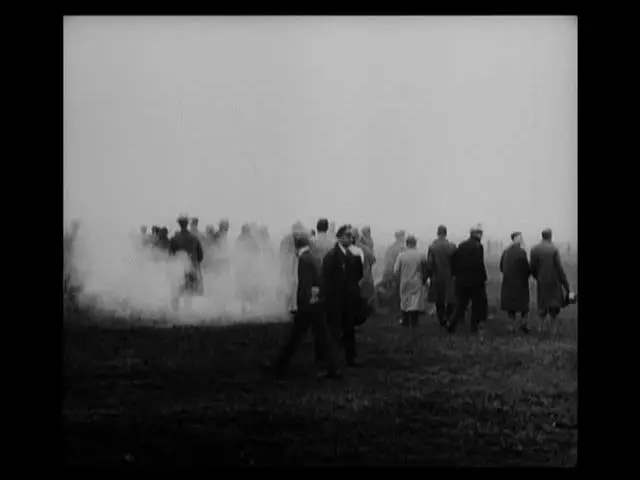
The lack of a conventional plot, with its arcs and character development, might initially deter some. However, viewing it as a historical artifact, a primary source document, unlocks its true value. It’s less about storytelling and more about documentation, a visual record of a moment when humanity felt it had truly touched the sky.
Charles A. Lindbergh himself, as portrayed in this film, is less a person and more a projection. The camera captures his stoicism, his focused determination, and later, his somewhat overwhelmed demeanor amidst the clamor of newfound fame. There’s a distinct lack of intimate detail, which is entirely understandable for a public figure of his stature at that time, and for the nascent stage of biographical filmmaking.
His image is carefully constructed: the 'Lone Eagle,' a symbol of American ingenuity and individual courage. The film doesn't delve into any personal struggles or internal monologues; instead, it presents him as an almost mythological figure, a hero for a nation hungry for inspiration after the Great War. This approach, while perhaps simplistic by today's standards, was profoundly effective for its original audience.
One particularly striking element is the way the film emphasizes the solitary nature of his endeavor, even as it frames it as a global triumph. Shots of Lindbergh alone with his plane, or gazing out at the horizon, underscore the immense personal responsibility he bore. This visual language is surprisingly sophisticated for a film of its presumed vintage, conveying gravitas without relying on dialogue or overt exposition.
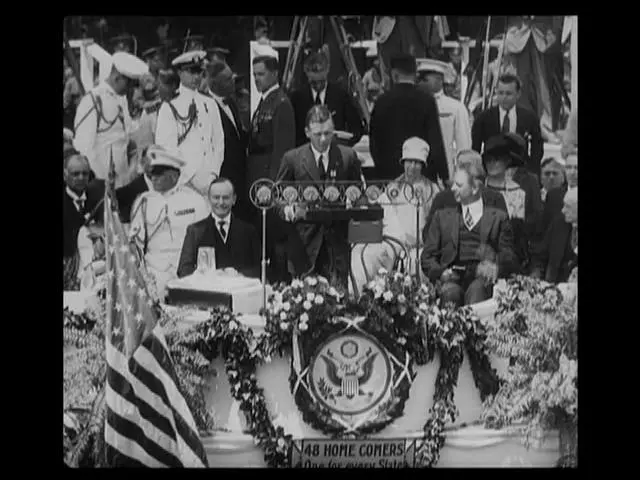
The inclusion of Lee De Forest in the cast list for "Charles A. Lindbergh" is a fascinating and somewhat unconventional element that elevates the film beyond a simple newsreel. De Forest, often credited as the 'Father of Radio' and a pivotal figure in the development of synchronized sound for film, likely features here not as an actor, but as a technological sage or narrator, providing expert commentary on the scientific marvel of Lindbergh's flight and, perhaps, the very medium capturing it.
His presence suggests a forward-thinking approach to documentary filmmaking, an early attempt to contextualize a technological achievement with insights from another pioneer. Imagine De Forest, with his distinctive, earnest delivery, explaining the complexities of navigation or the sheer audacity of a non-stop transatlantic flight. This would have added a layer of scientific credibility and intellectual depth that was rare for the period.
It’s plausible that De Forest's segments, if they involve him speaking, represent some of the earliest instances of synchronized sound being used in a non-fiction context, further cementing the film's status as a historical artifact not just of aviation, but of cinema itself. His involvement transforms the film from a mere chronicle into a dialogue between two revolutionary fields: flight and communication.
This surprising casting choice also highlights the interdisciplinary nature of innovation in the 1920s. Aviation, radio, and cinema were all nascent fields pushing boundaries, and De Forest’s inclusion might have been a deliberate effort to link these advancements in the public consciousness. It’s a brilliant, if understated, stroke of foresight that enriches the historical tapestry of the film significantly.
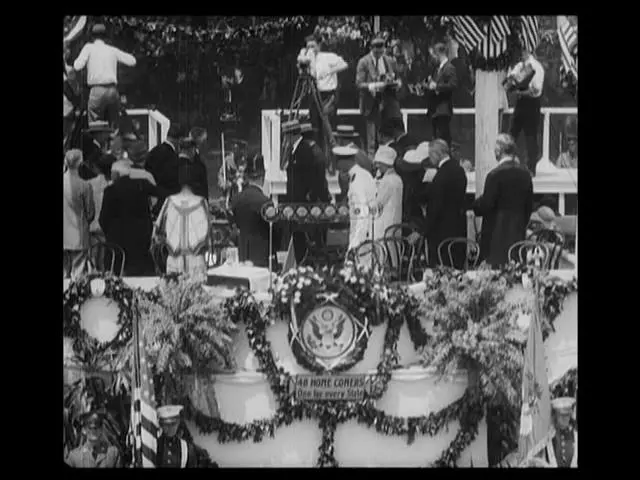
The direction in "Charles A. Lindbergh" is a masterclass in making the most of limited resources and nascent technology. The filmmakers faced the monumental challenge of depicting an event that largely occurred beyond the reach of cameras. How do you film a solitary pilot flying across an ocean?
The answer lies in clever staging, judicious use of archival footage (if available), and an emphasis on the human reactions surrounding the event. For example, scenes depicting Lindbergh’s departure are infused with a sense of urgent purpose, even if the actual take-off sequence might be brief or slightly staged. The director understands that the emotional weight of the moment is as important as its factual depiction.
Pacing, by modern standards, is deliberate, even slow. There are long takes of crowds, of the plane being prepared, or of maps tracing the route. This isn't a flaw; it's a stylistic choice reflective of the era. Early cinema often allowed moments to linger, inviting the audience to absorb the gravity of what they were witnessing. It demands patience, but it rewards with immersion.
The tone is overwhelmingly reverential and celebratory. There's little room for cynicism or critical analysis, which aligns with the public mood of the time. The film aims to inspire and to commemorate, and in this, it succeeds unequivocally. It’s a powerful example of how early documentaries shaped public perception and cemented historical narratives.
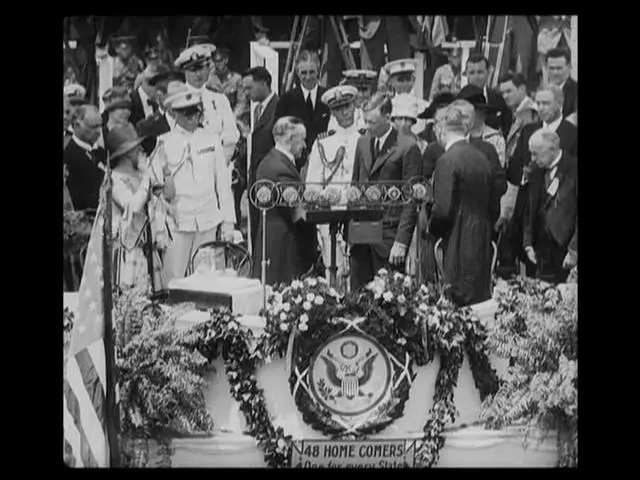
Comparing it to another early film like Pants (1919), which might have focused on a more domestic or comedic theme, highlights the ambitious scope of "Charles A. Lindbergh." While both are products of their time, Lindbergh's film tackles a subject of national and international importance with a seriousness that elevates it beyond mere entertainment, even if its techniques are still evolving.
The cinematography in "Charles A. Lindbergh" is, predictably, a testament to the technical limitations and burgeoning artistry of the 1920s. Shots are often static, composed with a straightforward, almost journalistic eye. There’s a raw, unpolished quality to the images that adds to their authenticity. Grainy footage, occasional flickering, and varying exposure levels are all part of the viewing experience, reminding us of the film’s age.
Despite these limitations, there are moments of striking visual impact. Close-ups of the aircraft's intricate machinery, or wide shots of the massive crowds, convey a sense of scale and wonder. The black and white palette, far from being a disadvantage, lends a timeless, almost mythic quality to the proceedings. It allows the viewer to focus on the forms and emotions rather than being distracted by color.
Regarding sound, the film’s status as an early work means it likely sits on the cusp of the silent and talkie eras. If it incorporates Lee De Forest's contributions, it might feature early synchronized sound segments, perhaps even a Movietone-style soundtrack. This would have been revolutionary for its time, adding an unprecedented layer of realism and immediacy to the historical footage.
However, even if it’s a purely silent film, the power of its visual storytelling, often augmented by intertitles and a live musical accompaniment (as would have been common), remains potent. The roar of the engine, the cheers of the crowd, the silence of the solo flight – all these would have been evoked through visual cues and the audience’s imagination, guided by the score. It works. But it’s flawed.
Yes, 'Charles A. Lindbergh' is absolutely worth watching today, but only for a specific demographic. It is not a film you put on for casual evening entertainment. This is an archival experience, a journey back in time to witness how a world-changing event was captured and presented in its immediate aftermath. You will not find modern editing or complex characters. What you will find is a raw, unvarnished look at history unfolding.
It serves as an invaluable educational tool, particularly for students of history, early cinema, and the cultural impact of technological advancements. The film offers insights into propaganda, public relations, and the birth of mass media celebrity. It’s a testament to the power of the moving image, even in its nascent form, to shape narratives and immortalize heroes.
For those who appreciate the unique aesthetic of early cinema, the film offers a rare opportunity to engage with a historical document on its own terms. It challenges modern viewing habits and encourages a deeper understanding of cinematic evolution. If you approach it with an open mind and an appreciation for its historical context, it delivers profound value.
"Charles A. Lindbergh" is not a film to be judged by contemporary metrics of entertainment or cinematic craft. It is, instead, a profoundly important cultural artifact, a time capsule that vibrates with the energy of a world transformed by a single, audacious act. Its primary value lies not in its narrative sophistication, but in its raw, immediate chronicling of history and its unwitting role in the evolution of both aviation and cinema. While it demands patience and a specific historical appreciation, its ability to transport the viewer back to a moment of collective wonder is undeniable. It’s less a movie and more a monument, and for that, it remains an essential, if demanding, viewing experience.
IMDb —
1923
Community
Log in to comment.