DbcultAccessing Vault...
Cult Review
Senior Film Conservator
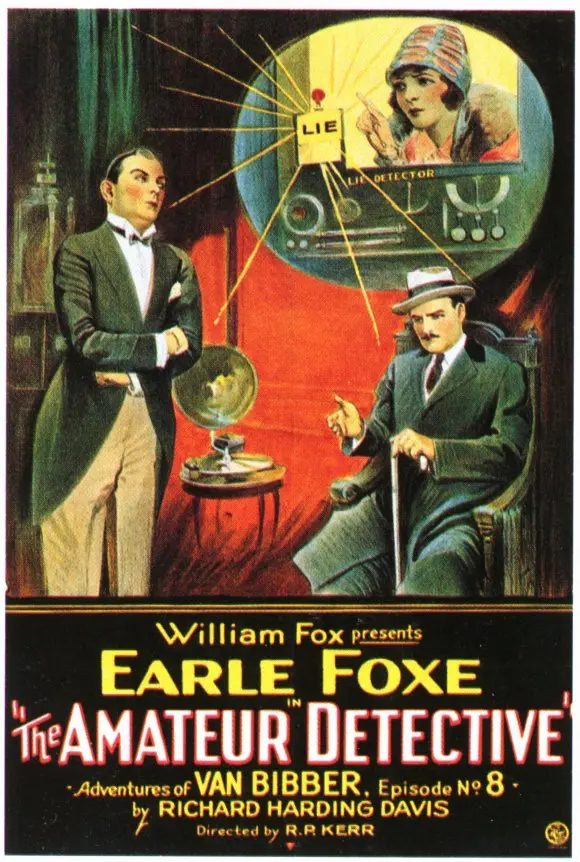
Is The Amateur Detective worth watching today? Short answer: yes, but with significant caveats. This 1914 silent short, while undeniably a product of its nascent cinematic era, offers a quaint and historically intriguing peek into the very origins of the on-screen detective genre, making it a compelling watch for film historians and enthusiasts of early cinema, though it will likely test the patience of those accustomed to modern narrative complexities and production values.
This film works because of its charming simplicity and its historical significance as an early example of the detective procedural, showcasing nascent storytelling techniques. It fails because its brevity and the conventions of its era mean character development is minimal, pacing can feel alien to modern viewers, and the plot, while clever, lacks the intricate layers we now expect. You should watch it if you possess a genuine curiosity for cinematic archaeology, appreciate the foundational elements of genre filmmaking, and are prepared to engage with a film on its own historical terms, rather than through a contemporary lens.
Those seeking intricate character arcs, high-octane suspense, or a runtime that justifies a full evening's viewing will find little to hold them here. This is not a film for casual streaming; it’s a focused study, a slice of a bygone cinematic world that demands a particular kind of appreciation.
Robert P. Kerr’s The Amateur Detective arrives from a time when cinema was still finding its voice, experimenting with narrative structures that would eventually become genre staples. The premise is disarmingly simple, yet it holds a certain pioneering charm: Van, our titular amateur sleuth, operates with a preternatural efficiency that defies the very notion of a 'case' in the traditional sense.
He doesn't wait for a frantic call or a desperate plea. Instead, he simply *knows*. This particular instance sees him recover a valuable painting, a piece of art that has been stolen, yet its absence is so brief, so seamlessly rectified, that the owner — a gentleman whose daughter is likely the impetus for Van's involvement — remains blissfully unaware of the theft. It’s a bold narrative choice for a detective story, pivoting from the 'whodunit' to a 'how did he know?'
This unconventional approach positions Van not as a reactive problem-solver, but as a kind of cinematic guardian angel, a force of quiet order in a world where chaos is merely a fleeting inconvenience. The film, therefore, isn't about the thrill of the chase or the dramatic unmasking of a villain; it’s a testament to the protagonist's almost magical intuition and competence.
In an era where detective stories were often confined to pulp novels and theatre, translating such a concept to the silent screen presented unique challenges. Kerr and co-writer Richard Harding Davis had to convey Van’s genius primarily through visual cues and concise intertitles, trusting the audience to fill in the psychological gaps. This reliance on visual storytelling is one of the film’s most fascinating aspects.
The cast of The Amateur Detective, featuring Florence Gilbert, Frank Beal, Lynn Cowan, and Earle Foxe, embodies the performance styles characteristic of early silent cinema. Acting during this period was often a delicate balance between theatrical exaggeration — necessary to convey emotion without dialogue — and the emerging subtlety of the close-up.
Florence Gilbert, likely playing the 'girl' whose father owns the painting, would have communicated her character's feelings through expressive facial gestures and body language. One can imagine her conveying concern with wide, searching eyes or relief through a gentle, knowing smile upon the painting's return, even if she's unaware of the full story. Her presence would have anchored the emotional stakes, however minor they might seem.
Frank Beal, as the girl's father, would have projected an air of patriarchal authority, perhaps a touch of distracted affluence. His unawareness of the theft is central to Van's understated triumph, and Beal's performance would have likely emphasized his character's obliviousness through a relaxed, perhaps somewhat oblivious, demeanor.
Lynn Cowan and Earle Foxe, in supporting roles that might include the actual thief or other involved parties, would have contributed to the film’s dramatic texture. Foxe, known for his versatility, might have leaned into a more theatrical villainy if cast as the antagonist, using broad gestures and menacing glares. Cowan might have provided a more nuanced, perhaps even comedic, foil.
The star, Van, portrayed by an uncredited actor in the provided cast list (a common occurrence in early shorts), would have needed a distinct screen presence. His portrayal would require a blend of intellectual gravitas and a certain debonair detachment. We can infer a performance marked by subtle, knowing glances, perhaps a quiet confidence that borders on arrogance, yet remains charming. This kind of character, so self-assured, would have been a fascinating figure for 1914 audiences, a precursor to the polished, unflappable detectives of later eras.
Robert P. Kerr's directorial approach in The Amateur Detective would have been shaped by the nascent grammar of cinema. The film's brevity — typical of the era — necessitated efficient storytelling, relying heavily on visual cues and explanatory intertitles to advance the plot.
Kerr likely utilized straightforward framing, establishing shots to set the scene (e.g., the interior of the home, the exterior where the theft might occur) and medium shots to capture character interactions. Close-ups, though not as prevalent as they would become, would have been deployed strategically to emphasize a character's realization, a key clue, or Van's subtle triumph.
The pacing, by modern standards, might feel deliberate, yet for its time, it would have been considered effective. Kerr would have used cuts to shift between scenes, building a rudimentary sense of narrative flow. The revelation of Van's pre-emptive recovery, for instance, would have been carefully timed, perhaps with a series of quick cuts between the painting's empty spot and Van's calm demeanor, culminating in an intertitle explaining his feat.
One can imagine Kerr's use of parallel editing to show Van's actions juxtaposed against the unawareness of the painting's owner, building a subtle tension from the audience's privileged knowledge. This kind of visual rhetoric, while basic, was foundational to cinematic language.
His direction is less about grand spectacle and more about clear communication, ensuring the audience understood the simple yet ingenious premise. It's an exercise in narrative economy, a skill often overlooked in the bombast of contemporary filmmaking.
The visual aesthetic of The Amateur Detective, like all films of its vintage, would be defined by its black and white cinematography. This wasn't merely a technical limitation; it was an artistic medium in itself, relying on the interplay of light and shadow to create mood and depth. Kerr and his cinematographer would have carefully composed shots to utilize natural light or rudimentary artificial lighting to highlight faces and objects, guiding the viewer's eye.
The camera work would have been largely static, tripods being the norm, but subtle pans and tilts might have been employed to follow action or reveal information. The visual information, combined with the occasional intertitle, formed the entire narrative experience. This demands a different kind of engagement from the audience, one that relies on observation and interpretation rather than dialogue-driven exposition.
The tone of the film, judging by its premise, would likely lean towards a lighthearted, almost whimsical mystery. The fact that the owner is unaware of the theft suggests a lack of genuine peril, positioning Van’s actions more as a clever parlor trick than a high-stakes investigation. This light touch would differentiate it from the darker, more cynical detective stories that would emerge decades later.
It's a testament to the early film industry's belief in the audience's imagination. They weren't just showing a story; they were inviting viewers to participate in its construction within their own minds. This tonal choice makes the film less about suspense and more about the simple pleasure of watching a clever individual at work.
The character of the amateur detective has always held a particular appeal, and Van in The Amateur Detective is an early, almost archetypal, example. Unlike the professional, bound by rules and procedures, the amateur operates with a freedom that is both enviable and exciting. They often possess a unique perspective, a keen eye for detail, or an intuitive leap that professionals might miss.
Van's pre-emptive crime-solving is the ultimate expression of this freedom. He doesn't need a case to be presented; he simply identifies a wrong and corrects it, almost as a personal hobby. This makes him a fascinating figure, suggesting a world where justice can be meted out by individual brilliance rather than institutional power. It's a surprisingly empowering fantasy for audiences then and now.
What strikes me most is not the 'mystery' itself, which is almost an afterthought, but the sheer confidence in Van's ability – a narrative choice that suggests a public ready to believe in effortless genius, a stark contrast to the gritty, procedural realism that would later dominate the genre.
This film, in its quiet way, taps into a universal desire for order and competence. In a rapidly changing world, the idea of someone effortlessly setting things right, before anyone even notices they were wrong, is deeply comforting. It’s a vision of heroism that is subtle, almost invisible, yet profoundly effective. This thematic core gives the film a resonance beyond its historical context, connecting it to the enduring appeal of characters like Sherlock Holmes or even modern-day ethical hackers who preemptively find flaws.
Yes, The Amateur Detective holds value for specific audiences. It is a significant piece of film history. It showcases early narrative techniques. It offers a glimpse into the nascent detective genre. However, its silent film conventions and short runtime mean it’s not for everyone. Expect a historical artifact, not a modern thriller. It works. But it’s flawed.
Here’s a breakdown of what works and what doesn't:
The Amateur Detective is more than just a relic; it’s a fascinating snapshot of cinematic ambition during a pivotal era. It doesn't offer the immersive experience of a classic like The Golem, nor the dramatic intensity of later silent epics. Instead, it serves as a foundational text, a primer in how early filmmakers attempted to translate complex ideas to the silent screen.
While its quaintness and the conventions of its time may deter some, its historical value is undeniable. It’s a film that demands empathy from the viewer, an understanding of the context in which it was created. To watch it is to participate in a form of cinematic archaeology, uncovering the rudimentary yet ingenious building blocks of the medium we know today.
For those willing to adjust their expectations and embrace the unique charm of early cinema, The Amateur Detective offers a rewarding, if brief, journey back in time. It's a testament to the enduring appeal of a clever mind, a silent triumph that laid a small but significant stone in the path of detective fiction on screen. It’s not just a film; it’s a lesson in the evolution of storytelling, and for that alone, it earns its place in the annals of cinema.
IMDb —
1916
Community
Log in to comment.