DbcultAccessing Vault...
1.5/10
Senior Film Conservator
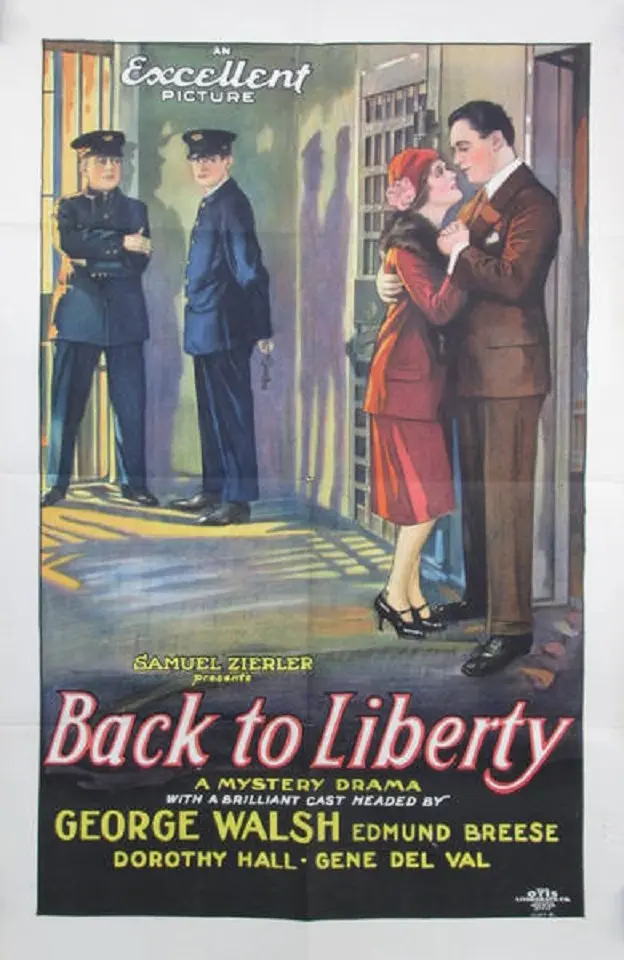
A definitive 1.5/10 rating for a film that redefined the boundaries of cult cinema. Back to Liberty remains a cornerstone of transgressive art.
Is 'Back to Liberty' worth watching today? Short answer: yes, but only if you have an appetite for the theatrical grit of the late silent era. This film is for the dedicated cinephile who enjoys seeing the DNA of modern noir in its embryonic state; it is not for those who demand the rapid-fire pacing or moral ambiguity of contemporary crime dramas.
The film presents a fascinating, if somewhat stagey, look at the duality of the American dream in the 1920s. It operates on the premise that class is a costume one can put on or take off at will. While the plot beats might feel familiar to anyone who has seen a modern police procedural, the execution in 1927 was a bold attempt to humanize the criminal element while still adhering to the strict moral codes of the time.
1) This film works because Gloria’s transformation from an innocent socialite to a calculating undercover operative provides a rare, early example of female agency in a male-dominated genre.
2) This film fails because Rudolph’s shift from a disgruntled partner to a murderous villain happens with such suddenness that it loses the psychological weight it deserves.
3) You should watch it if you want to see the transition point where silent film began to master complex, multi-layered storytelling through visual cues alone.
George Walsh delivers a performance that is surprisingly restrained for the period. As Tom Devon, he manages to convey a sense of looming dread even when he is playing the role of the affable Reginald Briand. The film uses sharp contrasts in lighting to distinguish between Tom’s two worlds. In the high-society scenes, the frames are flooded with light, emphasizing the artificiality of his social standing. In the secret meetings with Jimmy and Rudolph, the shadows are heavy, creating a claustrophobic atmosphere that mirrors Tom’s internal trap.
Consider the scene where Tom first tries to dissolve the partnership. The way Walsh grips his glass, his eyes darting toward the door, tells the audience everything they need to know about his fear of his own world. It is a physical performance that bridges the gap between the melodrama of American Methods and the more nuanced acting we would see in the coming decades. He isn't just a thief; he's a father trying to buy a clean future with dirty money.
While Walsh is the top-billed star, the film truly belongs to Dorothy Hall’s Gloria in its second half. After Jimmy is wrongly convicted, the film could have easily devolved into a standard 'rescue the hero' plot. Instead, Gloria takes the reins. Her decision to pose as a thief to trick Rudolph is a sophisticated narrative choice. It requires the actress to play a character who is herself playing a character, adding layers of artifice that were sophisticated for 1927.
The sequence where she wins Rudolph’s affection is a masterclass in silent suspense. Hall uses subtle shifts in her posture—dropping the stiff, upright stance of a debutante for a more fluid, dangerous physicality. It is a transformation that rivals the character arcs seen in Only a Shop Girl, though here the stakes are much more lethal. She isn't just surviving; she is manipulating a killer.
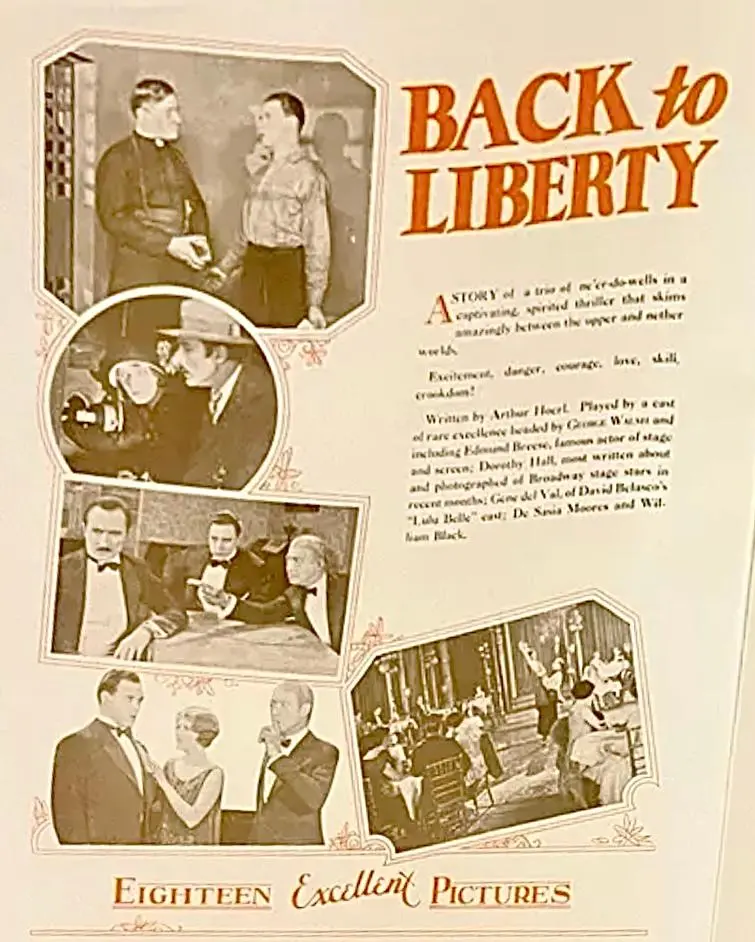
Back to Liberty is worth watching because it serves as a bridge between early silent shorts and the complex feature films of the 1930s. It offers a unique look at the 'gentleman thief' archetype that was popular at the time. The film is a valuable historical document for anyone interested in the evolution of the crime thriller. It provides a clear example of how silent cinema used visual storytelling to navigate complex moral themes.
The pacing of 'Back to Liberty' is its greatest hurdle for modern audiences. The first act spends a significant amount of time establishing Tom’s social standing and the romance between Jimmy and Gloria. This feels sluggish compared to the high-stakes tension of the final thirty minutes. However, the slow build-up is necessary to make the eventual fallout feel earned. It’s a structural choice that favors character over immediate action, a trait it shares with The End of the Game.
The cinematography by the uncredited camera team is functional but occasionally inspired. The use of close-ups during the confession scene is particularly effective. By filling the screen with Rudolph’s sweating face, the director forces the audience into a state of discomfort. It’s a brutal, simple technique. It works. But the rest of the film’s visual language is somewhat flat, relying on standard medium shots that feel more like a filmed play than a cinematic experience.
When compared to other films of the mid-20s, such as The Challenge or the more whimsical The Love Bug, 'Back to Liberty' feels decidedly more cynical. It doesn't offer a rosy view of the justice system. Jimmy is convicted despite his innocence, and it takes a private citizen’s dangerous deception to rectify the error. This skepticism toward institutional justice is a precursor to the noir movement that would dominate the 1940s.
The film also avoids the slapstick elements found in some contemporary releases like Snooky's Covered Wagon. It takes itself seriously, perhaps too seriously at times. The romance between Jimmy and Gloria is played with a sincerity that can feel clunky by modern standards, but within the context of 1927, it provided the necessary emotional anchor for the audience to care about the legal stakes.
'Back to Liberty' is a fascinating relic. It is not a masterpiece, but it is a highly competent thriller that showcases the technical proficiency of late 1920s filmmaking. The film’s willingness to let its heroine do the heavy lifting makes it feel more modern than many of its peers, like It's a Boy or Medicine Bend. It is a film of sharp edges and soft lighting, a morality tale that isn't afraid to get its hands a little dirty before the final curtain falls. If you can move past the initial slow burn, you’ll find a story that still has a surprising amount of bite. It’s flawed, but it’s undeniably effective.
IMDb —
1936
Community
Log in to comment.