DbcultAccessing Vault...
Cult Review
Senior Film Conservator
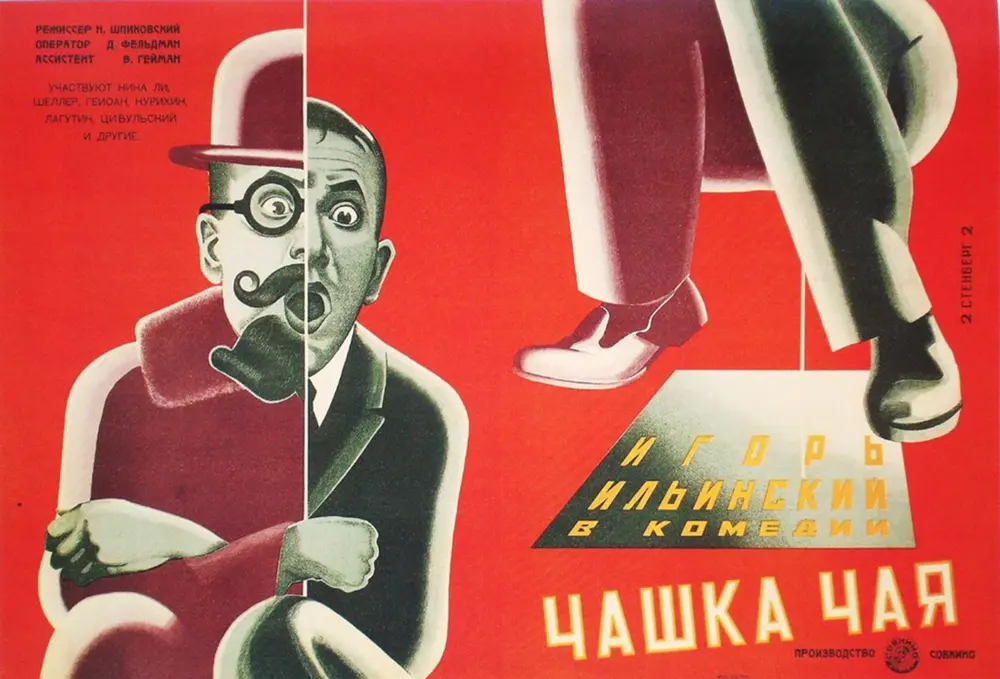
Is Mykola Shpykovskyi's 1927 silent film, "Chashka chaya," worth watching today? For the casual viewer seeking easy entertainment or a conventionally engaging narrative, the answer is a resounding no. This film exists primarily for the dedicated student of early Soviet cinema, the silent film completist, or those with a deep academic interest in the period's cultural artifacts. Everyone else will likely find its deliberate pace and often rudimentary storytelling a test of patience.
The film works because it offers a stark, unvarnished look at a specific moment in cinematic evolution, capturing the raw energy and experimental spirit of its era, however flawed. It manages to convey a sense of the everyday, even if that 'everyday' feels dramatically inert to contemporary sensibilities.
This film, often translated as "A Cup of Tea," is a testament to how much cinema has evolved. It’s not a lost classic waiting to be rediscovered, nor is it a particularly insightful social commentary. Instead, it’s a curio, a piece of the puzzle for understanding what filmmakers were doing when the medium was still figuring itself out. Its value is almost entirely archival. Expecting a "The Spy" or even a "Looking for Trouble" level of engagement would be a mistake. It’s a film that demands you bring your own context and appreciation for its historical placement, rather than one that reaches out to grab you.
The pacing of "Chashka chaya" is, to put it mildly, glacial. Scenes often unfold with an almost documentary-like slowness, dwelling on actions that would be briskly edited in even slightly later films. This isn’t a deliberate artistic choice to build tension or atmosphere; it feels more like a limitation of early editing techniques or a lack of confidence in the audience's ability to follow rapid cuts. The film takes its sweet time, often without justifying the extended takes with any meaningful visual information or character beat. There are moments where you feel you could simply walk away, return minutes later, and miss little of consequence.
Its narrative ambition seems to be rooted in the mundane. The title itself, "A Cup of Tea," suggests a focus on the trivial, the everyday. While this can be a fertile ground for character study or subtle social critique, Shpykovskyi’s execution often feels less like a thoughtful observation and more like a simple recording. The conflict, if one can truly call it that, never truly gains momentum. It remains stubbornly small, refusing to escalate in any way that might generate genuine dramatic interest.
The ensemble cast, including Fyodor Kurikhin and Ivan Lagutin, largely operates within the theatrical conventions of the era. Gestures are broad, expressions often exaggerated for the camera, which was common in silent film. However, few performances here manage to transcend these conventions to create something truly memorable or emotionally resonant. They perform their roles, yes, but often without much internal life visible beneath the surface.
Igor Ilyinsky, a name often associated with early Soviet comedies, provides the film's most animated moments. His presence, even in what might be a minor role, brings a flicker of the playful absurdity that was his hallmark. When he’s on screen, there’s a brief sense that the film might actually break free from its own earnestness. His movements are sharper, his reactions more defined, offering a stark contrast to the more static portrayals around him. It’s a small mercy, but a noticeable one.
Shpykovskyi's direction is functional rather than inventive. The cinematography is straightforward, often static, capturing the action head-on. There are few flourishes, little in the way of dynamic camera movement or experimental framing that would distinguish it from countless other films of the period. The film feels visually flat, lacking the kind of striking compositions or innovative editing that defined the work of some of Shpykovskyi's more celebrated contemporaries.
The production design, from what little can be gleaned, also leans towards the utilitarian. Sets appear sparse, almost bare, serving merely as backdrops rather than active elements in the storytelling. This isn't necessarily a flaw, given the practical constraints of early filmmaking, but it does contribute to an overall sense of austerity that doesn't always work in the film's favor dramatically.
One could argue that the film’s very ordinariness is its point – a deliberate attempt to capture the quiet rhythms of life without sensationalism. But there’s a thin line between capturing the mundane and simply being dull. "Chashka chaya" frequently crosses that line. It struggles to find the poetry or the underlying tension in its everyday subject matter, leaving the viewer to simply observe without much emotional or intellectual investment. The film never quite earns its slow pace by revealing anything particularly profound about its characters or their circumstances.
"Chashka chaya" is not a film for everyone. It's not even a film for most. Its value lies almost entirely in its existence as an artifact from a specific time and place in cinematic history. As a piece of entertainment, it’s a tough sell. As a teaching tool, or an example of a particular strand of early Soviet filmmaking, it holds some weight. But approach it with tempered expectations. This cup of tea is lukewarm, perhaps even cold, but it offers a taste of a very different era, whether you find that taste palatable is another matter entirely.
IMDb —
1925
Community
Log in to comment.