DbcultAccessing Vault...
Cult Review
Senior Film Conservator
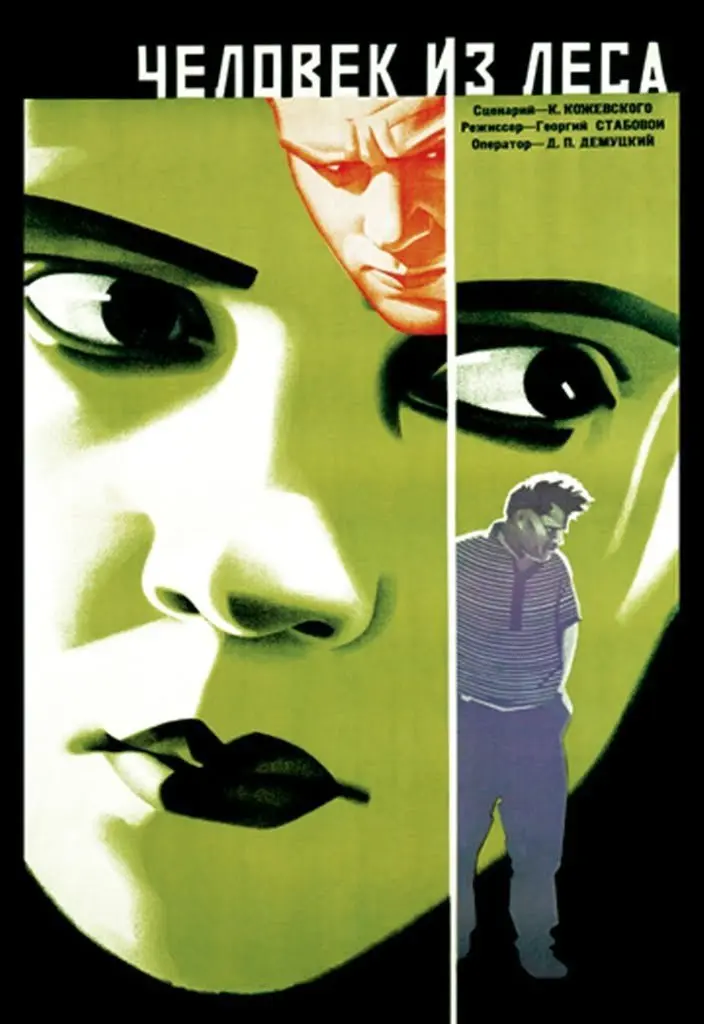
This film is not for everyone, and frankly, it's not particularly good by modern dramatic standards. “Chelovek iz Lesa” (Man from the Forest) is a fascinating, if often clunky, piece of Soviet propaganda, worth watching primarily for its historical context and a few flashes of directorial ingenuity rather than as a compelling narrative experience.
This film works because... It provides a stark, unvarnished look at early Soviet propaganda filmmaking, showcasing its techniques and thematic priorities. It features moments of surprisingly dynamic cinematography, especially in depicting the industrial setting and chase sequences, which were ambitious for its era. The central villain, Poloz, despite being a caricature, occasionally achieves a genuinely menacing presence.
This film fails because... The acting is broadly theatrical, common for the silent era, but here it often veers into caricature, making emotional stakes feel distant. The plot is thin, serving primarily as a vehicle for ideological messaging, leading to predictable beats and underdeveloped character motivations. Pacing can be uneven; moments of visual interest are often interrupted by lengthy intertitles or stiff exposition.
You should watch it if... You are a dedicated student of early Soviet cinema or propaganda history. You have a high tolerance for silent film conventions, including exaggerated performances and reliance on intertitles. You appreciate seeing the nascent stages of cinematic storytelling, even when dramatically flawed.
The film opens, as many Soviet dramas of the period did, with an almost religious devotion to industry. We see the power plant, a gleaming symbol of progress, rising from the landscape, its stark lines asserting human will over nature. The camera lingers on machinery, on the faces of determined workers, their expressions uniform in their commitment. This isn't just a backdrop; it's practically a character itself, representing the future of the socialist state, a stark contrast to the 'forest' where the antagonist, Poloz, lurks. The visual language immediately establishes a clear dichotomy: the ordered, illuminated world of collective endeavor versus the shadowy, chaotic realm of individual malice.
Director Konstantin Koshevskiy, working with a clear ideological mandate, occasionally elevates the material beyond mere political broadside. There are sequences, particularly those involving the plant's massive turbines, where the camera tracks across the whirring gears with a surprising fluidity, almost celebrating the mechanical ballet. A frantic search for the saboteur, later in the film, utilizes rapid cuts and deep shadows to generate a fleeting sense of paranoia. One shot, tracking Poloz through the dense forest, managing to convey his predatory nature with just a few well-placed shadows and a low angle, stands out as a brief glimpse of genuine craft. It shows an understanding of visual storytelling that transcends the era's often static compositions, hinting at a cinematic potential the rest of the film doesn't consistently deliver.
G. Kalmykov's portrayal of Poloz is a study in silent film villainy, less a human being and more a walking embodiment of counter-revolutionary evil. He's all scowls and furtive glances, his gestures broad enough to be understood even in the cheapest seats of a provincial cinema. This isn't nuanced acting; it's a performance designed to elicit a visceral reaction—fear and hatred for the "White Guard" outsider. While effective in its bluntness for its intended audience, it leaves little room for complexity, reducing the antagonist to a two-dimensional bogeyman. Katya, played by Bachinskaya, is given the thankless role of the distressed mother. Her emotional range is largely confined to wide-eyed worry or desperate pleas, particularly when her son is threatened. Her plight is meant to tug at the heartstrings, to emphasize the human cost of the saboteur's actions, but the performance often feels more dutiful than truly felt, lacking the raw emotional punch needed to truly sell the melodrama.
The narrative itself unfolds with a certain inevitability, especially once Poloz is introduced and his intention to blow up the power plant is established. The film quickly becomes a straightforward cat-and-mouse game, yet the tension frequently sags. Lengthy intertitles, while an unavoidable necessity for exposition in silent cinema, often over-explain what the visuals could have conveyed more efficiently, slowing the pace to a crawl. There's a particular sequence where the workers are shown discussing the threat in a series of static, medium shots, their collective deliberation draining momentum just when the stakes should be escalating. It's a common failing of early cinema to prioritize informational delivery over dramatic rhythm, but here it feels particularly pronounced given the supposed urgency of the plot. The film struggles to maintain a consistent pulse.
One could argue that the film's most glaring flaw isn't its simplistic plot or broad acting, but its complete lack of internal conflict within its heroic characters. The Soviet workers are presented as uniformly virtuous, driven by an unwavering commitment to the cause. This ideological purity, while serving the propaganda aims of the time, ultimately flattens any potential for dramatic interest. There's no doubt, no personal struggle with fear or temptation, no moral ambiguity. They are simply good, facing pure evil. This approach makes them admirable, perhaps, but rarely engaging as individuals, stripping the narrative of any real psychological depth. It’s a missed opportunity for genuine human drama.
The film's use of the child as a narrative device, stolen by Poloz to pressure Katya, feels particularly cynical. It's a cheap, easy way to escalate emotional stakes without actually developing complex characters or scenarios. It’s manipulative. The child is less a character and more a living MacGuffin, a pure symbol of innocence to be endangered.
Beyond the immediate plot, “Chelovek iz Lesa” functions as a clear articulation of early Soviet anxieties and aspirations. The "man from the forest" isn't just a saboteur; he's a potent symbol of the old order, the untamed wilderness, attempting to undermine the structured, industrialized future. The film relentlessly reinforces the idea that external threats, often disguised and insidious, constantly menace the fledgling socialist state. It's a powerful and unsubtle piece of nation-building rhetoric, instructing its audience on who to trust and, more importantly, who to fear. The entire exercise serves to solidify the 'us vs. them' mentality that fueled the era, presenting a world where compromise is impossible and vigilance is paramount.
While often lauded for its historical significance, the film's artistic merit is often overstated. Its moments of visual dynamism, though commendable for the period, are ultimately overshadowed by stretches of clunky exposition and dramatically inert scenes. It's a document, yes, providing valuable insight into a specific historical moment and its cinematic output, but not a particularly elegant or enduring piece of art. To elevate it to the status of a "cinematic achievement" would be stretching the definition, ignoring its significant dramatic shortcomings. It exists as a snapshot, not a fully realized vision.
“Chelovek iz Lesa” is a film for the curious specialist, not the casual viewer. It offers a direct, unmediated look into the ideological machinery of early Soviet cinema, but as a piece of dramatic entertainment, it struggles. Its value lies almost entirely in its historical context, providing a tangible example of how a nascent state used the moving image to forge its identity and demonize its enemies. Approach it as a historical document, and you'll find something to dissect. Expect a compelling story, and you'll likely leave disappointed.

IMDb —
1931
Community
Log in to comment.