DbcultAccessing Vault...
Cult Review
Senior Film Conservator
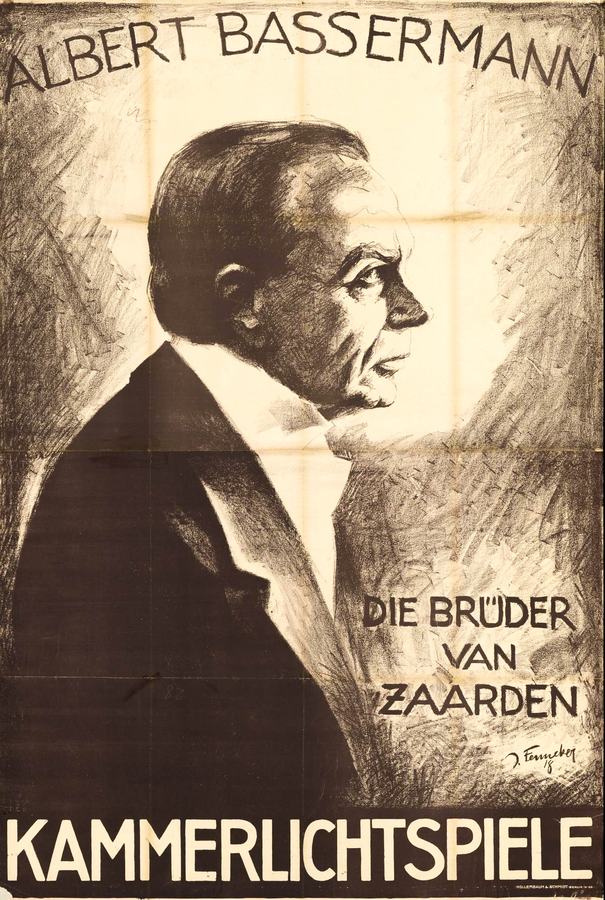
The flickering luminescence of early cinema often served as a canvas for grand narratives, tales spun with an earnest gravitas that could transcend the silent medium. Few films from that nascent era manage to resonate with the profound emotional complexity and psychological depth of Die Brüder von Zaarden. This 1918 German production, penned by the remarkably perceptive Elsa Bassermann and featuring a stellar cast including herself, the formidable Albert Bassermann, and the captivating Marija Leiko, stands as a testament to the power of character-driven melodrama when executed with such refined artistry. It's not merely a historical curiosity; it's a vibrant, throbbing heart of a film, offering a window into the moral anxieties and familial bonds that defined the German psyche in the twilight of the Great War.
From its opening frames, the film establishes a palpable atmosphere of simmering tension within the ancient, hallowed halls of the Zaarden family estate. This isn't just a setting; it's a character in itself, imbued with the weight of generations, its shadows harboring secrets and its grandeur slowly decaying. The narrative thrust centers on two brothers, heirs to this storied, yet increasingly vulnerable, legacy. One, often portrayed with a brooding intensity by Albert Bassermann, embodies the ruthless pragmatism born of desperation, driven by an almost pathological need to restore the family's former glory, even if it means trampling over ethical boundaries. His counterpart, a more introspective and honorable figure, struggles with the moral compromises his brother so readily embraces, a struggle that forms the very backbone of the film's dramatic conflict. The Zaarden name, once a beacon of respectability, threatens to become synonymous with scandal and ruin, a fate the brothers approach from diametrically opposed philosophical stances. This foundational conflict, while seemingly straightforward, is layered with nuances that speak to the societal pressures of the time, where honor and reputation could be as valuable as any tangible asset.
The brilliance of Elsa Bassermann's screenplay lies not only in its intricate plotting but in its profound understanding of human nature, particularly the corrosive effects of greed and the resilience of the human spirit. She crafts a narrative that avoids simplistic good-versus-evil dichotomies, instead presenting characters fraught with internal conflicts and moral ambiguities. The film delves deep into the psychological toll of betrayal, the agonizing weight of false accusations, and the arduous path towards redemption. It's a testament to her vision that even without spoken dialogue, the characters' emotional landscapes are vividly painted, their struggles made intensely personal and universally relatable. Her writing transcends mere plot mechanics, elevating the story to a profound exploration of fidelity, sacrifice, and the enduring, often painful, bonds of kinship. This is where Die Brüder von Zaarden truly distinguishes itself, moving beyond a simple melodrama into something far more resonant and intellectually engaging.
The performances are, predictably, nothing short of mesmerizing. Albert Bassermann, a titan of the German stage and screen, delivers a portrayal of immense power and subtlety. His character, initially perhaps driven by a misguided sense of duty, gradually succumbs to avarice, his expressions shifting from determined resolve to haunted desperation. Every gesture, every flicker in his eyes, conveys a wealth of unspoken emotion, a masterclass in silent acting that builds a complex, often unsettling, portrait of a man consumed by his own ambition. He doesn't merely play a villain; he embodies the tragic descent of a soul, making his character's plight, however reprehensible his actions, oddly compelling. One might draw a thematic parallel to the moral quandaries explored in The Beast, where human nature's darker impulses are laid bare, though Bassermann's performance here feels more intimately tragic, less overtly monstrous, and therefore, perhaps, more chillingly real. His presence alone provides a gravitational pull to every scene he inhabits.
Opposite him, Elsa Bassermann, in her dual role as writer and actress, brings a nuanced grace to her character. Whether she portrays a steadfast matriarch caught between her warring sons or a woman whose quiet strength becomes a bulwark against the rising tide of deceit, her performance is imbued with an inherent dignity and emotional depth. Her ability to convey profound sorrow, steely resolve, and unwavering loyalty through subtle movements and expressive glances is truly remarkable. Her presence often serves as the moral compass of the film, a quiet counterpoint to the more volatile masculine energies at play. It's a performance that speaks volumes without a single word, demonstrating the extraordinary communicative power of the human face and body in the silent era. Her contribution as a writer also means her character is afforded a richer interiority, making her actions and reactions feel utterly authentic and deeply affecting.
And then there is Marija Leiko, whose enigmatic presence adds a layer of intoxicating mystery and dramatic urgency to the proceedings. Her character is a captivating enigma, a woman whose motivations are initially shrouded in ambiguity, making her a pivotal figure in the unfolding drama. Is she a femme fatale, a victim, or an agent of truth? Leiko navigates these complexities with an alluring intensity, her piercing gaze and elegant demeanor hinting at depths unseen. She becomes the catalyst, the outsider who, perhaps inadvertently, begins to unravel the tightly wound secrets of the Zaarden family. Her interactions with both brothers are charged with an unspoken tension, her allegiances seemingly shifting, keeping the audience perpetually guessing. Her performance is a masterclass in silent film allure, reminiscent of the captivating, morally ambiguous figures found in films like Black Orchids, where a woman's presence can either destroy or redeem. Leiko's ability to hold the screen with such compelling magnetism is undeniable, making her character's journey one of the film's most intriguing elements.
The direction, while not overtly flashy, is meticulously crafted, ensuring that every visual element serves the narrative and emotional arc. The use of light and shadow, characteristic of the era and a precursor to the German Expressionist movement that would soon define the nation's cinema, is employed with great skill to underscore mood and psychological states. Interiors are often bathed in a chiaroscuro effect, emphasizing the moral murkiness and the hidden machinations taking place. The external shots of the Zaarden estate, perhaps crumbling or imposing, reflect the family's fortunes and their internal struggles. Intertitles are judiciously used, providing necessary exposition without interrupting the flow of the visual storytelling, allowing the actors' performances and the mise-en-scène to carry the bulk of the narrative. The pacing, though deliberate, builds to several moments of intense dramatic crescendo, holding the audience firmly in its grip. The film's aesthetic choices contribute significantly to its overall gravitas, creating a world that feels both grand and claustrophobic.
Thematic resonance is another area where Die Brüder von Zaarden truly shines. Beyond the surface-level melodrama, the film explores universal themes that remain pertinent even today: the corrupting influence of power and wealth, the enduring strength of familial bonds despite profound betrayals, and the arduous journey towards truth and forgiveness. It’s a compelling study of human morality, questioning how far one is willing to go to protect a legacy, and at what cost. The film suggests that true honor lies not in inherited titles or material wealth, but in integrity and compassion, qualities often tested under the most dire circumstances. In an era grappling with the aftermath of global conflict and profound societal shifts, such explorations of moral fortitude would have resonated deeply with audiences. The film's examination of justice, particularly when one brother is wrongfully accused, echoes the dramatic tension found in films like Not Guilty, where the pursuit of truth against overwhelming odds forms the central conflict.
Comparing Die Brüder von Zaarden to other silent films of its time reveals its unique position. While it shares the dramatic intensity of a film like Vengeance Is Mine (1917), its approach feels less overtly sensationalist and more psychologically nuanced. It delves into the internal lives of its characters with a precision that hints at the burgeoning sophistication of cinematic storytelling. Unlike the more action-oriented narratives, this film thrives on emotional confrontations and the slow unraveling of deceit, a characteristic shared with more contemplative dramas. The intricate family dynamics and the pervasive sense of a hidden past also bring to mind elements found in The Riddle of the Tin Soldier, where secrets slowly surface to alter the course of lives. However, Die Brüder von Zaarden maintains its distinct identity through its powerful central performances and Elsa Bassermann's masterful narrative construction.
In conclusion, Die Brüder von Zaarden is far more than just a historical artifact; it is a vibrant, compelling piece of cinematic art that continues to speak to the human condition with remarkable clarity and emotional force. The combined talents of Elsa Bassermann as both writer and performer, alongside the magnificent Albert Bassermann and the magnetic Marija Leiko, create a tapestry of human drama that is both grand in scope and intimately personal. Its exploration of familial duty, betrayal, and the quest for redemption resonates powerfully, making it a film that deserves to be rediscovered and celebrated. For those interested in the rich tapestry of early German cinema, or indeed, anyone with an appreciation for profound storytelling, this silent masterpiece offers an unforgettable experience, solidifying its place as a significant contribution to the art form.
IMDb 6.9
1931
Community
Log in to comment.