DbcultAccessing Vault...
Cult Review
Senior Film Conservator
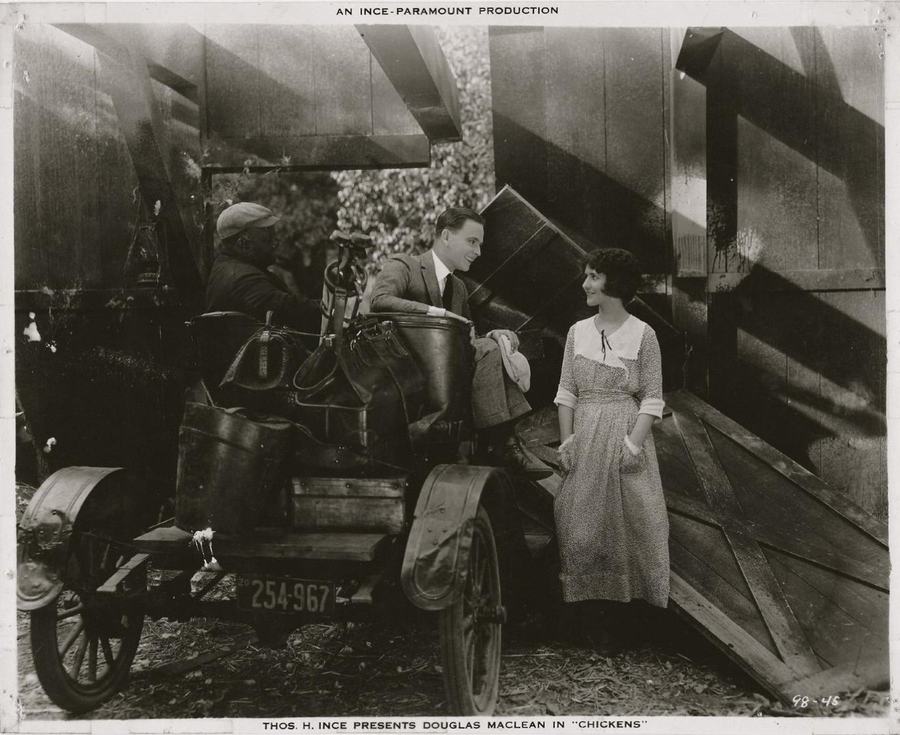
The silents rarely sauntered into barnyard territory without slipping on pastoral clichés, yet Chickens struts in like a rooster that’s learned ballet—every peck at the ground a sly jab at the idle rich. Director Burton L. King, working from a script marinated in Agnes Christine Johnston’s feminist vinegar, frames the countryside as both Eden and ledger book: dewy furrows glisten while IOUs flutter like cursed confetti. The film’s first half luxuriates in juxtaposition—white-tie soirées dissolve into splintery coops—achieved through double-exposed montages that prefigure the social surrealism later minted by The Triumph of the Weak. Cinematographer Bert Baldridge’s chiaroscuro turns chicken wire into Venetian blinds, slicing moonlight across Douglas MacLean’s angular cheekbones until even the hens look like conspirators.
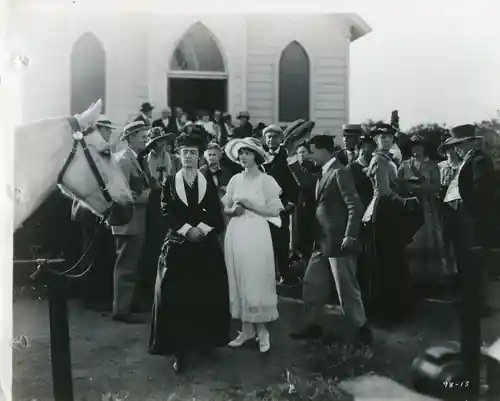
Gladys George, still years away from her venomous turns in Valiant Is the Word for Carrie, radiates a calibrated frost. She enters in a slate-gray riding cloak, the collar grazed with mud, the camera tilting up to catch a defiant chin—think Garbo with soil under her nails. George’s Julia is the moral counterweight to Wall-Street roulette: her ledger is written in calloused palms, not ticker tape. In a medium shot that could headline any film-studies syllabus, she candle-tests eggs in the gloaming—each translucent orb glows like a small sun while her pupils narrow, calculating which life deserves incubation and which ends in omelette. The moment is wordless yet voluble; it whispers that nurture and liquidation share the same wicker basket.
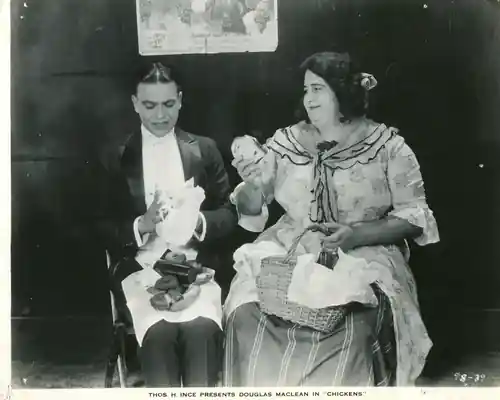
Douglas MacLean, often dismissed as a lightweight Valentino, here weaponizes his foppish elasticity. His Deems Stanwood arrives in plus-fours and patent-leather boots better suited to croquet than clucking. Watch the way his shoulders climb toward his earlobes when a Rhode Island Red flaps at his face—comedy born of entitlement, yet King refuses to let the joke ossify into caricature. After the trustee’s telegram arrives (a smash-cut of black letters on white, like a ransom note), MacLean’s gait changes: spine collapses, knees hinge, and the actor’s natural athleticism morphs into a marionette with loosened strings. The performance is a clinic on how silent-era clowning could coexist with Chekhovian melancholy.
Screenwriters Johnston and Herschel S. Hall lace the scenario with proto-screwball banter rendered via intertitles that snap like winter twigs. One card reads: “He knew bonds at 4%—hens at 0%—and never the twain did balance.” The line skewers both character and capitalist cosmology in twelve words. Compare that economical bite to the bloated exposition plaguing The Forbidden River, where melodrama trampled satire beneath elephantine prose.
Willie Figg, the rival suitor essayed by Raymond Cannon, could have strolled straight from a Faulkner first draft—charming, opportunistic, the New South incarnate. Cannon plays him with a jackal smile and a habit of rocking on his boot heels, thumbs hooked like he’s perpetually measuring doorframes for a takeover. Yet the film declines to render him Snidely Whiplash; when Julia confronts him about the mortgage, a single tear streaks the corner of his eye, suggesting that even foreclosure men fear loneliness. That glimmer of empathy distinguishes Chickens from the moral absolutism saturating Sold at Auction, where villains twirl mustaches with assembly-line efficiency.
The picture’s tonal pivot arrives via a bravura set-piece: an auction on the courthouse steps rendered through Eisensteinian montage—gavels, spurred boots, fluttering lien papers—cross-cut with Deems in the woods teaching himself to pluck a hen by candle-lantern. The alternation of public shame and private education underscores that America measures manhood in solvency while nature demands competence. Editor William P. Bennett slices the footage into staccato bursts, the rhythm approximating a runaway thresher. Viewers in 1921 reportedly gasped at the sequence; modern eyes will note anticipatory DNA spliced into the Coen brothers’ Raising Arizona.
Composer-conductor Jeffrey Mark, on the 2018 Kino restoration screener, provides a new score built around pizzicato strings and tack-piano rags. During the climactic storm—yes, there’s a cathartic tempest because symbolism—the orchestra swells into Stravinskian dissonance, every bass-drum thud mimicking Deems’s heart ricocheting off his ribcage. The audio-visual marriage catapults what might have been a quaint curio into sensory opera worthy of Carnegie Hall.
Gender politics linger long after the fade-out. Julia’s final act—buying the mortgage—flips the damsel trope so thoroughly that even the hens seem to clap. She isn’t rescuing Deems; she’s investing, wagering on potential much as the trustees once wagered on railroad stock. The difference lies in due diligence: she’s observed his willingness to learn, to sweat, to trade cufflinks for calluses. Their betrothal kiss occurs inside an emptied grain silo, moonlight shafting through slats like prison bars dissolving. It’s a visual manifesto that partnership, not patriarchal rescue, is the only hedge against ruin.
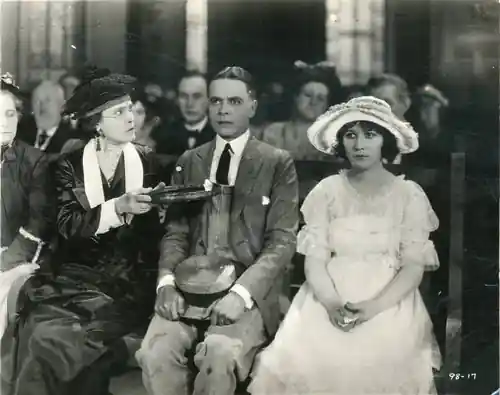
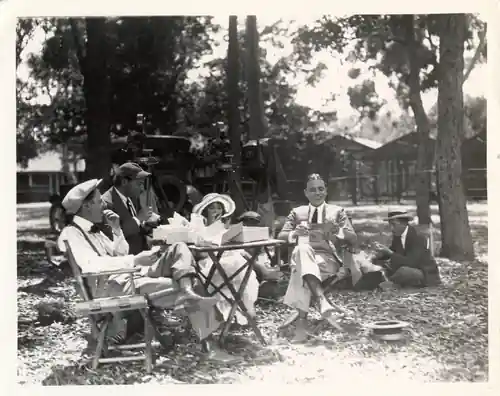
Production-design buffs will swoon over the verisimilitude of the farm sets, erected on a backlot in Fort Lee, New Jersey, before Hollywood hijacked the industry. Real chickens pecked among the actors; one scene required seventeen takes because a Rhode Island Red kept perching on MacLean’s shoulder, prompting the actor to break into unscripted laughter. King kept the blooper—proof that authenticity sometimes trumps choreography.
Comparative sidebar: if you crave more rural class warfare, stream Squatter's Rights—its dust-bowl eroticism and squatter-settler tension offer a darker, more Marxist counterpoint to Chickens’ ultimately utopian arc. Conversely, for city-slicker schadenfreude, Leap Year Leaps trots out similar fish-out-of-water tropes but lacks Johnston’s narrative incision.
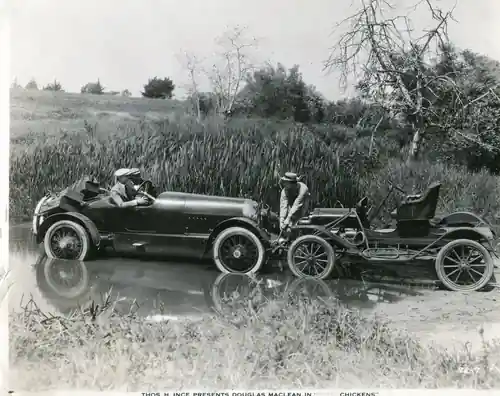
Restoration-wise, the 4K scan from a surviving 35mm nitrate print at the Library of Congress reveals textures previously smothered: straw looks sharp enough to draw blood; Gladys George’s velvet riding hat shows every rubbed nap. Kino’s Blu-ray includes an audio commentary by historian Dr. Maya Krom, who contextualizes the 1921 farm-crash within post-WWI agricultural volatility—a crisis that saw 200,000 American farms foreclosed that year alone. Knowing that statistic, Julia’s rescue mission feels less like sentimental contrivance and more like populist fantasy scripted for shell-shocked audiences.
Final verdict? Chickens is the rare silent that cackles at the oligarchy while cradling the human heart. It anticipates Capra’s small-town valentines and the eco-economic musings of Minari, yet remains tethered to its own mud-caked moment. Seek it out for the wit, stay for the revelation that solvency and soul are both forms of husbandry—each requiring patience, humility, and the guts to muck out yesterday’s failures before sunrise.
Where to watch: Kino Classics Blu-ray, Kanopy (library card), Criterion Channel rotating roster. Runtime: 58 minutes—perfect for a lunch-break epiphany that might just ruffle your feathers.
IMDb —
1919
Community
Log in to comment.