DbcultAccessing Vault...
5.2/10
Senior Film Conservator
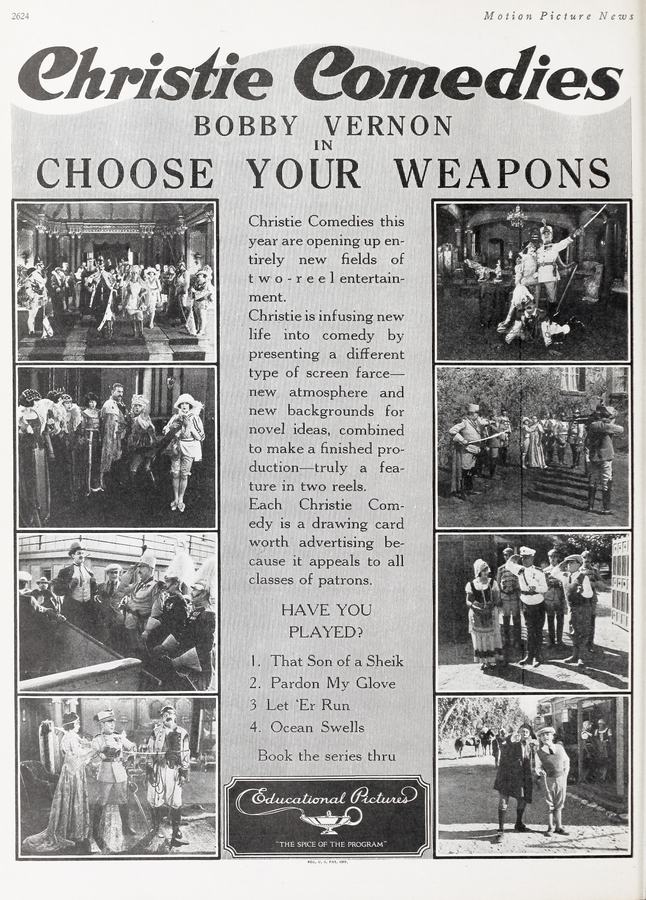
A definitive 5.2/10 rating for a film that redefined the boundaries of cult cinema. Choose Your Weapons remains a cornerstone of transgressive art.
Bobby Vernon’s vertiginous two-reel fever dream—equal parts saber, slapstick, and ivy—skewers the very notion of the homecoming hero.
The customary trajectory for a returning soldier is ticker tape and tremulous sweethearts; instead, our protagonist is handed a treasonous passport to the Duchy of Absurdia, where court etiquette demands duels before dawn and betrothal by dusk. Vernon, face a constellation of freckles and disbelief, scuttles across banquet tables like a caffeinated squirrel while the camera gorges on baroque lintels pilfered from some bankrupt operetta.
Notice how cinematographer Frank Roland Conklin tilts the frame a scant two degrees whenever royalty enters: the world literally off-kilter under the weight of ermine pretension. It is a visual pun worthy of the Keystone lineage, yet here the jest lands darker, for the medals on every chest are tin, and the war outside the palace gate has not so much ended as been reenlisted in bedroom farce.
There is, of course, a princess—Maude Truax, eyes like exclamation points—condemned by treaty to wed the swaggering Earle Rodney, a Teutonic brute whose moustache performs calisthenics whenever he laughs. Enter Vernon, mistaken for a prince because he once owned a cocker spaniel named Duchess. The script treats logic as a optional garnish; narrative propulsion is achieved purely through accelerated costume changes and the conviction that if you sprint fast enough, plausibility will never catch up.
Every blade is a tongue of foil, thin enough to wink at danger yet thick with burlesque. Vernon’s opening duel occurs in a hallway so narrow the combatants must file their egos sideways. The fight’s tempo—three thrusts, two pratfalls, one ascending arpeggio on the organ score—owes less to Fairbanks than to the convulsive rhythms of vaudeville plate-spinning. Yet the bruises look real: a welt blooms on Vernon’s cheek like a crimson parenthesis, proof that slapstick, for all its elastic artifice, still traffics in corporeal consequence.
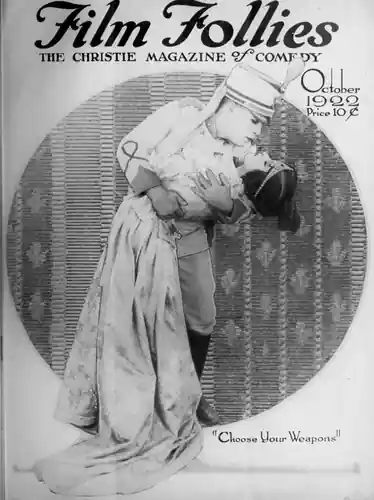
Halfway through, the skirmish spills onto the façade where ivy has staged its own green coup. Suddenly the film’s comic vector tilts ninety degrees: gravity becomes gagman. Characters dangle above stone precipices clutching vines that snap with punitive punch-line timing. The ivy itself, shaggy and anthropomorphic, resembles the parasitic creepers in The Eagle’s Nest—only here the plant allies with the proletariat, yanking aristocrats from balconies and depositing them in compost heaps of comeuppance.
To elude capture, Vernon dons the princess’s riding habit—bustle, feathered hat, and a veil the size of remorse. The joke is period-typical: man in skirt equals hilarity. Yet the sequence lingers beyond the punch line. Watching Vernon hitch his hem to scale a ladder, one senses a frisson of gender vertigo rare in post-Victorian slapstick. The guards ogle the “lady” with wolfish bemusement, but the camera ogles Vernon’s visible comfort inside silk. For twenty-three seconds he inhabits the garment rather than caricature it—an accidental assertion of plastic identity that feels closer to A Twilight Baby’s genderfluid reveries than to the burly bearded lady gags of contemporaneous shorts.
Rumor whispers that producer Lincoln Plumer rescued costumes from a shelved Prisoner of Zenda knockoff; the epaulettes gleam like surplus suns, and the ballroom’s painted columns flake only when the plot demands humility. This salvage-aesthetic dovetails with the film’s thematic obsession: everything—title, betrothal, heroism—is second-hand, repurposed, slightly mismatched. Even the intertitles speak in hand-me-down aphorisms: “A kingdom is a stage where the understudies seldom rest.”
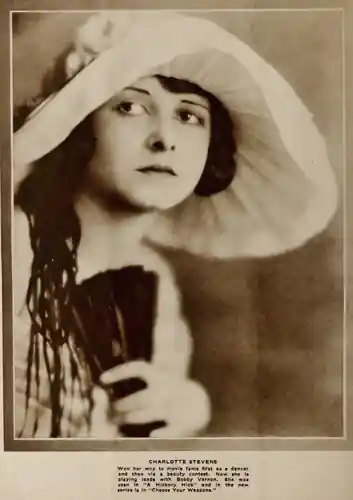
The thrift extends to casting. Charlotte Stevens essays both a scullery maid and a countess, differentiated solely by a beauty mark that migrates like a chess piece. The economy is Brechtian before Brecht hit the zeitgeist: we are reminded, relentlessly, that identity is wardrobe-deep.
Twenty-four minutes. That is the contractual length, yet the narrative inhales and exhales with the tidal assurance of a six-reel epic. Credit Conklin’s Eisensteinian compression: every splice is a stiletto, every cut calibrated to the heartbeat of a 1922 projector’s carbon arc. Compare this to the languid sprawl of Bespridannitsa, whose pastoral melancholy stretches like taffy. Choose Your Weapons refuses the luxury of sprawl; it is trench warfare played at the pace of a Charleston.
Contemporary exhibitors often paired the short with improvised organ flourishes. Viewed today with a tasteful score—say, a toy piano, muted trumpet, and typewriter percussion—the film reveals its sneaky pacifist streak. Each clash of steel lands atop a kazoo raspberry, undercutting phallic bravado. The climactic wedding march becomes a dirge in 4/4, punctuated by slide-whistles that imitate incoming shells. Thus does the soundtrack weaponize absurdity to indict the martial pomp it depicts.
Where The Woman and the Law dramatizes jurisprudential hypocrisy with melodramatic solemnity, Choose Your Weapons ridicules jurisprudence by having a marriage contract signed inside a dumbwaiter. While Daddy Ambrose sentimentalizes patriarchal redemption, Vernon’s patriarchs are blowhards whose beards unfurl like party streamers. And unlike Mary’s Lamb, whose innocence is sacrosanct, innocence here is an absurdity no character can afford.
The picture vanished from repertory after 1932, doomed by its two-reel brevity and the assumption that farce, unlike horror or melodrama, fossilizes poorly. Yet its DNA persists. The ivy-clamber set pieces resurface, mutated, in 1990s Hong Kong wire-fu; the cross-dressing duel anticipates Some Like It Hot’s gender carnival; the bureaucratic buffoonery prefigures the administrative nightmares of The Ticket of Leave Man. Cine-arkaeologists tracing the genealogy of cinematic anarchy will locate, wedged between the Sennett pie and the Lubitsch touch, this feisty little hand grenade.
Choose Your Weapons is a contraband joke smuggled inside a war-weary satire—a cinematic snuff box that explodes into confetti. It lampoons heroism without souring on humanity; it cross-dresses without cruelty; it crams continents of narrative into a snow-globe runtime. If you crave silent cinema that pirouettes on the razor’s edge between frivolity and despair, clamber up this ivy-choked balcony and RSVP to the most absurd wedding the 1920s never quite remembered.
—repertory revivalist and unabashed Vernonite, Cinephemera Blog
IMDb —
1921
Community
Log in to comment.