DbcultAccessing Vault...
5/10
Senior Film Conservator
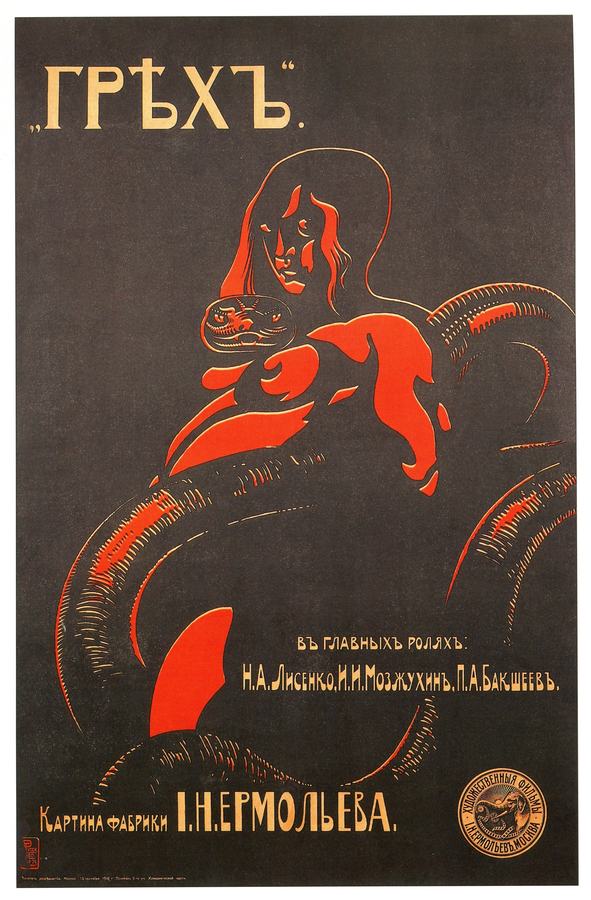
A definitive 5/10 rating for a film that redefined the boundaries of cult cinema. Grekh remains a cornerstone of transgressive art.
The spectral glow of early Russian cinema often conjures images of grand melodramas, existential angst, and performances steeped in a theatricality that was, at once, both raw and refined. Among these cinematic specters, 'Grekh' (Sin) stands as a particularly haunting and resonant piece, a film that, even through the lens of history and the veil of its silent era, speaks volumes about the human condition. It’s a testament to the profound emotional depth and narrative sophistication that filmmakers like Ivan Mozzhukhin, who not only penned the screenplay but also delivered a pivotal performance, brought to the nascent art form. This isn't just a story; it's a moral crucible, a societal mirror reflecting the unforgiving strictures of its time with an unflinching gaze.
At the heart of 'Grekh' lies the tragic figure of Elena, brought to life with exquisite nuance by Nathalie Lissenko. Her portrayal is a masterclass in silent acting, conveying a universe of suppressed longing, desperate passion, and profound despair through subtle gestures, the tilt of her head, and the eloquent sorrow in her eyes. Elena is not merely a victim of circumstance but a woman caught in an impossible bind, tethered to a loveless marriage with Nikolai, portrayed by Gennadiy Mirskiy with an icy detachment that perfectly encapsulates the rigid, patriarchal society he represents. Mirskiy’s performance is understated yet potent, his very presence radiating an oppressive authority that stifles Elena’s spirit long before any illicit affair takes root. The film meticulously builds the emotional landscape of her entrapment, making her eventual transgression not a wanton act, but an almost inevitable escape valve for a soul suffocating under the weight of expectation and emotional deprivation.
Her encounter with Dmitri, Mozzhukhin’s character, is depicted as a lightning strike, a sudden, overwhelming infusion of color into her grey existence. Mozzhukhin, ever the magnetic screen presence, imbues Dmitri with an artistic fervor and romantic intensity that makes his allure palpable. He is the antithesis of Nikolai – passionate, free-spirited, and dangerously captivating. The cinematography, particularly in the scenes depicting their burgeoning romance, uses light and shadow to great effect, often bathing them in a soft, ethereal glow that contrasts sharply with the stark, almost documentary-like realism of Elena’s marital life. This visual dichotomy underscores the film’s central conflict: the clash between societal expectation and individual yearning, between duty and desire. The affair, clandestine and fraught with peril, is portrayed not as a simple act of infidelity but as a desperate bid for self-actualization, a search for a fragment of genuine human connection in a world that denies it.
The narrative’s turning point, the exposure of the affair, is handled with a chilling realism. Pyotr Baksheyev, as the vengeful Pyotr, delivers a performance that perfectly captures the insidious nature of jealousy and moralistic condemnation. His character is not a grand villain but a bitter, small-minded individual whose actions unleash a torrent of societal wrath. The film excels in illustrating the devastating consequences of public shaming, depicting Elena’s ostracism with a raw, visceral impact. Her banishment from her home, her social circle, and ultimately, her former life, is a harrowing sequence, rendered all the more powerful by Lissenko's portrayal of a woman stripped bare of her dignity. The camera lingers on her isolation, on the averted gazes and whispered condemnations, transforming her personal tragedy into a universal commentary on the brutality of public judgment.
This aspect of 'Grekh' draws interesting parallels with other contemporary dramas that explored similar themes of female transgression and societal repercussions. One might recall the intense emotional landscape of Assunta Spina, where Francesca Bertini's titular character also navigates a world quick to judge and slow to forgive, her choices leading her down a path of increasing hardship. While 'Assunta Spina' is rooted in Neapolitan verismo, the emotional core of a woman facing the brunt of societal condemnation for her passions resonates deeply with Elena's plight in 'Grekh'. Both films, despite their cultural specificities, speak to a universal truth about the often-disproportionate burden of morality placed upon women in various societies.
Elena’s subsequent journey through destitution is portrayed with a stark realism that avoids sensationalism. Her descent into poverty is not merely a plot device but a profound exploration of human resilience and vulnerability. The film introduces Vera Orlova as a compassionate, yet equally marginalized, woman who offers Elena a fleeting moment of solace. Orlova’s character, though brief, provides a crucial counterpoint to the pervasive cruelty, a beacon of empathy in a landscape of indifference. This interaction underscores the film’s nuanced understanding that true sin often lies not in personal transgression, but in the collective failure of compassion. It's a powerful reminder that human connection, even in its most fragile forms, can be a lifeline in the darkest hours.
Meanwhile, Dmitri, grappling with his own complicity, embarks on a journey of self-reflection. Mozzhukhin’s portrayal here is complex; his character is not simply a romantic hero but a flawed individual struggling with the ethical implications of his actions and the demands of his art. The film subtly suggests that his artistic genius, while enabling his passion, also provides a form of detachment, an ability to observe rather than fully participate in the consequences of his desires. This internal conflict adds another layer of psychological depth to the narrative, elevating it beyond a simple morality tale. His struggle to reconcile his love for Elena with his artistic ambitions and the societal pressure he faces is a compelling subplot, reflecting the broader societal tension between individual freedom and collective responsibility.
Ivan Mozzhukhin’s multifaceted contribution to 'Grekh' as both writer and lead actor is nothing short of remarkable. His screenplay is a tightly woven tapestry of emotional arcs and thematic explorations, demonstrating a keen understanding of human psychology and the dramatic potential of silent cinema. The pacing is deliberate, allowing the emotional weight of each scene to fully register, yet never dragging. His writing avoids didacticism, preferring to let the characters' actions and reactions speak for themselves, inviting the audience to engage in a deeper moral inquiry rather than simply consuming a predetermined message. This sophistication in storytelling is a hallmark of the era's best works, often overlooked in favor of later, more technically advanced films.
As an actor, Mozzhukhin possessed an unparalleled intensity. His eyes, often described as pools of liquid fire, were capable of conveying immense passion, torment, and intellectual depth with a single glance. In 'Grekh', he navigates the complexities of Dmitri’s character, from the initial romantic ardor to the later stages of guilt and artistic introspection, with a seamless authenticity. He doesn't merely perform; he inhabits the role, making Dmitri’s internal struggles tangible. This level of performance was rare, even among his contemporaries, setting a high bar for silent film acting. One might compare his intense, brooding presence to that of Asta Nielsen in her most dramatic roles, or even the subtle power of Max Linder in his more serious ventures, though Mozzhukhin carved out a unique niche with his blend of aristocratic elegance and raw emotionality.
The film’s visual language is a crucial component of its power. While details of specific directorial techniques might be lost to time, the general aesthetic of Russian pre-revolutionary cinema often favored lush, theatrical sets and expressive lighting, aiming to elevate melodrama to high art. 'Grekh' likely employed these techniques to underscore its thematic content. The contrast between opulent interiors and the harsh realities of the streets, for instance, would have visually articulated the chasm between the privileged and the outcast. Symbolic imagery, a staple of silent film, would have been utilized to great effect – perhaps a wilting flower to represent Elena’s fading innocence, or a broken mirror symbolizing her shattered reputation.
The film’s central theme of 'sin' is explored not as a simple religious concept, but as a multifaceted social construct. It questions who defines sin, who enforces its penalties, and what true redemption entails. Is Elena’s passion a sin, or is the society that condemns her the greater transgressor? This moral ambiguity is one of 'Grekh'’s most enduring strengths, inviting audiences to ponder complex ethical questions rather than accepting easy answers. This philosophical depth sets it apart, allowing it to transcend its era and speak to contemporary concerns about judgment, empathy, and the pursuit of happiness.
In its exploration of moral quandaries and the harsh realities of human existence, 'Grekh' finds a conceptual kinship with films like The Sign of the Cross, albeit with a distinct cultural and historical lens. While Cecil B. DeMille’s epic delves into the persecution of early Christians and the clash of paganism and nascent faith, both films confront the notion of moral purity against a backdrop of societal corruption and personal sacrifice. Where 'The Sign of the Cross' uses historical spectacle to amplify its spiritual message, 'Grekh' grounds its moral exploration in the intimate, devastating reality of individual lives caught in the web of societal judgment, offering a more psychological and less overtly theological examination of transgression and suffering.
The final act of 'Grekh' culminates in a cathartic, yet profoundly tragic, act of self-sacrifice, bringing Elena’s journey to a poignant close. It’s a resolution that avoids simple happy endings, instead opting for a powerful, emotionally resonant conclusion that cements the film’s status as a significant work of art. The film doesn't offer easy answers or neat moral lessons; rather, it presents a complex, often brutal, vision of human existence, where love and betrayal, compassion and cruelty, constantly vie for dominance.
The ensemble cast, including the understated yet effective performances by Gennadiy Mirskiy and Pyotr Baksheyev, provides a solid foundation for Lissenko and Mozzhukhin’s central drama. Each character, no matter how minor, contributes to the rich tapestry of the narrative, painting a vivid picture of a society grappling with its own moral contradictions. The film's enduring power lies in its ability to evoke deep empathy for its characters, even those who commit grave errors, and to provoke serious thought about the nature of morality itself. It’s a film that demands reflection, lingering in the mind long after the final fade to black, a testament to the timeless power of its narrative and the exceptional talent of its creators.
In an era often dismissed for its nascent technical capabilities, 'Grekh' stands as a powerful reminder of the artistic and emotional sophistication already present in silent cinema. It is a film that speaks with an eloquence that transcends the absence of spoken dialogue, proving that true artistry lies not in technological prowess, but in the ability to capture the complex, often contradictory, pulse of the human heart. It’s a vital piece of cinematic history, deserving of its place among the great melodramas of its time, and a poignant exploration of the eternal struggle between societal decree and the insistent whisper of individual desire.

IMDb —
1926
Community
Log in to comment.