DbcultAccessing Vault...
Cult Review
Senior Film Conservator
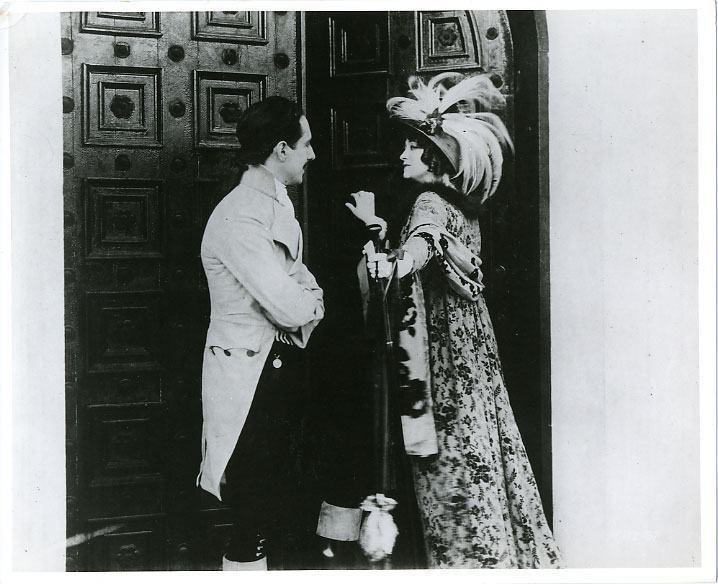
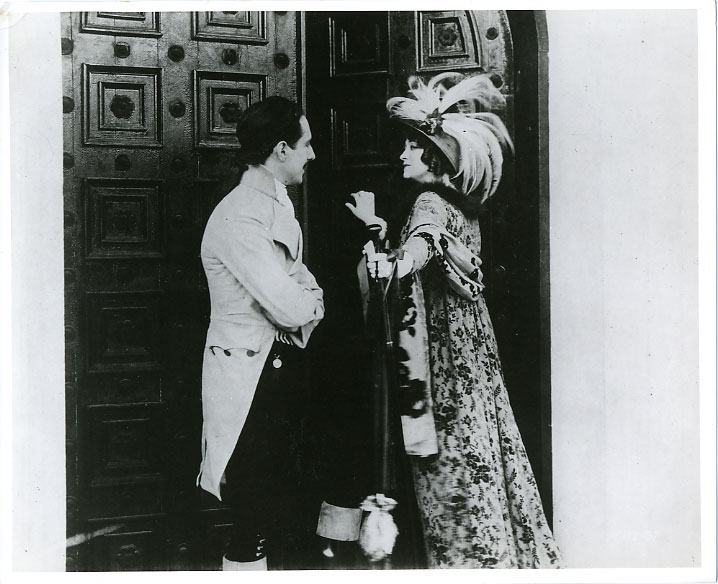
In the pantheon of early silent cinema, few figures command the screen with the visceral, haunting gravitas of Pauline Frederick. Her 1918 portrayal of La Tosca is not merely a performance; it is a tectonic shift in the medium's ability to convey complex, overlapping emotional states. While the 1918 production, directed by Edward José, might be overshadowed by the operatic heights of Puccini, this filmic adaptation of Victorien Sardou’s play serves as a vital bridge between the histrionic stage traditions of the 19th century and the nuanced psychological realism that would eventually define the 20th century screen.
The Rome depicted in this version of La Tosca is a claustrophobic landscape of monumental architecture and stygian shadows. The film opens not with the aria, but with the heavy atmosphere of a city under the surveillance of a police state. Unlike the pastoral or whimsical settings found in contemporary works like As You Like It, the world of Tosca is one of stone and iron. The villa where Mario Cavaradossi (Jules Raucourt) hides the fugitive Angelotti is presented as an oasis of rebellion that is quickly encroached upon by the encroaching darkness of Baron Scarpia’s influence.
The set design leverages the limitations of 1918 technology to create a sense of impending doom. The high contrast of the lighting—a precursor to the chiaroscuro that would later define film noir—emphasizes the isolation of the characters. When Tosca enters the frame, her presence is radiant, yet she is constantly framed by the heavy, oppressive geometry of the Roman sets. This visual strategy underscores the theme of the individual crushed by the machinery of the state, a motif that resonates with the political anxieties of the era, much like the thematic weight found in Vendémiaire.
To understand the impact of this film, one must analyze the specific magnetism of Pauline Frederick. In an age where silent acting often drifted into the hyperbolic, Frederick exhibits a controlled intensity that is startlingly modern. Her Floria Tosca is a woman defined by her contradictions: she is a celebrated artist capable of commanding thousands, yet she is reduced to a state of trembling vulnerability by the mere suspicion of infidelity. This dualism is captured in the close-ups, where her eyes communicate a depth of terror that dialogue cards could never hope to replicate.
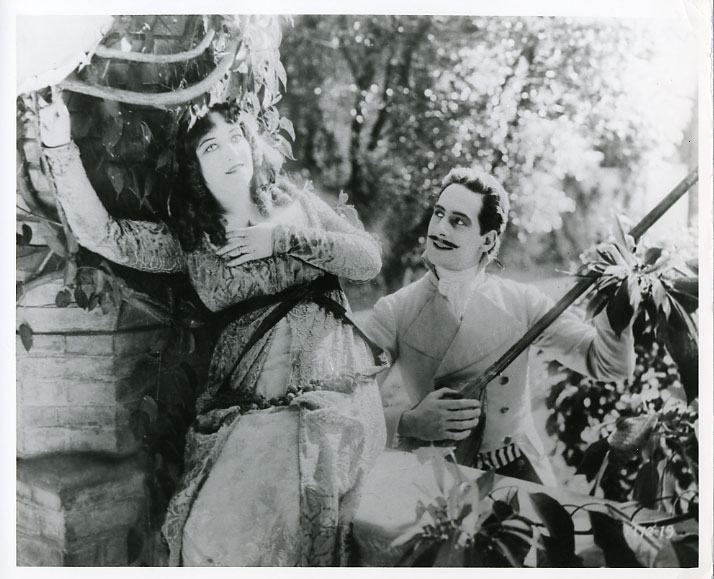
Compare her performance to the dual-role complexity seen in Stella Maris. While Mary Pickford utilized physical transformation, Frederick utilizes an internal, emotional alchemy. When she discovers that Mario is not unfaithful but is instead risking his life for a political cause, her relief is fleeting, quickly replaced by a burgeoning realization of the danger they now face. The transition from the jealous lover to the desperate protector is handled with a fluidity that speaks to Frederick's mastery of her craft.
Frank Losee’s Baron Scarpia is a masterclass in understated villainy. In many silent films, villains were caricatures of mustache-twirling malice, but Losee plays Scarpia with a chilling, bureaucratic coldness. He is the embodiment of the state—efficient, pitiless, and fundamentally corrupt. His desire for Tosca is not presented as a romantic passion, but as an exercise in power. He wants to break her spirit as much as he wants to possess her body. This dynamic creates a tension that is almost unbearable, reminiscent of the darker psychological undercurrents in Manden med de ni Fingre III.
The torture sequence remains one of the most effective scenes in early cinema. By focusing on Tosca’s reaction to Mario’s off-screen screams, the film engages the audience's imagination, creating a more visceral sense of horror than any explicit depiction could achieve. We see the crumbling of her morality in real-time. Her decision to reveal Angelotti’s hiding place is not a moment of weakness, but a biological imperative to stop the suffering of the man she loves. It is a moment of profound human failure that the film treats with heartbreaking empathy.
The second act of the film moves with the relentless pace of a Greek tragedy. The negotiation between Scarpia and Tosca is a high-stakes poker game where the currency is human life and dignity. The film brilliantly captures the transactional nature of their interaction. Scarpia’s offer—Mario’s life in exchange for Tosca’s virtue—is presented with a sickening politeness. The contrast between the opulent surroundings of the Farnese Palace and the grotesque nature of the deal creates a jarring dissonance.
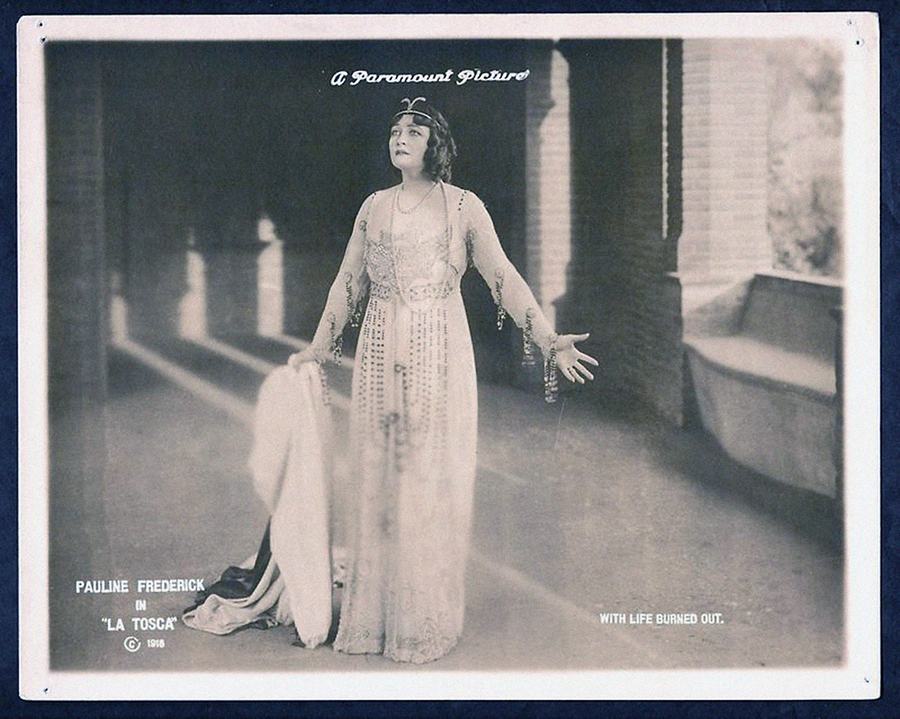
In this regard, La Tosca explores the themes of honor and sacrifice with more grit than the period dramas like The Incomparable Mistress Bellairs. While the latter focuses on the social maneuvers of the elite, La Tosca strips away the veneer of civilization to reveal the raw power dynamics underneath. The stabbing of Scarpia is the film’s cathartic peak. Frederick’s expression as she realizes she has the upper hand is one of the most iconic moments in silent film history—a mixture of horror at her own capacity for violence and a grim satisfaction in her vengeance.
The final act is a descent into absolute fatalism. The trope of the 'mock execution' that turns out to be real is a narrative device that could easily feel manipulative, but here it feels inevitable. The film establishes early on that Scarpia’s world is one where words have no meaning and promises are merely tools of manipulation. When Tosca discovers Mario’s body, the silence of the film becomes a deafening roar of grief. Unlike the more optimistic resolutions of films like Her Official Fathers or the redemptive arcs in The Birth of Character, La Tosca offers no easy comfort.
The cinematography of the final leap from the battlements is handled with a stark simplicity. There are no elaborate camera movements, just the terrifying finality of the action. It is a moment that echoes the tragic weight of Das Spiel vom Tode, where death is the only escape from an unsolvable moral equation. The film ends not with a moral lesson, but with a visual exclamation point that leaves the viewer haunted by the waste of such vibrant lives.
Technically, the 1918 La Tosca is a testament to the sophistication of the Paramount-Artcraft era. The tinting of the film—using deep blues for the night scenes and warm ambers for the candlelit interiors—adds a layer of emotional resonance that is often lost in modern black-and-white reproductions. The editing, while slower than modern standards, allows for a rhythmic buildup of tension that is essential for a story so dependent on atmosphere. It lacks the frenetic energy of The Fugitive, but replaces it with a deliberate, operatic pacing.
Furthermore, the film’s use of location—or at least, very convincing studio recreations of Roman landmarks—gives it a sense of scale. The church of Sant'Andrea della Valle is not just a backdrop; it is a space of sanctuary and subsequent betrayal. This attention to environmental storytelling is something that was also being explored in films like Ben Blair, though La Tosca applies it to a much more claustrophobic and urban context.
In conclusion, the 1918 La Tosca is a masterpiece of silent melodrama that deserves a prominent place in the history of film. It is a showcase for the singular talent of Pauline Frederick, whose ability to navigate the extremes of human emotion remains as potent today as it was over a century ago. The film manages to strip away the artifice of the stage to find the raw, beating heart of Sardou’s tragedy. It is a story of love, politics, and the terrifying ease with which power can destroy beauty.
While it shares some DNA with the vengeance narratives of Vengeance Is Mine or the physical hardships depicted in The Crippled Hand, La Tosca stands alone in its operatic scope. It is a reminder that even in its infancy, cinema was capable of grappling with the most profound aspects of the human condition. For those who seek to understand the evolution of the 'tragic muse' in film, or for those who simply wish to see a masterclass in silent storytelling, this 1918 production is essential viewing. It is a flickering, beautiful, and ultimately devastating testament to the power of the image over the word.
Reviewer's Note: This film represents a pinnacle of the 'Diva' genre, a specific moment in cinematic history where the female lead was not just the star, but the very soul of the production. To watch Pauline Frederick as Tosca is to witness the birth of the modern screen icon.
IMDb 7.6
1930
Community
Log in to comment.