DbcultAccessing Vault...
Cult Review
Senior Film Conservator
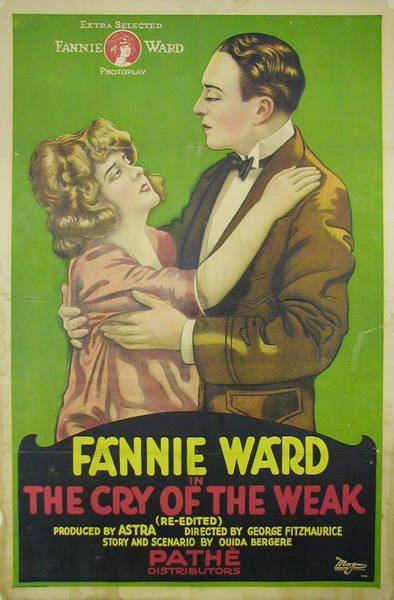
In the pantheon of early silent cinema, few works attempt the intellectual heavy lifting found in The Cry of the Weak. Directed with a keen eye for social nuance and written by the formidable Ouida Bergère, this 1919 feature transcends the simplistic moralizing of its era. It is not merely a story of crime and punishment; it is an architectural study of the human conscience. The film opens not with action, but with an ideological stalemate. District Attorney Dexter and Judge Creighton are locked in a game of chess, a sequence that functions as a brilliant metaphor for the rigid, calculated nature of the law they both serve. While The Sentimental Bloke explores the vernacular of the streets with a certain poetic levity, The Cry of the Weak approaches the urban milieu with a somber, almost clinical gravity.
The brilliance of the screenplay lies in its swift deconstruction of Dexter’s absolutism. Dexter, played with a starchy, unwavering conviction by Frank Elliott, represents the 'Old Guard' of legal thought—the belief that the law is a static, unyielding force. His neighbor, Judge Creighton (Walt Whitman), acts as the progressive foil, suggesting that the human condition is malleable. This debate is abruptly terminated by the crack of a pistol. When the Judge is shot in his own home, the theoretical becomes personal. Unlike the lighthearted escapades found in Father and the Boys, the violence here has weight; it is the catalyst for a total re-evaluation of the social contract.
"The law is a mirror, but for the weak, it is often a distorted one that reflects only their failures, never their potential." — A thematic echo of the era's reformist movement.
Fannie Ward, portraying Mary, delivers a performance that anchors the film’s more abstract concepts in raw, palpable emotion. When she discovers her brother Budd (Paul Willis) hiding in the shadows of her home, the film shifts gears into a high-stakes psychological thriller. Ward’s ability to convey the agonizing conflict between her duty to her husband—the very man hunting the intruder—and her primal loyalty to her sibling is nothing short of extraordinary. This domestic tension mirrors the larger societal friction explored in Madame X, where the maternal or familial bond is pitted against the rigid structures of decorum and legality. Mary is the bridge between two worlds: the polished parlor of the DA and the desperate alleys that birthed Budd’s criminality.
The cinematography during the scene where Dexter shoots the escaping thief—unaware it is his brother-in-law—utilizes shadow and light to emphasize the blindness of justice. It is a haunting sequence that recalls the stark visual storytelling of The Tong Man, where the environment itself feels complicit in the unfolding tragedy. The revelation of Budd’s identity is the film’s emotional zenith, forcing Dexter to confront the human face of the 'criminal element' he so casually condemned over a game of chess.
The title, The Cry of the Weak, is a direct challenge to the Darwinian social philosophies prevalent in the early 20th century. Through Mary’s impassioned defense of Budd, Bergère’s script delves into the concept of social determinism. She argues that Budd is not a villain of Shakespearean proportions, but a 'weak-willed' youth susceptible to the predatory influences of a neglected urban landscape. This theme of the 'environment as antagonist' is a recurring motif in silent-era social dramas, often seen in works like The Defeat of the City or the controversial Birth Control. The film posits that society has a moral obligation to protect its most vulnerable members before they are forced into the arms of the lawless.
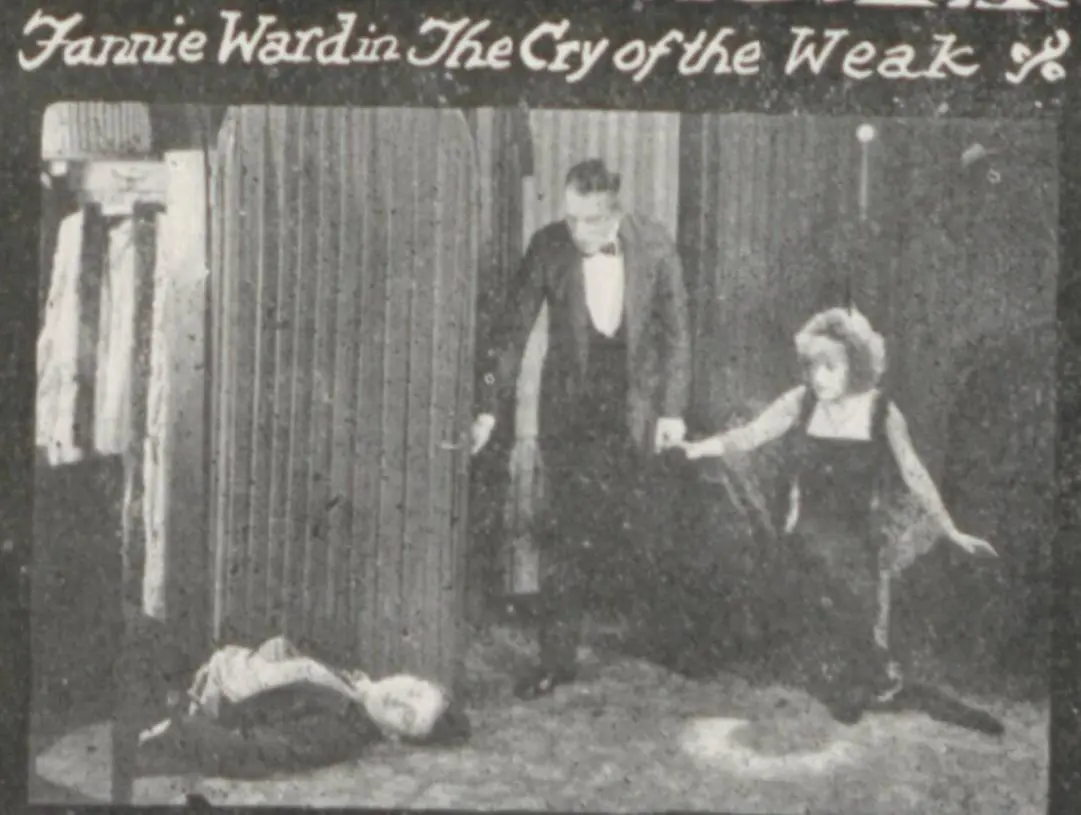
The narrative structure smartly uses the police investigation to exonerate Budd of the more heinous act—the shooting of the Judge—thereby allowing Dexter a 'safe' path toward mercy. This nuance is crucial; it suggests that while Budd is guilty of a lapse in character, he is not beyond the reach of redemption. This redemptive arc is far more sophisticated than the simple moral binaries found in Lawless Love, where the lines between good and evil are often drawn with a much broader brush.
The final act of the film takes us away from the claustrophobic city and toward the expansive promise of the American West. The letter from Budd, detailing his progress on a ranch, serves as a powerful symbol of rebirth. The frontier, in the cinematic vocabulary of 1919, represented a space where the stains of the past could be washed away—a theme also touched upon in A Man and the Woman. Dexter’s admission that he was wrong is not just a personal victory for Mary; it is a systemic admission of the law’s limitations. It echoes the sentimental yet profound transformations seen in The Bachelor's Romance, where rigid lifestyles are thawed by the warmth of human connection.
When we compare this film to other contemporary works like The Clown (1917) or the adventurous In Search of the Castaways, The Cry of the Weak stands out for its lack of artifice. It doesn't rely on spectacle or exotic locales to maintain interest. Instead, it relies on the tectonic shifts of the human heart. Even when compared to the light-heartedness of The Downy Girl or the historical drama of Arrah-Na-Pogue, this film retains a modern sensibility in its approach to criminal justice reform.
Ultimately, The Cry of the Weak is a cinematic manifesto for empathy. It challenges the viewer to look past the crime and see the person, to look past the 'weakness' and see the potential for strength. In an era where cinema was still finding its voice as a tool for social change, Ouida Bergère and her cast crafted a narrative that remains startlingly relevant. The film doesn't just ask us to pity the weak; it asks us to dismantle the circumstances that make them so. It is a work of profound humanism that deserves a prominent place in the history of the medium, standing alongside One Thousand Dollars and The War Correspondents as a testament to the power of storytelling to bridge the gap between the powerful and the powerless.
Verdict: A hauntingly beautiful exploration of the grey areas of justice, anchored by a career-defining performance by Fannie Ward.
IMDb —
1924
Community
Log in to comment.